
Assisi is a magnificent medieval city, rich in numerous wonderful monuments, known worldwide for its Christian worship. Every pilgrim and tourist visiting Assisi visits several of its most important churches. They usually begin with the most important monument, the Basilica of St. Francis, which is a UNESCO World Heritage Site. The churches dedicated to St. Rufinus and St. Clare, as well as others, are also worth visiting.
The Museum of the Treasures of the Basilica of St. Francis in Assisi is a place that will undoubtedly delight not only the most religious person but also lovers of art and history. The museum is the burial place of St. Francis. The focal point of life and gatherings in Assisi is the Piazza del Comune. In the center of the square stands a fountain with three lions, built in 1762. The steps surrounding it are often crowded with local tourists. The town hall, Palazzo dei Priori, also dominates the Piazza del Comune.
Location
Assisi is an Italian city located southeast of Perugia, in the Umbria region, province of Perugia.
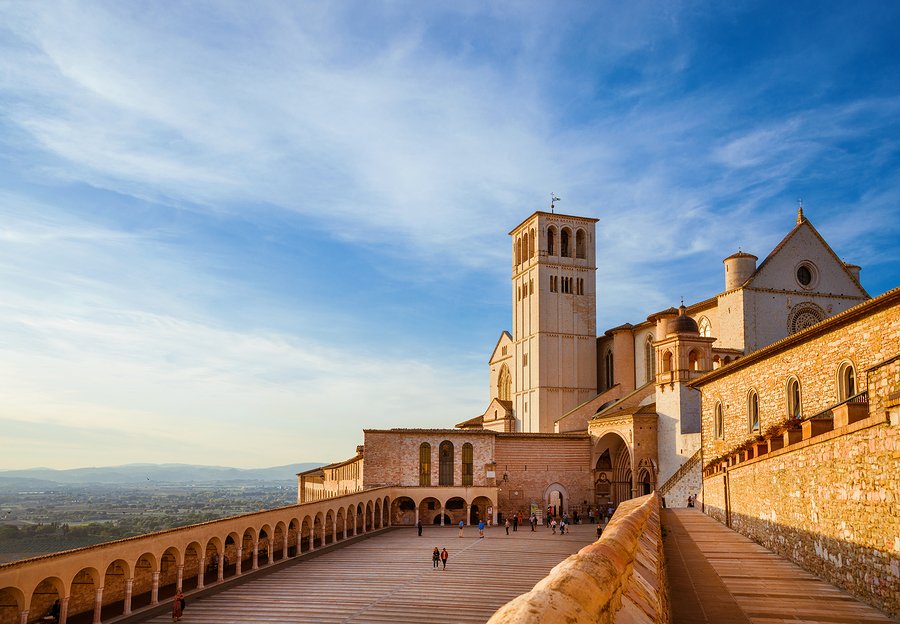
Basilica of St. Francis in Assisi
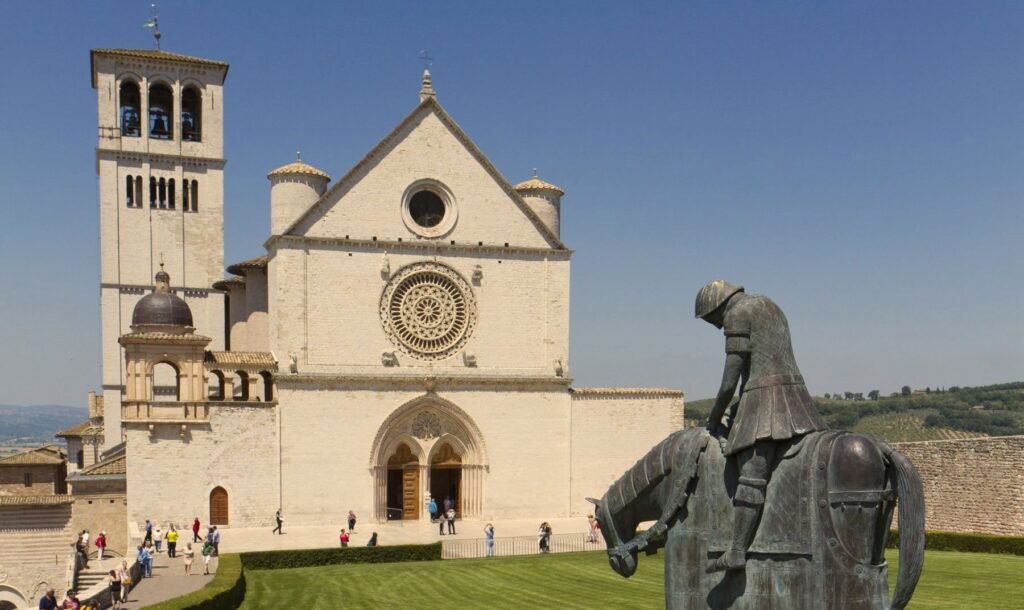
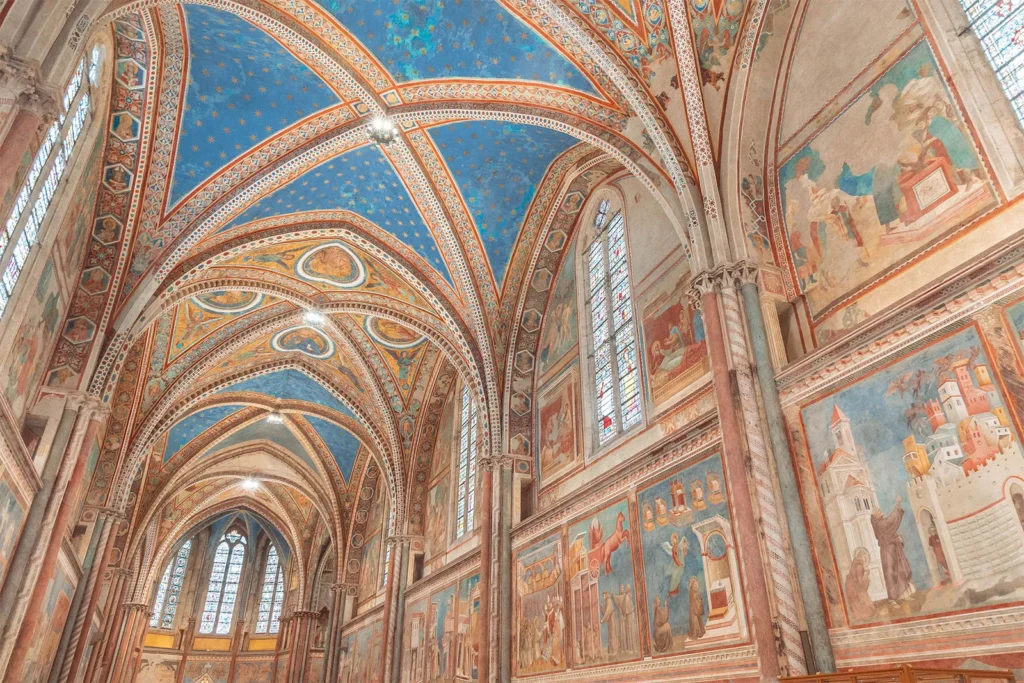
Francis of Assisi (1181/82–1226) gave away his wealth to the Church and dedicated his life to poverty and piety. By attracting followers whom he sent on missions to preach the Gospel throughout Europe, he restored faith in the Church.
The Basilica of St. Francis is the most important church in Assisi and one of the oldest works of Gothic architecture in Italy. It was built to welcome the thousands of pilgrims who visit the city every year. The Basilica consists of two churches (Upper and Lower) and a crypt where St. Francis is buried. These two churches, or basilicas, house works by the best late medieval painters such as Cimabue and Giotto.
Basilica of St. Clare in Assisi
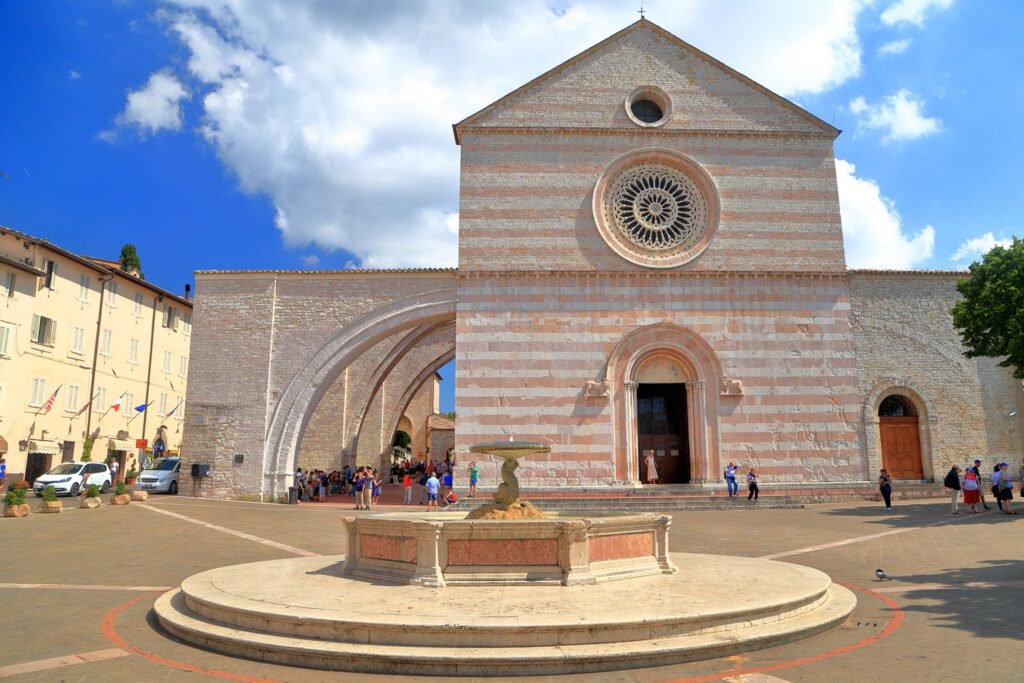
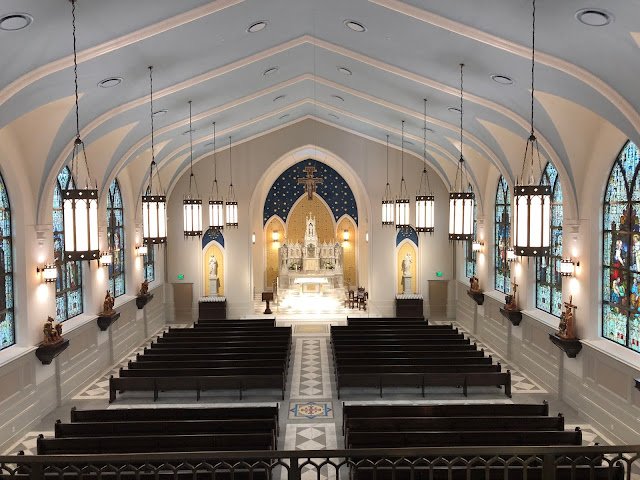
The Basilica of Santa Chiara in Assisi is a Gothic church dedicated to Saint Clare, a disciple of Saint Francis and founder of the Order of Poor Women. Construction began in 1257, four years after her death.
Inside the church is the original 12th-century crucifix from San Damiano, which, according to tradition, spoke to Saint Francis, guiding his mission. Saint Clare’s remains rest in the crypt beneath the main altar. From the original church of San Giorgio (built earlier on the site of the Church of St. Clare), fragments of earlier Sienese frescoes have been preserved, mainly in the transepts and above the main altar.
Basilica of Our Lady of the Angels
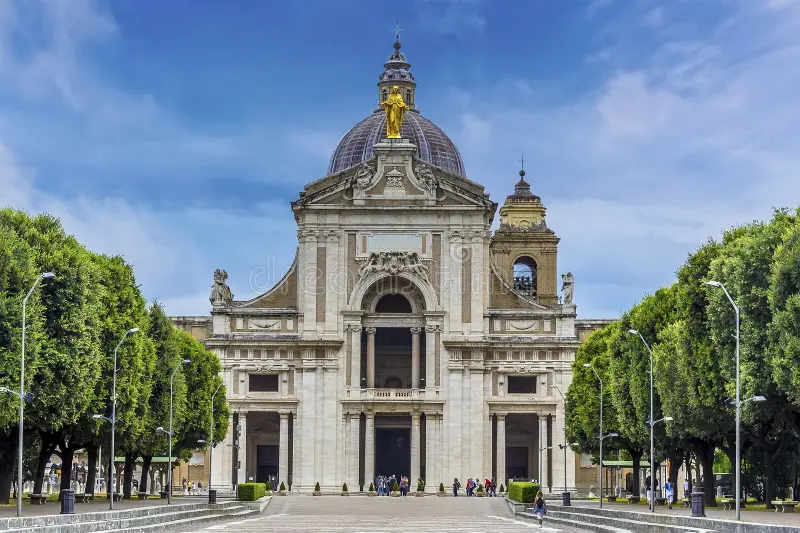
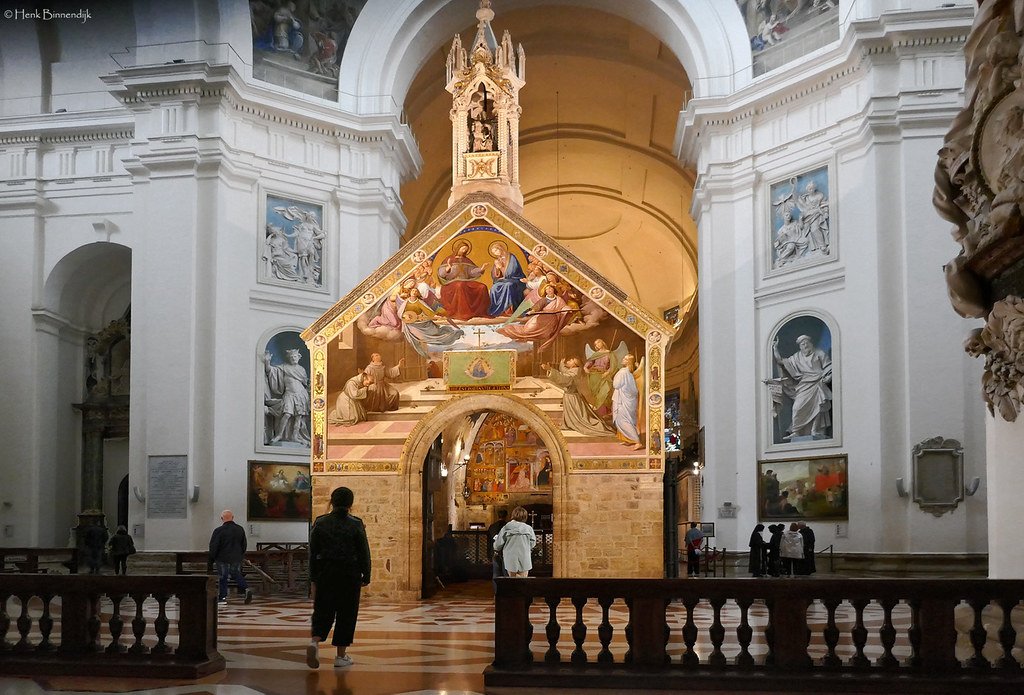
Santa Maria degli Angeli was built between 1569 and 1679 to protect the Porziuncola, the small church where St. Francis found refuge and founded his order. Its Baroque architecture, enriched by centuries of history and piety, is worth noting.
This place became the center of his mission, where he and his followers lived a life of poverty and prayer. The Porziuncola was not only the birthplace of Franciscanism but also the place where St. Francis died on October 3, 1226. Since then, church has become a symbol of spirituality for pilgrims from around the world.
Church of St. Rufinus in Assisi
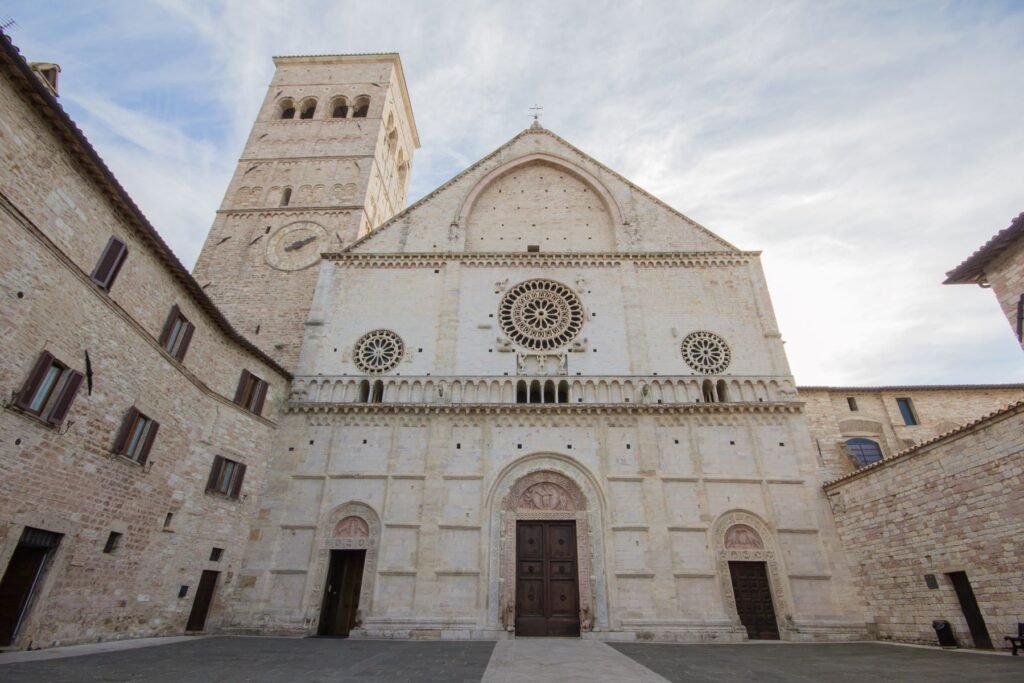
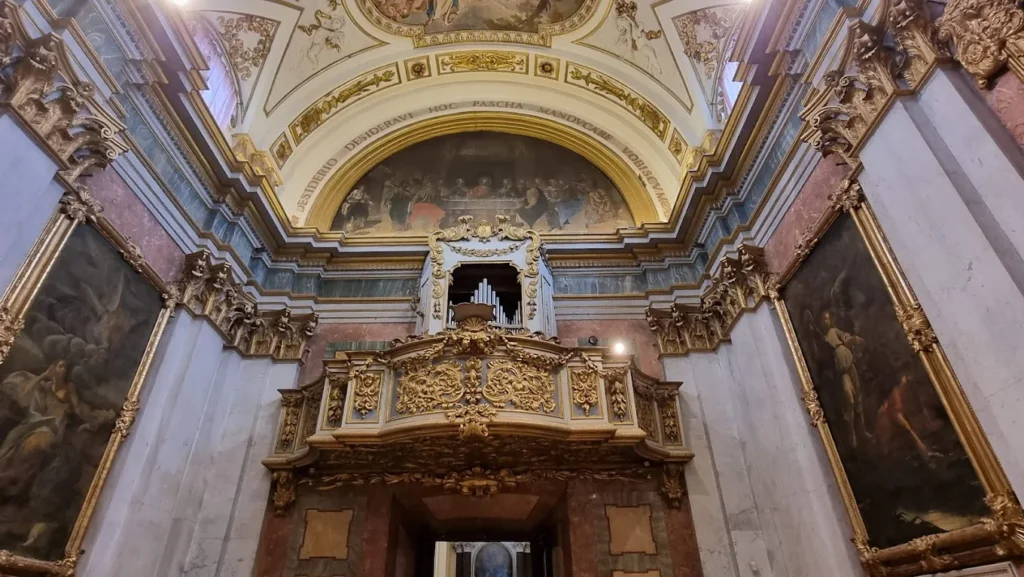
The Cathedral of San Rufino is located in the homonymous square. Built in the 12th century and well worth seeking out for its beautiful Romanesque facade and historic font. To the left of the facade, stands the majestic Romanesque bell-tower with double mullioned windows, dating back to the 11th century. The interior of the basilica is divided into three naves, separated by pillars. The current appearance dates back to the renovation of 1571.
Rocca Maggiore
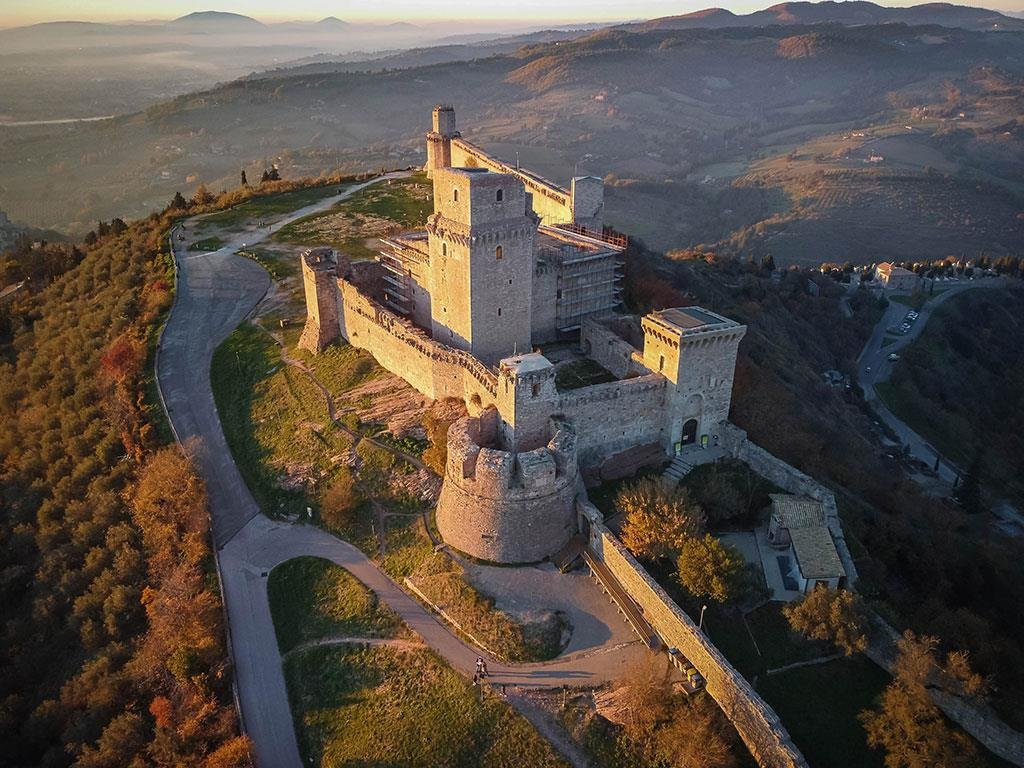
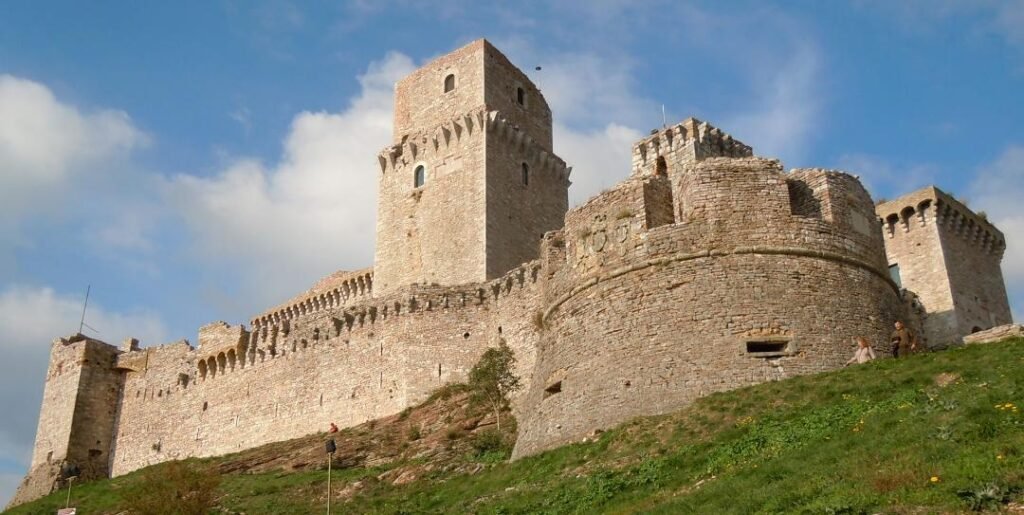
Rocca Maggiore was built around 1173-1174. This significant example of 14th-century military architecture, still well-preserved, dominates the historic center of the city, the narrow gorge cut by the Tescio River, and a significant portion of the Umbrian valley, stretching from Perugia to Spoleto. The entrance is near a 16th-century bastion; inside is a courtyard paved with 14th-century bricks. The keep served as the lord’s residence and consists of five rooms connected by a spiral staircase.
Hermitage in Carceri
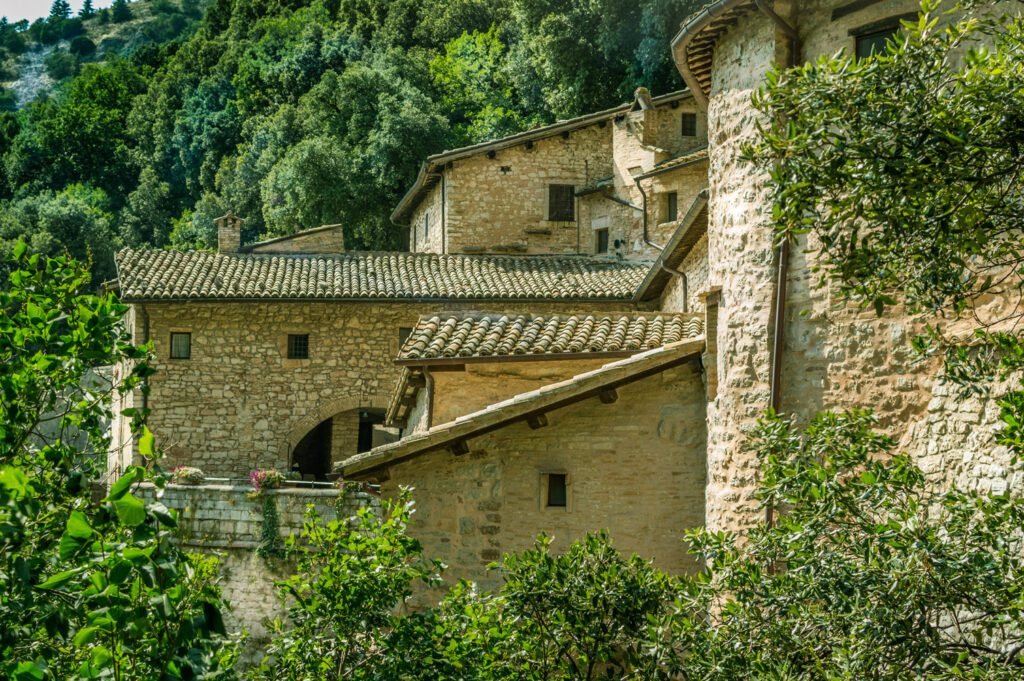
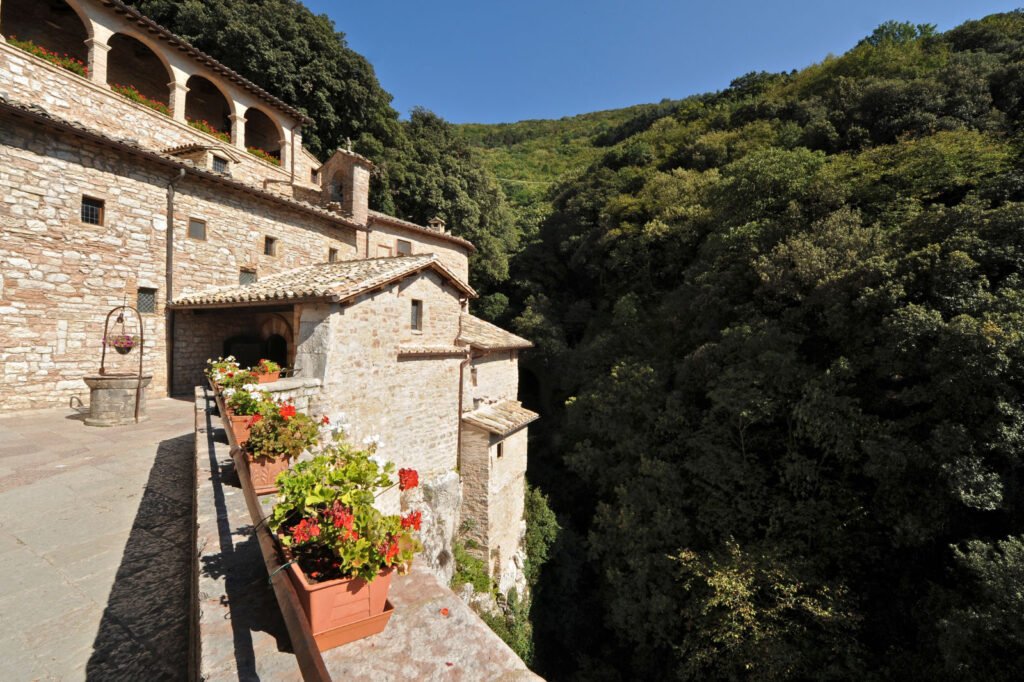
The Eremo delle Carceri is a small hermitage in a steep forest gorge at the four kilometers above Assisi. Today is an important religious site for the followers of St. Francis of Assisi and is known for its atmosphere of tranquility and spirituality. This place was loved by the saint because it offered an ideal solitary refuge for prayer and contemplation. Saint Francis and his followers often retreated here to seek peace and communion with nature.
Piazza del Comune
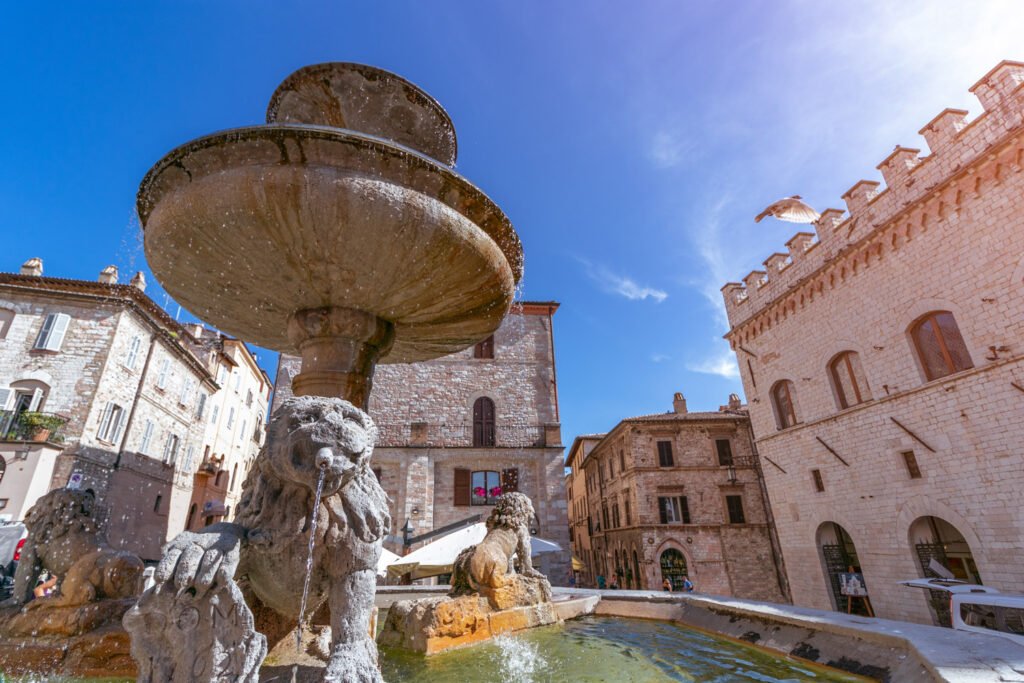
The center of Assisi’s life is located in Piazza del Comune. The southern side of the square dates back to the late 15th century, when the Palazzo dei Priori was completed. A magnificent circular fountain dominates the center of the square, while the Palazzo delle Poste, built in 1926 is the newest building.
Chiesa di Santa Maria Maggiore / Santuario della Spogliazione (Church of Santa Maria Maggiore)
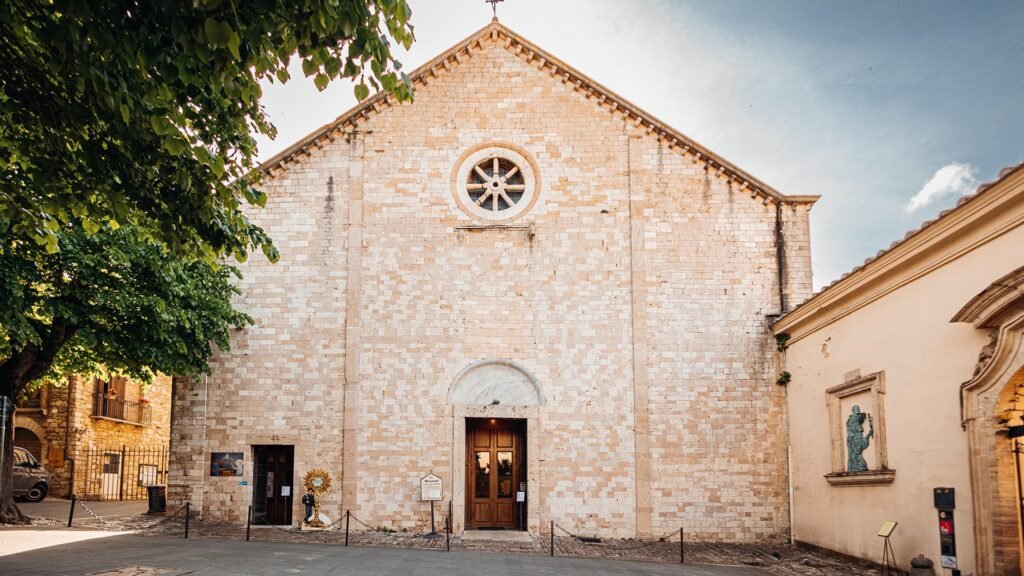
When visiting Assisi, don’t miss the Church of Santa Maria Maggiore / Santuario della Spogliazione. This seven-meter-high, historic church dates back to the 11th century and houses the relics of Carlo Acutis. The crypt of Santa Maria Maggiore also contains the ruins of a Roman house, and murals from the excavations are on display in the nearby museum in Piazza del Comune.
Chiesa di Santa Maria sopra Minerva ad Assisi (Church of Santa Maria sopra Minerva in Assisi)
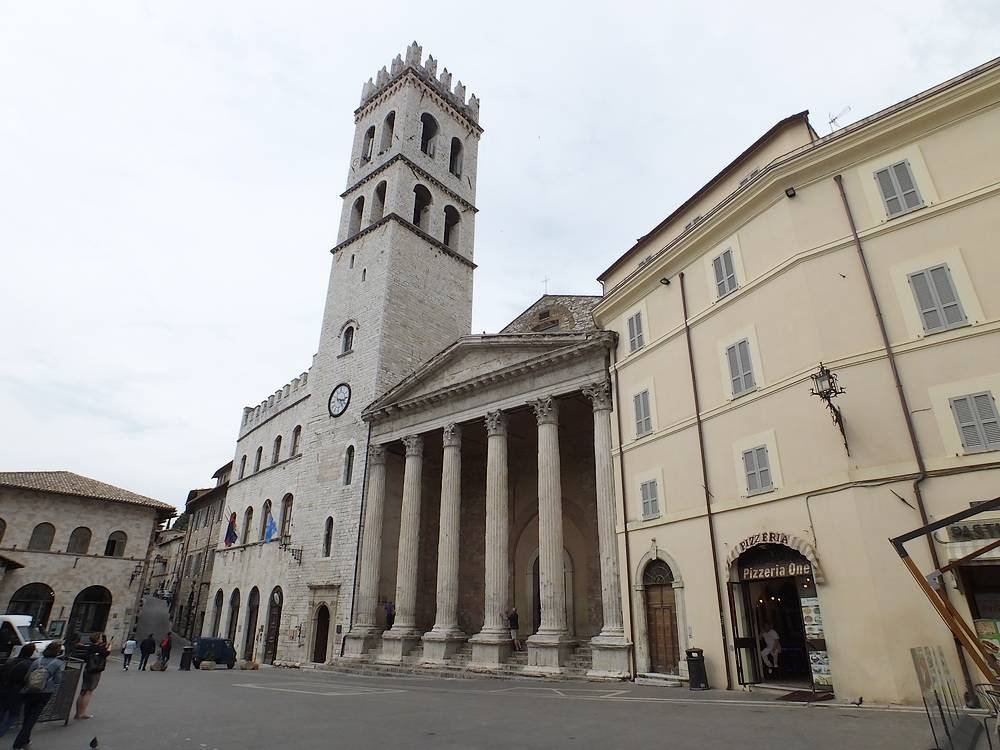
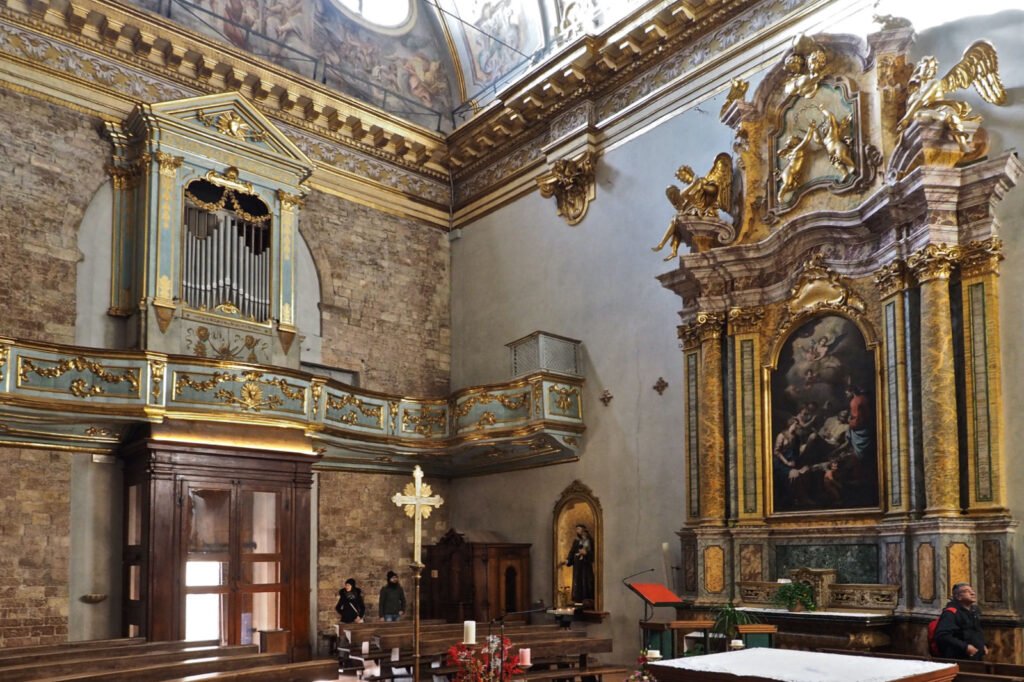
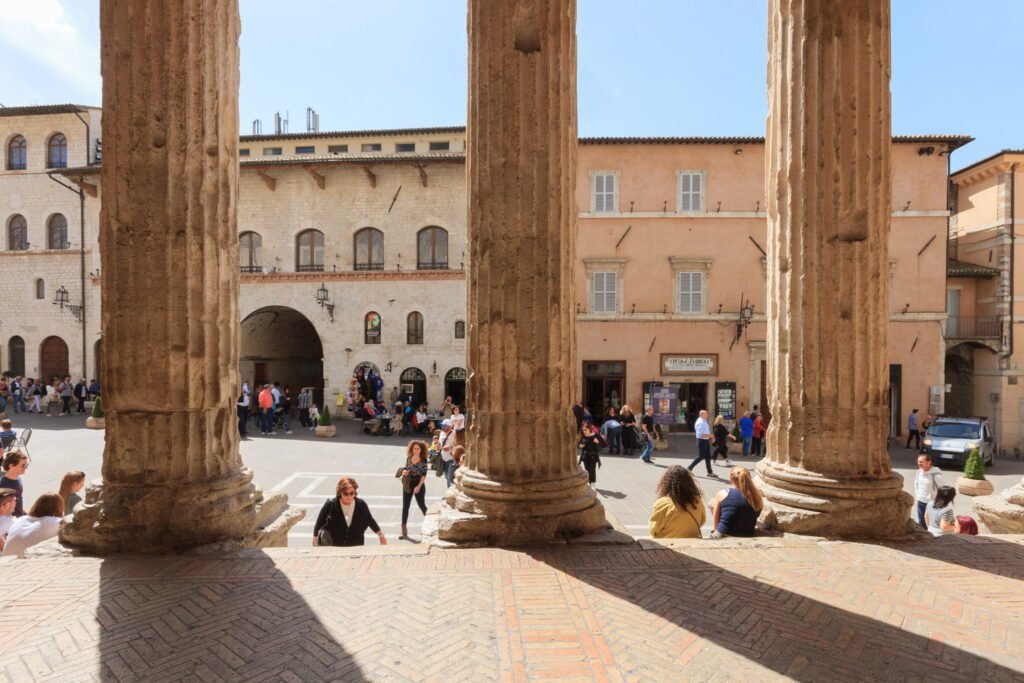
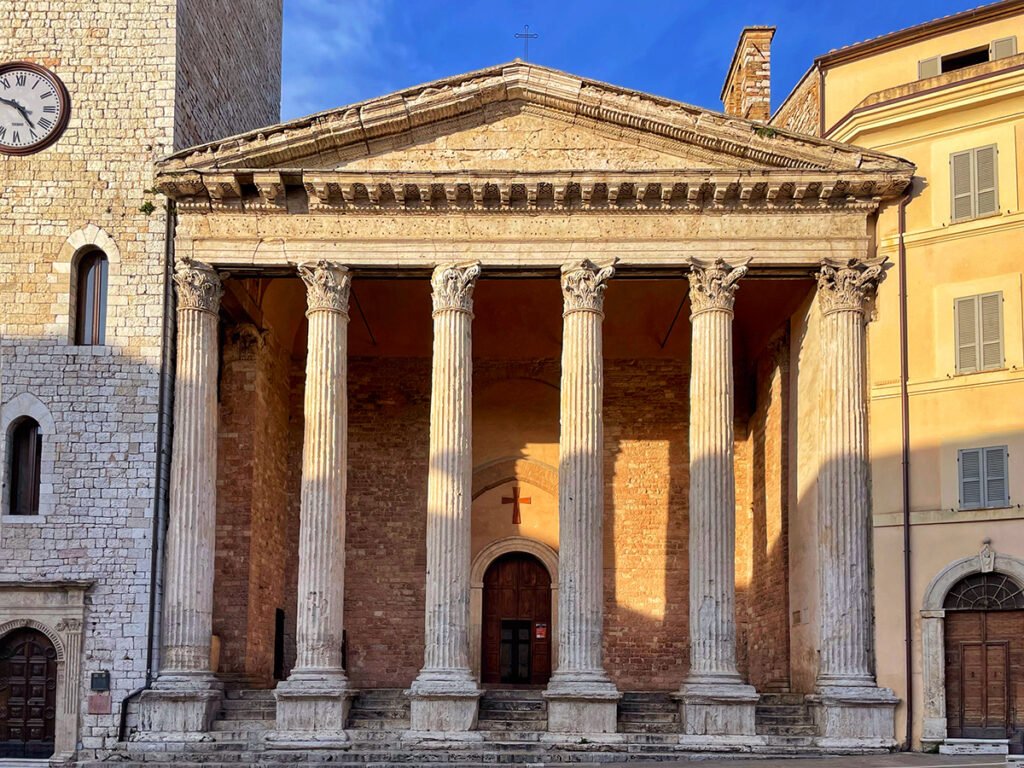
When visiting Piazza del Comune, be sure to visit the Temple of Minerva, as it is the best-preserved Roman structure in the entire region.Converted into the church of Santa Maria sopra Minerva and consisting of a single row of six Corinthian columns, it truly commands attention. Next to it stands the elegant Town Hall, these two buildings also serve as landmarks. Inside the temple, you can still see the remains of some original artwork and frescoes, as well as a statue of Minerva now located in the National Archaeological Museum of Assisi.
Basilica superiore di San Francesco d’Assisi (Upper Basilica of St. Francis of Assisi) Sacro Convento
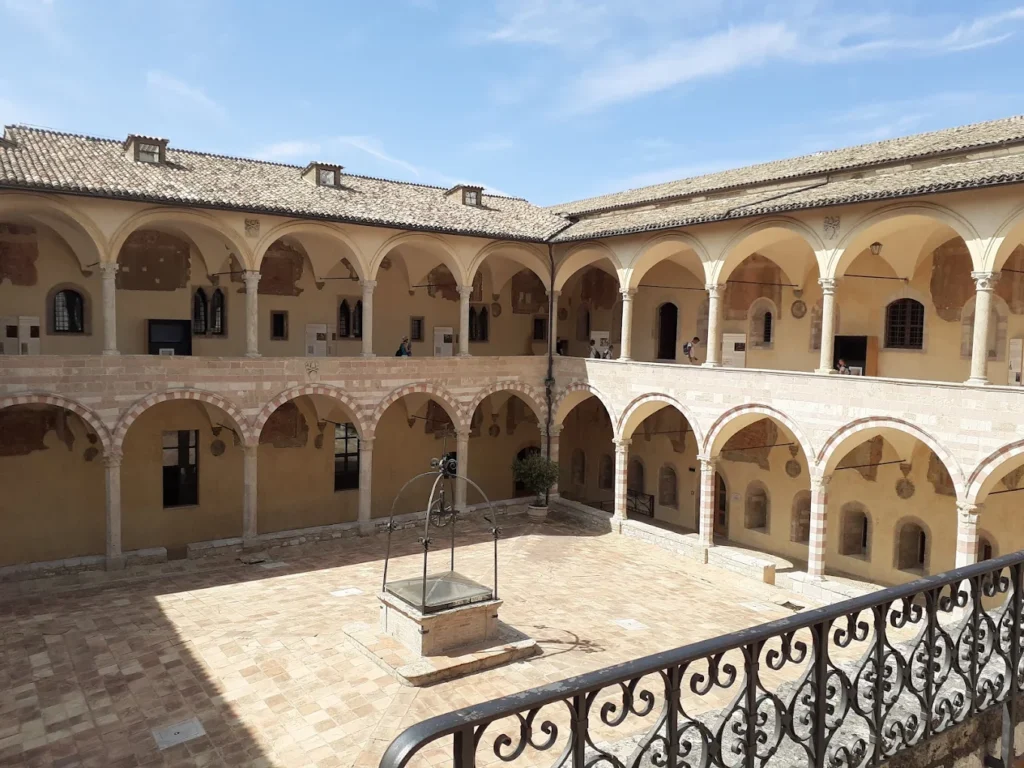
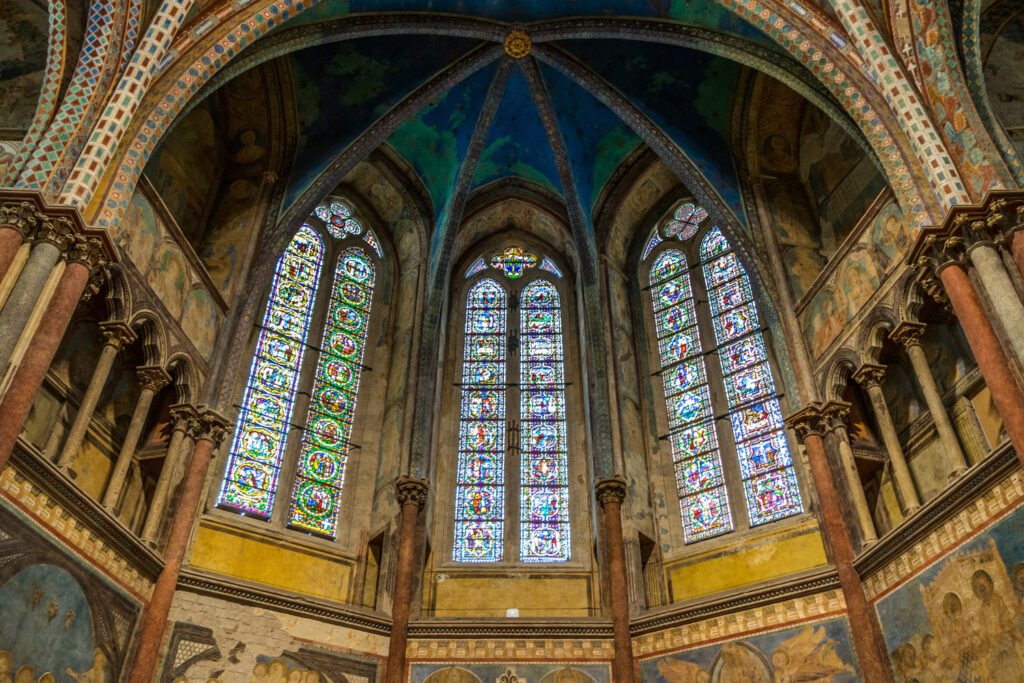
The Basilica of St. Francis The Basilica of St. Francis of Assisi, and especially the Upper Basilica, is one of the earliest examples of Italian Gothic architecture. The stained glass windows in the apse and transept are among the oldest in Italy, crafted by artisans specially brought from beyond the Alps. It is this history of pictorial decoration that makes the Basilica of St. Francis a marvel of diverse art.
Church of St. Peter
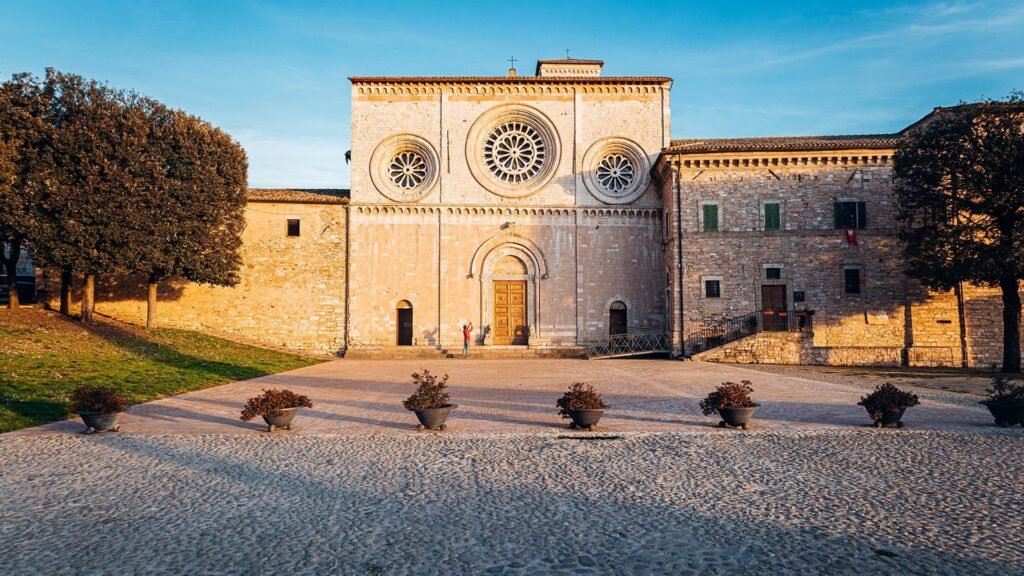
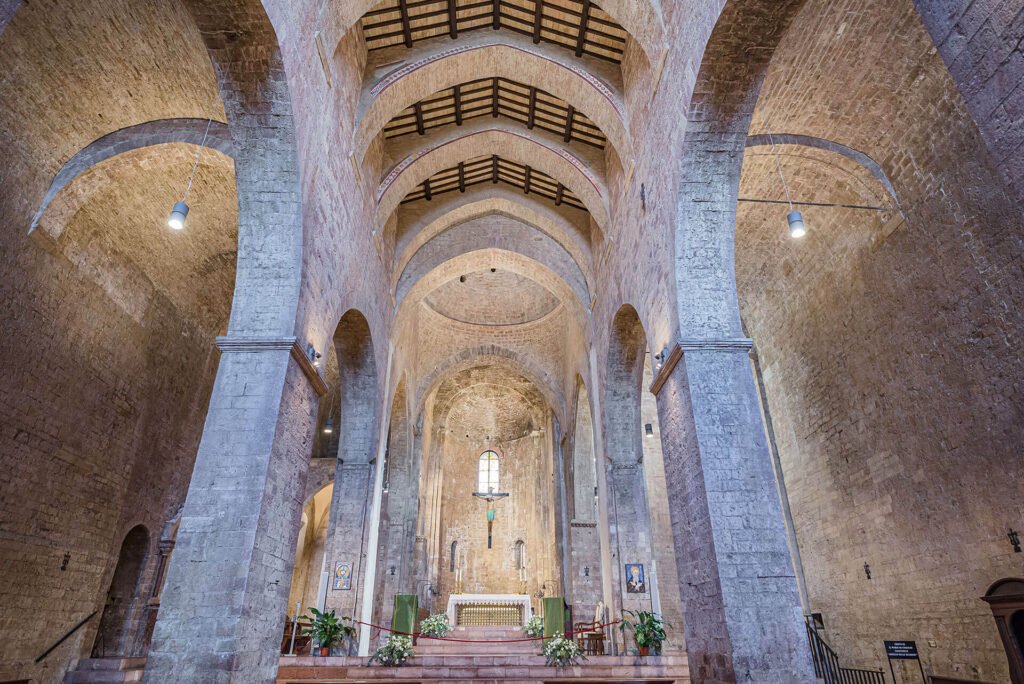
The Romanesque Church of San Peter is a beautiful, historic church with a rich history dating back to the 10th century. It impresses with its Baroque interior and magnificent works of art, including altars by renowned artists. The façade is rectangular and divided by a cornice; it has three doorways, with the central one flanked by two lions. Its upper band has three rose windows.
Roman Forum and Archaeological Museum
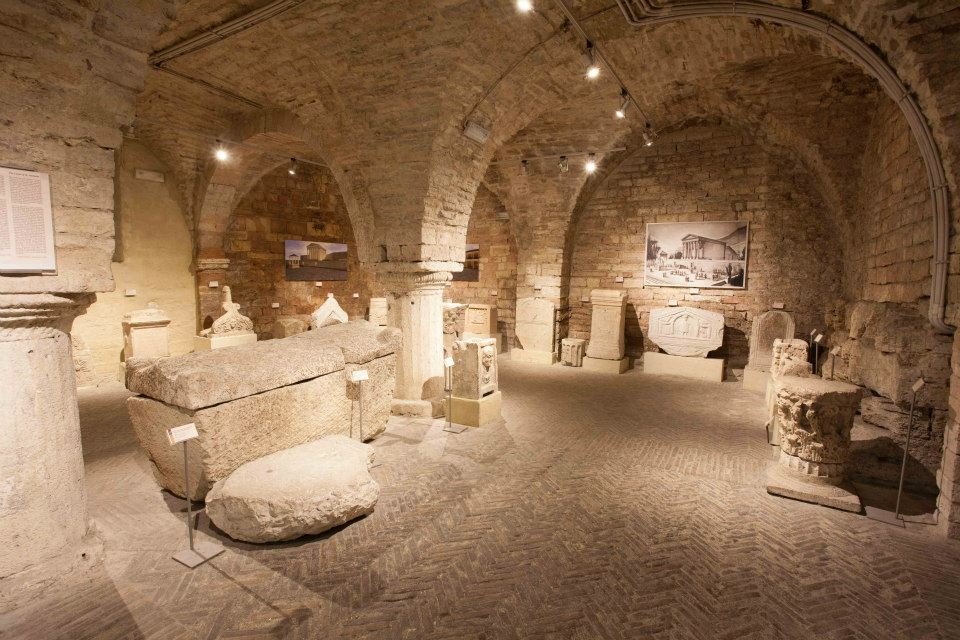
The Roman Forum (Foro Romano), the center of city life, was built in Assisi at the turn of the century BC and AD at the initiative of numerous wealthy patrons. Today, almost twenty-one centuries later, it is still partially visible. The tour begins at the small Archaeological Museum, hidden in the underground Romanesque crypt of the former Church of San Nicolò. Inside, it houses Roman inscriptions, capitals, and several tombstones recovered from the necropolis near Assisi.
Chiesa Nuova
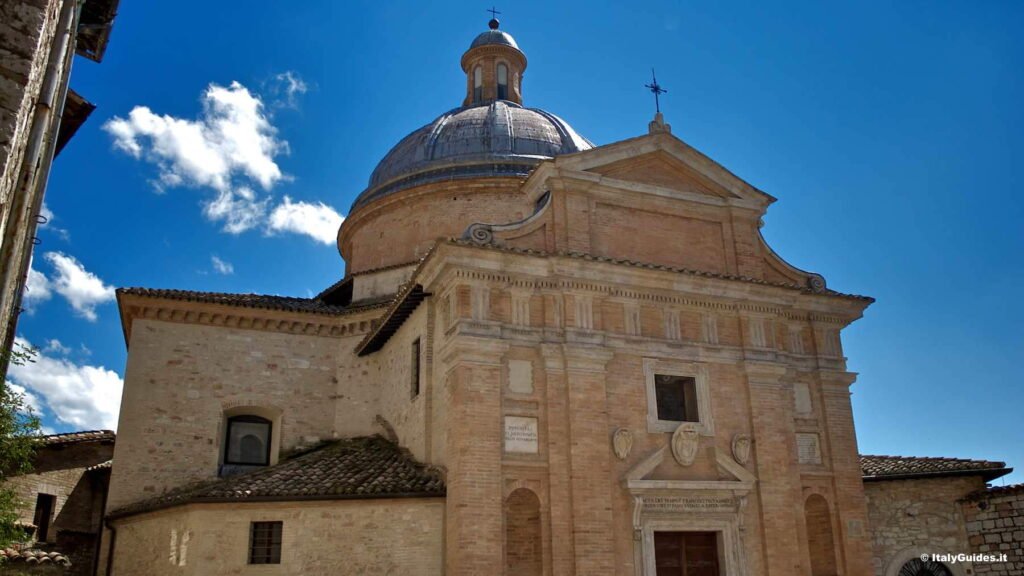
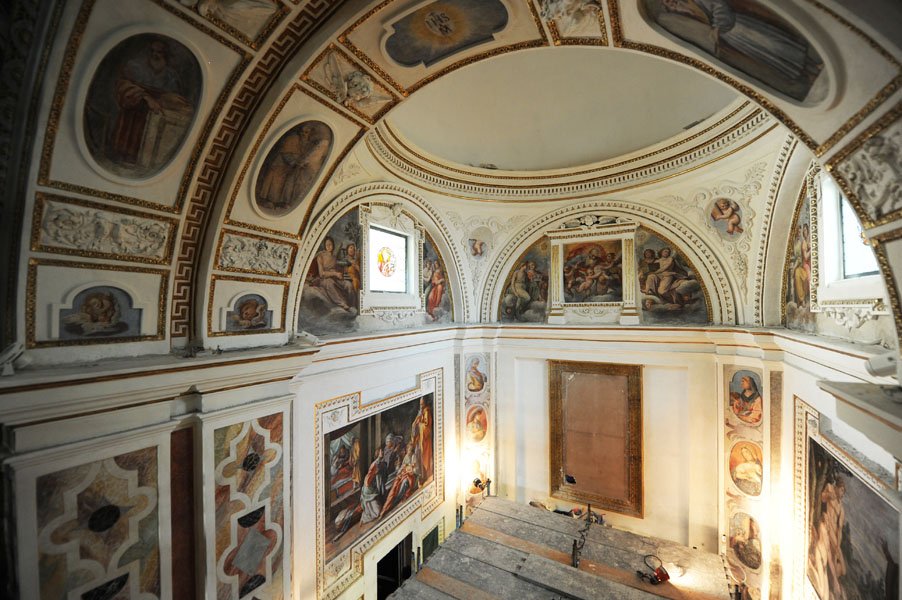
Just southeast of Piazza del Comune, this baroque domed church is a peaceful place for contemplation. Chiesa Nuova is constructed in the early 17th century. It is believed to be built on the site of the house where St. Francis of Assisi was born. The church features a Baroque architectural style, with a simple yet elegant interior. The church is a significant pilgrimage site.
San Damiano
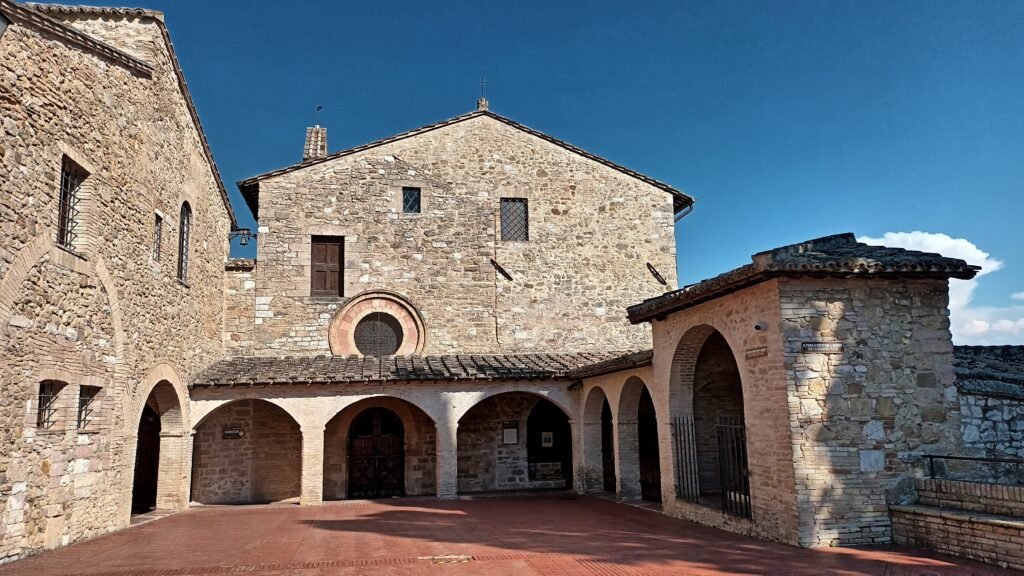
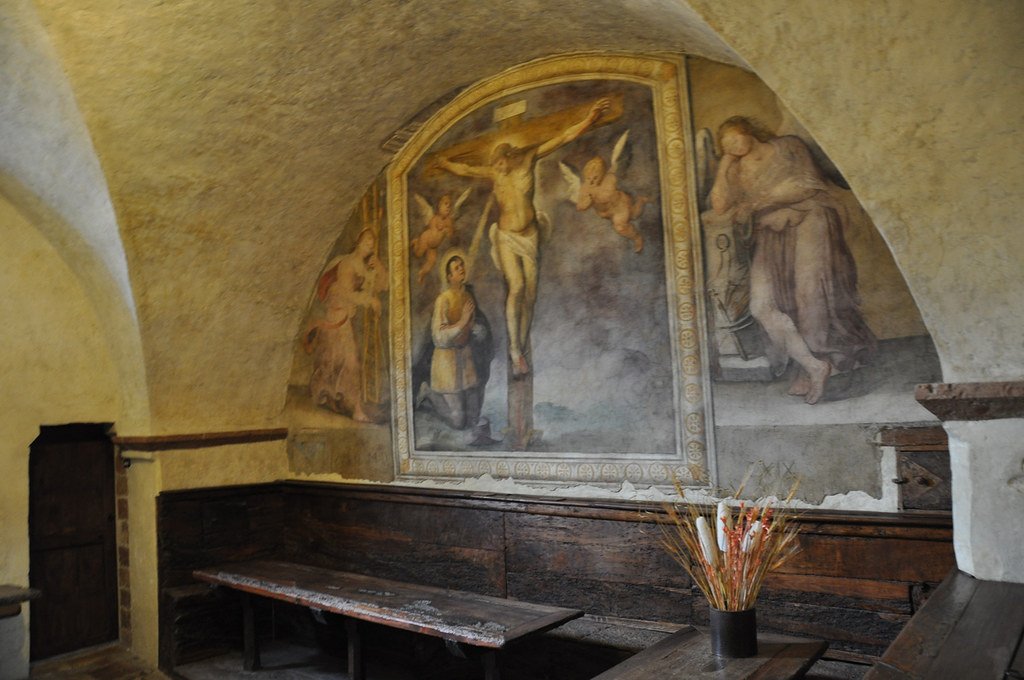
The Sanctuary of San Damiano is probably the place of all the holy places in Assisi that best represents the virtues and values that St Francis left as a legacy to the world. It’s St. Damian Monastery (Convento di St. Damian), where the Saint Francis of Povert started his religious life. He threw away all his property to share with the poor people and advocated his the spirit of poverty, which was born here in this church.
