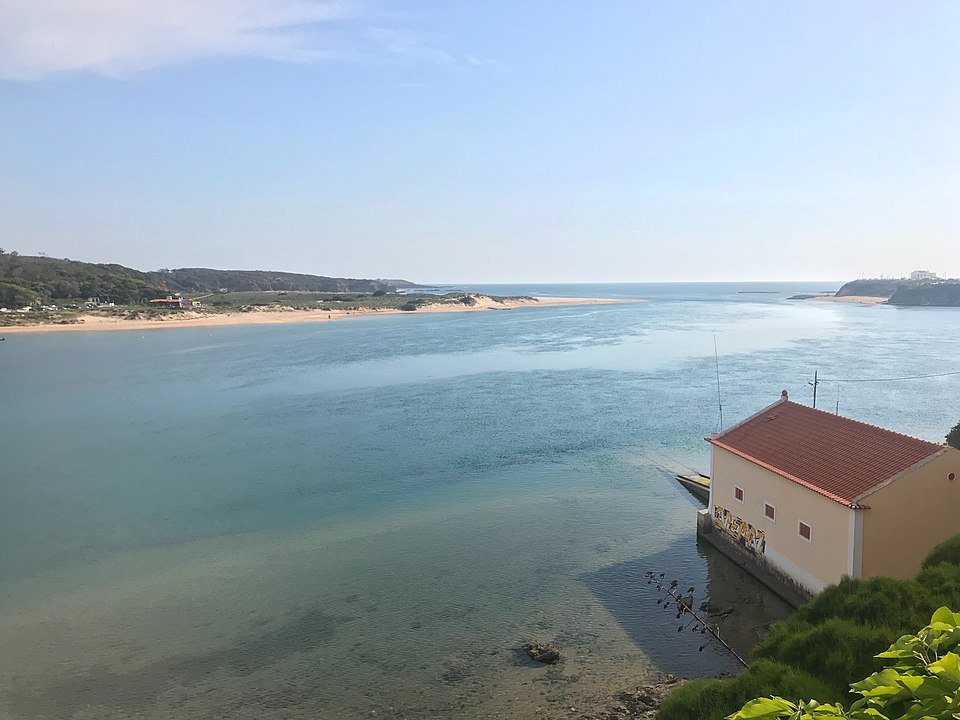
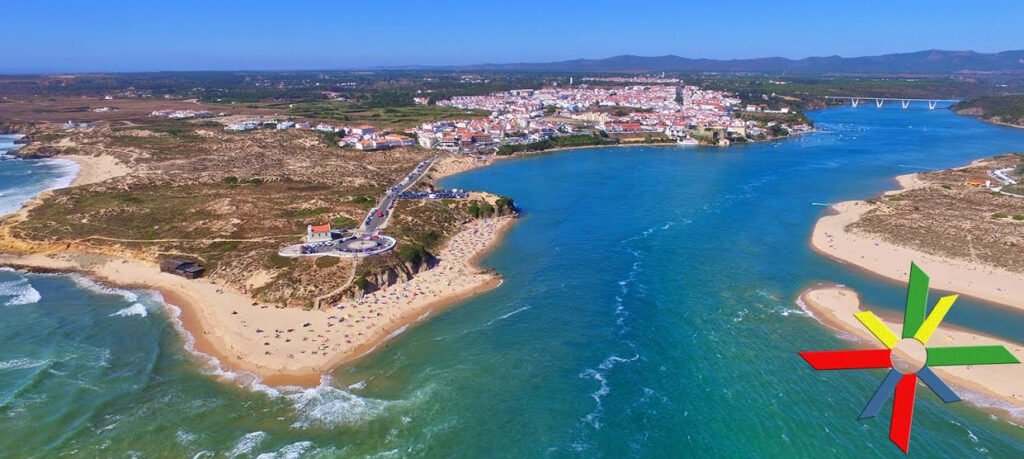
Vila Nova de Milfontes is a town and civil parish (freguesia) in the municipality (concelho) de Odemira, in the Alentejo region of Portugal. The population in 2021 was 5,653, in an area of 76.48 km. Vila Nova de Milfontes is located along the western coast of the Atlantic Ocean, on the northern bank of the Mira River, within the Southwest Coast of Alentejo and Vicenza Natural Park. Vila Nova de Milfontes is characterized by a vast estuary and ecosystem dominated by the Mira River, which provides habitat for numerous species of birds and marine animals, as well as wild boars and foxes living in the surrounding forests.
*A bit of history. One of the oldest parishes in the municipality, founded in 1485 by King John II. The area was created to fulfill an economic and defensive role in the Alentejo, at the mouth of the Mira River, and benefited from its strategic importance as a safe haven. The first inhabitants were prisoners convicted of minor crimes; 50 years later, the parish’s population numbered little more than ten families. The village was frequently attacked by pirates and was completely destroyed in 1590. In response to these attacks, Fort São Clemente was built between 1599 and 1602, during the reign of King Philip II, during the personal union of Spain and Portugal. In the 19th century, during the administrative reforms of Mouzinho da Silveira, the parish was incorporated into the municipality of Odemira. Vila Nova de Milfontes participated in the Portuguese air force, being the starting point of the Lisbon-Macau raid. On April 7, 1924, pilots José Manuel Sarmento de Beires and António Jacinto da Silva Brito Pais departed Campo dos Coitos near Milfontes on their journey to the Far East. In tribute to the pilots and their historic flight, a monument commemorating their journey was erected in Barbacã Square (next to the fort).

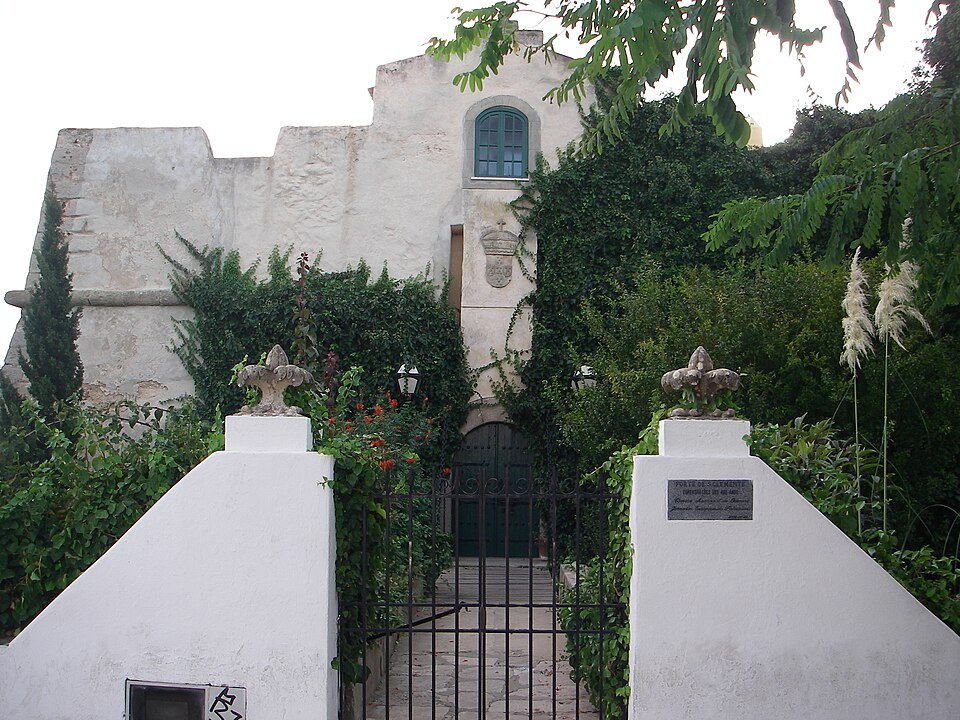
*Fort São Clemente or Fort St. Clement (Portuguese: Forte de São Clemente), also known as the Castle or Fort of Vila Nova de Milfontes (Castelo or Forte de Vila Nova de Milfontes), is located in the town and parish of Vila Nova de Milfontes, in the municipality of Odemira, in the Alentejo Region of Portugal. It was built in 1602 to defend the town from pirate attacks and the mouth of the Mira River. It lost military functions in the 19th century, having been sold to private individuals in 1903. It is considered an ex-Libris of Vila Nova de Milfontes, and was classified as a Property of Public Interest in 1978.
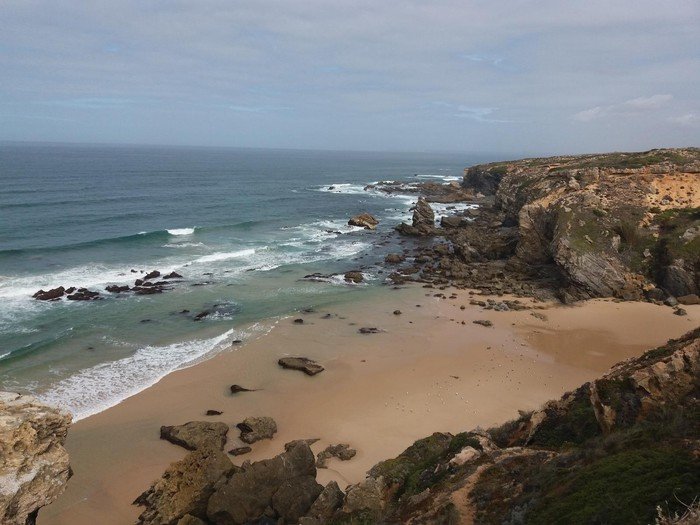
*Economy. A small fishing port still operates along the river, providing a small source of income. Nearby, in Moinho da Asneira, an aquaculture center has developed in the region. Furthermore, sport fishing, diving, hiking trails, horseback riding trails, and off-road sports are promoted among leisure tourists, supported by a local economy based on tourist services. The area also offers eco-tourism, paragliding training, a small safari park, and beautiful hideaways with small waterfalls. This tourist-oriented town, with its small population, flourishes annually during the summer and holiday seasons, attracting visitors with its white sandy beaches, clear waters, and picturesque landscapes.
*António Mantas (1875–1939), politician; adopted son of Vila Nova de Milfontes, he married Aurora Prado, daughter of a landowner and industrialist from Odemira, inheriting the house in Milfontes where he lived. For a decade, he was active in local affairs, supporting Milfontes interests, particularly improving the navigability of the Mira River, where boats tended to run aground.

*The town was once a fishing village. The old houses in the center, low, painted white with blue or beige stripes highlighting the edges of the walls and windows, had a “local” look. But beyond that, the former castle lacks the charm of an old fortress. Outside the center, the newer buildings are less attractive. The only thing that seemed interesting to us was the mouth of the Mira River, with its wide, sandy beach, which was also full of people.
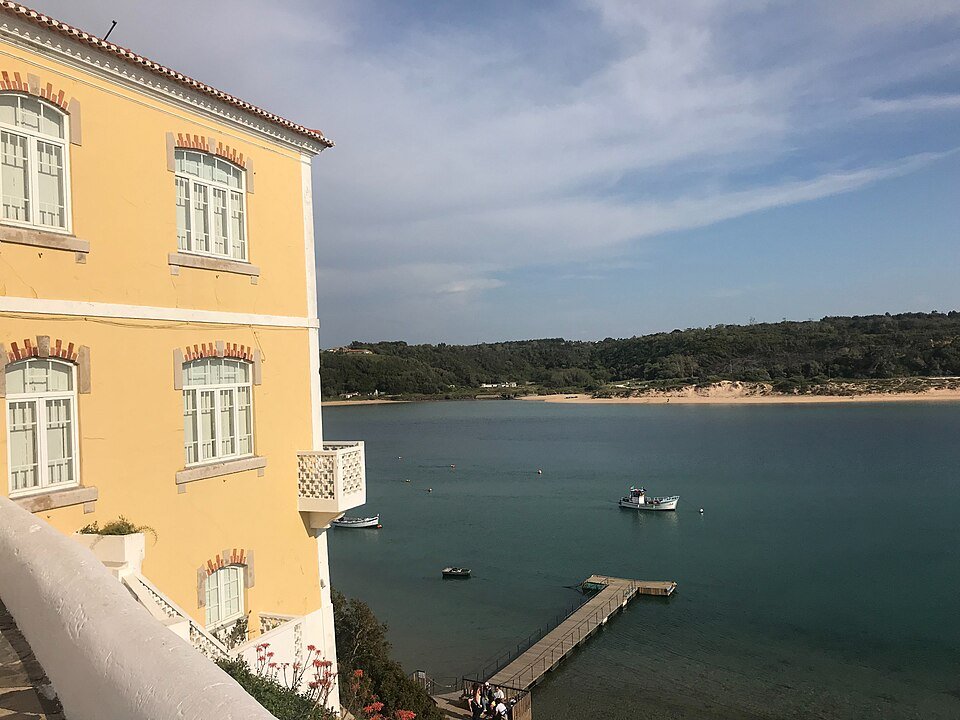
*Vila Nova de Milfontes is a town situated between the Atlantic coast and the mouth of the Mira River, south of Sines. It’s also supposedly a surfers’ paradise, but we haven’t seen any big waves in the mouth of the river, so I guess we’ll have to try further afield, on the ocean.