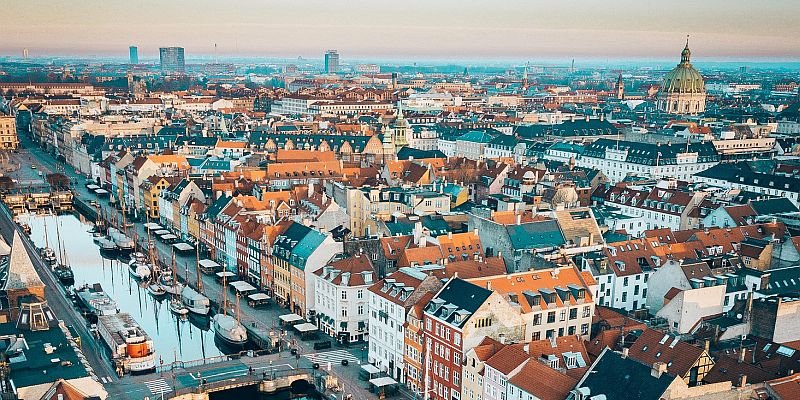
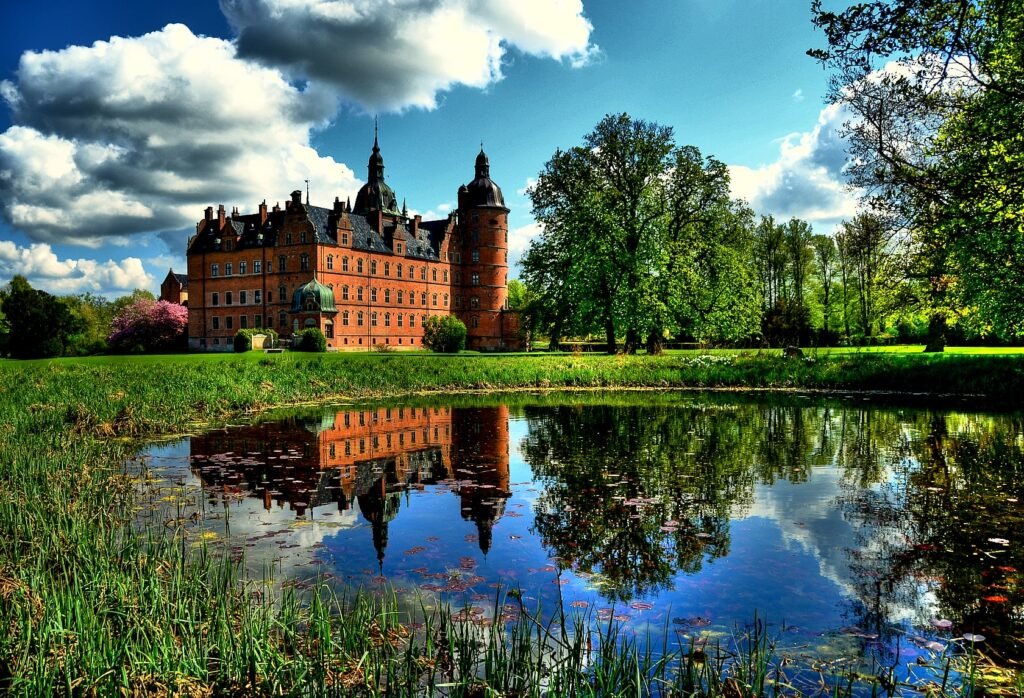
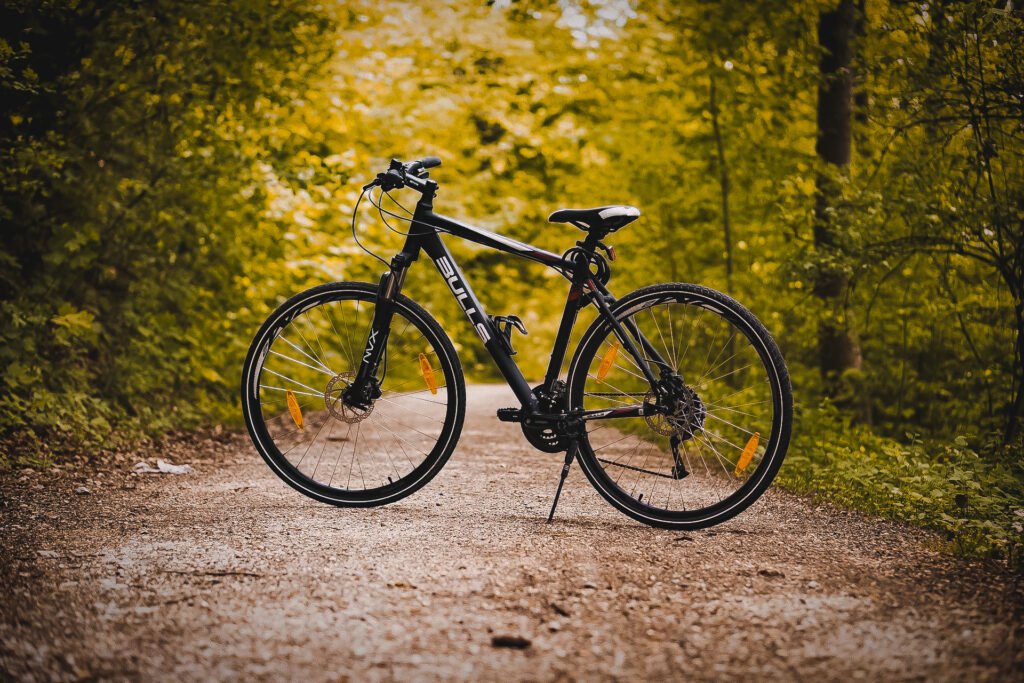
Køge is a town in Denmark on the Stevns Peninsula, in the Zealand region, and the seat of Køge Municipality. From 1970 to 2006, it was the seat of the former Køge Municipality. The town is home to Køge Railway Station and a port. The town is connected to the Berlin-Copenhagen cycle path and the European route EuroVelo 7. The town has developed chemical, food, and pulp and paper industries.
*EuroVelo, the European network of cycle routes. This is a project of the European Cyclists’ Federation, which aims to build nineteen long-distance cycle routes across Europe. The total length of the routes is planned to be almost 90,000 km. The Eurovelo network consists (as of November 2019) of sixteen routes with a total length of over 45,000 km. These routes are intended to foster the development of cycling tourism across the continent; they are built on the existing network of local, regional, and national cycle paths and routes, connecting them into a single system. EuroVelo is co-financed by the European Union. The goal of EuroVelo is to encourage people to travel more often by bicycle instead of by car. While some will be able to experience cycling across the continent, most trips on EuroVelo routes will be local – to school, work, shopping, or for relaxation. However, every trip along such a route will be a little more exciting, as the user will know that from a given point they can easily cycle to Moscow, Athens, or Santiago de Compostela. The construction of EuroVelo routes is led by national, regional, and local authorities and non-governmental organizations in all European countries. The international status of routes selected as part of the EuroVelo network helps secure funding and political support for construction. Only routes approved by the EuroVelo coordinator are entitled to use the name; it is an important symbol of quality for both the cyclist and the route promoter. EV7 – the Sun Trail, runs through the following countries: Norway, Sweden, Denmark, Germany, the Czech Republic, Austria, Italy, and Malta.
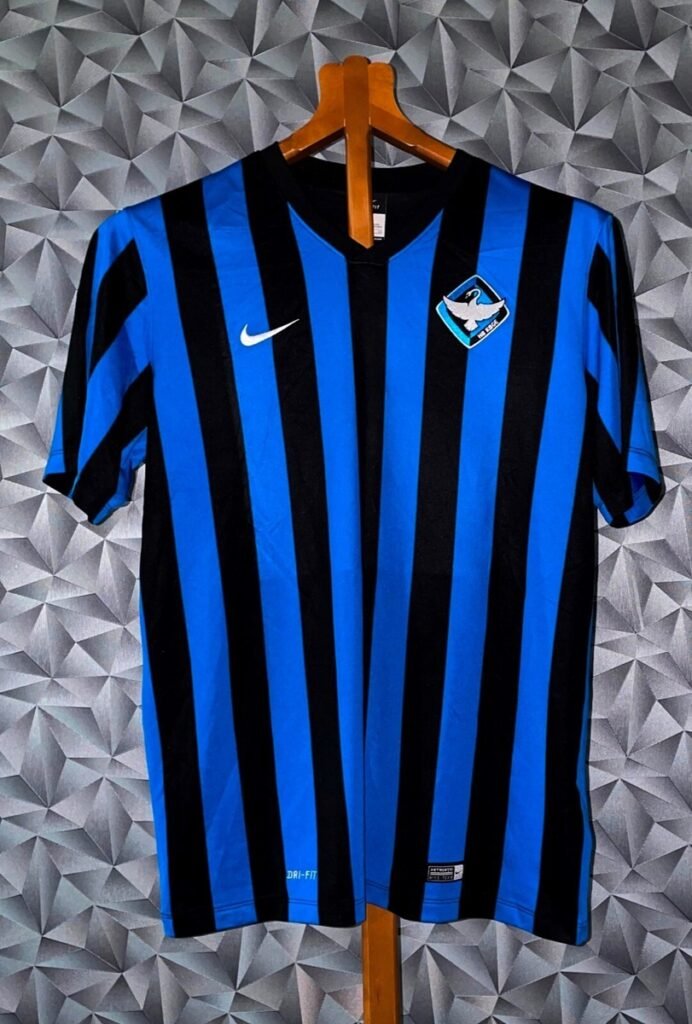
*Køge Boldklub is a Danish football club based in Køge. The club was founded on October 1, 1927. They debuted in the Danish top division in the 1939/40 season, finishing fourth. In the 1951/52 season, they finished as runners-up in the Danish championship. In the 1953/54 season, they became the first club from outside Copenhagen to win the Danish championship. In 1963, they reached the Danish Cup final, losing 1-2 to Boldklubben 1913. In 1975, they won their second Danish championship. In 1976, they played in the European Champion Clubs’ Cup, losing 7-1 on aggregate to Bayern Munich in the first round. In 1979, they reached the Danish Cup final for the second time. In the match for the title, they lost 1-0 to Boldklubben 1903. They last played in the Danish top league in the 2002/03 season. On February 2, 2009, the club declared bankruptcy, but on March 14, they merged with Herfølge BK to form HB Køge. Despite the merger, the youth teams continue to operate under the name Køge BK.
*HB Køge is a Danish football club currently playing in the 1st Division, based in the city of Køge, located in the greater Copenhagen metropolitan area. In March 2009, two teams from the 1st Division, Herfølge BK and the bankrupt Køge BK, decided to merge. The merger officially took effect on July 1, 2009. Thanks to Herfølge’s first-place finish in the second division, HB Køge began playing in the Superligaen in 2009. After a one-year stint in the top flight, the team returned to the 1st Division. In the 2011/12 season, the team played in the Superligaen again, but after a year, they returned to the 1st Division, where they continue to play today (as of 2023).
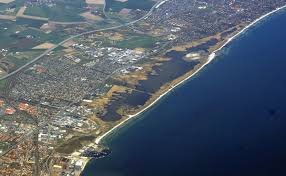
*Køge is a historic port town in Denmark, located on the east coast of Zealand, approximately 40 km south of Copenhagen. Officially, the town was founded in 1288 by the then King of Denmark, Eric VI. Thanks to its favorable location on the Køge Bay, which juts into the interior of the island, the town quickly became one of the region’s most important trading centers. In 1677, a famous naval battle took place in Køge Bay, in which Danish ships commanded by Admiral Niels Juel defeated the Swedish fleet sailing towards Copenhagen. The battle was observed by the Danish King, Christian V (1646-1699), from the tower of the town church. Today, Køge is part of the Copenhagen metropolitan area and is connected to the Danish capital by a suburban railway system.
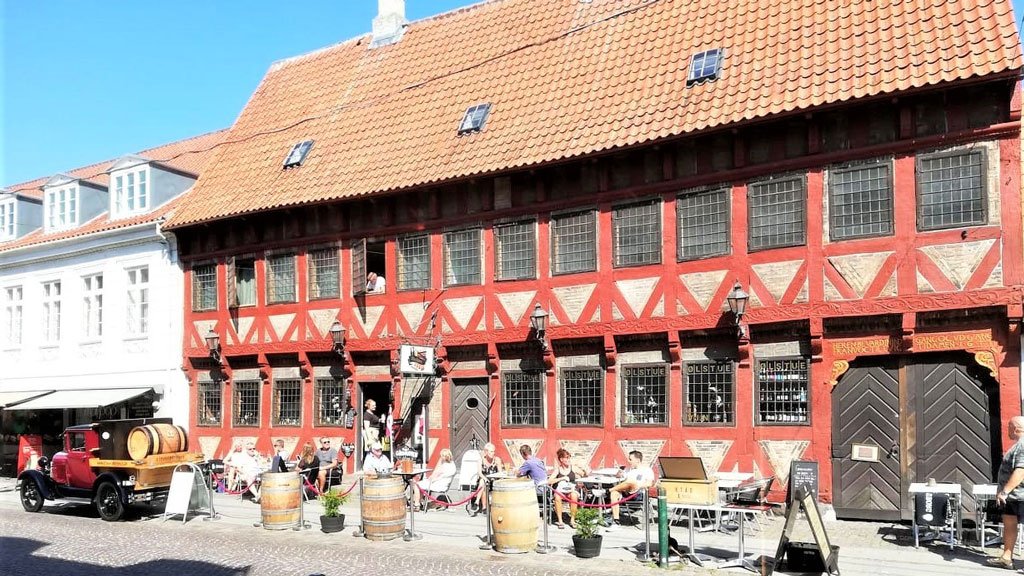
*The heart of the city is the market square (Køge Torv – the largest medieval square in Denmark), surrounded by picturesque half-timbered houses. In the center of the square stands a monument to King Frederick VII (1808-1863), created in 1869 by the Danish sculptor Hermann Wilhelm Bissen. Køge is also home to one of the oldest half-timbered buildings in Denmark, built in 1527. It can be seen at Kirkestræde 20. Half-timbered construction was very popular among Danish builders. The load-bearing function in such houses is provided by a system of wooden posts and beams connected by horizontal and diagonal beams. Køge boasts one of the largest and most valuable concentrations of this type of buildings. Other noteworthy monuments in the city include St. Nicholas Church, built at the turn of the 14th and 15th centuries. Nicholas Church (Sankt Nicolai Kirke), the Municipal Museum and the 17th-century Richters Gæstgivergård manor house, a masterpiece of half-timbered architecture.
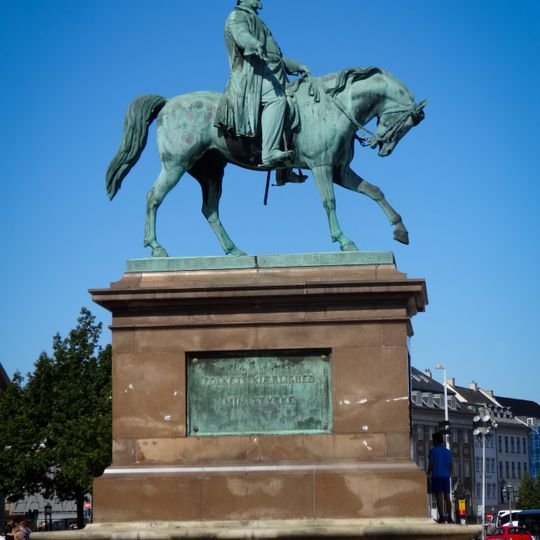
*The monument to King Frederick VII (1808-1863) is located in Køge, Denmark, in the center of Denmark’s largest medieval square, Køge Torv. It was created by Danish sculptor Herman Wilhelm Bissen and unveiled in 1869. It depicts the king on horseback, a characteristic of Danish royal monuments, although it is not the equestrian monument in front of Christiansborg (that is, the monument to Frederick V). It is worth visiting to see this valuable monument and the historic half-timbered houses surrounding it.
*Køge is famous for its vibrant old town, brimming with inspiration for a wonderful vacation. Visit local museums, admire beautiful, old, well-preserved houses, and don’t forget the modern architecture of our newer neighborhoods. Køge’s spectacular market square is unmatched by any other city.