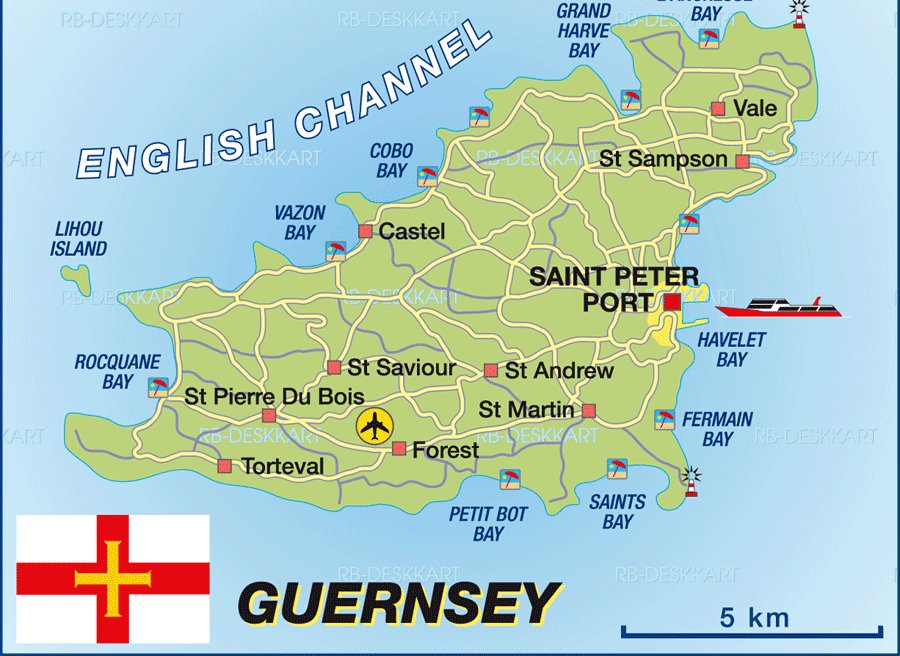
Guernsey, an island in the English Channel, in the Gulf of Saint-Malo, is the second largest of the Channel Islands and the largest of the islands of the Bailiwick of Guernsey, a British Crown dependency. The island’s largest town, St. Peter Port, is the capital of the territory. The island has an area of 63.4 km². The population in 2022 was approximately 63,500. The island is approximately 45 km from the French coast and just over 110 km from the English coast. In the southern part, the terrain rises to about 90 m above sea level, with a cliff coast. The terrain gradually slopes northward. It has a maritime climate. The economy is largely based on tourism and agriculture. Greenhouse cultivation of tomatoes, grapes, and flowers, as well as dairy farming, is practiced here. The island has an airport. There are ferry connections between Guernsey and other islands of the archipelago (Jersey, Alderney, Sark), ports in England (Poole, Portsmouth) and France (Saint-Malo, Cherbourg).
The islands of Guernsey, Alderney, and Sark constitute a British Crown Dependency. The head of state is King Charles III, represented by the Lieutenant Governor, who is also Commander-in-Chief of the Army. Legislative power is vested in Parliament (the Estates), while judicial power is vested in the Royal Court and, at the local level, Magistrates’ Courts. The territory is divided into 10 districts. Public holiday: May 9, Liberation Day.
The territory is part of the Common Travel Area, a passport-free zone that allows citizens of the United Kingdom, Guernsey, Jersey, the Isle of Man, and Ireland to travel freely between these countries using any form of photo identification.Citizens of other countries traveling to the island are required to have a passport, with some exceptions. In limited circumstances, citizens of the European Economic Area and Switzerland may travel with an ID card (this privilege is available, for example, to those undergoing naturalization in the UK). There are no routine border checks.
Aquarium – La Vallette, St Peter Port – an aquarium located in an old German tunnel.
Beau Sejour – Beau Sejour, St Peter Port – a leisure center on the island overlooking the east coast. It features a cinema, theater, large indoor swimming pool, saunas, and tennis courts.
Bowl Centre – Victoria Avenue, St Sampsons – a sports stadium.
Coach House Gallery – La Route du Longfrie, St Peter – a gallery of oil and watercolor paintings. New artists exhibit their work here each month.
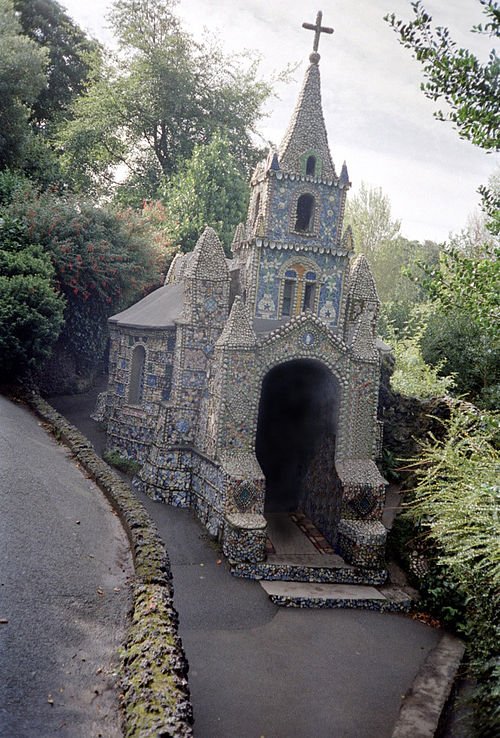
Little Chapel – Les Vaubelets, St Andrew – one of the smallest chapels in the world, built in 1923.
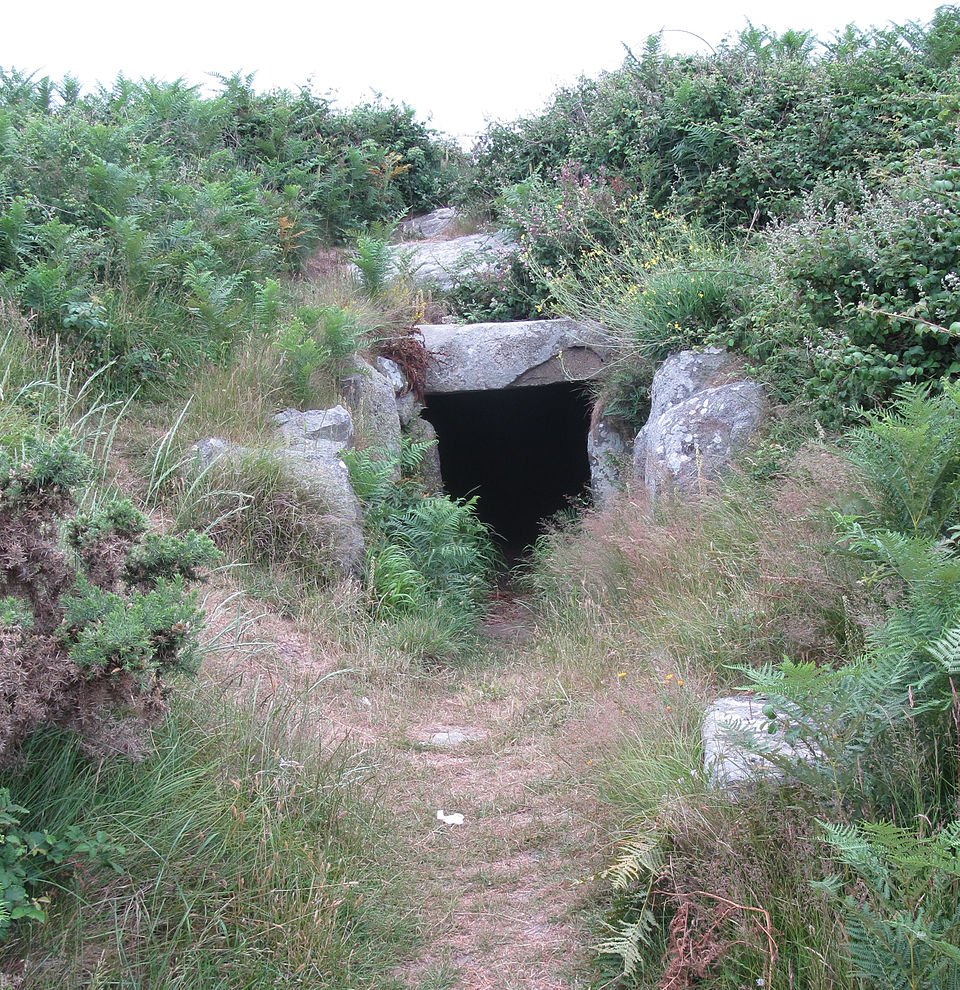
La Varde, a Neolithic passage tomb located in Guernsey, is the largest megalithic structure found on the island. The tomb was accidentally discovered in 1811 by soldiers constructing ramparts. It is 10 meters long and over 3 meters wide at its widest point. It consists of a single chamber approximately 2 meters high, with an eastward-facing entrance, gradually widening inward. At its northwest end is a smaller, oval chamber. The chamber’s supporting stones support massive ceiling boulders, the largest of which weighs over 10 tons. In 1837, Frederick Corbin Lukis conducted archaeological excavations inside the tomb, discovering numerous human bones, over 150 fragments of pottery, as well as stone and bone artifacts. Stratigraphic data indicate that the tomb was in use for a long period, from the Middle Neolithic to the early Bronze Age (3500–2000 BC).
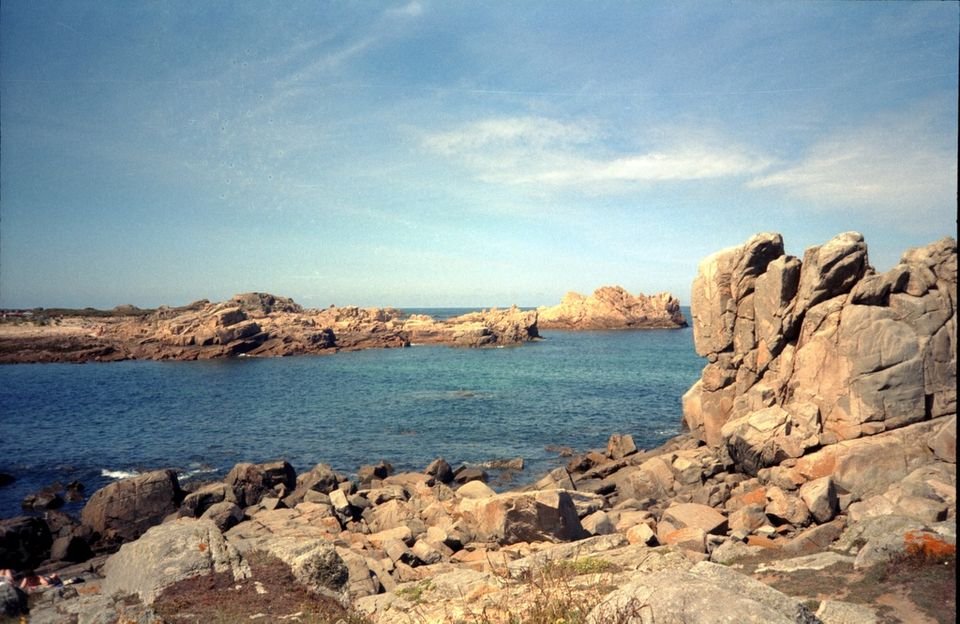
There’s no denying that summer is the best time to visit Guernsey. However, if you plan your visit between the second half of June and the end of August, you should expect plenty of other tourists to drop in. So, if you want a more intimate experience, choose May or September.
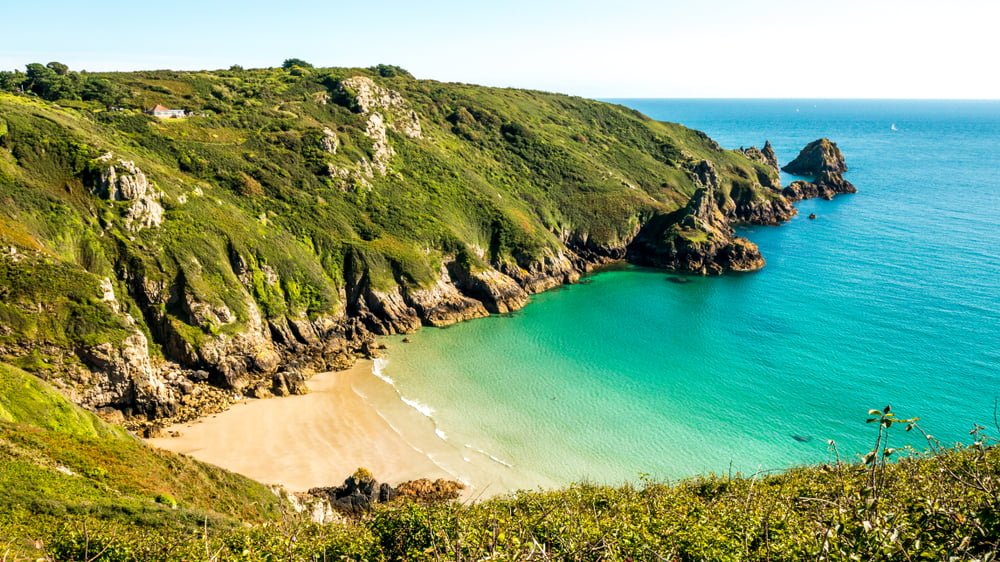
There are many beautiful beaches in Guernsey. So which one should you choose to enjoy the most stunning views and the best conditions for sunbathing and swimming? Here are a few beaches that are pleasing to the eye and perfect for sunbathing and swimming.
You’ll definitely love the wide beach of St. Brelades Bay, considered one of the most beautiful in Britain. Here, you’ll find the exclusive and historic 19th-century St. Brelade’s Bay Hotel. Built by the Germans as their headquarters during their occupation of the island, it’s a must-see for St. Brelades Church, with its Fishermen’s Chapel and elevated cemetery. From here, you can admire the stunning panoramic view of the beach.
One of the island’s most recognizable beaches is Vazon. It’s located in the northwest. It’s known for its long, wide beach and gentle slope. This makes Vazon an ideal destination for families with children. Surfers also enjoy this part of the island, especially those just starting out in the sport.
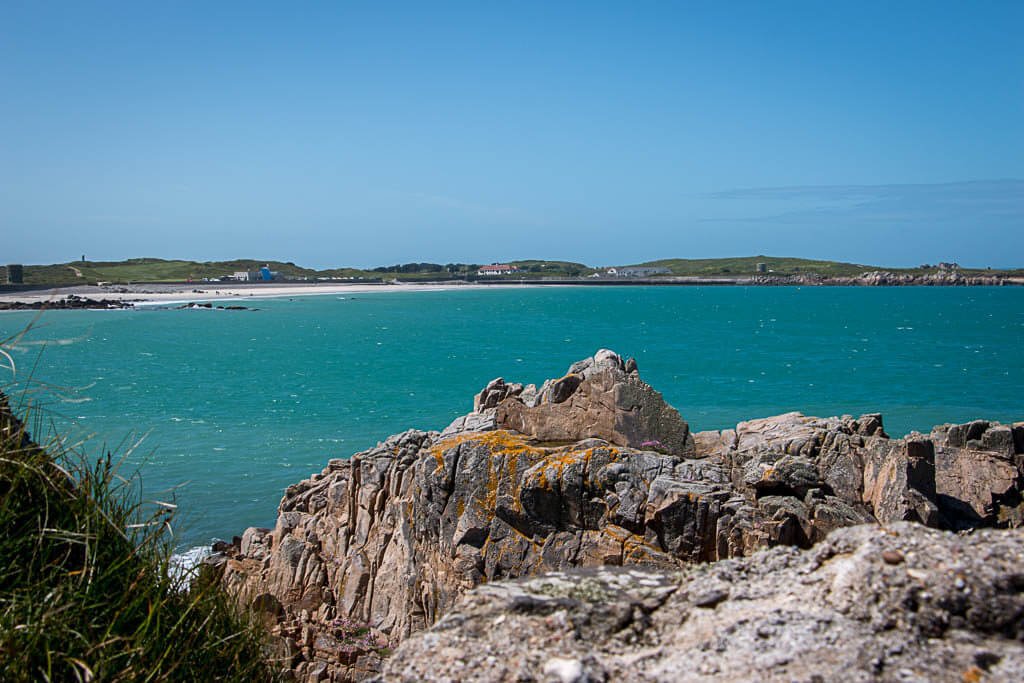
Grandes Rocques Beach is also worth a visit. Located a little further east of Vazon, it will delight you with its expansive panorama, fine white sand, and the rustling grasses that grow nearby. Also nearby is the Portinfer Dunes Nature Reserve, with its beautiful dunes.
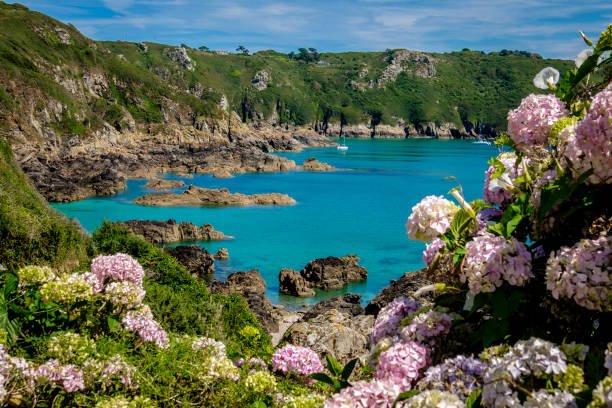
Moulin Huet Bay is one of the more surprising spots in the south of the island. Some people think of the Caribbean. True, there are no palm trees, but the seawater can take on an incredibly intense blue color. Dark rocks contrast with the white sand.
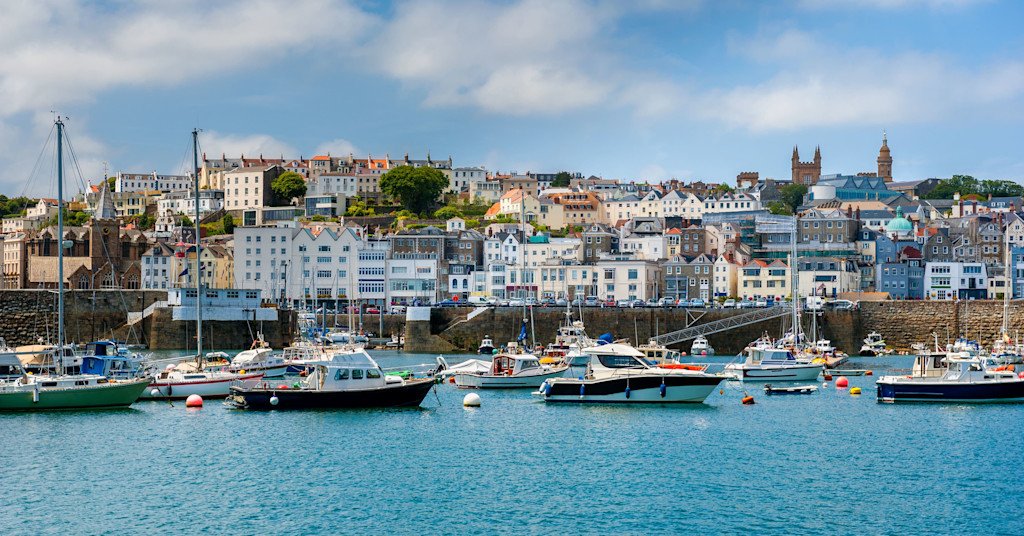
Who is Guernsey for? A trip to Guernsey is a great option if you’re looking for unique travel destinations. The island is also filled with a significant number of historical sites. So, if you enjoy sightseeing, you can easily spend your free time there. Guernsey also boasts stunning nature and views. You’ll be able to relax on one of the beaches or stroll through the beautiful landscapes.