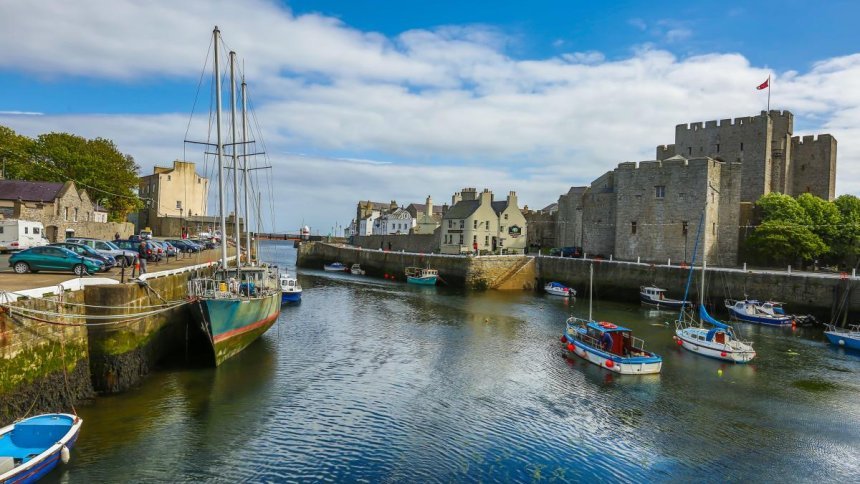
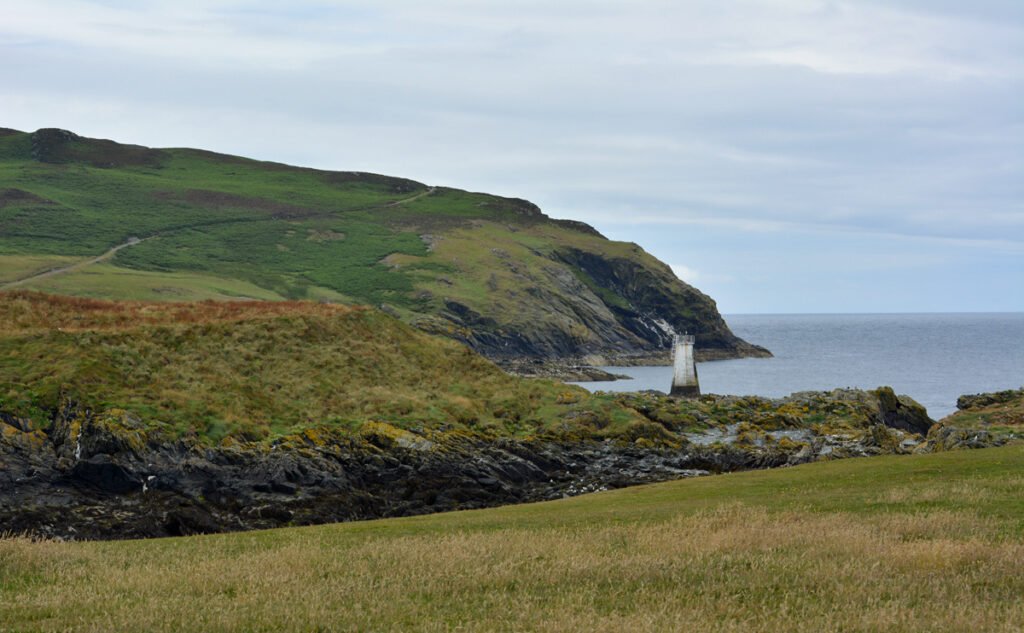
The Isle of Man is a British Crown dependency located on the Isle of Man, part of the British Isles archipelago, in the Irish Sea between Great Britain and Ireland. As a territory, it is not legally part of the United Kingdom of Great Britain and Northern Ireland, nor was it part of the European Union before Brexit (Mann citizens were not represented in EU lawmaking processes, but they could exercise some of the rights granted by EU citizenship).
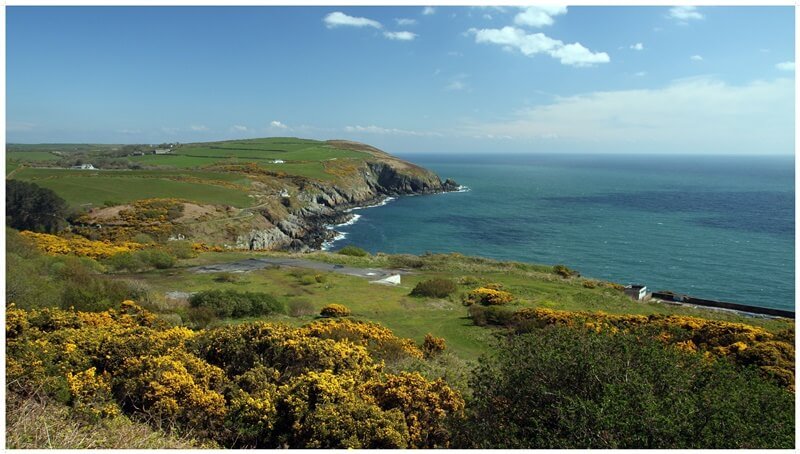
The island’s climate is temperate and warm maritime, with relatively small temperature variations. The coldest month is February, with an average temperature of 3.4°C, and the warmest are July and August, with an average temperature of 12.4°C. The highest recorded temperature on the island was 29°C. Snowfall is rare in winter. Fog is common, particularly on the south and east coasts. Average annual rainfall on the southeast coast is 863 mm, but it varies with altitude, reaching more than twice that amount at the island’s highest peak.
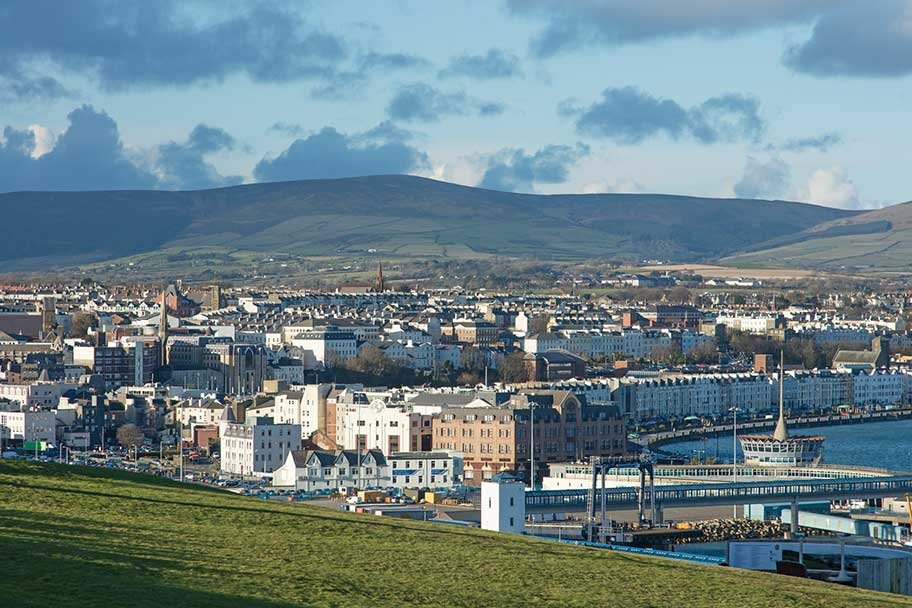
Economy. For centuries, the main source of income for the island’s inhabitants was the sea: shipping, fishing, and the smuggling of imported goods, bypassing high tariffs, to England. After 1765 and the acquisition of the Lords of Man by the British Crown, a period of ruthless suppression of smuggling ensued, and the islanders were forced to turn their attention to other economic sectors: agriculture, livestock breeding, and mining.
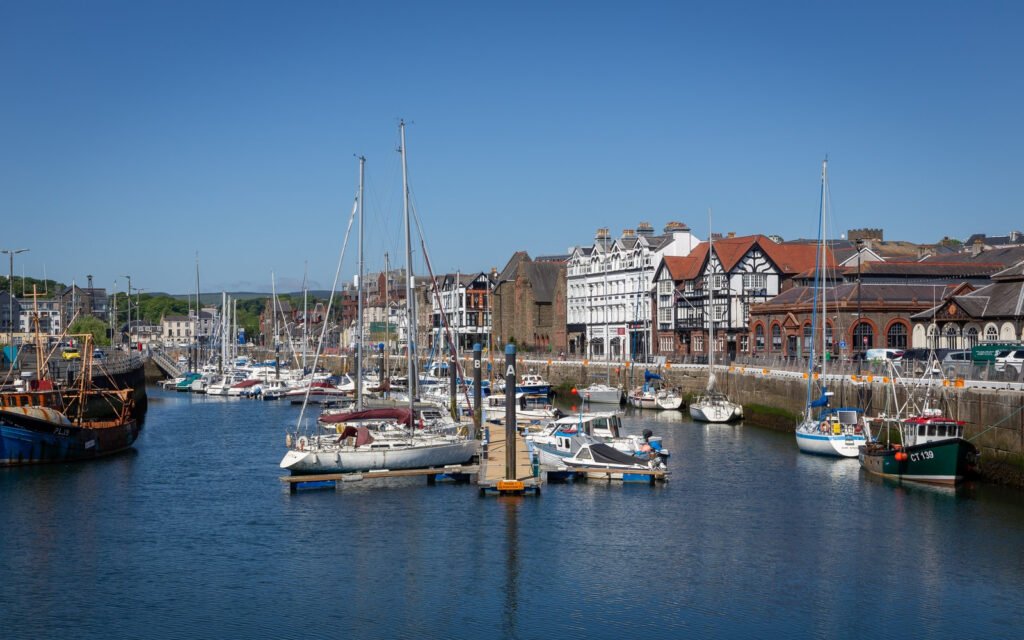
Transport. The Isle of Man can be reached by air or sea. Ronaldsway Airport is located in the southeast of the island, near Derbyhaven. Direct flights to the island are available from numerous airports in the UK, Ireland, and Guernsey. The main seaport is located in the capital, Douglas. Ferries to the island depart from the UK and Ireland. The ferry company operating these crossings is one of the oldest in Europe. Outside of towns, there are no speed limits on the roads.
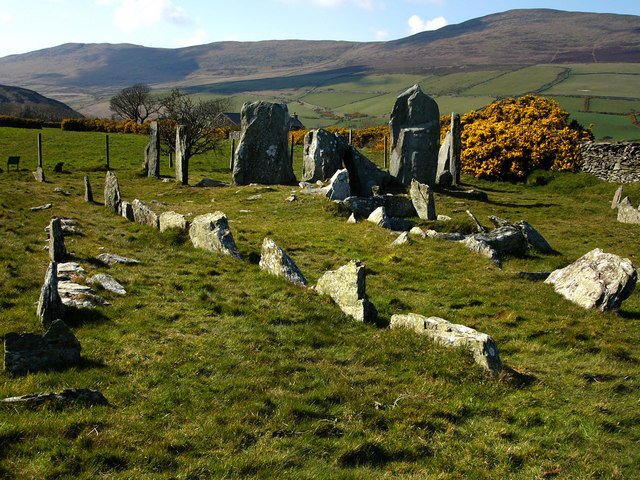
Cashtal yn Ard (“Castle on the Hill”) is a Neolithic tomb located near Maughold in the northwest of the Isle of Man. Dating to the Late Neolithic period (ca. 2000 BCE), the west-oriented tomb consists of a vestibule and five burial chambers. Originally, the entire structure was covered with a stone mound (cairn), but this was dismantled over the centuries for building materials. Only the stones surrounding the chambers survive today.
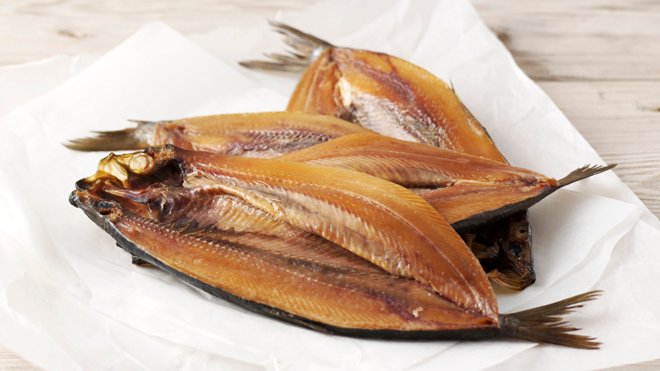
The cuisine of the Isle of Man is strongly linked to its maritime location and agricultural traditions. It features simple yet delicious dishes based on local ingredients, such as seafood, lamb, and dairy products. The most characteristic dishes of the Isle of Man include:
Manx Kippers – smoked herrings from the local catch
Priddhas an’ Herrin – a classic potato dish
Loaghtan Lamb – a unique lamb from the Manx Loaghtan sheep
Manx Cheese – The Isle of Man is renowned for its cheeses, especially cheddar and smoked cheeses.
Bonnag – a traditional soda bread or cake, often with raisins and spices.
Manx Ale – local craft beers, such as those from Bushy’s Brewery and Okell’s Brewery, which have been brewing beers based on traditional recipes for centuries.

TT RACES
The International Isle of Man TT Race is a prestigious motorcycle race that has been held on the Isle of Man almost continuously since 1907. For many years, it has been considered one of the most important and demanding events in the world of motorsport. The Isle of Man is known worldwide for these extreme competitions, which annually attract crowds of motorsport fans and riders willing to take on the challenge of this dangerous route. Right at the entrance to the trail leading to the island’s highest peak, stands a statue of Joey Dunlop – a legendary motorcyclist who won this route 26 times. Nearby, you can also see plaques commemorating riders who lost their lives during the race. Unfortunately, the list of casualties is not short, as the Isle of Man TT is considered the world’s most dangerous race – over 260 participants lost their lives in the first edition. The race route is approximately 60 kilometers long, and its course can be seen on the map below.
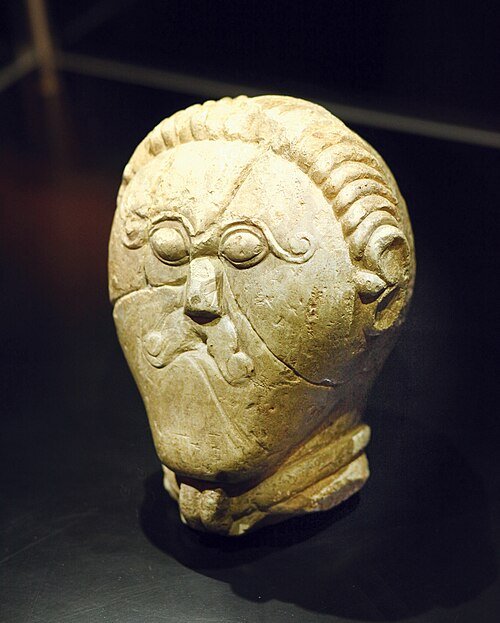
A bit of history. The Isle of Man has a rich and fascinating history stretching back thousands of years. The first traces of settlement date back to the Stone Age, and even in Celtic times, the island became an important center of culture and trade. From the 9th century, Man fell under the influence of the Vikings, who established their own kingdom here. In 979, Tynwald, the oldest continuously operating parliament in the world, was established. Over the following centuries, the Isle of Man changed rulers several times, first falling under Norwegian rule, then Scottish rule, until finally falling under English control in the 14th century. Although it was never officially incorporated into the United Kingdom, it has been a Crown Dependency since the 18th century, meaning it retains a broad degree of autonomy in many matters, including law and internal policy. Today, the island is known not only for its unique political status, but also for its rich Celtic traditions, unique culture and the world-famous Isle of Man TT motorcycle races, which attract both competitors and motorsport enthusiasts from all over the world every year.