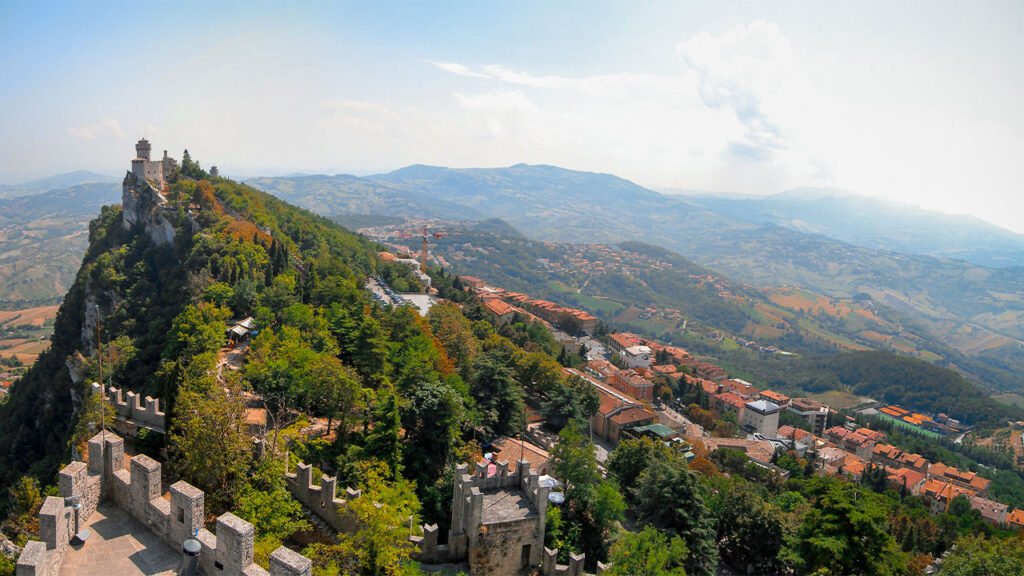
San Marino, also known as the Most Serene Republic of San Marino, is a landlocked country in Southern Europe, an enclave within Italy. Its capital is the city of San Marino. San Marino is one of the smallest countries in Europe, smaller only by Monaco and the Vatican City. San Marino is an enclave within Italy. The border with the Italian regions of Emilia-Romagna and Marche is 39 km long. Besides Vatican City, it is the only enclave country in Europe. It is located in mountainous terrain within the Apennine Mountains. The highest peak, Monte Titano, reaches 749 m above sea level. San Marino’s climate is humid subtropical, with warm summers and mild winters. Two rivers flow through San Marino: the San Marino and the Marano. The San Marino River is a tributary of the Marecchia River, while the Marano River flows into the Adriatic Sea.
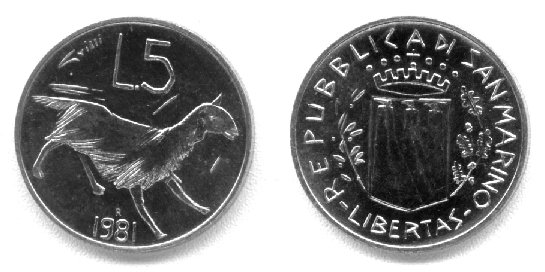
Economy. Per capita GDP and standard of living are similar to those in Italy. The former reached $32,000 in 2000, more than half of which came from tourism. San Marino maintains the lowest unemployment rate in Europe (2.6% in 2001), and the state budget records annual surpluses. There is no public debt. Income taxes are significantly lower than in Italy, so citizenship rules are extremely restrictive. Based on agreements with Italy, San Marino had the right to issue and use the country’s currency, the lira, and to produce the equivalent Sanmarinese lira. After the creation of the eurozone in 2002, the Council of the European Union concluded a similar agreement regarding the new currency. San Marino’s euro coins, available in small quantities, are highly collectible due to their low mintage. San Marino is located in the Northern Apennines. Volcanic soils dominate, which are well-suited for viticulture, which, combined with the favorable climate, results in highly developed viticulture. Due to San Marino’s mountainous location, it offers favorable conditions for the development of tourism. In addition to its natural assets, tourism in San Marino is also thriving thanks to its numerous historical monuments. Other attractions include the Philatelic and Numismatic Museum and the Museum of Painting. Folklore also plays a significant role, especially during holidays and anniversaries.
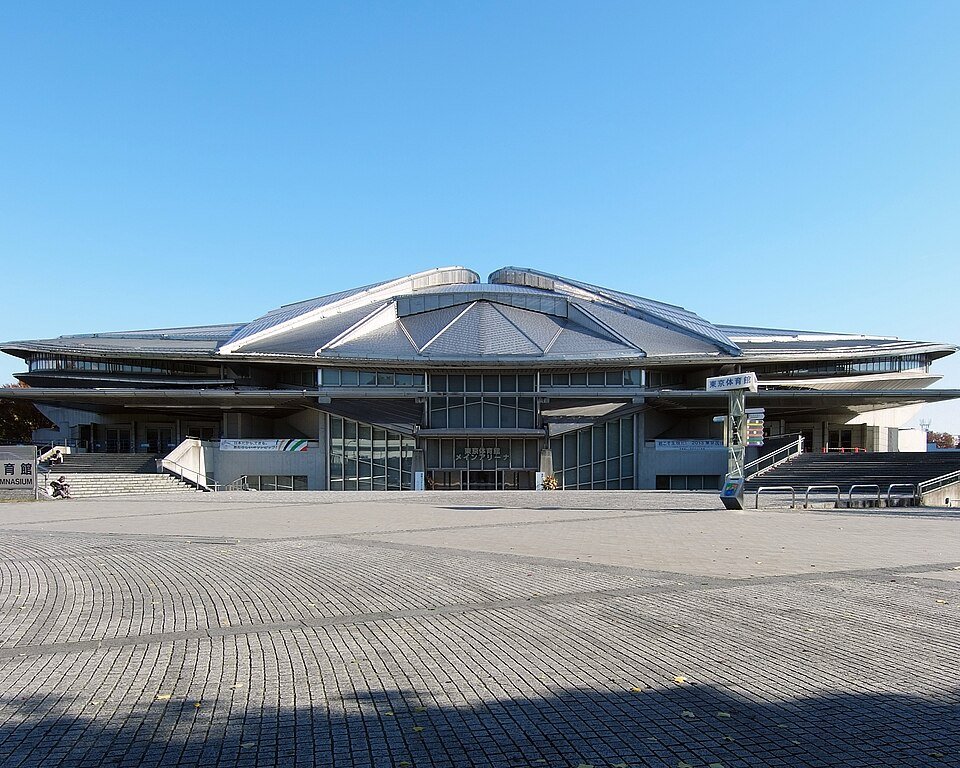
Sport, XXXII Summer Olympic Games 2020. San Marino’s representatives won three medals at the XXXII Summer Olympic Games 2020, held in Tokyo, Japan, from July 23 to August 8, 2021: bronze in women’s trap, silver in mixed team trap, and bronze in men’s wrestling. These are historic Olympic medals, the first for San Marino in Olympic history. This makes San Marino the least populous country ever to achieve such success in Olympic history.
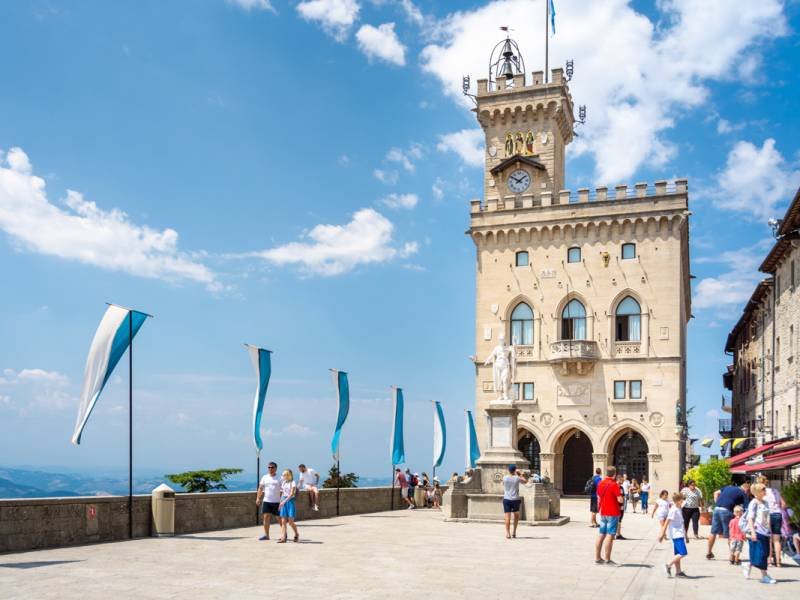
Piazza della Libertà, which offers a magnificent view of the surrounding area, is the heart of the city. The square houses the post office, which issues San Marino stamps, a real treat for philatelists. The Gothic Palazzo Pubblico, where the government resides, is also located here. With a bit of luck, you might even be able to witness the changing of the guard. The square also features the white marble “Liberty” monument and restaurants. Interestingly, beneath the square lie medieval cisterns that collected rainwater for the city of San Marino.
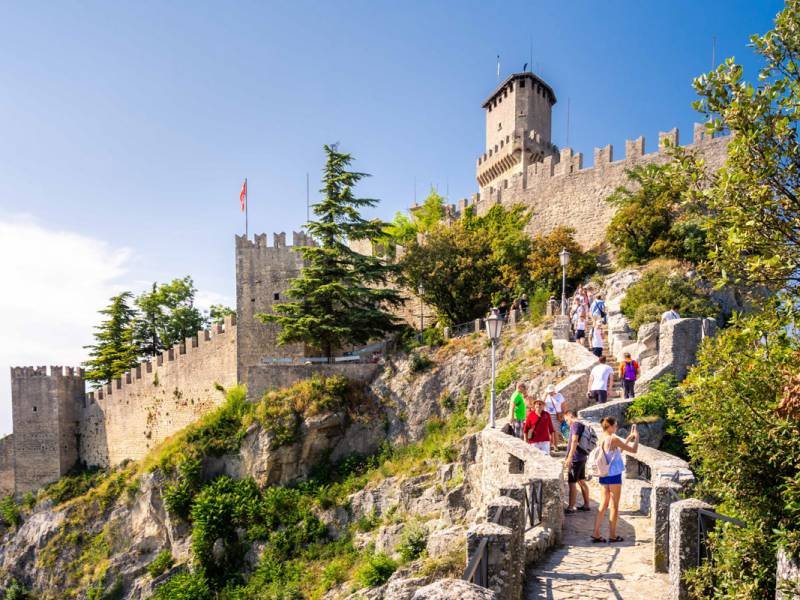
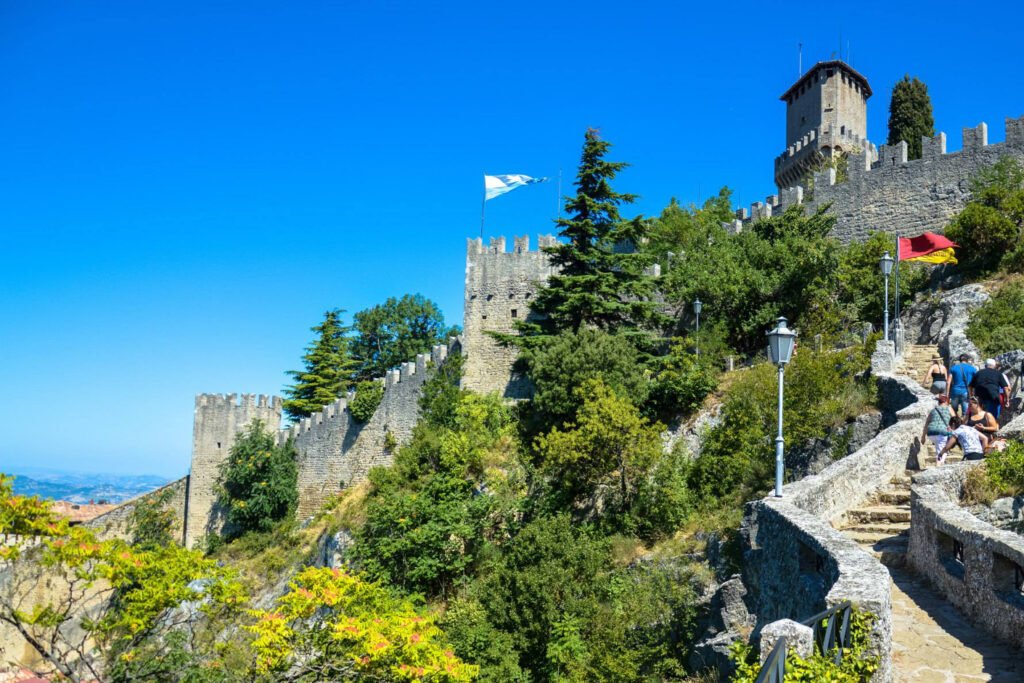
Defensive walls and three towers: it’s impossible to miss the city’s former defensive walls in San Marino. These structures date from the 13th to the 16th centuries. Three towers have also been preserved and can be visited:
First Tower – Guaita is an 11th-century tower.
Second Tower – La Cesta was built in the 13th century on the ruins of an ancient Roman fortress. It is located at the top of Mount Titano and offers breathtaking views.
Third Tower – Terza Torre, dating from the 14th century, was also used as a prison. The third tower is not open to visitors.
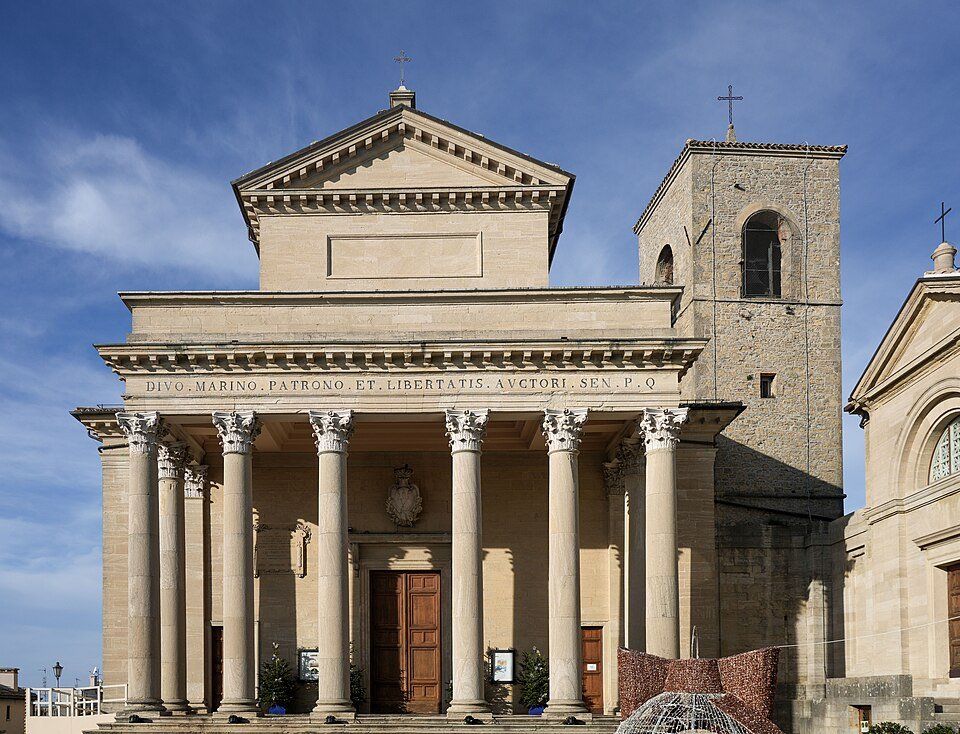
The Basilica of Saint Marino in San Marino is a Roman Catholic church located in the Republic of San Marino. While the country has a distinct predominance of historic Christian religious buildings, the basilica is the main church of the city of San Marino. Located in Piazza Domus Plebis on the northeastern edge of the city, adjacent to the Church of Saint Peter, it is dedicated to Saint Marino, the founder and patron saint of the Republic. The current church was built in 1838 on the site of an earlier one dating back to the 7th century. It is constructed in the neoclassical style, with a porch of eight Corinthian columns. Saint Marino’s relics are housed in a reliquary in the basilica.
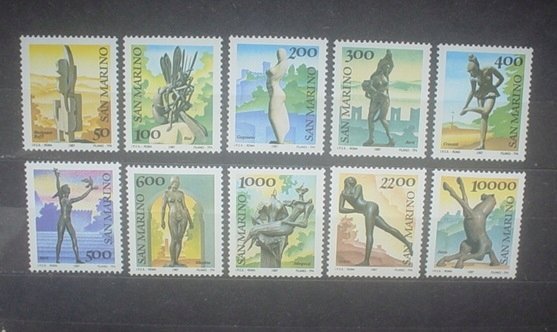
Museums, including the Wax Museum, the Philatelic Museum, the Torture Museum, the Weapons Museum, and the Vampire Museum.
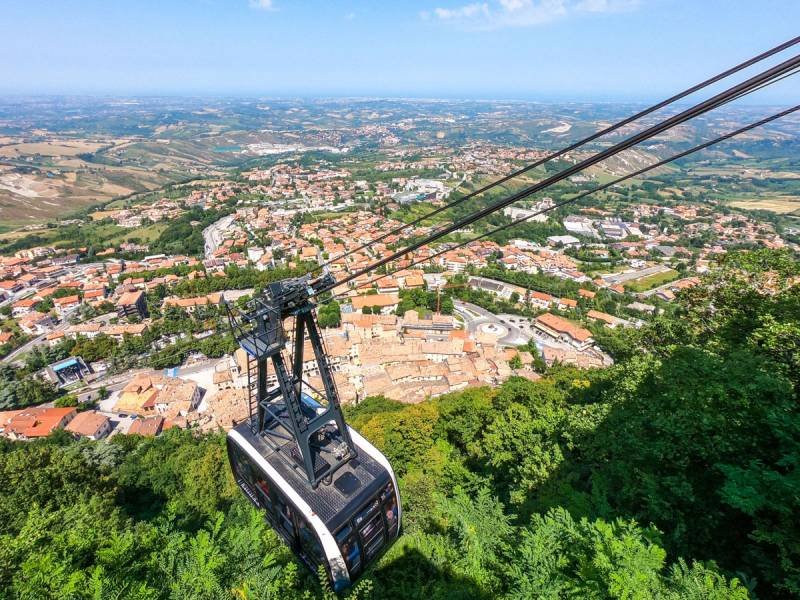
San Marino Cable Car. With a bit of luck, you can find a parking space at the cable car and take this route to the summit. There’s a viewpoint at the upper station. Many flowers grow here. One creature flying around caught our attention. Locals call it a hummingbird because it resembles a bird, due to its wings and beak. It’s actually a butterfly from the hawk moth family, the Gołębiewski.