
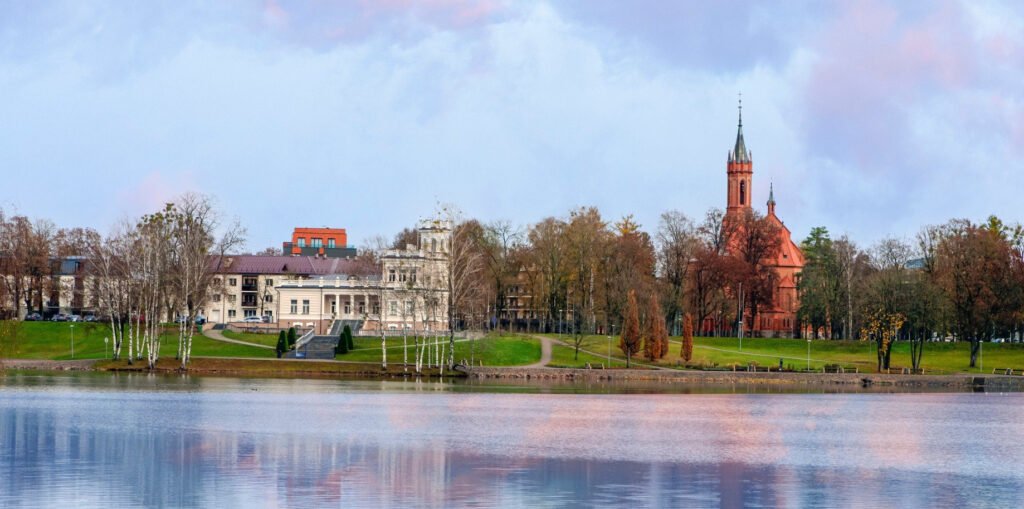
Druskininkai, a town in Dzūkija, Lithuania, is a popular health resort located on the banks of the Nemunas River. Population: 16,647 (2006), city area: 22 km². It is the largest and most modern health resort in Lithuania, one of the best climatic and balneological resorts in Europe. It boasts numerous mineral springs and peat deposits. It houses nine sanatoriums and a balneological center. The royal town was located in the non-city district of Przewalski in the Grodno district of Trakai Voivodeship at the end of the 18th century.
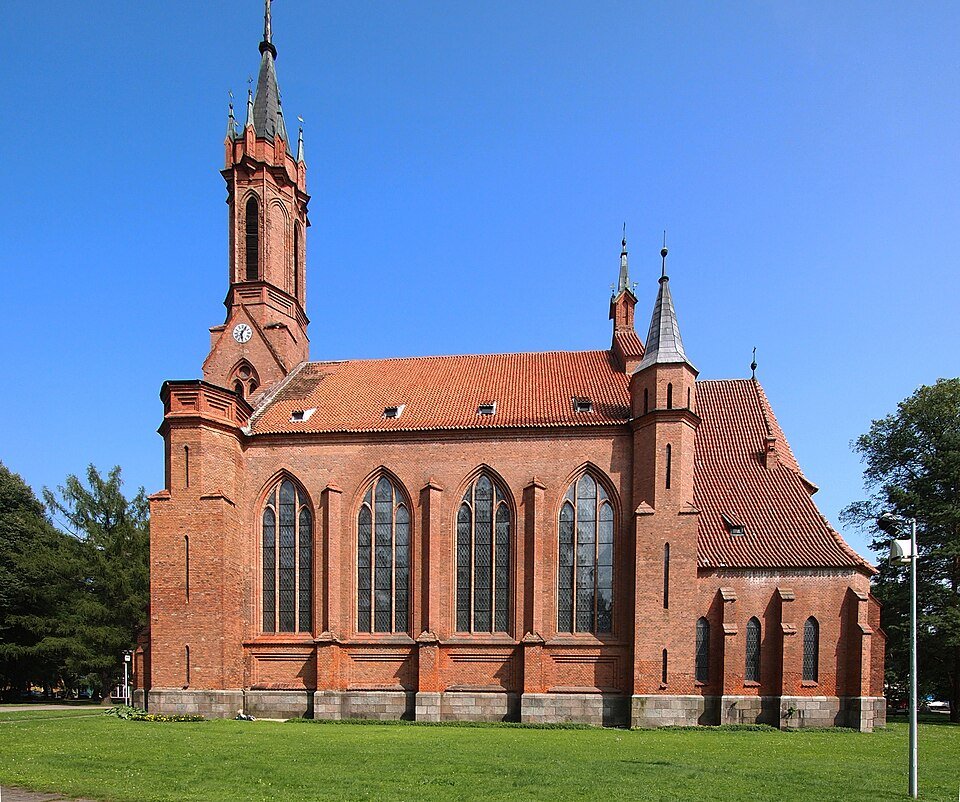
*The Church of Our Lady of the Scapular in Druskininkai is a Roman Catholic church located in Druskininkai, designed by Stefan Szyller in the neo-Gothic style, built between 1912 and 1931. Inside are paintings: “Our Lady with Child and St. John the Baptist” from around 1600, which comes from the Carmelite church in Grodno, “St. Anthony” from the second half of the 17th century, and “St. Augustine” from the 18th century. The church has three naves, its façade is decorated with a sculpture of Christ Blessing by K. Patamsis from 1991. The sculpture of Christ Crucified from the second quarter of the 18th century in the side altar comes from the main altar of the now-defunct Carmelite church in Grodno.
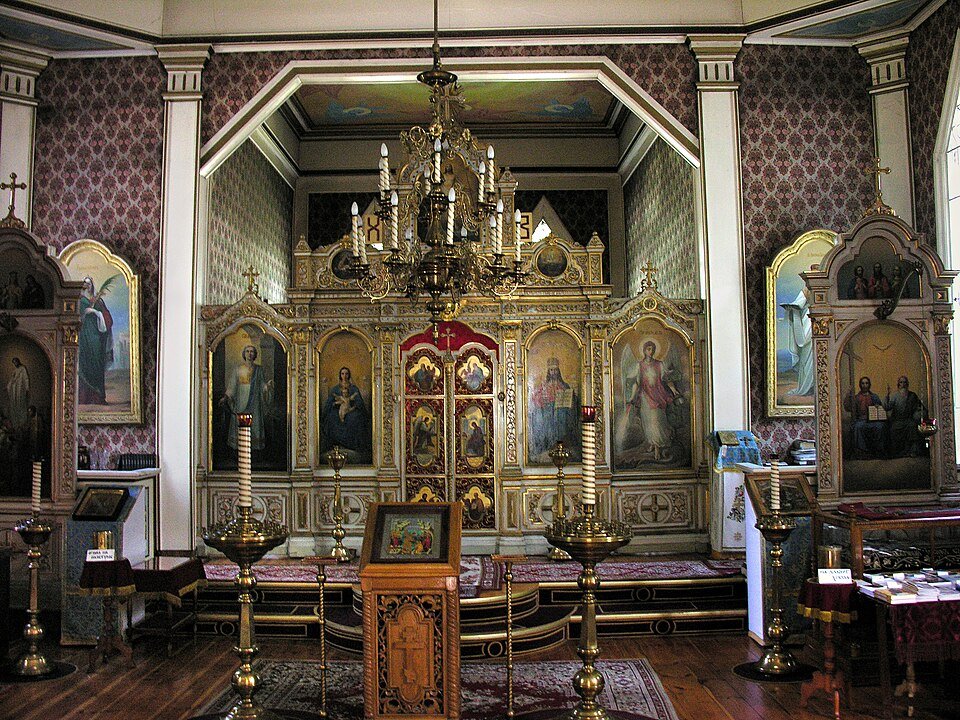
*The Church of the Icon of Our Lady “Joy of All Who Sorrow,” a wooden Orthodox parish church in Druskininkai, was built in 1865. The small wooden church, painted blue and white, has four domes and a bell tower integrated into the structure, topped with a smaller dome on the spire. It is richly decorated with ogee-back motifs and Doric pilasters symmetrically arranged around the windows and doors. Each window is additionally framed. Three doors lead into the church, each with a painted black cross. The vestibule and altar space are not clearly defined. The interior retains the original iconostasis and painted decoration: bright red walls and an image of Our Lady on the church ceiling. In addition to the main altar, the church has two side altars.
*The Kiersnowski Villa in Druskininkai, known as Wesoła, is a historic house located at Čiurlionio Street 59 in Druskininkai. It is one of the city’s most distinctive buildings and currently houses the Druskininkai Municipal Museum. The villa was built in the early 20th century by the Lipchitz family from Druskininkai, from whom the Kiersnowski family purchased it before World War I. The single-story house features a three-story, octagonal corner tower dominating the main building, as well as balustrades on the roof and a ground-floor loggia. After World War II, the house housed the Civil Registry Office. After Lithuania regained independence, the villa housed the archives and the seat of the Sajudis authorities. In the early 21st century, the villa was converted into the Druskininkai Municipal Museum.

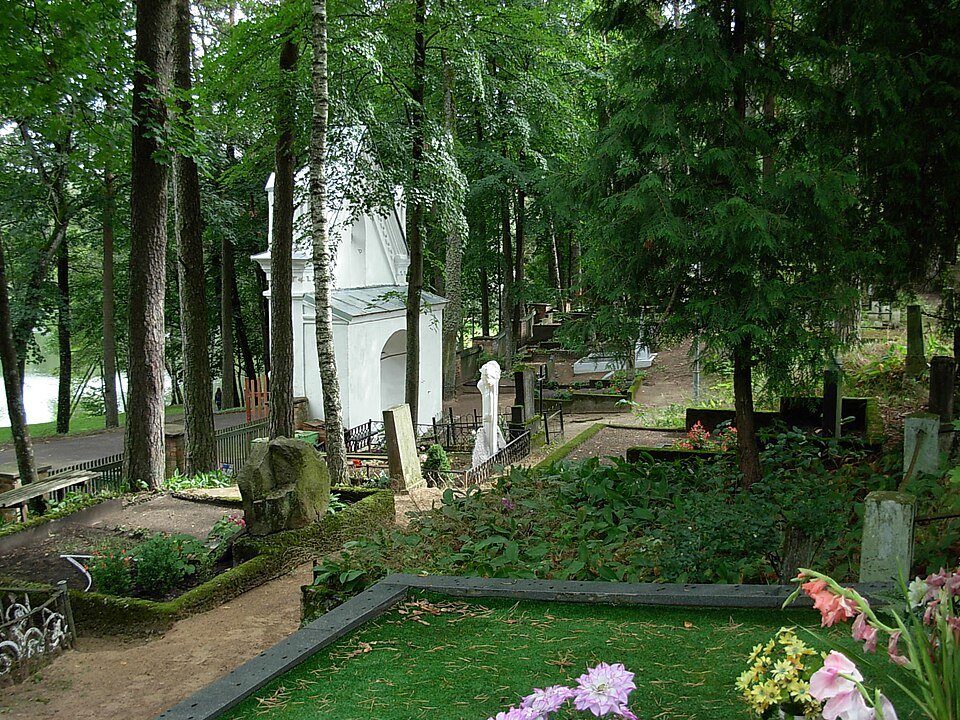
*The Druskininkai Cemetery, a Catholic-Orthodox necropolis located in Druskininkai, Lithuania. The cemetery was founded in the 19th century and is divided into Orthodox and Catholic sections. The latter is the burial place of, among others, Stanisław Grzegorzewski, author of the first guidebook to Druskininkai; Jan Pilecki, a Polish physician, journalist, and social activist; Jadvyga Surutis, sister of Mikalojus Čiurlionis; and members of the Kiersnowski family, who were associated with the town. The cemetery also contains the symbolic tombstone of Father Bolesław Wołejko, who was imprisoned in Grodno and later executed at an unknown location in 1942 for collaborating with the Home Army.
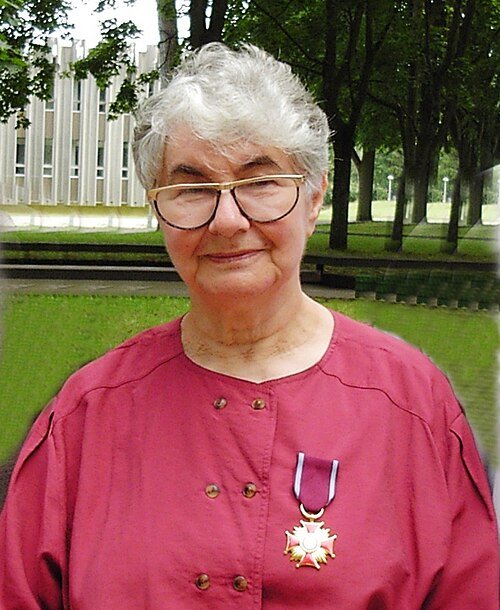
*Maria Borkowska-Flisek (born November 1, 1933, in Częstochowa) was a Polish activist, cultural animator, and organizer of exhibitions and art events. She completed grades 1 to 5 of primary school on a collective farm. Her father was appointed delegate of the Polish Embassy in Kuybyshev for the Koshkin District and director of the Polish Home for Polish Invalids and Orphans. In 1943, he was arrested by the NKVD and sentenced (“for espionage on behalf of Poland”) to 10 years in the labor camps. He died in a labor camp on March 6, 1952. After forced deportation from the Eastern Borderlands, she and her mother were sent to Gdańsk, where she, her mother’s sister, arrived directly from the German labor camp in Fordon. They arrived in Gdańsk on April 26, 1946; she graduated from the Gdańsk University of Technology – Faculty of Communications (in 1958, she received a Master’s degree in Communications Engineering). She began her professional career (as a designer, then as a technologist) in 1958 and worked in the same production plant until her retirement in 1993. She actively participated in the August Strike (1980). She was elected chairwoman of the Strike Committee and later of the Solidarity Trade Union’s Plant Commission. After the outbreak of martial law, she was dismissed from her job, but after “court battles” (after six months) she was reinstated; and immediately after the Round Table Talks, she was re-elected chairwoman.
2023 – Award of the Mayor of Gdańsk in the Field of Culture for lifetime achievement
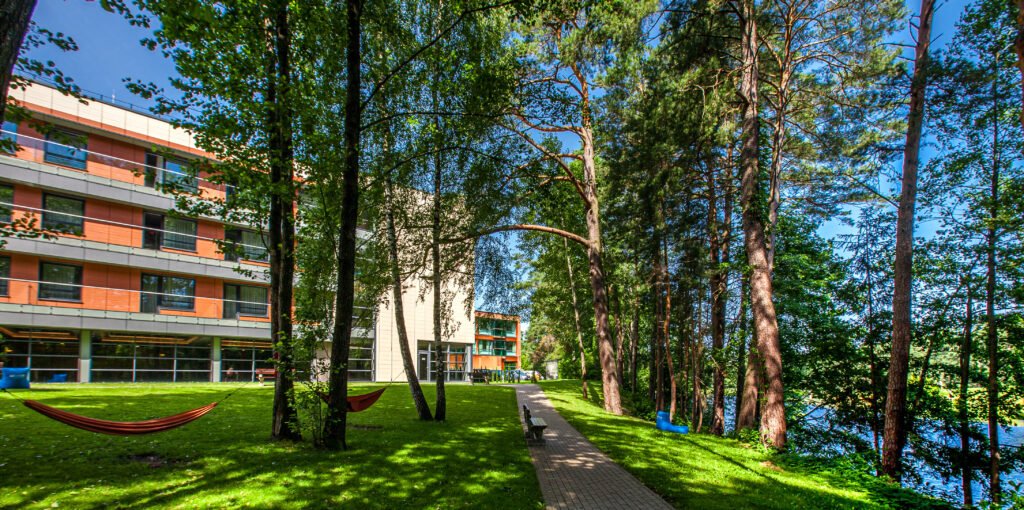
*Druskininkai SPA Sanatoriums and Recreation. On the right bank of the Nemunas River lies Druskininkai, Lithuania’s largest and most modern spa resort. Open year-round, the spa is located in southern Lithuania, 60 km from the Polish border. UPA Medical SPA Druskininkai SPA TREATMENT PROGRAM. Do you remember the smell of a pine forest on a sunny day and the fresh weather by the water? Welcome to “UPA” – a home of rest and health, surrounded by the warmth and care of home, which preserves pleasant memories and always gives you strength – just like the living goddess Upa River in Lithuanian mythology. At the Upa Rest and Health House, you will find a cozy, bright, and comfortable atmosphere and state-of-the-art spa and wellness services designed for relaxation, regeneration, health prevention, or overcoming ailments. We will provide you with balanced meals three times a day and select the appropriate treatments for you.
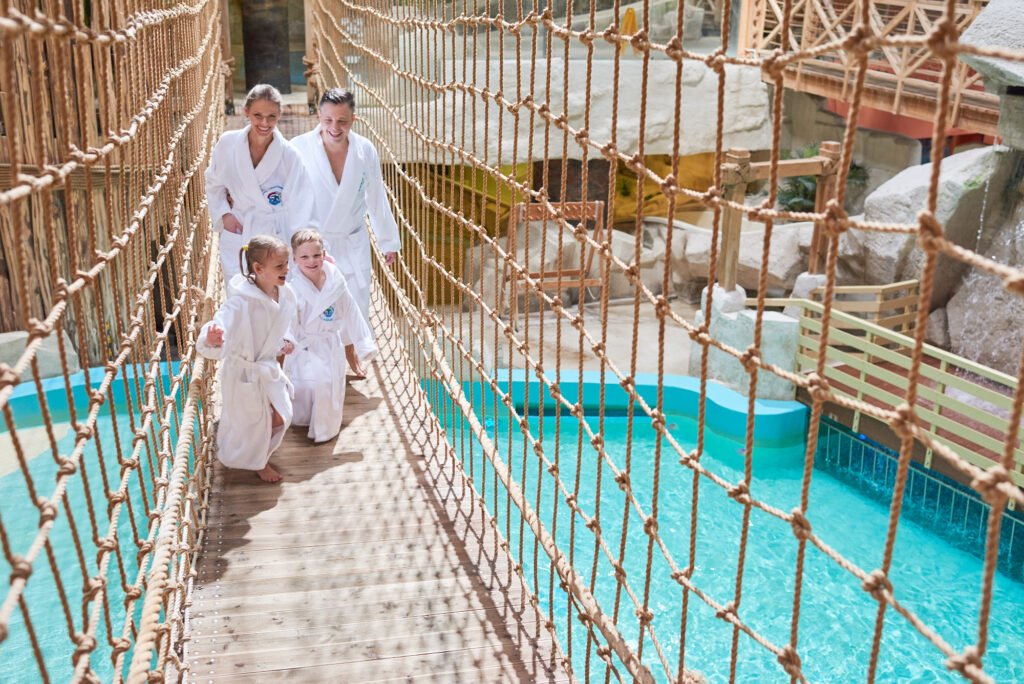
*AQUA PARK IN DRUSKINIKI. AQUA PARK INCLUDED IN THE PRICE. Relaxation and entertainment for the whole family! Daily therapeutic treatments and unlimited stays at the Druskininkai Aqua Park. One of the most beautiful and largest complexes of its kind in Europe! Accommodation at the AQUA 3* Hotel in the Aqua Park complex. Hotel AQUA 3* offers accommodation in 93 comfortable rooms. Two are luxury suites, 6 MiniLUX rooms, 7 single rooms, and 78 double and double plus rooms. A double plus room can accommodate up to two extra beds or a room with a view of Wileńska Avenue and the Aquapark dome. A MiniLUX room is one spacious room with the possibility of 1-3 extra beds. Guests also have free Wi-Fi. All rooms at the Aqua Hotel are air-conditioned and decorated in warm colors and with wooden furniture. Each room is equipped with satellite TV, a balcony, and a private bathroom with bathrobes and toiletries. Guests visiting the Aquapark or the East Island sauna and bath complex can use the hotel’s towels and bathrobes.
*Grūtas Park, an open-air private exhibition of monuments to Soviet politicians and objects related to the history of the country, particularly the Lithuanian SSR, has been in existence since 2001. The park was created and owned by entrepreneur Viliumas Malinauskas. The park is located near the town of Druskininkai, within the Dzūkija National Park, near the village of Grūtas (Polish: Gruta). The exhibition grounds include monuments to Soviet leaders (Lenin, Stalin), Lithuanian communist activists (Vincas Mickevičius-Kapsukas, Pranas Eidukevičius), and partisans (Marytė Melnikaitė). A special pavilion also houses a reconstructed party meeting hall with a library, while separate buildings house an exhibition of socialist realist paintings and sculptures, as well as other post-Soviet memorabilia. The park also features a children’s playground, a café, and souvenir shops. At the entrance to the park, there’s a replica of the barbed wire surrounding a Soviet labor camp, a wagon used to transport prisoners there, and further on, a replica of the camp loudspeaker. In total, the park contains 86 Soviet sculptures by 46 different artists.

