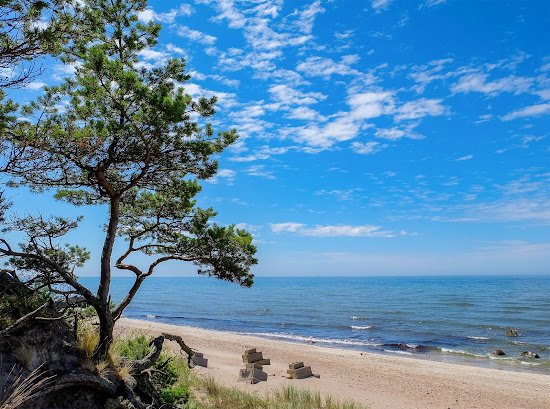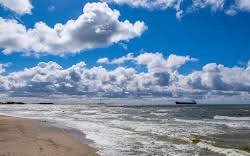
Klaipėda is a city on the Baltic Sea coast on the Curonian Lagoon, in western Lithuania, situated at the mouth of the Dangi River into the Curonian Lagoon, connected by a canal to the mouth of the Nemunas River. It is the largest city in Lithuania Minor. Klaipėda has a large seaport and a railway station.
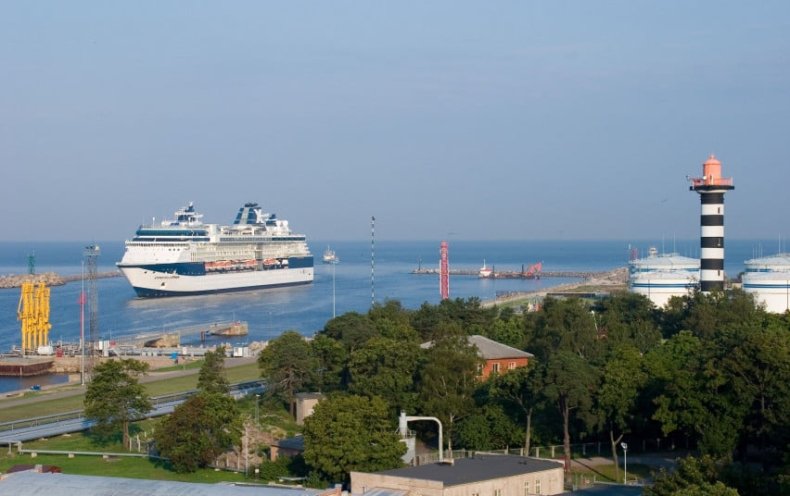
*Economy. Klaipėda is home to one of the largest Baltic seaports. In 2014, the port recorded transshipment results of 36.41 million tons, including 450,400 TEUs of containerized cargo and 344,800 ferry passengers. Klaipėda is home to a major fishing port (the most important in Lithuania) and the Western Shipyard.
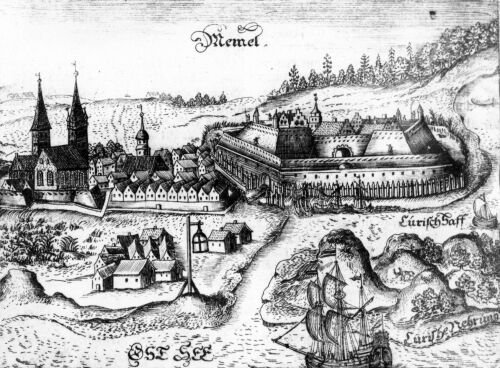
*Klaipėda Castle is a brick castle built by the Teutonic Order in the 15th century on the site of an earlier wooden fortification. In 1393, the Teutonic Knights began construction of a tower, which was destroyed during another Lithuanian invasion the same year. However, expansion began again around 1408 and intensified after 1417, with the construction of a regular-plan castle. In the 15th century, the castle was adapted for firearms. Between 1529 and 1559, bastions were built around the castle, from which artillery fire could be fired. During the Polish-Swedish War, in 1629, the castle was captured by Swedish troops. During the Seven Years’ War, in 1757, the castle was damaged by a Russian siege. By the end of the 18th century, the castle lost its strategic importance and fell into ruin. As a result, it was almost completely demolished by the Prussian authorities by 1874. Archaeological excavations were conducted at the castle in 1968, and continued into 1975. In 2002, a museum was opened under one of the bastions.
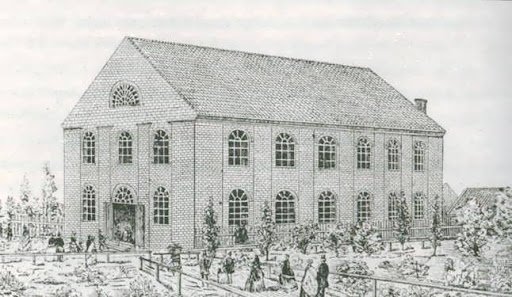
*The Evangelical Baptist Church is an evangelical church in the Lithuanian city of Klaipėda, on Vytauto gatvė (Vytauto Street). It belongs to the Baptist Union. The 25-member Baptist community in Klaipėda was founded on October 3, 1841. When the church’s membership grew to two hundred, the decision was made to build a church. For this purpose, two plots of land were purchased near the old city cemetery. Bricks and roof tiles were brought from Szczecin. The completed building was consecrated on October 12, 1851.The church survived the city fire of 1854 as one of the few public buildings. The church temporarily housed a school and hosted services for various denominations. On September 2, 1860, a group of Latvians was baptized in the church, marking the beginning of Baptistism in Latvia. The building was renovated in 1876 and 1928. In 1944, the Baptist community was dissolved, and most of the German members were resettled to Germany. During the Soviet era, the building served as a nautical club, a warehouse, and a teachers’ house. The community was reactivated in 1977, with services held on the outskirts of the city. After the fall of communism, the house of prayer was returned to the faithful in 1991, and the consecration of the returned building took place on October 5th of that year, two days after the 150th anniversary of the community’s founding. Currently, the community has approximately 80 members. Services are held on Sunday mornings in Russian and in the evenings in Lithuanian. The church also houses the Veranda Art School.
*Klaipėda, a historic port on the Baltic Sea (formerly Memel), retains traces of its rich past, although many of its monuments, including the 18th-century granaries (often referred to at the time by the German term “Speicher”), have required renovation or have been rebuilt; these are characteristic port structures, a testament to the region’s commercial importance, and are common around the Danė River.
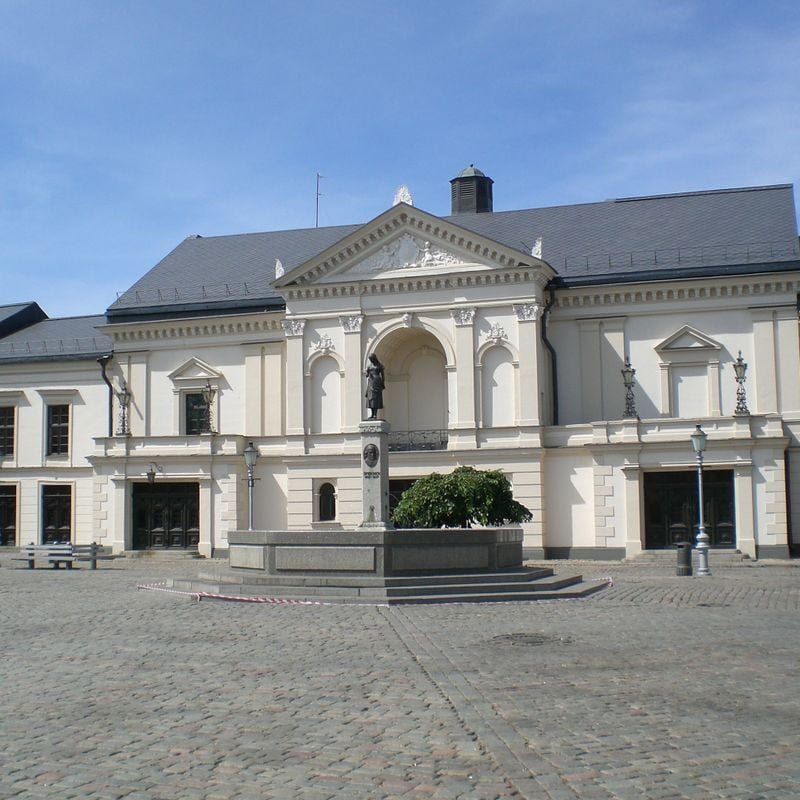
*The Drama Theatre, built in 1857, is both a famous landmark of Klaipėda and the oldest theatre in the country. It has endured much during its turbulent history – it burned down, was rebuilt, and renovated several times (most recently in 2015). Located in the heart of the city, it serves as the city’s cultural center. It also plays an important role during the Klaipėda Sea Festival, a popular event held every July. Like many other Lithuanian landmarks, it also played a role in the region’s turbulent history – it was from the balcony of this theatre that Hitler announced the annexation of the Memel region, as the Germans called the Klaipėda region (the city was under German rule several times throughout its history). Today, the theatre presents a diverse range of cultural offerings, from experimental plays to children’s performances. The renovated theatre also hosts the THEATRIUM International Theatre Festival, which has become a permanent fixture in Klaipėda’s artistic events calendar.
*Charming sculptures fill the Old Town and the center of Klaipėda. Following the designated route, you might encounter a dragon, a mermaid, a fisherman, a girl blowing a kiss, or even a mouse that will grant you a wish if you rub its nose. Charming sculptures fill the Old Town and the center of Klaipėda. Following the designated route, you might encounter a dragon, a mermaid, a fisherman, a girl blowing a kiss, or even a mouse that will grant you a wish if you rub its nose. Some of these sculptures even have love stories behind them. Take, for example, the sculpture “Ann of Tharau,” which takes center stage in Theatre Square. Immortalized as the heroine of a famous poem by the Klaipėda-born German poet Simon Dach, Ann was the girl with whom the poet fell in love at first sight. Unfortunately, she was already engaged, so this love was never to be fulfilled.
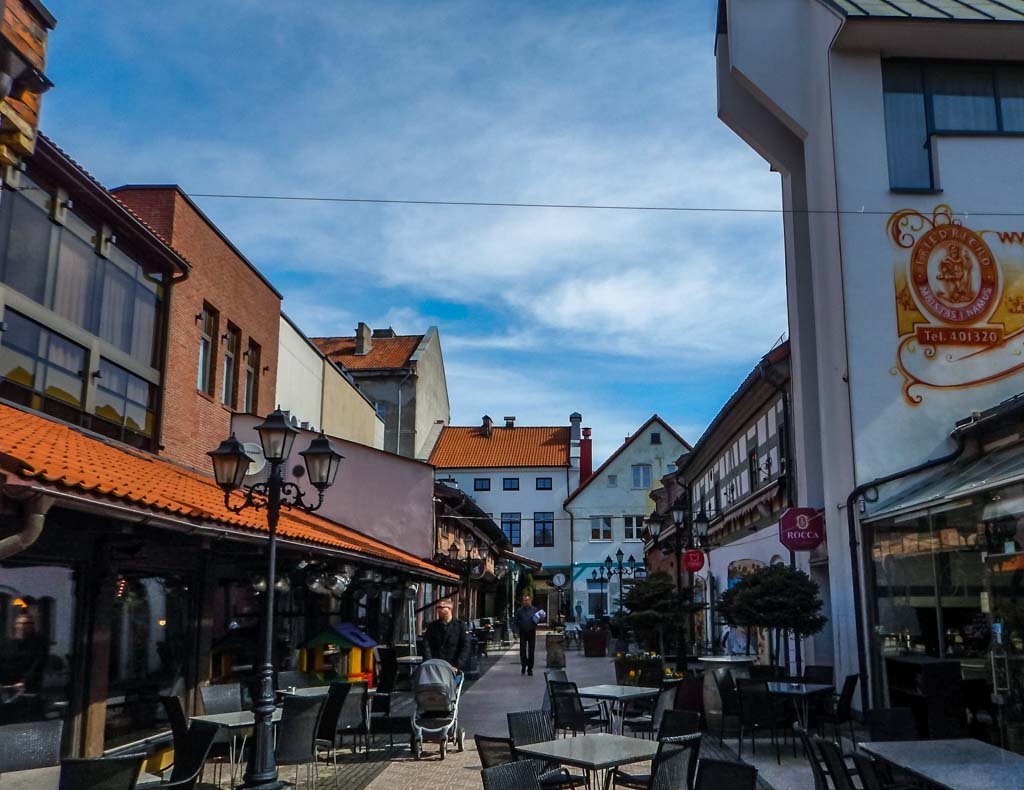
*Old Town. Most attractions are located within the Old Town, which requires a few hours to explore. The Old Town, practically completely destroyed, was restored in the 1970s. The medieval street layout has been preserved, but several churches were “forgotten” due to the work of Soviet architects. Klaipėda’s undoubted attractions are its half-timbered houses, which are wooden structures with walls filled with clay, rubble, and reeds. These 8th-century houses are found primarily on Aukštoji and Sukilèlių Streets.
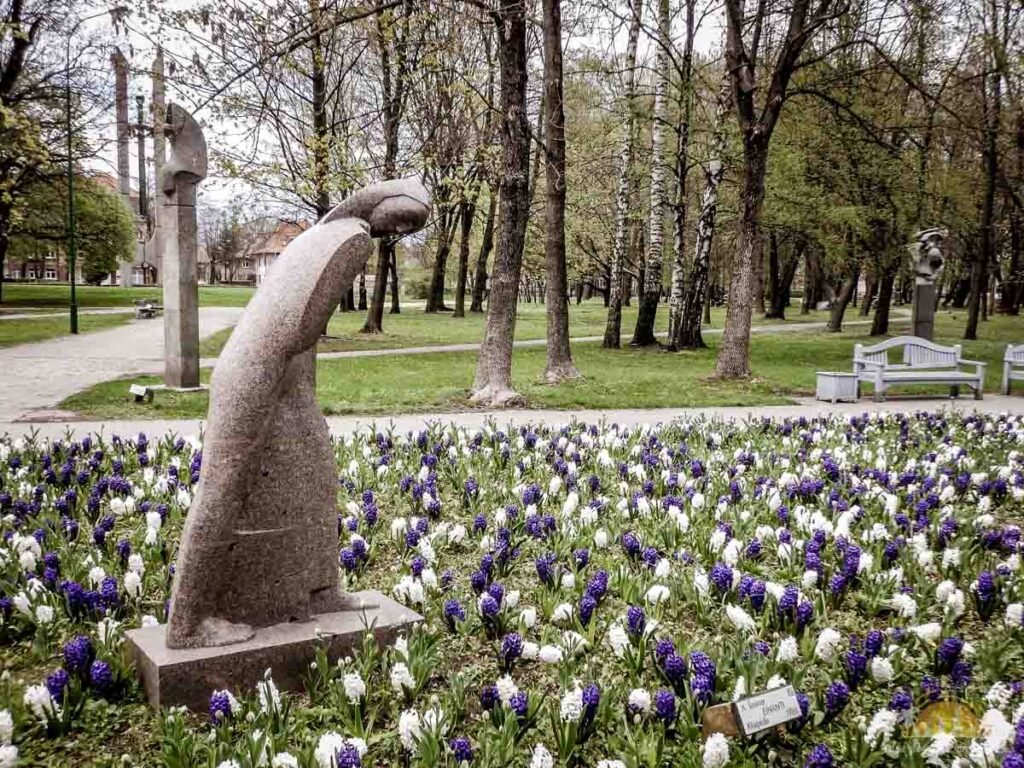
*It’s worth taking a moment to explore the New Town, located on the other side of the Danė River. Immediately after crossing the river, you’ll come to Atgimino Square, home to the 1960s modernist buildings of the Musical Theatre and Philharmonic. A little further on, in the park by the river, stands the Ark, a monument from 2003 commemorating the 80th anniversary of Klaipėda’s annexation to Lithuania. This concrete monument, reminiscent of the Arc de Triomphe, is engraved with the words “One Nation, One Land, One Lithuania.” We recommend visiting the sculpture park, where you’ll find dozens of different works of contemporary art created between 1977 and 1991. The park was created on the site of the city cemetery destroyed by the Soviet authorities.
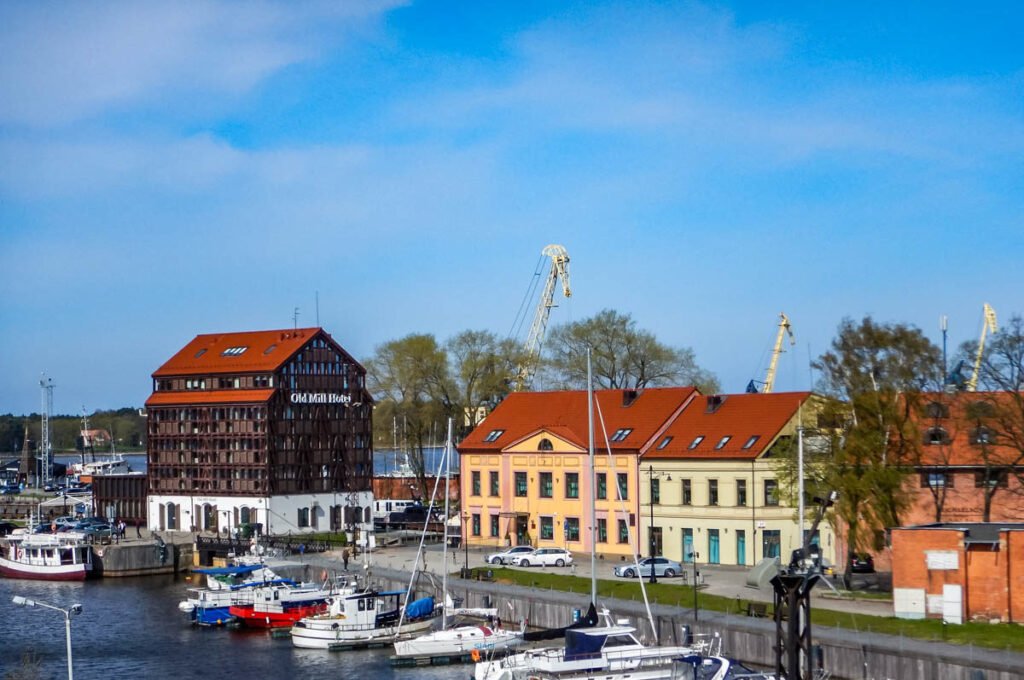
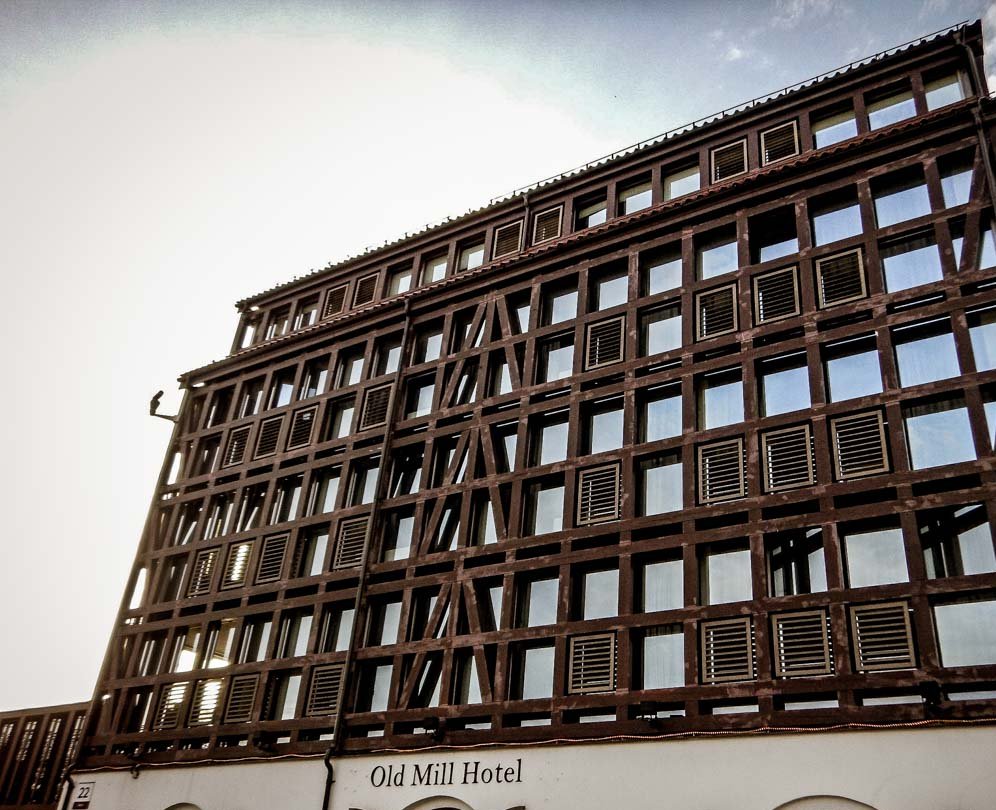
*The area around the old port and the castle. For our overnight stay in Klaipėda, we chose the old port castle and the Old Mill Conference Hotel, which, along with the Old Mill Hotel, is one of the renovated buildings in this part of the city. Links to www.booking.com – Hotel Old Mill and Hotel Old Mill Conference (from €40 for two people with breakfast). As part of the revitalization, a yacht port was built here, and you can admire additional sculptures.
*Turgas Street and St. John’s Church. Turgas Street is one of Klaipėda’s main shopping streets, lined with numerous shops in historic buildings. The street leads to the site of St. John’s Church, which currently boasts only the church’s outline, delineated by a hedge, and archival photos. There are plans to rebuild the church, which will feature a 75-meter tower, but for now, it’s just a plan.
*Summary: Klaipėda can be explored in a single day, but we recommend dedicating a little more time to the Smiltynė district, home to the Lithuanian Maritime Museum and typical Lithuanian seaside architecture. It’s worth grabbing a seat at one of the pubs and savoring the leisurely pace of the town. This charming city has definitely made a lasting impression on us, and we’ll be back at the next opportunity. Meanwhile, we’re off to further explore Lithuania and the Nemunas Delta, which you can read about in our articles about Lithuania.
(Baltic Sea shore photos)