
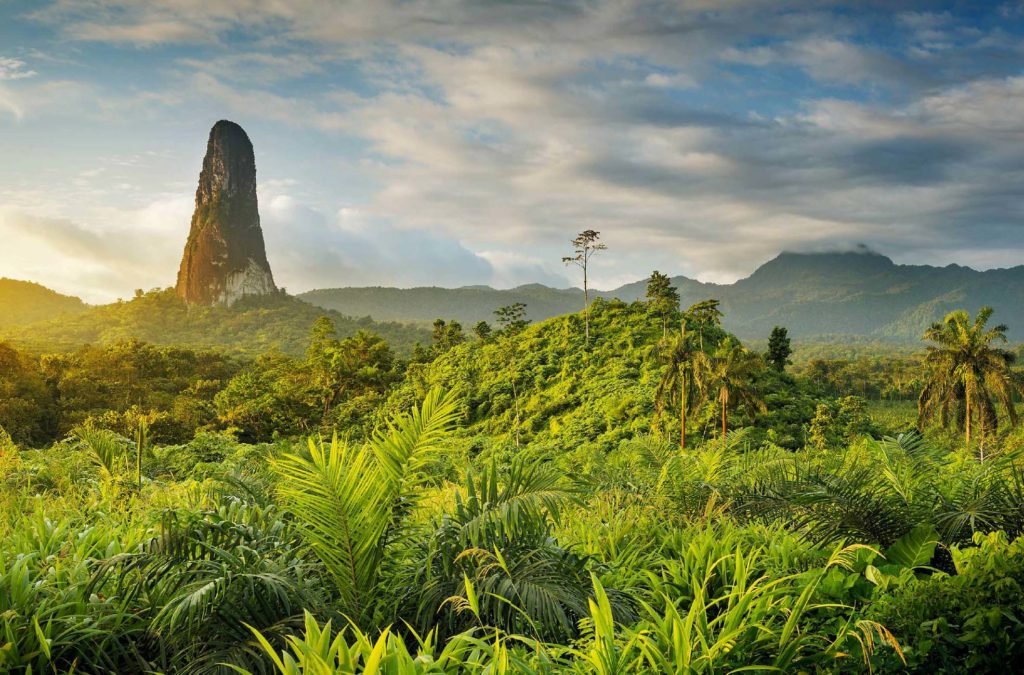
São Tomé and Príncipe is an island nation in the Gulf of Guinea (Africa), consisting of two main islands: São Tomé and Príncipe, and smaller islets, including the inhabited Ilhéu das Rolas (located on the equator) and Pedras Tinhosas.
Main islands and features:
São Tomé: The largest (859 km²), mountainous, with the highest peak, Pico de São Tomé (2,024 m above sea level), and the country’s capital.
Príncipe: The smaller island (142 km²), also of volcanic origin, with the extinct volcano Pico de Príncipe (948 m above sea level).
Characteristics: The islands are of volcanic origin, covered with equatorial forests, and have a tropical climate.
Location: They lie approximately 150 km apart.
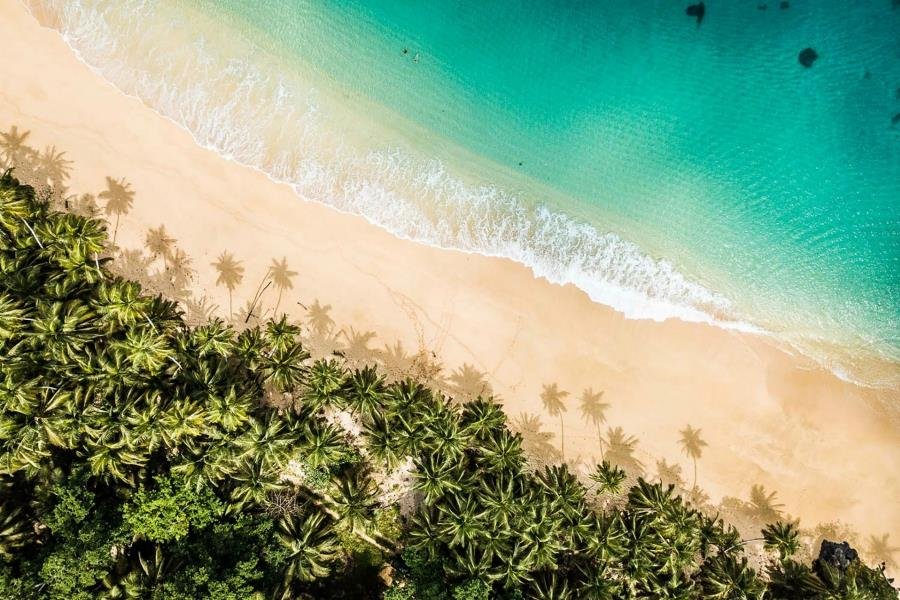
São Tomé is an island in the Atlantic Ocean, in the Gulf of Guinea, the largest island of São Tomé and Príncipe, covering an area of 859 km². It has a population of 133,600 (2004), or approximately 96% of the country’s population. The capital, São Tomé, is located in the northeastern part of São Tomé. Other important towns on the island include Santo Amaro, Santana, Neves (an important seaport), and Trindade. The island’s interior is mountainous, with the highest peak, Pico de São Tomé, rising to 2,024 m above sea level, and covered with forest (Obo National Park). Agriculture plays a significant role on the north and east coasts. These mainly consist of plantation crops: cocoa, coffee, coconut palm, and oil palm. Oil deposits were recently discovered north of the island under the Gulf of Guinea, which are expected to be exploited in the near future.
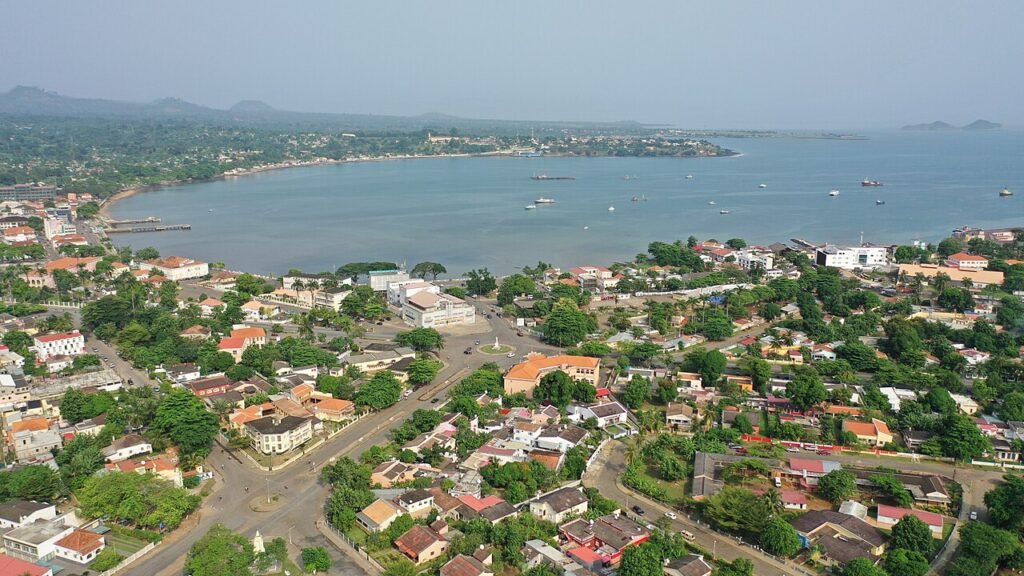
São Tomé is the capital and largest city of São Tomé and Príncipe on the Gulf of Guinea on São Tomé Island; the administrative center of the province of São Tomé. Population: 65,468 (2010). It has a commercial and fishing port; food industries (primarily oil and fish) and timber; and an airport (opened 1992). It was founded by the Portuguese in 1485 and is centered around a 16th-century cathedral. Another ancient building is Fort São Sebastião, built in 1575. The city has been the country’s capital since 1852. Its name means Saint Thomas in Portuguese.
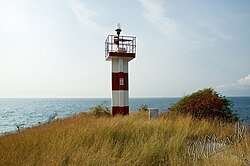
Príncipe Island is a volcanic island in the Atlantic Ocean, in the Gulf of Guinea, the smaller of the two main islands of São Tomé and Príncipe. It is one of the country’s two provinces and one of seven districts called Pagué. It covers an area of 136 km² and has a population of 8,420 (2018). The island’s highest peak is Pico de Príncipe, at 948 m above sea level. The forest covering it is protected by the Obô do Príncipe Natural Park. The northern and central parts of the island are occupied by plantations, where coffee, cocoa, and coconut palms are grown. The only urban settlement is Santo António (2,620 inhabitants – 2012), and there are several smaller villages, such as Sundy and Porto Real. In 2012, the Príncipe Biosphere Reserve was established. During the total solar eclipse of May 29, 1919, a scientific expedition led by Arthur Eddington made observations on Prince Island that allowed for the first time to measure the gravitational bending of light rays near the Sun, which was the first experimental confirmation of Albert Einstein’s general theory of relativity.
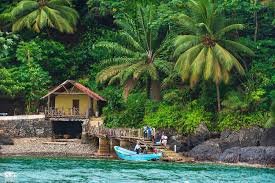
Ilhéu das Rolas is a small island belonging to the country of São Tomé and Príncipe, in Africa. The equator passes through the island and it lies just south of São Tomé.
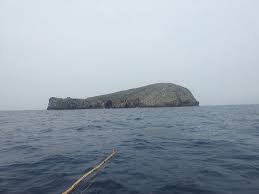
Pedras Tinhosas is a small archipelago belonging to São Tomé and Príncipe. It consists of the islands of Tinhosa Grande and Tinhosa Pequena. Since 2006, the islets have been listed under the Ramsar Convention as Ilots Tinhosas, and since 2012, they have been part of the Príncipe Biosphere Reserve. The only bird breeding on the islets is the yellow-billed tropicbird. Periodically, in small numbers, but not breeding, white-tailed tropicbirds, masked boobies, red-footed boobies, and the endangered frigatebird occur there. Brown-backed terns and white-rumped storm petrels have also been sighted. In 2015, a lizard, Trachylepis adamastor, from the skink family, was discovered on Tinhosa Grande.
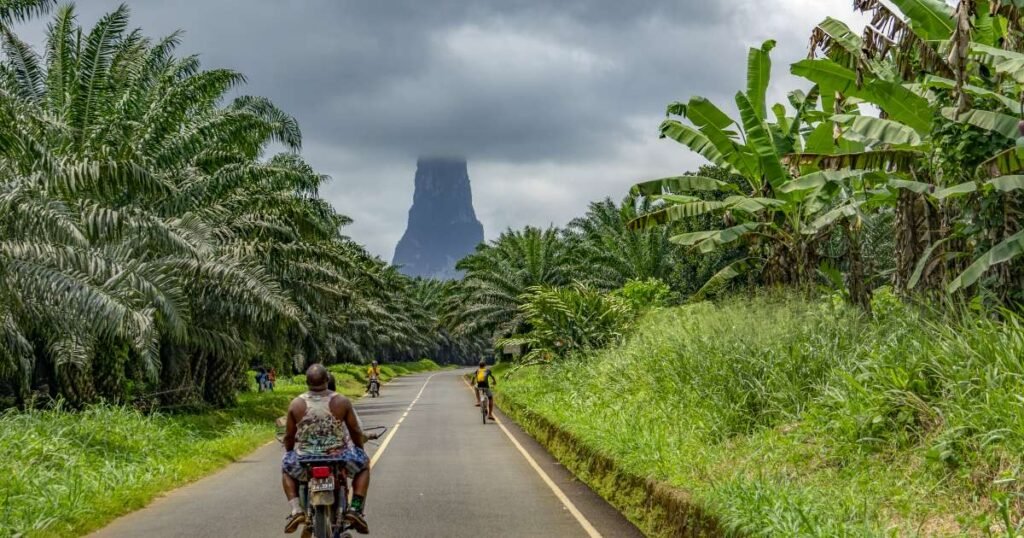
Economy. The main economic sector is agriculture, based primarily on cocoa plantations. Other crops include coffee, coconut and oil palms, bananas, vanilla, cinnamon, and cassava. The food and timber industries play a major role; soap factories also operate in the country.
Greenhouse gas emissions from São Tomé and Príncipe are primarily methane and carbon dioxide. Their levels were similar in the 1990s and early 2000s. During this period, emissions of both gases – as well as nitrous oxide – increased, with carbon dioxide emissions rising faster and becoming dominant. The increase in carbon dioxide emissions has been erratic. Increases in emissions from the energy and transport sectors are primarily responsible. Carbon dioxide equivalent emissions in 1990 reached 0.092 Mt, of which 0.047 Mt were carbon dioxide. Per capita emissions amounted to 410 kg of carbon dioxide, or 199 kg per thousand US dollars of GDP. In 2018, fossil carbon dioxide emissions amounted to 0.150 Mt, or 720 kg per capita, or 235 kg per thousand US dollars of GDP.
