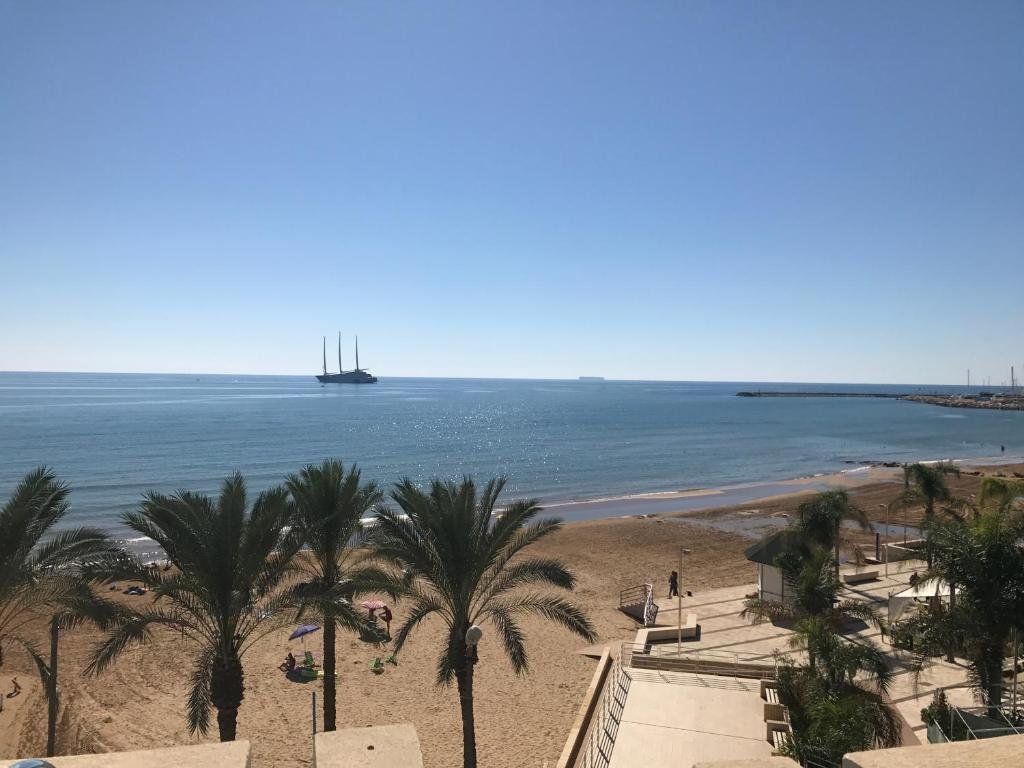
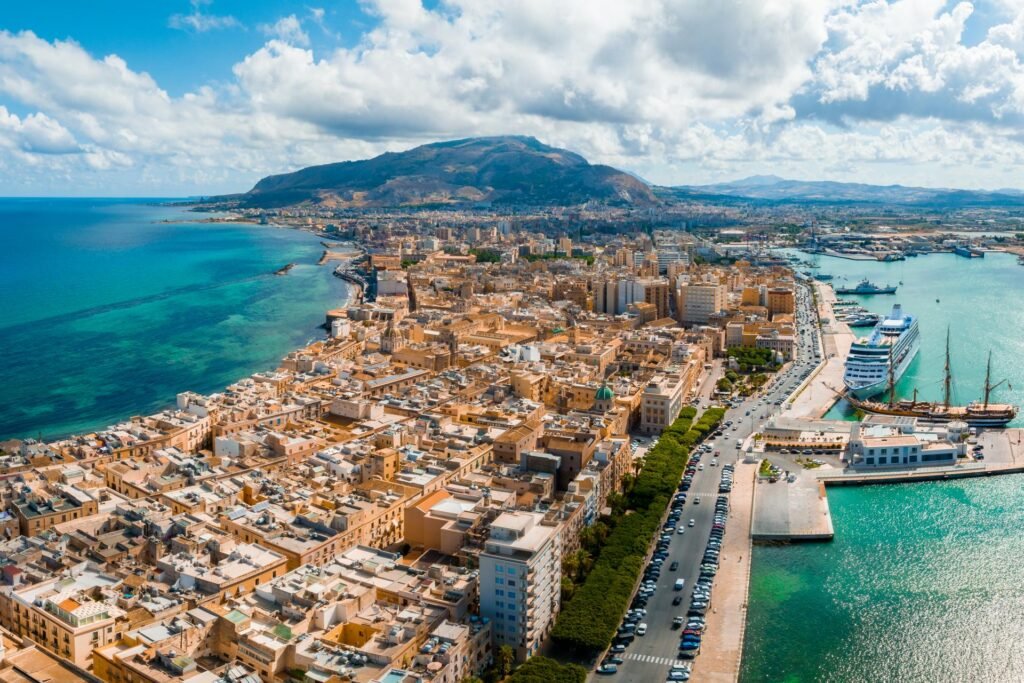
Trapani is a city and commune in the province of Trapani, Sicily, Italy. As of 2022, the commune had a population of 55,335, with a density of 202.6 inhabitants per km². The city was founded by the Elymians. Trapani Railway Station is located in the town. Trapani-Birgi Airport is located 13 km south of the city in the village of Birgi.
Trapani isn’t really a city, but a peninsula bathed by two seas. Beautiful views, interspersed with looming windmills and Baroque accents of palaces and churches, await. Near Trapani, you’ll find beautiful beaches in Sicily.
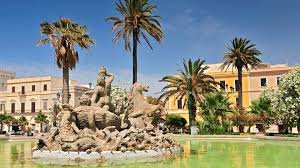
Trapani’s Old Town. Although Trapani’s historic center is not very extensive, it boasts some gems. The beautiful Fontana del Tritone is located at Via Marino Torre 75. It could even be said that this very point, Piazza Vittorio Emanuele, marks the boundary between Trapani’s historic and newer centers. The Fontana del Tritone dates back to 1890. The octagonal fountain, featuring a bronze statue of Triton by Domenico Li Muli, is surrounded by palm trees and benches, perfect for taking a breather and enjoying the pleasant panorama of the square.
Municipal Garden. At Viale Regina Margherita 21, there’s a beautiful garden where, strolling among centuries-old tax offices, you’ll discover the beautiful Villa Margherita. Villa Margherita was built shortly after the unification of Italy. Since 1889, the park, named after Queen Margherita of Savoy, has been open to the public.
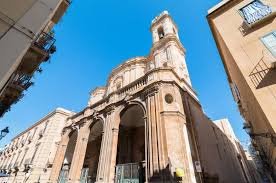
The Cathedral of San Lorenzo in Trapani. Located on Vittorio Emanuelle, the beautiful Baroque Cathedral of San Lorenzo was built in the 17th century on the foundations of a church dating back to the Middle Ages. The church’s interior, illuminated by a bright light and divided into three naves by massive columns, is exquisitely decorated with frescoes. Pause for a moment to admire the paintings by Flemish painters, especially Anthony van Dyck’s Crucifixion, or the bas-reliefs depicting scenes from the Gospel of Matthew. The church is open to tourists except during masses.
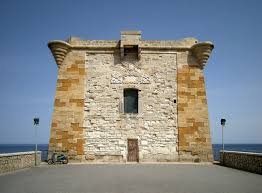
Archaeological Museum in Torre di Ligny. The tower was built in 1671 by order of Don Claudio La Moraldo, Duke of Ligny and Viceroy of the Kingdom of Sicily. The structure served as a Spanish watchtower; today it houses an archaeological museum displaying valuable finds from Trapani, as well as from other corners of the world, such as Tunisia and Algeria. The museum boasts, among other things, helmets from the First Punic War. Admission costs €1.
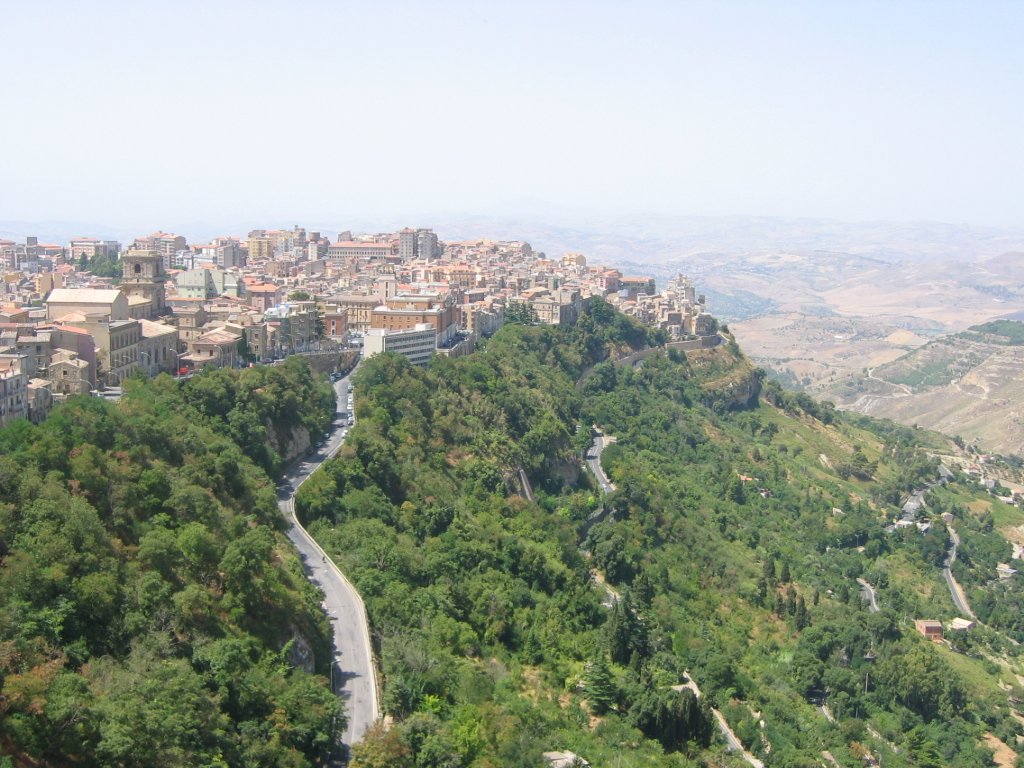
Enna is a town and commune in the province of Enna, Sicily, Italy. It is located almost in the center of the island on a plateau, forming the dividing line between southern and northern Sicily. The city is nicknamed the Belvedere della Sicilia. According to 2004 data, the commune had a population of 29,072, representing a density of 81.4 inhabitants per square kilometer. The town also houses the Enna railway station.
Enna, also known as the navel or Belvedere of Sicily, combines everything that makes this part of Italy such a unique and beautiful place. It’s here that you can plan a walk in the footsteps of ancient civilization, discover magical places amidst Sicilian forests, savor regional cuisine, and immerse yourself in Italian culture.
Church of San Benedetto. Although the exact date of its construction is unknown, it is believed to have been built in the second half of the 18th century. In addition to a beautiful painting depicting the Assumption of the Blessed Virgin Mary by Giuseppe Rapisardo, the church also houses a Byzantine icon from the 14th century. Adjacent to the church is a monastery built in the 14th century.
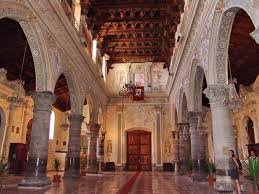
The Cathedral of Our Lady of Enna was built in the early 14th century, but its present appearance dates back to the 17th century, when, following a great fire, the church was rebuilt and restored. The church’s façade was expanded in the 18th century, hence its beautiful Baroque style. The enormous black basalt columns that divide the church’s three naves beautifully harmonize with the splendor of gold, purple, mosaics, and sculptures. The most striking features of the visit are the beautiful wooden ceiling and Pietro Rosso’s work – The Coronation of the Virgin Mary, located in the main apse of the church. In the Chapel of the Marmi, there is a large statue of the Virgin Mary – the city’s patron saint.
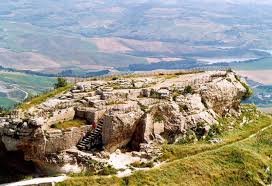
Rocca di Cerere. North of the castle lie the majestic and imposing Rocca di Cerere. Today, you can climb them for beautiful views. A temple of Demeter (from the Latin word for Ceres) once stood there. Historians of the time, such as Cicero, wrote that Rocca di Cerere was a major place of worship even in ancient times, where people venerated an image of Demeter. With the Roman invasion in 173 BC and the theft of the image, the temple was abandoned and fell into disrepair until only small fragments remained.
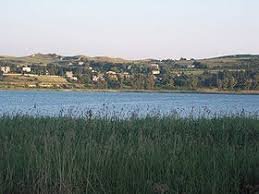
Lake Pergusa. It’s located about 8 kilometers from the center of Enna. Unfortunately, due to the high level of pollution, swimming is not permitted there. However, it’s worth a visit for the beautiful views, especially at sunset, and to admire nature. Near the lake, there’s a racetrack where you can participate in races for both sports cars and classic cars. You can reach the lake by bus number 5 from Piazza Antonello da Messina. Buses run every half hour and take you to the lake itself (a 500-meter walk).
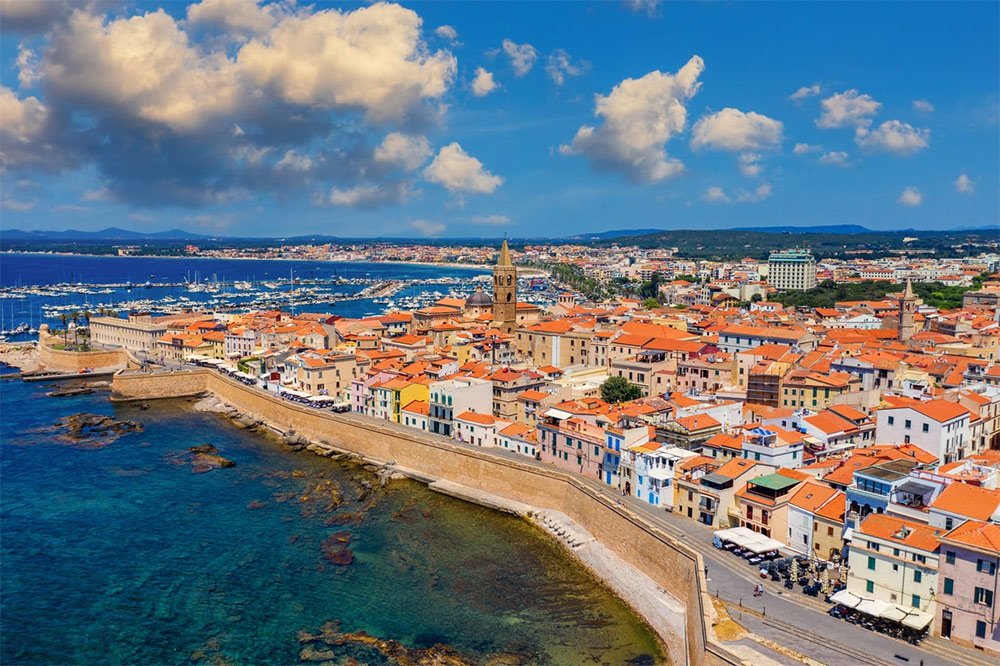
Ragusa is a town and commune in the province of Ragusa, Sicily, Italy. According to 2004 data, the commune had a population of 68,346, with a population of 154.6 people per square kilometer. Nearby, oil, oil shale, and asphalt are mined. Historic monuments: The historic center of the city has been designated a UNESCO World Heritage Site, along with other late Baroque towns in the Noto Valley. Noteworthy are the valuable Baroque monuments of sacred art:
Cathedral of San Giovanni (18th century)
Duomo di San Giorgio (18th century)
Church of San Giuseppe (18th century).
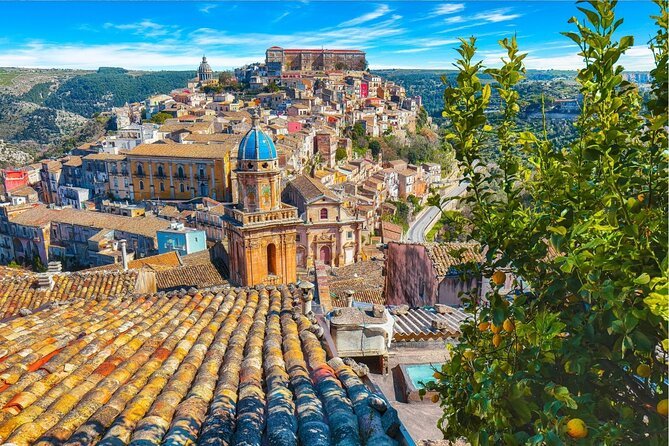
From a distance, Ragusa looks like a Baroque city surrounded by green groves. Perched on a hill, it climbs into the sky, with Baroque buildings looming among the clouds. But Ragusa offers more than just a stroll through the footsteps of ancient history. It’s an ideal place for hiking, cycling, and relaxing on the beach. Although Ragusa isn’t directly on the sea, golden beaches are not far away. Even in high season, it remains peaceful and atmospheric.
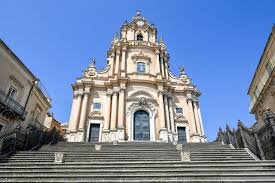
Basilica di San Giorgio. This church is a symbol of the city’s renewal after the earthquake. Built by Rosario Gagliardi in 1738, the basilica is accessed by 200 steps, and its exterior boasts a beautiful neoclassical dome supported by 16 columns, added only in 1820. The church’s interior is a true Baroque masterpiece, composed of columns, friezes, and sculptures. The cathedral, dedicated to John the Baptist, is particularly beautiful, with its side façade topped by a 50-meter bell tower. Also noteworthy are the stained glass windows depicting 13 scenes of the martyrdom of St. George (San Giorgio) and other saints. Before the earthquake, the Church of San Nicola stood on the site of the basilica.
Palazzo Cosentini. In one of the most evocative corners of Ibla, tucked between Piazza della Repubblica and Via Salita Commendato, and Corso Mazzini, leading to the new Ragusa, stands one of the oldest Baroque buildings in Ragusa Ibla – Palazzo Cosentini. The castle is named after Baron Rafaelle Cosentini and his son Giuseppe, the architects of the palace’s construction. The balconies, beautifully decorated with carved figures, are a striking sight. These figures are both masked and unmasked, accompanied by animals and reptiles. Some balconies uniquely depict entire scenes from the daily life of the time. At the main entrance is the so-called “balcony of slander,” which features five individuals wearing smiling masks, resembling caricatures. Beside them stand scantily clad women, whose role is to add splendor and beauty to the scene, and in the midst of them all stands a mother and child. To add even more contrast, the masks are very terrifying. One is biting a snake, while another has a scorpion in its mouth.
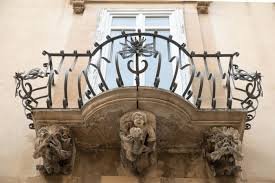
Palazzo Rocca. This building is located on Via Capitano Bocchieri, near the Cathedral of San Giorgio. The palace was built between 1760 and 1780. Its balconies are also decorated with interesting sculptures. Currently, it houses the headquarters of the Provincial Tourist Association. Some rooms retain their original 18th-century style, complete with antique furniture and sumptuous chandeliers. The overall design is complemented by stuccoed and frescoed walls and floors made partly of stone and partly of ceramic. However, tours of the palace’s interior are not always possible.
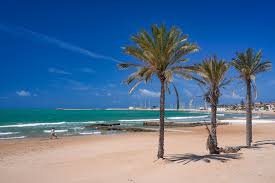
Marina di Ragusa. 25 kilometers from the center of Ragusa, we’ll discover the beauty of Sicilian beaches with golden sand, clear water warmed by the Italian sun, and a breathtaking panorama in the background. Here, you’ll find, among others, the Lungomare Andrea Doria e Bisani with its beautiful, long promenade, restaurants, and bars. A little further on, we’ll discover the Riserva Naturale del Fiume Irminio, also an interesting spot with a wide beach and a place to relax.