
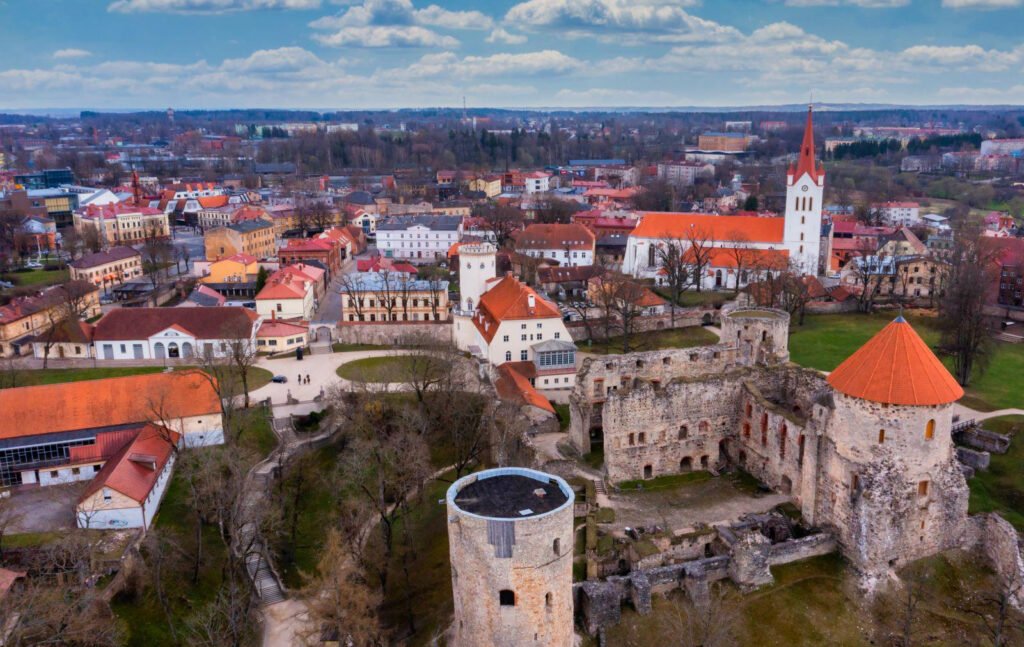
Cēsis (Latvian: Cēsis), a town in Gauja National Park, in the Livonia region of Latvia, on the Gauja River, about 100 km east of the capital Riga.
*History. With a population of only about 18,000, it is a relatively quiet historic town, containing two beautiful castles and parks, houses built in different periods, and small cobblestone streets in the Old Town. The name Venden or Wenden, respectively, comes from the Venden, an ethnic group that lived here in the 12th century. This is not entirely certain, but they likely spoke a Finno-Egonian language. In the early 13th century, the area was conquered by the Order of the Brothers of the Sword. Under their rule, in 1206, Kieś received city rights. Among the Brothers of the Sword and their successors, Kieś became a prosperous town. In the 14th century, the town became a member of the Hanseatic League. In 1578, Stephen Báthory, King of Poland and Grand Duke of Lithuania, defeated the Russian Tsar Ivan IV, who had invaded Livonia. Livonia was already paying taxes to the Polish king, but in 1598, the town became fully Polish and the capital of the Wenden Voivodeship. In 1621, the city became Swedish, and in 1703, Russian. This remained the case until Latvia gained independence in 1918. However, Polish, Swedish, and Russian rule did not diminish the dominant position of the German-speaking elite in Livonia, who had settled there in the Middle Ages as landowners and merchants. Most of the local leaders, as well as notaries, judges, and lawyers, were Baltic Germans. However, after Latvia regained independence, their influence changed. Although the city’s street layout dates back to the Middle Ages, no medieval buildings have survived. Over the course of its history, Cēsis has been rebuilt almost three times, the last time in 1703. Thus, the oldest buildings date back to the 18th century.
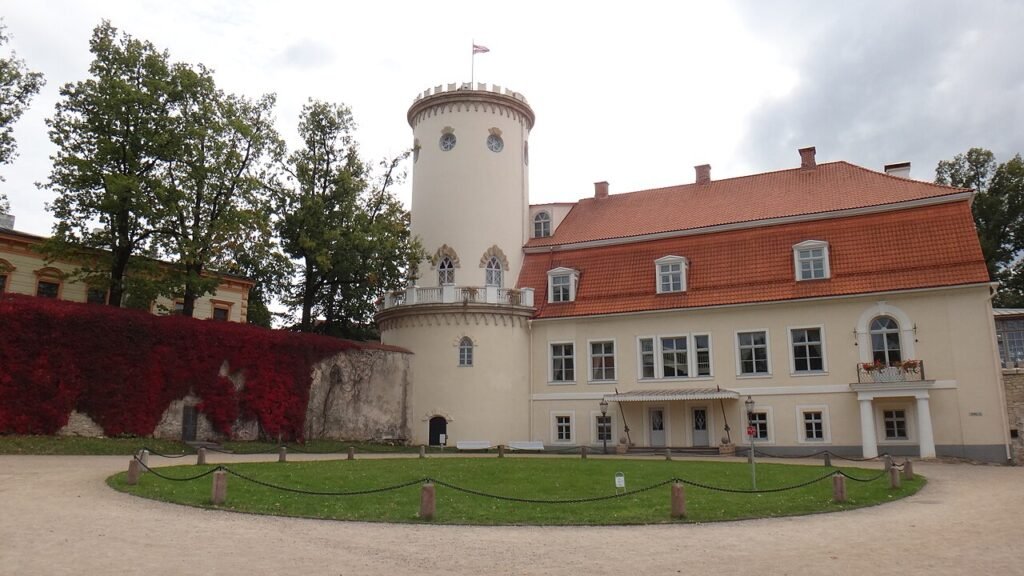
*Kiesi Castle, a monastic castle from the first half of the 13th century in Kiesi, Latvia, was expanded until the 16th century, preserved in ruins, partially reconstructed. The fortress, with an irregular quadrangular plan, with three towers at the corners and a corner chapel, was surrounded by a moat. The towers and the chapel were connected by three-story buildings, creating an enclosed courtyard with arcaded arcades. The castle’s architectural dominant feature is the large southern tower, circular in plan, covered with a conical roof. The western tower, circular in plan, has walls over 4.6 meters thick. The original entrance was through a gate from the east, now through a drawbridge from the south. The buildings of the eastern ward have not survived; in their place stands a small palace, rectangular in plan, with two stories. The castle and palace are surrounded by the remains of defensive walls, as well as a park with Walnut Hill (Latvian: Riekstu) and a small lake.

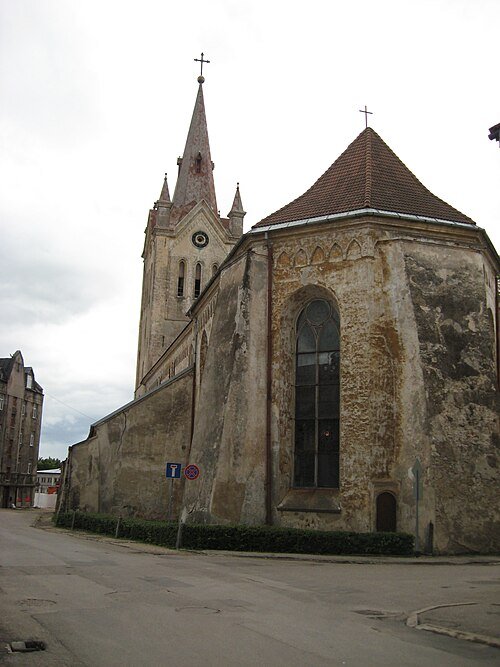
*St. John’s Church (Latvian: Svētā Jāņa baznīca), a Lutheran church in the Latvian town of Cēsis. It is a Gothic, three-nave church with a basilica layout. It is built of dolomite and brick. It is 65 meters long and 32 meters high. A 65-meter tower with a 15-meter spire is attached to the church. The church seats 1,000 people, making it the largest church in northern Latvia in this respect.
*The Cēsu alus darītava brewery, the oldest in Latvia, was built in 1878 on the site of an older one dating back to the times of the Livonian Wars.

*The Church of the Transfiguration of the Lord, an Orthodox church in Cesis, is located in the Valmiera deanery of the Riga Eparchy of the Latvian Orthodox Church. The church was built in a park on the estate of General Count Karl Eberhard von Siewers, who owned the local castle and was also one of the founders of the church. The site of the church previously housed the Catholic Church of St. Catherine, which was already in ruins by the 19th century. Tsar Nicholas I and other donors also contributed money for the construction. On August 6, 1845, the completed church was consecrated by Bishop Filaret of Riga. Before 1917, the local parish numbered approximately one thousand believers, and services were held in Church Slavonic and Latvian. A parish school was also run, and Cesis had an Orthodox cemetery. The church was built of stone, with one dome over the nave and another over the low bell tower. It represents the Russian-Byzantine style. The interior features a single-row iconostasis. The interior paintings were created by the Estonian painter Johann Köler. Behind the church are buried Count Karl Siewers and his wife Jelena, as well as his son Count Emmanuel Siewers and his wife Jelizaveta.

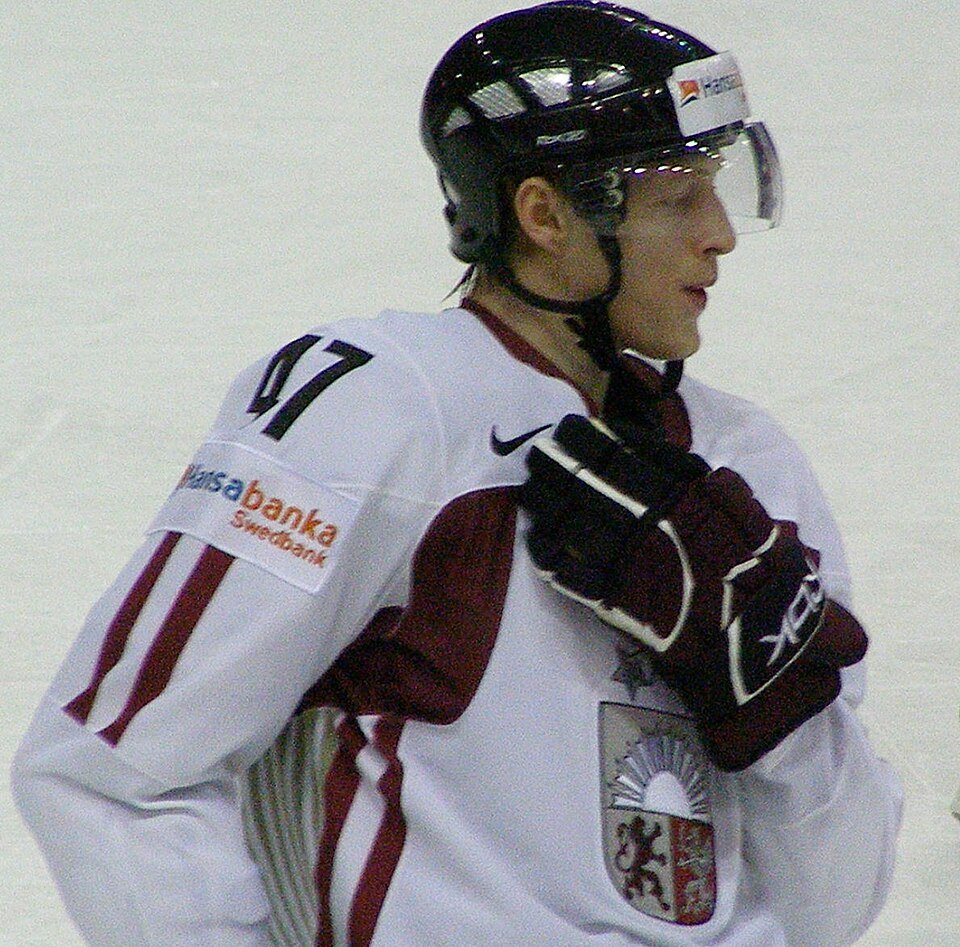
*Mārtiņš Cipulis (born November 1980 in Kės), Latvian ice hockey player, representative of the Latvian national team, three-time Olympian. Mārtiņš Cipulis. A Liepājas Metalurgs alumnus. From April 2012 to April 2013, he played for HC Lev Prague. Since July 2013, he has been playing for Dinamo Riga again. Since January 2016, he has been playing for the Slovak club MHC Martin (along with his compatriot Jānis Sprukts). Since December 2016, he has been playing for EHC Lustenau. Since October 2017, he has been playing for HK Kurbads. He participated in the 2005, 2006, 2007, 2008, 2009, 2010, 2011, 2012, 2013, 2014, and 2015 World Championship tournaments, and the 2006, 2010, and 2014 Winter Olympic Games. He has numerous individual and club achievements. He was the best forward in the Latvian Extra League in the 2003/2004 season. 2013 Ice Hockey World Championship/Elite: 1st place in the tournament’s penalty minutes ranking: 29 minutes.
*Gastronomy
- Kafetērija Cēsis Mon–Sat 7:30 AM–7:00 PM, Sun 9:00 AM–5:00 PM. Authentic local style, affordable bites. Salads, meat, fish, cakes – all made to order. Salads from €0.25/100g, coffee €0.90.
- Cafe Popular, Vienības laukums 1 (on the side of Hotel Cēsis), Mon 11:00 AM–8:00 PM, Tue-Thu 11:00 AM–9:00 PM, Fri Sat 11:00 AM–11:00 PM, Sun 12:00 PM–8:00 PM. Pizzas. Daily bistro. Summer terrace.

