Kuldyga (Latvian: Kuldīga), a town in western Latvia, in Courland, on the Ventspils River, is the seat of the Kuldyga novads municipality, with a population of 12,123. Kuldyga has retained its craftsmanship to this day. It also boasts modern industrial plants, with the timber industry dominating. The town also houses branches of higher education institutions from Riga and Liepāja. In 2023, Kuldyga’s old town was added to the UNESCO World Heritage List.
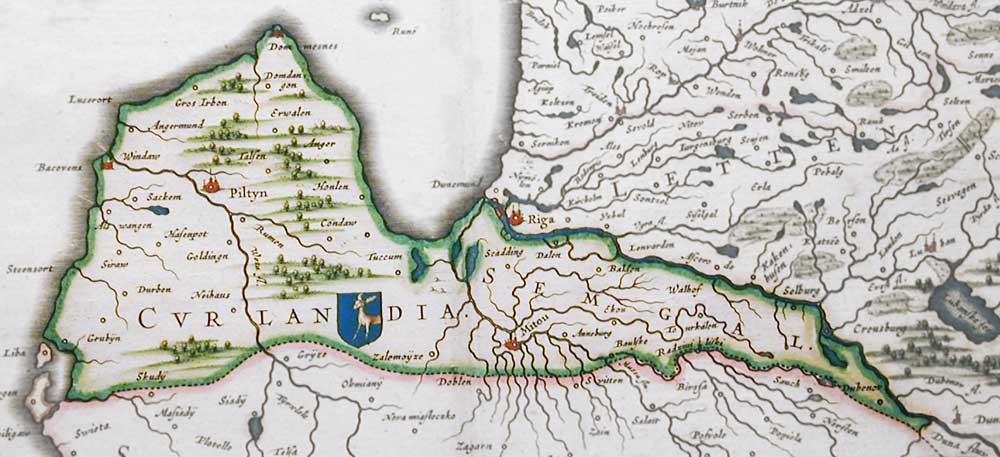
*Jacob Kettler (Latvian: Jēkabs Ketlers) (born October 1610 in Goldynga, died January 1682 in Mitau) – Regent of Courland and Semigallia from 1638 to 1642, Duke of Courland and Semigallia from 1638 and from 1642 to 1682, vassal of the Polish-Lithuanian Commonwealth. The most prominent representative of the Kettler dynasty, grandson of Gotthard Kettler, son of Prince Wilhelm Kettler, dethroned in 1616, and Sophie of Hohenzollern, daughter of the Prussian Duke Albert Frederick of Hohenzollern. In his youth, Jacob Kettler and his father were deprived of their rights to the throne of Courland and Semigallia and wandered around Europe. He visited Germany, France, England, and the Netherlands. He studied in Rostock and Leipzig. Due to his uncle’s childlessness, Friedrich Kettler was appointed his successor and effectively took over the duchy in 1638. The Polish King Władysław IV Vasa opposed this policy. After much effort, however, Jacob Kettler succeeded in securing the right of succession and becoming heir to Courland and Semigallia in 1642. From his marriage to Louise Charlotte Hohenzollern, Jacob Kettler had five children, including two sons who were Dukes of Courland and Semigallia: Frederick Casimir, who reigned from 1682 to 1698, and Ferdinand, who ruled the duchy intermittently from 1698 to 1737 and was the last male representative of the Kettler dynasty.

* History. Kuldiga (Kuldīga) is a town in western Latvia, situated on the Venta River. Its origins date back to the mid-13th century, when a settlement was founded. Construction of a castle began shortly thereafter. Its favorable location on a major water trade route resulted in Kuldiga receiving city rights in 1378, and consequently numerous privileges and concessions. Later that same century, the town became a member of the Hanseatic League (an association of trading towns in Northern Europe from the Middle Ages and the early modern era), ushering in a period of dynamic development and prosperity. At one time, ships even departed from the local port to the Courland colonies in Africa. At the turn of the 16th and 17th centuries, alongside Mitau (now Jelgava), Kuldiga was a major trading center for the Duchy of Courland and Semigallia. The local waterfall on the Venta River has always been a key feature of the town. This always prevented navigation upstream, making Kuldiga the last port for boats and ships plying the river. In 1615, it contributed to the town’s almost complete destruction by flooding. In 1659, the town and its castle were conquered and occupied by the Polish-Lithuanian Commonwealth. Kuldiga remained within Polish borders until 1795, when it became part of the Russian Empire.
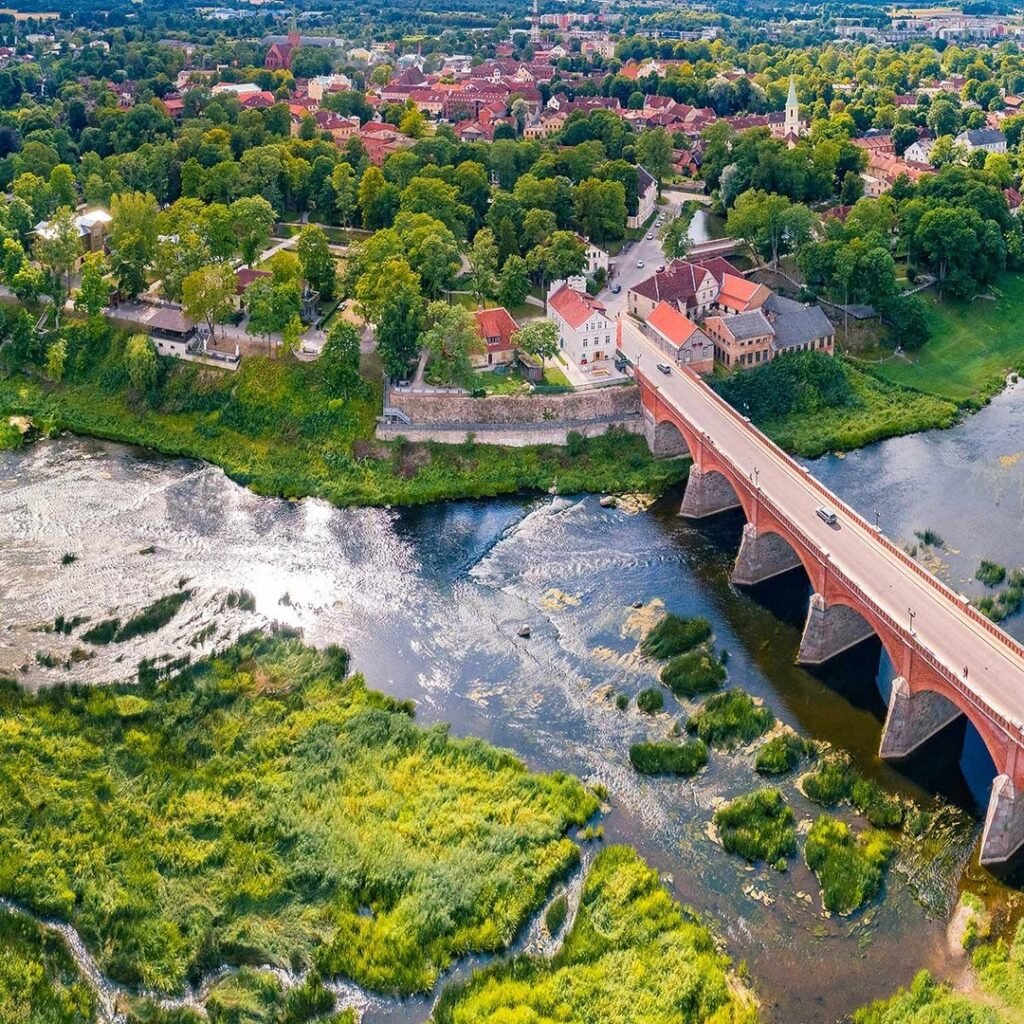
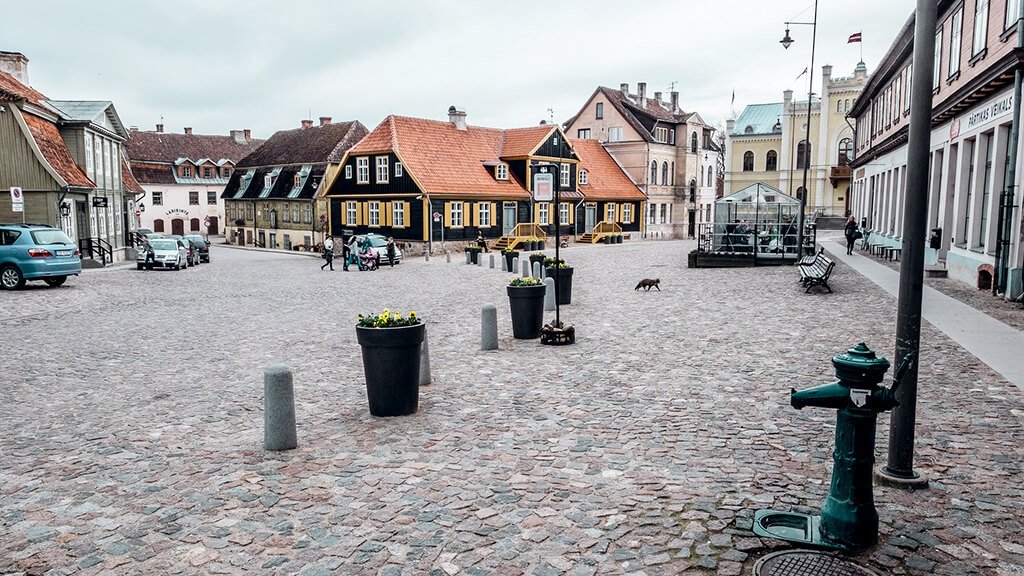
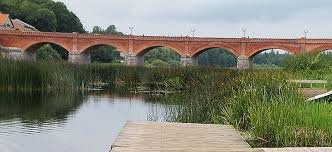
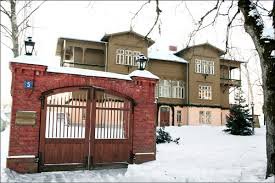
*Kuldiga still boasts an exceptionally charming old town with its characteristic 17th- and 18th-century wooden buildings. This complex of buildings is unique in Latvia. The heart of the city is Baznīcas iela Street, which begins at Ratslaukums Square. This is the best place to start exploring Kuldiga. The tourist information office is also located here, as well as numerous restaurants and cafes. Strolling along the promenade, it’s worth noting house number 8, a unique example of the characteristic half-timbered construction, commonly known as half-timbering. The town also boasts several historic churches (including the Catholic Church of the Holy Trinity, the Orthodox Church, and the Protestant Church of St. Catherine) and the interesting Museum of Local Lore, located on the site of a former castle. This museum boasts a rich collection of various objects and artifacts related to the history of the city and the region. Here, you can see, among other things, Old black-and-white photos documenting the development of Kuldiga. One of Kuldiga’s greatest attractions is the famous rapids with a picturesque waterfall located on the Ventspils River. This is the widest cascade of its kind in Europe, stretching from 249 to nearly 270 meters (during the spring thaw). A nearly 165-meter-long brick bridge, built in 1874, spans the river banks. It is one of the largest river structures of its kind in Europe.
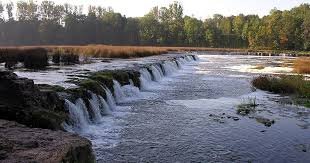
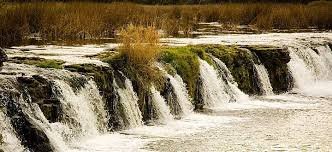
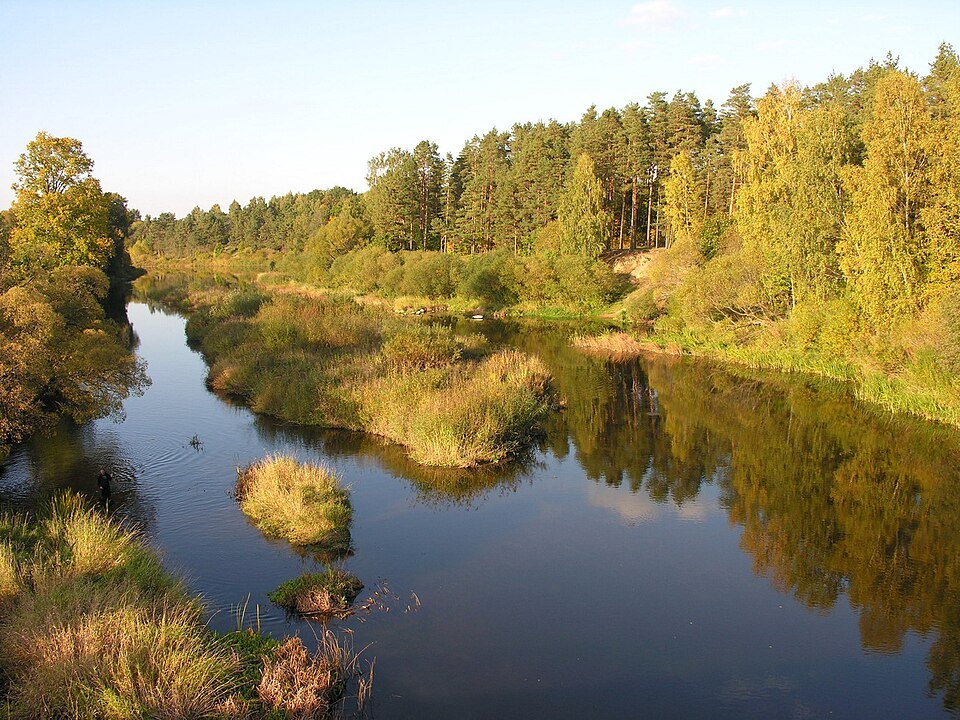
*The Venta (Latvian and Lithuanian: Venta) is a river in northern Lithuania and western Latvia (Courland). It is 346 km long, 178 km of which in Latvia, and has a catchment area of 11,800 km², 67% of which in Latvia and 33% in Lithuania. The Venta rises near the town of Kuršėnai, in Šiaulių apskritis (Šiaulių apskritis) in Lithuania. It flows into the Baltic Sea at the Latvian port of Venta. The Venta rumba, the widest rapids in Europe, lie on the Venta River. The main towns on the Venta River are Mažeikiai, Kuldīga, and Venta. The longest tributaries are Abava, Vyrvita, and Varduva.