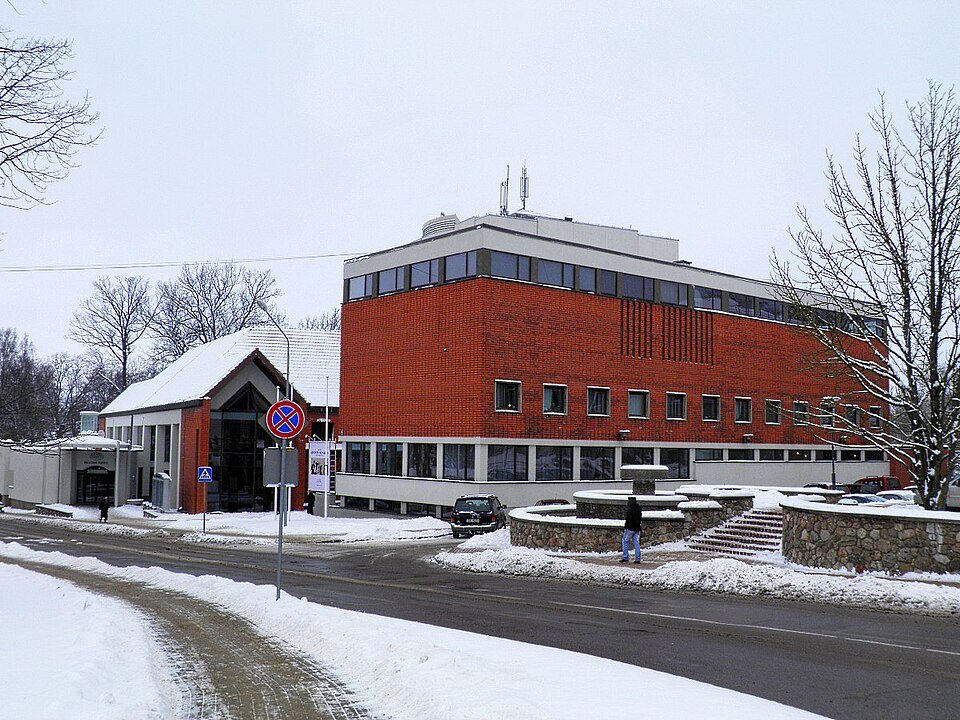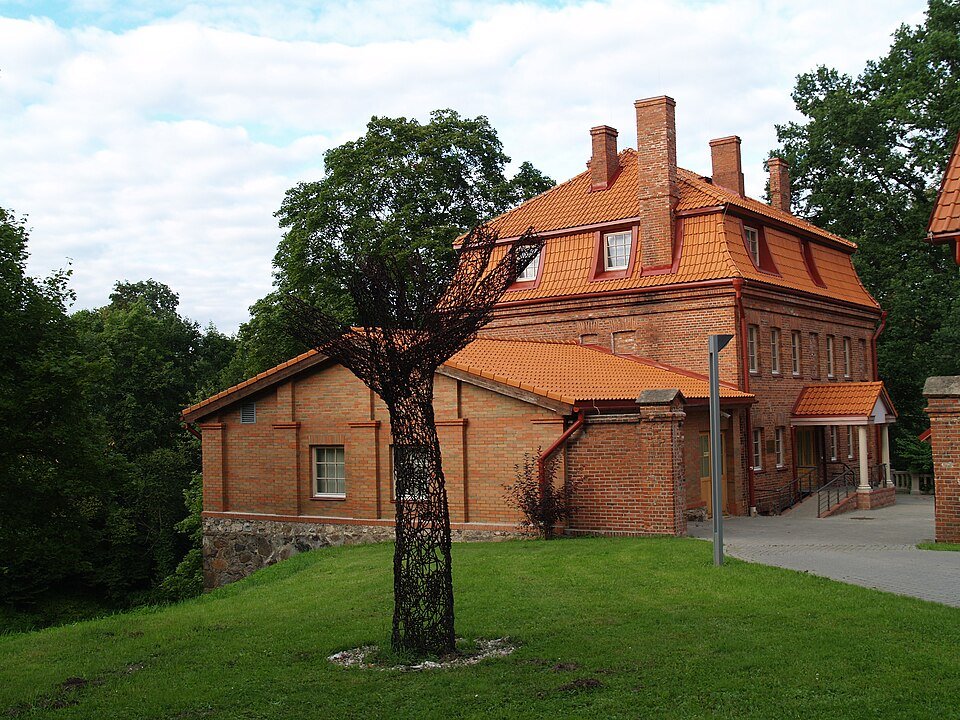
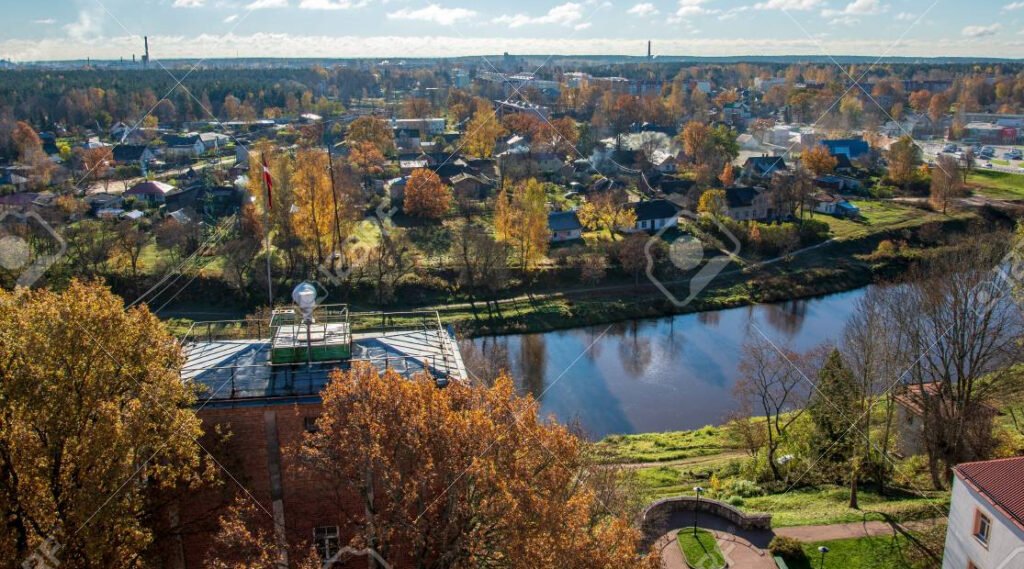
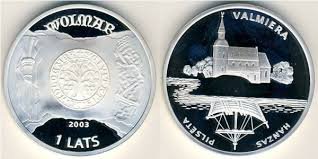
Valmiera, until 1917 Wolmar, a town in the north-eastern part of Latvia, in Livonia, on the Gauja River, at the crossroads of several important roads, about 100 km from Riga, the capital of the country, 50 km from the border with Estonia, the capital of the Valmiera novads, 27,515 inhabitants (2006).
*A bit of history. Wolmar and its surrounding area are among the earliest settled areas in Latvia. Archaeological finds have confirmed the presence of permanent human settlements in this area as early as 9,000 years ago. In the 11th century, a stronghold belonging to the Tālava region was located here. The brick castle in Wolmar was built by the Livonian Order in 1224. Wolmar is first mentioned as a town in 1323. The actual location likely occurred at least 40 years earlier, when Wilhelm von Nindorf, the Land Master of the Livonian branch of the Teutonic Order, built a church here in 1283. The church tower was added in the second half of the 14th century. Wolmar was a member of the Hanseatic League from the 14th to the 16th century. Membership in this alliance brought significant development to trade and transportation. During the interwar period, Valmiera became famous as a center for athletics, and famous national race walkers came from here, such as Jānis Daliņš (1904-1978), a six-time world record holder, silver medalist at the Los Angeles Olympics, and European champion in 1934. At the beginning of World War II, on September 20, 1939, a camp was established in the city for Polish civilian refugees who had fled from Poland to Latvia during the September Campaign. The camp contained 268 registered Poles, most of whom were released in October. From 1940, it was occupied by the Soviets, from 1941 to 1944 by the Germans, and again by the Soviets in 1944. World War II brought almost complete destruction to the city, especially its historic center. After the war, it remained within the USSR as part of the Latvian Soviet Socialist Republic, and the Liepas Air Force Base was located near Valmiera. After Latvia regained independence and the fall of the USSR, it once again became part of Latvia.
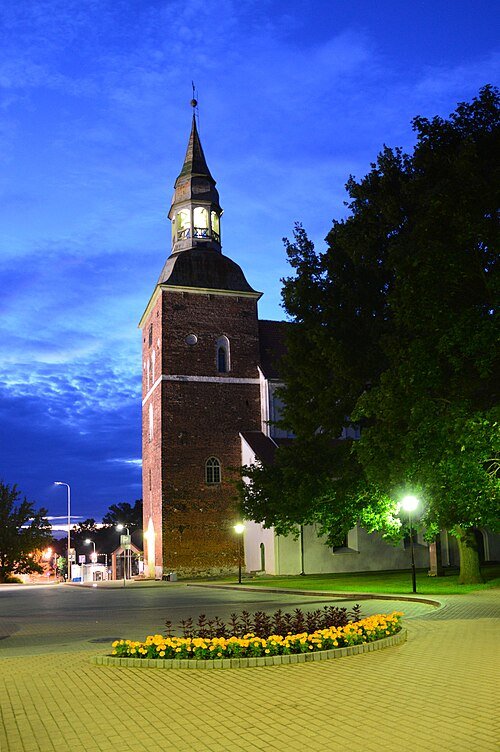
*Today, Valmiera is, alongside Riga, the de facto cultural and administrative center of Livonia. It is the only city in the region besides Riga with a professional theater, Valmieras teātris, which dates back to a theater company in 1872 and has been operating as a professional theater since 1923. In the 1990s, a regional university, Vidzemes Augstskola, was established here. It also houses a museum dedicated to local history. Valmiera is also the economic center of the region. The dominant industries are the food industry, fiberglass production, metal, wood, and furniture industries. There are plans to build a geothermal power plant, a sports hall, and an Olympic center in the city.
*Football Club Valmiera is a Latvian football club based in Valmiera. Established in 1996, it will play in the 1. Līga in the 2025 season. The team plays its home games at the Vidzemes Olimpiskais Centrs stadium. It will be the 2022 national champion.
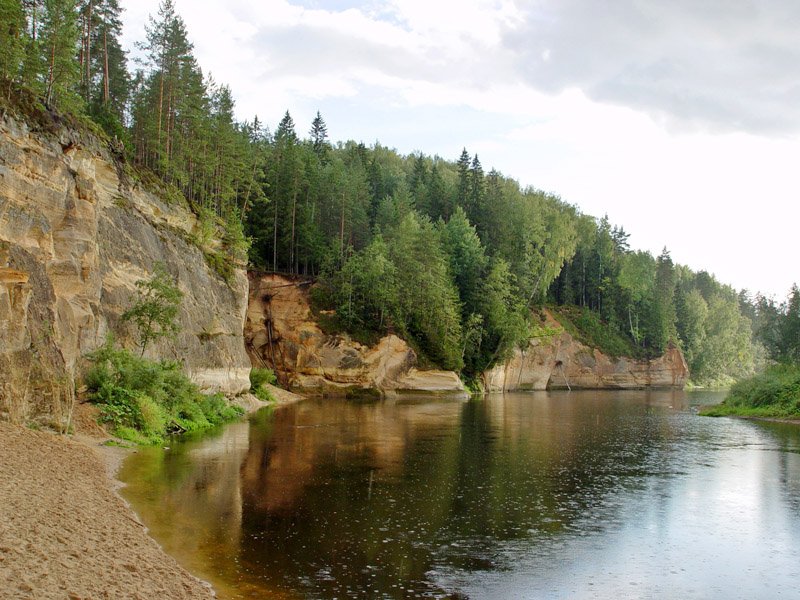
*The Gauja (Gawia, Goiwa, Trejder-Aa, Est. Koiva jõgi) is a river in Latvia and Estonia. Its length is 452 km, navigable in its lower section. It originates in the so-called Livonian Switzerland, flows through Livonia and through the towns of Valmiera, Kieś (Latvian: Cēsis, German: Wenden), and Sigulda, which were formerly the seats of the Livonian Brothers of the Sword. It then flows into the Gulf of Riga above Riga. In its middle section, for 93 km, it flows through Gauja National Park. Its lower course once formed the ethnographic border between Latvians and Estonians.
*Museums and theaters. The Valmiera Drama Theatre, one of the oldest theaters in Latvia, is worth visiting. The Valmiera Museum also offers insights into the region’s rich history.