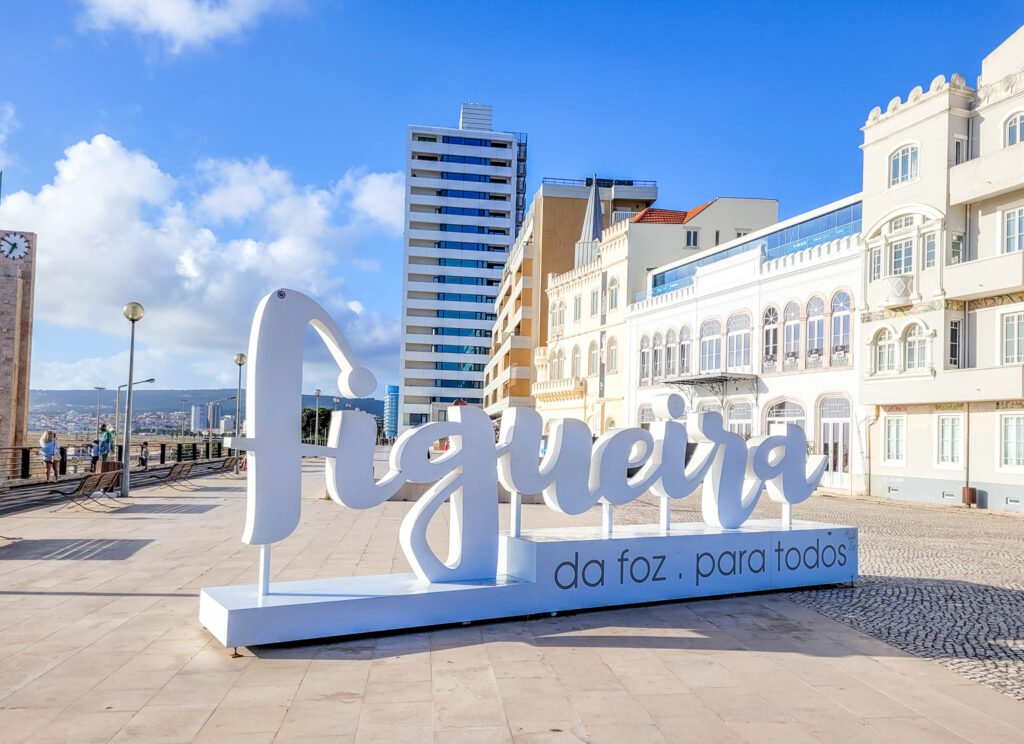
Figueira da Foz is a town in Portugal, located in the Coimbra District, in the Centro region, in the Baixo Mondego subregion (at the mouth of the Mondego River on the Atlantic Ocean). The town is the seat of the municipality of the same name.
*Figueira da Foz stretches across 379 square kilometers at the mouth of the Mondego River, with extensive beaches and a Mediterranean climate. The municipality’s origins are documented in 1096, developing from a small fishing settlement into a significant port and industrial center. The municipality maintains fourteen distinct parishes, each contributing to regional traditions through fishing practices, agricultural methods, and local festivals. The city is connected to major Portuguese destinations by the A14, A17, and A1 motorways, with regular train connections between Coimbra and Lisbon. The municipality contains diverse natural environments, including rice paddies, salt pans, dunes, lagoons, mountains, and twelve kilometers of Blue Flag beaches.
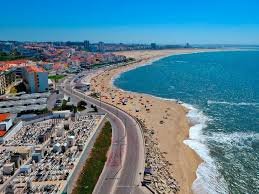

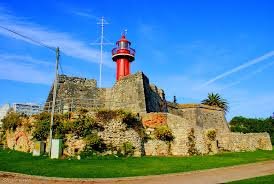
*Figueira da Foz is a town and popular summer resort in Portugal, located at the mouth of the Mondego River into the Atlantic Ocean on the southern tip of the Beiras coast. Although not as popular as the Algarve, the area attracts a growing number of tourists each year. In addition to a wide range of accommodation and dining options, holidaymakers can enjoy a vast, half-kilometer-wide sandy beach. The high ocean waves create ideal conditions for windsurfing, and windsurfing competitions are frequently held here. The town also boasts one of the largest casinos in Portugal. While visiting Figueira da Foz, it’s also worth exploring the outskirts of the town, where the remains of the medieval Fort of St. Catherine lie near the river’s mouth. This fortress was built in the 16th century and its primary purpose was to protect the coast from pirates.


*Arriving by plane: Figueira da Foz doesn’t have an international airport, nor does its metropolis, Coimbra. That said, Coimbra is located halfway between the major international airports in Porto and Lisbon, with frequent trains running between the two cities via Coimbra, where you can transfer to Figueira da Foz.

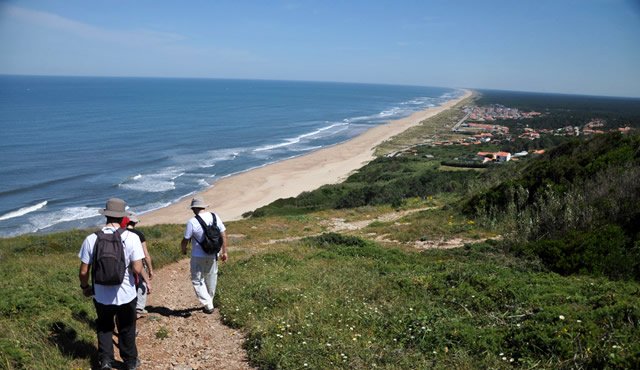
*Serra da Boa Viagem A green hill rising above Figueira in the north, overlooking the Atlantic coast and Cabo Mondego, it offers a view of the departing boats on their way, hence the name, referring to the traditional greeting given to travelers.
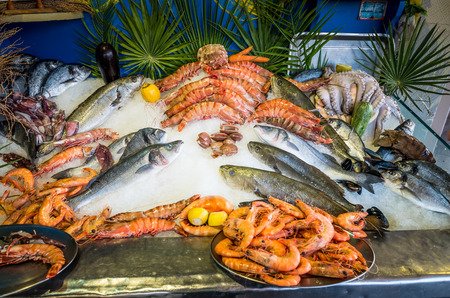
*What would Portuguese cuisine be without fresh fish and seafood?
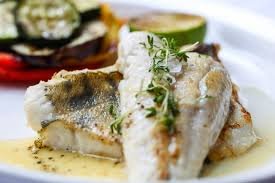
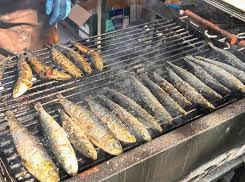
- Salted, dried cod (Portuguese: bacalhau) reigns supreme in Portugal and is the absolute king of the table. Apparently, there are 1,001 ways to prepare it! And I have no doubt that there are countless dishes using this fish in Portugal. I especially recommend: Bacalhau à Brás (cod mixed with fries, egg, and onions), Bacalhau com natas (cod in cream sauce), Bacalhau assado na brasa (grilled cod), and Bacalhau com broa (cod covered in cornbread). What else can you eat besides cod? What fish should you eat in Portugal? Portuguese sardines. The larger ones are grilled with just coarse salt and drizzled with olive oil – heavenly! These are sardinhas assadas na brasa. Tiny sardines, on the other hand, are most often fried in breadcrumbs (eaten whole, with bones, head, and tail) – in Portuguese, they’re called sardinhas fritas (petingas fritas). Other fish that are always delicious and worth recommending include dourada (sea bream), robalo (sea bass), and tuna steak (Portuguese: bife de atum) – it looks like beefsteak. Another interesting option is ray (stingray), which is eaten with its bones! Espinhas (bones) resemble delicate cartilage rather than typical sharp bones (probably because rays are cartilaginous fish, after all).
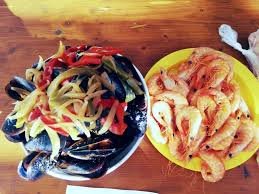
- Typical Portuguese food is also inextricably linked to seafood. I especially recommend mexilhões (mussels) and boiled or grilled shrimp, number one on the list of the most delicious seafood, delicious! These are more of appetizers and snacks than main courses. Unless you opt for shrimp skewers (Portuguese: Espetadas de camarão or Espetadas de gambas). Squid, also known as lula and pota, are also very good (lula seems to be more appreciated by the Portuguese; apparently, pota is a lesser version of lula, but I personally don’t see the difference). I recommend Espetadas de lulas, or squid skewers. You also can’t go wrong with polvo, or octopus. Polvo à Lagareiro (boiled and then grilled octopus with garlic and onion) served with batatas a murro (salted potatoes in their jackets) is delicious.