
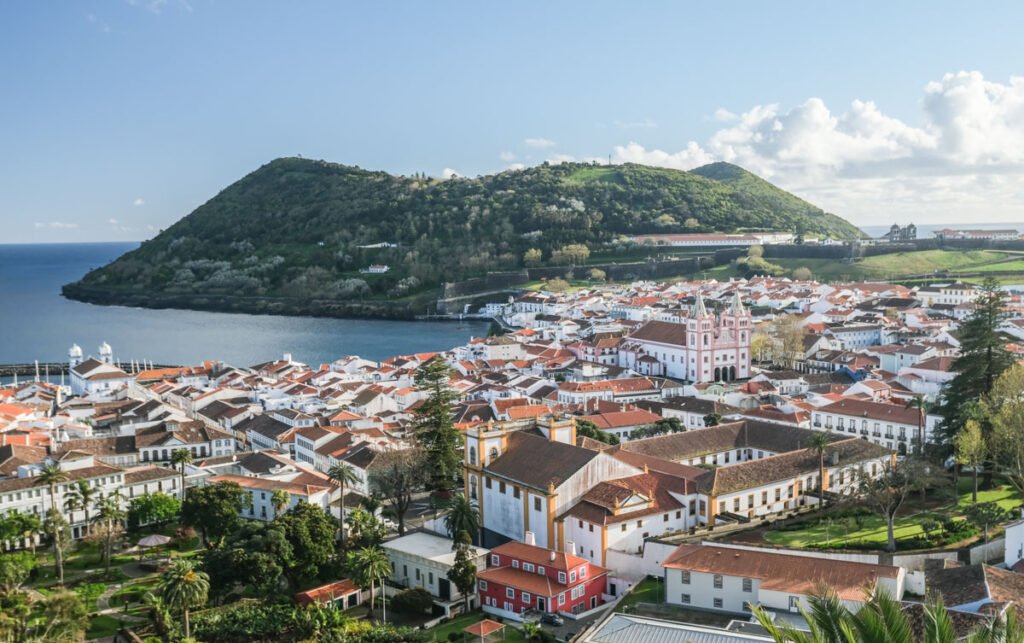
Terceira, a Portuguese island of volcanic origin in the Atlantic Ocean, is located in the central-eastern part of the Azores archipelago, part of Macaronesia. This third-largest island in the Azores covers an area of 396.75 km², and its highest point is Santa Bárbara Peak, which rises to 1,023 meters above sea level. Administratively, it is divided into two municipalities – Praia da Vitória in the northeast and Angra do Heroísmo in the southwest, whose capital is the historic fortified city of the same name and the island’s administrative center, designated a UNESCO World Heritage Site in 1983. According to 2003 data, Angra do Heroísmo has 35,581 of Terceira’s 54,996 inhabitants.
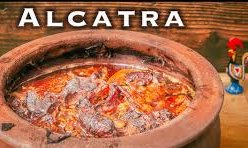
Food, what to try. Four delicacies you’ll enjoy on Terceira:
– alcatra (a beef stew, possibly with seafood),
– cracas (packlefish, a bit like oysters),
– Queijada da Dona Amélia (molasses muffins with honey and spices),
– cheese (cows in the Azores eat fresh grass, and their milk is used to make delicious cheeses)
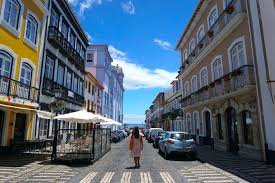
Transportation. You’ll need to fly to Terceira. SATA operates flights between the islands of the Azores archipelago. Flights from mainland Portugal (TAP and budget airlines) and other European cities are also available. Public transportation isn’t particularly reliable. You can rent a car (or alternatively, a bike or your own feet). It’s worth booking in advance, especially in summer.
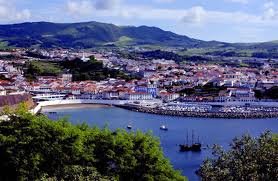
Angra do Heroísmo. You could say that it all begins here, in the island’s capital. Stroll through the Renaissance streets, visit the Sé Cathedral, and climb Monte Brasil with the São João Baptista Fortress, which offers a panoramic view of the city and bay. You must stop in this picturesque and atmospheric town. I wholeheartedly agree. Angra do Heroísmo is wonderful. Indeed, if you do visit the capital of Terceira, take at least fifteen minutes to admire the city from its best vantage point—Monte Brasil Caldeira. This extinct volcano rose from the sea to connect with the city of Angra do Heroísmo, rising 205 meters above sea level. Today, it is a protected landscape and a natural park within the city, offering excellent views of Angra do Heroísmo. A pleasant hiking trail, PRC04TER, leads to the top of the crater, and you should allow about three hours for the hike. With a little luck, you might even spot wild deer, or even—if visibility is good and you’re very lucky—whales emerging from the Atlantic to catch their breath.
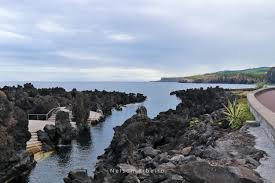
Biscoitos is a town on the northern coast famous for its natural lava pools. Swimming in the crystal-clear Atlantic waters, surrounded by black volcanic rocks, is an unforgettable experience. And not only for those brave enough to jump into the churning waters, but also for nature lovers. My group and I were just such a group on Terceira. Biscoitos, as well as neighboring towns and the Terceira coastline, are the island’s most beautiful attractions. Simply drive ahead and admire the beauty of nature.
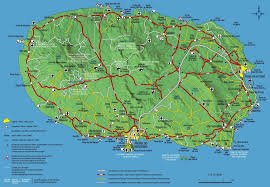
A la Madeira hiking trail. I’m referring to the Misterios Negros PRC01 hiking trail. If you have more time, you can’t miss this stop. The entire hike will take you no more than 3 hours (4.9 km). The views are spectacular.
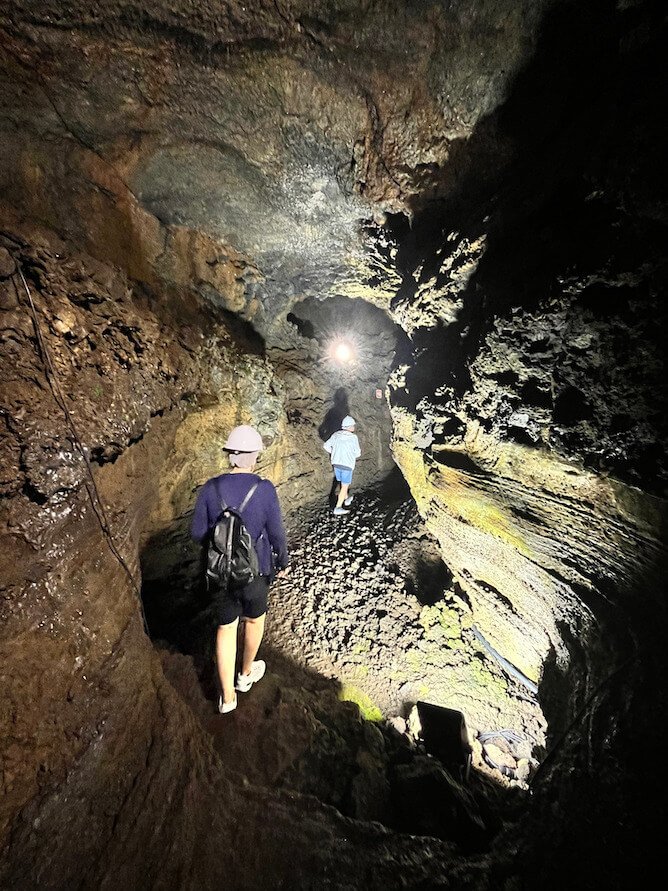
The Algar do Carvão Volcano. This unique attraction attracts so many visitors from around the world to Terceira. What is it? It offers the opportunity to descend into the depths of an extinct volcano. The sight of a vast volcanic cave, covered with delicate vegetation and with a lake at its bottom, is breathtaking.
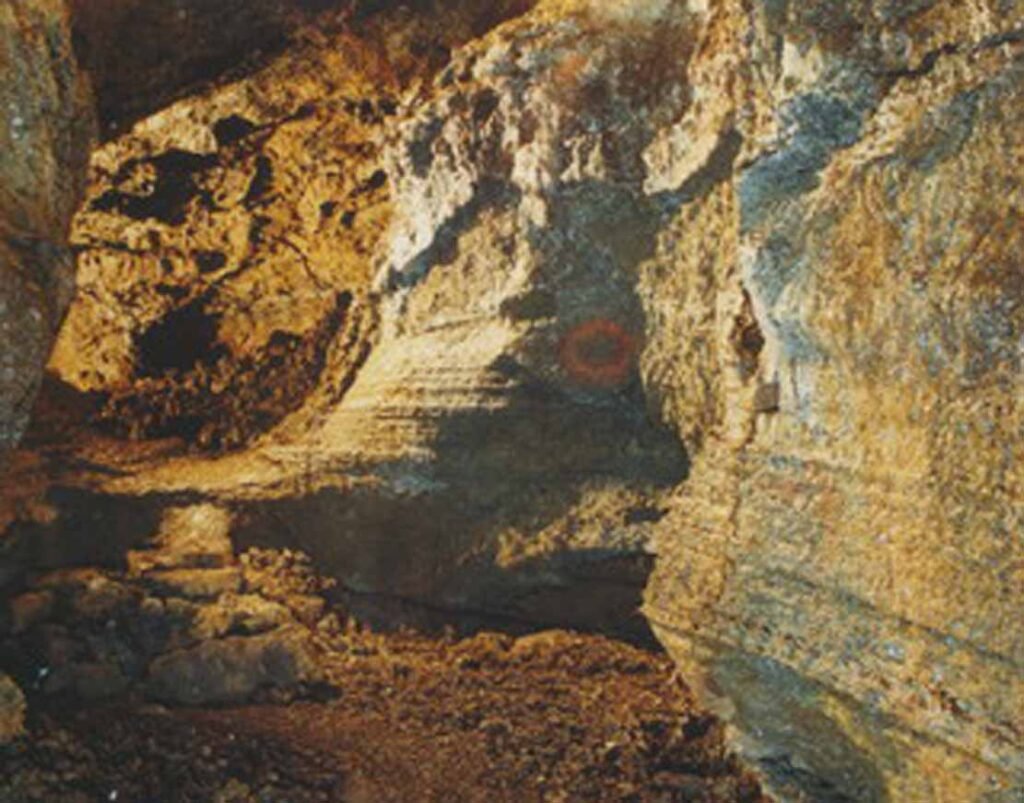
Gruta do Natal Lava Tunnel. Or rather, the entrance to the Christmas Cave, a fascinating lava tunnel. With a helmet on, feeling like an explorer of the underground world, you’ll experience unforgettable moments here.
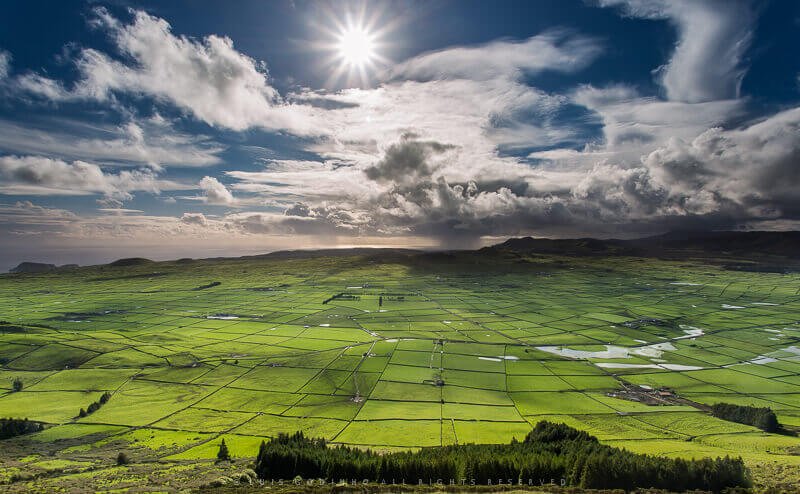
Miradouro da Serra do Cume. And now the viewpoint from which Terceira’s most famous landscape unfolds – a patchwork of green fields intersected by stone walls, known as the “patched blanket.” This is not the only place on the island with such a view. The northern part of the island, or rather the northern coast of Terceira, is full of similar “patched” landscapes.
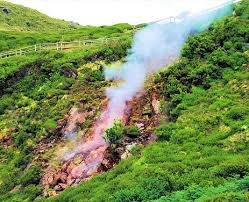
Furnas do Enxofre. Finally, I left the geothermal field, where you can observe fumaroles—holes in the ground from which hot steam with a characteristic sulfurous smell emanates.
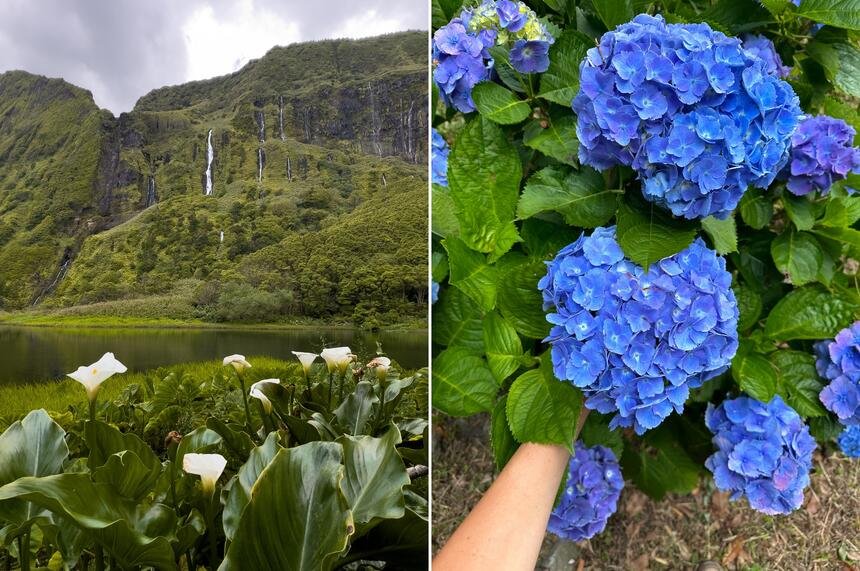
Terceira, the Purple Island. In the heart of the Atlantic, one of the nine pearls of the Azores archipelago, lies Terceira. Often called the “Purple Island” due to its ubiquitous hydrangeas, during peak season, it is a place where history meets nature in its most spectacular way. From a Renaissance city listed as a UNESCO World Heritage Site, to the interior of an extinct volcano, to joyful local festivals, Terceira offers unforgettable experiences. Terceira is an island of hundreds of colorful chapels known locally as Imprerios, an island of intensely green pastures, and thousands of cows.
