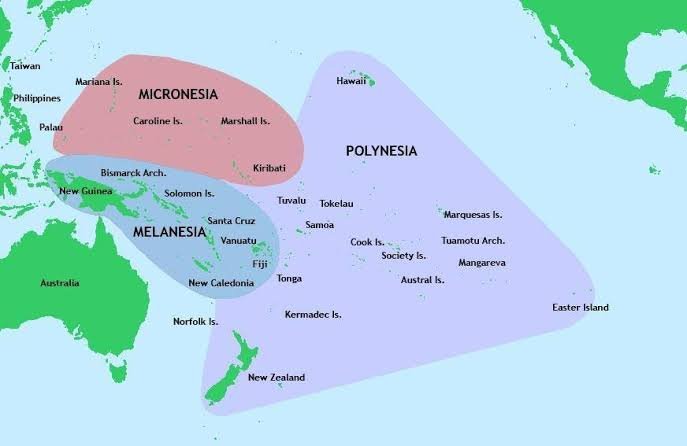
The Line Islands are a group of 11 coral islands in the Pacific Ocean, located in Polynesia. They stretch for approximately 2,500 km near the equator and the 160°W meridian. Among them is Kiritimati (Christmas Island) – the largest coral island in the Pacific. The islands are situated in the world’s earliest time zone, with an offset of UTC+14.
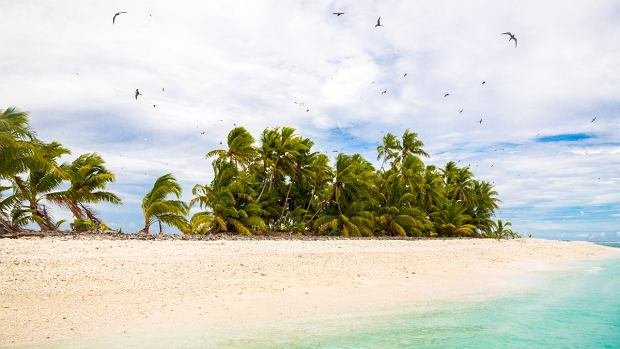
About the islands. The total land area of the islands is 512 km². Only three are inhabited, with a population of 8,809 (according to a 2005 census): 5,115 people live on Kiritimati, 2,539 on Tabuaeran, and 1,155 on Teraina. In 1900, only about 300 people lived on these three atolls. Most of the islands—specifically Flint, Vostok, Caroline, Starbuck, Malden, Kiritimati, Tabuaeran, and Teraina—are part of the island nation of Kiribati, constituting one of its six districts. The remaining islands (Jarvis, Palmyra, and Kingman Reef) belong to the United States. The islands were discovered in the second half of the 18th century and remained a British possession (the Gilbert and Ellice Islands) for over two centuries. In 1979, they became part of the independent nation of Kiribati.
Political and territorial division. Most of the islands are part of the nation of Kiribati, while three are unincorporated territories of the United States:
• Kiribati (8 islands): Kiritimati (Christmas Island), Tabuaeran (Fanning Island), Teraina (Washington Island), Malden, Starbuck, Vostok, Caroline (Millennium Island), and Flint.
• United States (3 territories): Palmyra Atoll, Jarvis Island, and Kingman Reef.
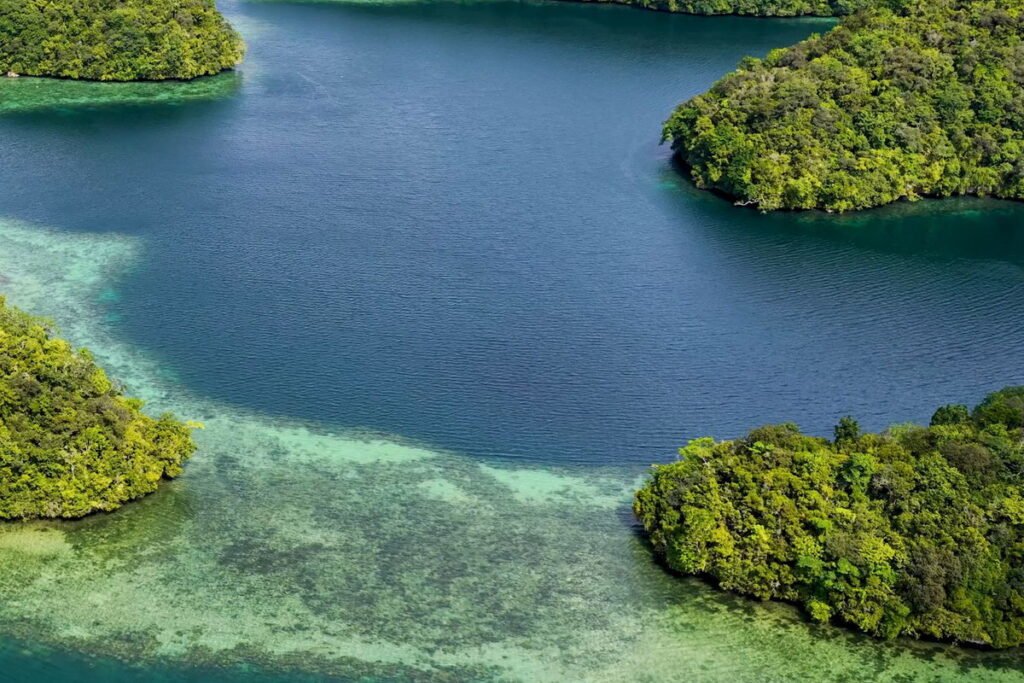
Important information about the islands:
• Population: A permanent population resides on only three of the islands belonging to Kiribati (Kiritimati, Tabuaeran, and Teraina). The remaining atolls are uninhabited.
• Largest island: Kiritimati – it accounts for over 70% of the archipelago’s total land area and is the largest coral island (atoll) in the world by land area.
• Record-breaking time zone: The islands belonging to Kiribati are located in the UTC+14:00 time zone. This means their inhabitants are the first in the world to welcome each new day and the New Year.
• History: The islands were discovered by Europeans in the second half of the 18th century. During the 19th and 20th centuries, they were sites for guano extraction and the establishment of coconut plantations (for the production of copra).