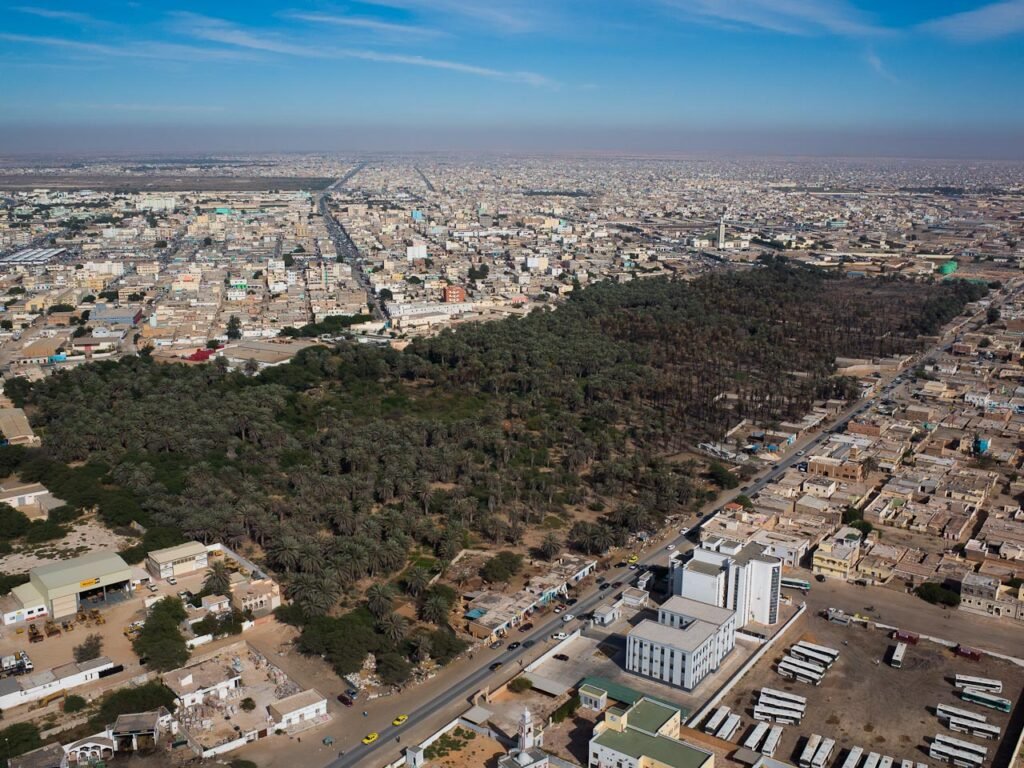
Nouakchott, the capital of Mauritania, is located in the western part of the country, 4 km from the Atlantic coast. Nouakchott is also the capital of the Mauritanian Capital District. In 2013, the city had a population of approximately 958,000. The city boasts seawater desalination plants and an international airport. Nouakchott is also characterized by low-rise buildings and a lack of high-rise buildings.
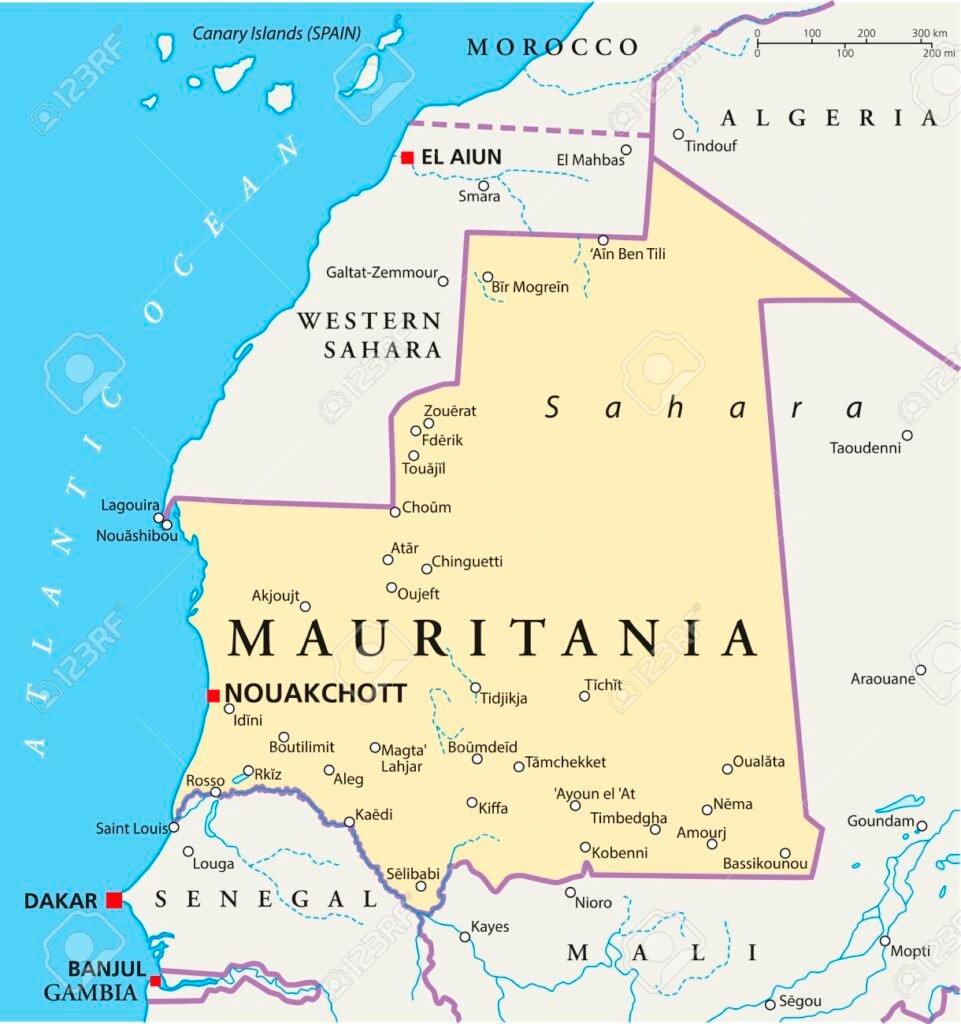
The city’s history. In the 17th century, the Portuguese founded a fort 25 kilometers from the present-day capital of Mauritania. At the beginning of the 20th century, only a desert well existed on the site of present-day Nouakchott. In 1904, a small French military post (a dozen or so soldiers) was built there, and in the 1920s, a fort and an airfield were built to service mail planes flying the Toulouse-Dakar route. In 1927, a civilian village began to develop around the post, initially with about 100 inhabitants. In 1950, a flood occurred; the Senegal River overflowed, destroying the city. New Nouakchott was built about 1 kilometer north of the old site. In 1957, the decision was made to build a city, conceived as the future capital of Mauritania, which was striving for independence. Work, co-financed by a French loan, began the following year, despite significant logistical challenges (for example, water for construction purposes initially had to be brought in by tanker from the Senegal River, several hundred kilometers away). This intensive expansion was intended to ensure that Nouakchott could reach a population of 15,000. A devastating drought in the Sahel in the 1970s caused a rapid influx of people, who settled there in search of better living conditions. In 2004, Nouakchott’s population reached 689,000. Due to this rapid population growth, the city now struggles with a shortage of drinking water.
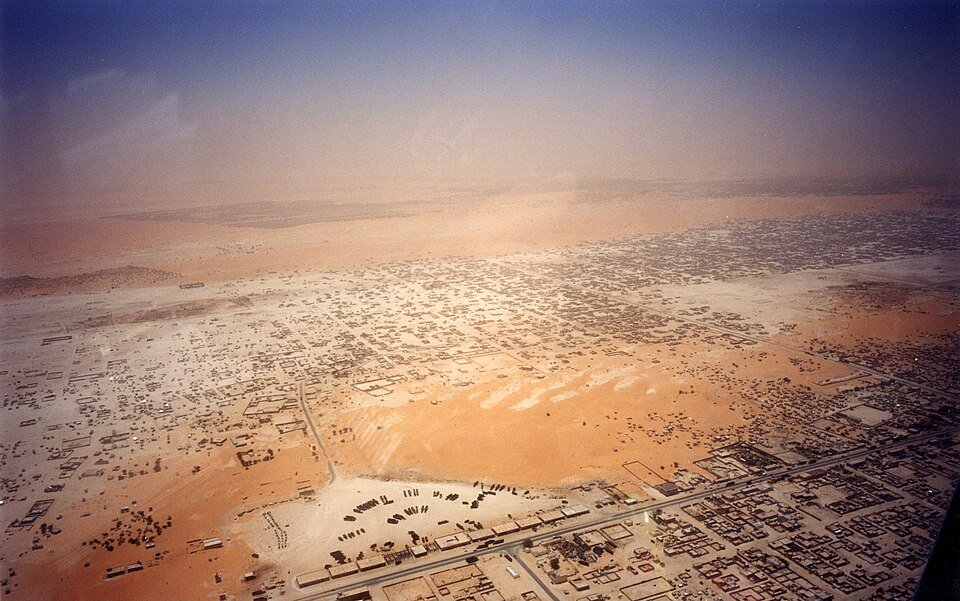
Transportation: The city has an international airport. Mauritania Airways, the Mauritanian carrier, offers flights to Paris, Las Palmas, and several cities in Mauritania and other West African countries. Other carriers also offer connections to Casablanca, Tunis, and Marseille. Four paved roads branch off the city: north to Nouadhibou, northeast to Atar, south to Rosso, and east to An-Nama. This last route is the longest in Mauritania and is known as the Route de l’Espoir (“Road of Hope”).
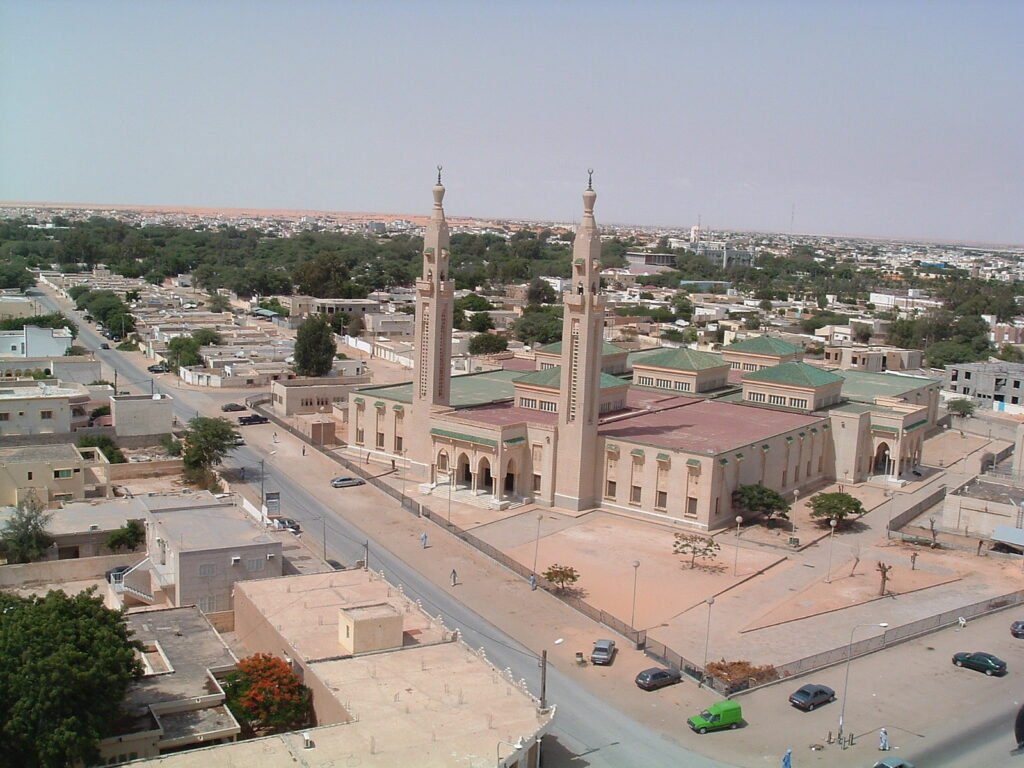
Characteristics and Interesting Facts.
Demography and Culture: The metropolitan area is home to over 1.2 million people, representing nearly a quarter of Mauritania’s entire population.
Large Size: The city is very sparsely built-up and covers an area.
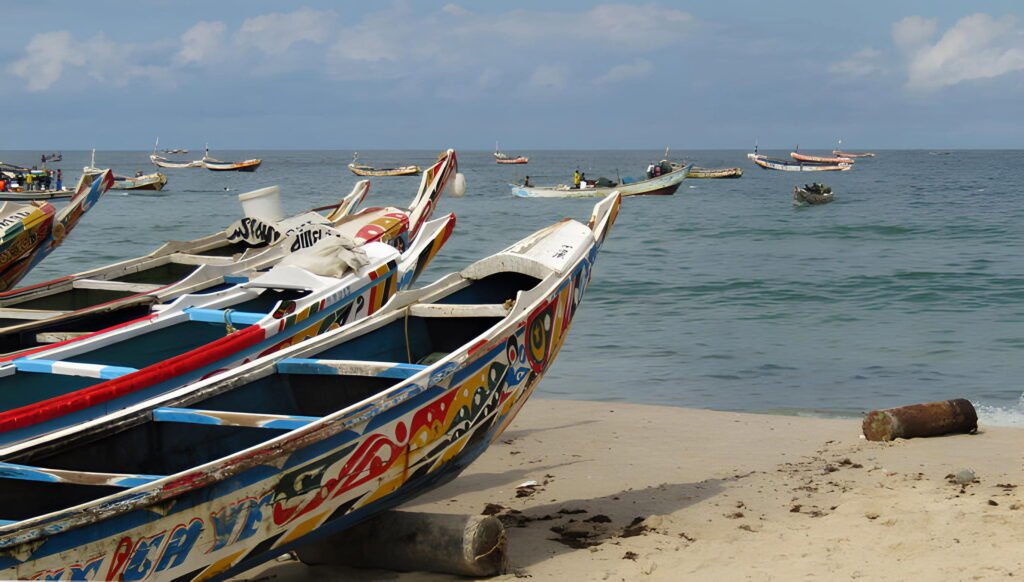
Fishing Port: One of the city’s most important and fascinating landmarks is the Port de Pêche. A bustling place where thousands of traditional, colorful wooden boats called pirogues are pulled ashore.
Economy: Nouakchott serves as the country’s main financial and economic hub, focusing on trade and processing. The average standard of living in the region remains low, with many residents engaged in crafts and agriculture.
Architecture: Due to the influx of refugees from rural areas, the city boasts striking contrasts – modern government buildings, mosques, and embassies mingle with traditional Bedouin camps.
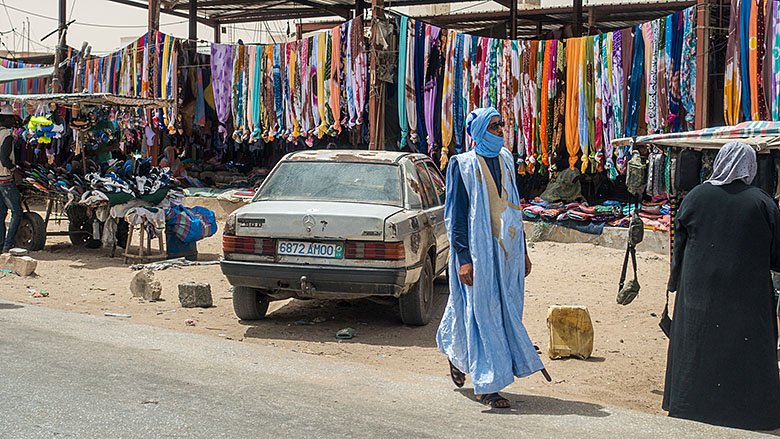
Nouakchott, the capital of Mauritania, is a fascinating blend of tradition and the harsh desert climate. Top attractions include the bustling Fishing Port (Port de Pêche) with hundreds of traditional, colorful boats, the Camel Market (one of the largest in West Africa), and local craft markets where you can buy traditional leather and silverware. Culture enthusiasts should visit the National Museum of Mauritania and the Handicraft Center (Centre Artisanal).
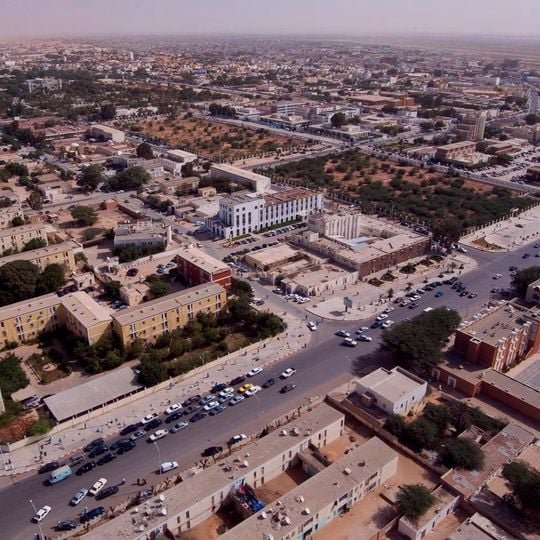
Tourist attractions: Nouakchott doesn’t boast a long history as a city, so it lacks historical monuments and accommodations are sparse. Most tourists only come here on their way to other destinations in Mauritania or transiting from Morocco to Senegal or Mali. The only museum of interest is the Musée National de Nouakchott. It is housed in a building built by the People’s Republic of China in 1972 and shares its premises with the National Library. The city has several local markets (especially the fish market in the port), a few small mosques in the city, and a wide, sandy beach on the Atlantic coast.