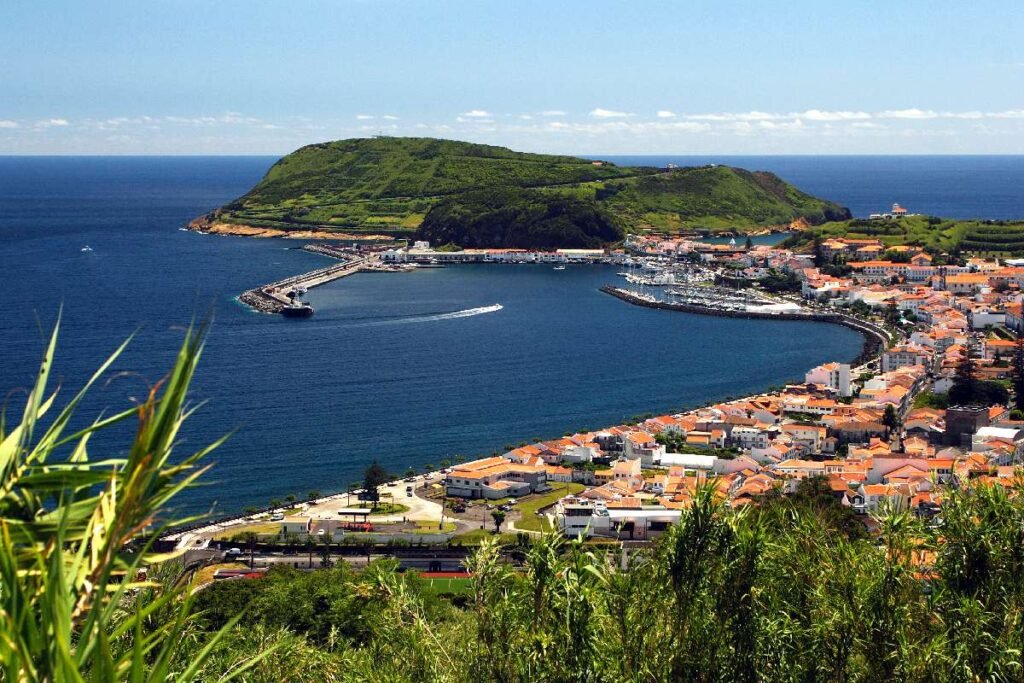
Faial is a Portuguese volcanic island in the central part of the Azores archipelago, part of Macaronesia. It lies opposite the distinctive stratovolcano of Pico, separated by a strait averaging 3 km wide, where numerous common dolphins, sei whales, and sperm whales are now a major tourist attraction. The island covers 173 km², and its average dimensions are 20 km long and 25 km wide. The highest point is the Cabeço Gordo (literally “Fat Head”) peak, rising to 1,043 m above sea level. On the western edge of the island is the Ponta dos Capelinhos lighthouse. Among local historical events, noteworthy are the relatively large number of Flemish settlers who settled the island starting in the 15th century, and the 1957 eruption of Vulcão dos Capelinhos, which increased the island’s surface area by less than 1.5 km². The capital of Faial is the town of Horta, home to 6,636 of the island’s nearly 15,000 current inhabitants – a popular stopover for yachts crossing the Atlantic. The island’s population is engaged in cattle breeding and the cultivation of vines and corn.
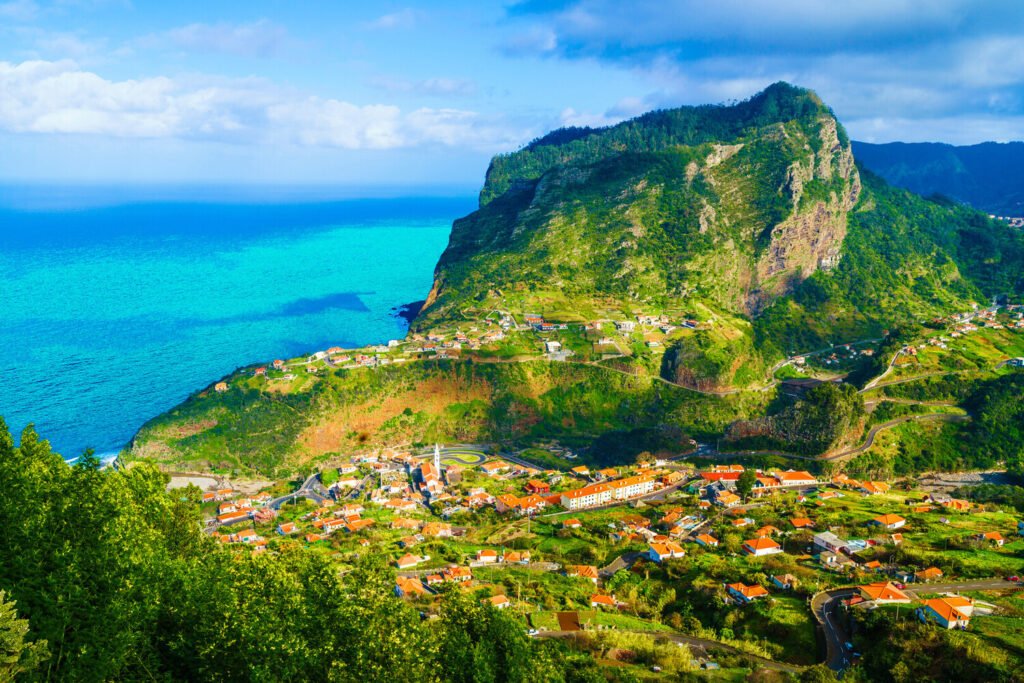
General Information: Faial is a place where the hearts of hikers and sailors begin to beat faster. Begin your visit to this island in the bustling port town of Horta – according to locals, it’s the fourth most visited marina in the world! Sample gin at the famous Peter Cafe Sport, take a trekking trail through volcanic landscapes, chimneys, craters, and caves, swim on the sandy beach of Porto Pim, and if the weather cooperates, head to Cabeco Gordo Hill, where the abundance of blooming hydrangeas gives the island the color of the surrounding sea. Thanks to this symbiosis between the blue of the flowers and the green of the pastures and surrounding vegetation, Faial is sometimes called the blue island of the Azores. Many surprises await you on the island – Cabeco Gordo’s interior conceals a caldera brimming with vegetation, and in the western part of the island, you can be transported to the almost lunar landscape of the Capelinhos volcano. This small island, located near Pico, with long-standing economic and cultural ties to it, was discovered somewhat by accident in the second half of the 15th century, as a result of an unsuccessful expedition searching for new tin and silver ores. The mainstay of the economy became the cultivation of woad – a medicinal plant from which the blue dye indigo was also extracted – and later, a newly built port, at the time one of the most important navigational stops between Europe and the Americas.
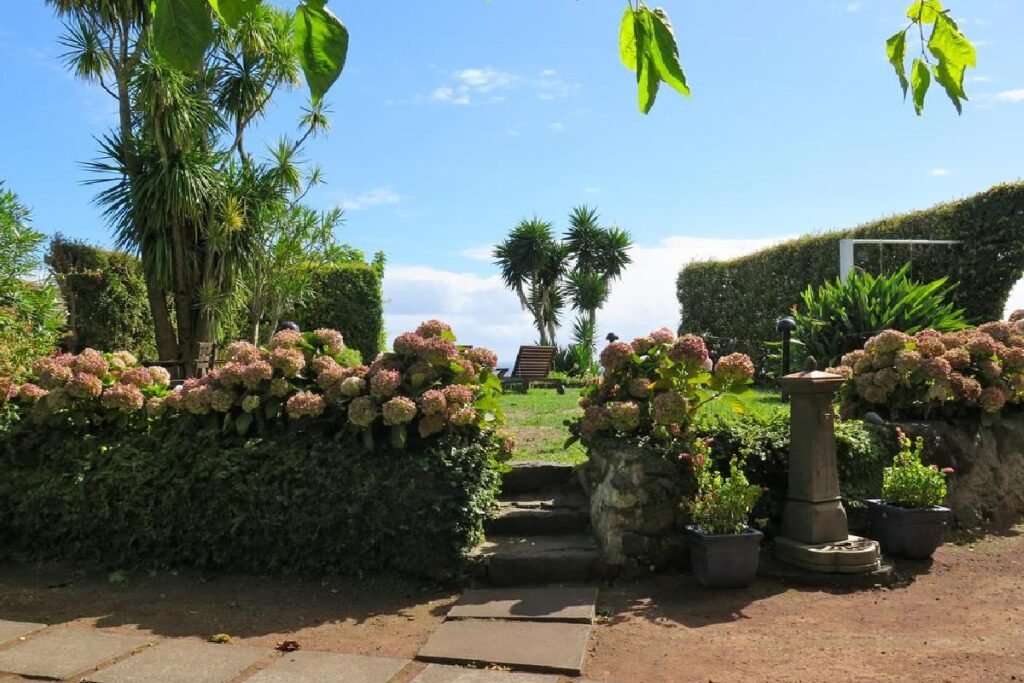
The “blue island” of Faial, known as “blue island,” is known for its numerous hydrangea hedges and is undoubtedly one of the most charming islands in the Azores. Shaped like an irregular pentagon, Faial covers an area of approximately 173 km², making it the fifth largest island in the archipelago. The distance to the neighboring islands is 7 km to Pico, 19 km to São Jorge, 85 km to Graciosa, and 124 km to Terceira. Topographically, the island is dominated by the Caldeira, a massive volcanic crater approximately 2 km in diameter and 400 meters deep, with gentle slopes interspersed with secondary volcanic formations. Its highest peak, Cabeço Gordo, has been a dormant volcano since 1672 and reaches a height of 1,043 meters above sea level. In any case, Faial’s greatest attraction is undoubtedly its capital, the charming town of Horta, which, with its famous marina and rich architectural heritage, is arguably the most vibrant and cosmopolitan city in the archipelago. Regarding Faial’s history, it can be said that, in a sense, it reflects the history of the entire archipelago, clearly demonstrating that all historical events originated from outside. The discovery of Faial Island is closely linked to the discovery of São Jorge Island in 1450, and large-scale settlement began in 1466, when Josse van Hurtere—who gave the town its name, Horta—landed on the island with around a thousand people searching for silver and tin mines.
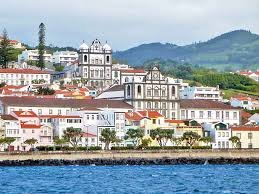
The port city of Horta, Faial Airport. Another milestone in Faial’s history was the arrival of the first seaplane at Horta’s port in 1919. From then until World War II, all transatlantic seaplane flights stopped at Horta’s port. Faial also became an important military base for the Allies during World War II. Later, under Salazar’s rule, Faial fell into obscurity, like the rest of the islands in the archipelago. Only when Faial built an airport in 1971 and the Azores archipelago was recognized as an autonomous region – the city of Horta became the seat of the regional government from 1976 and became one of the three regional administrative centers – did Faial’s political and economic importance increase again. However, this period of prosperity was short-lived as the island was once again hit by another setback, the terrible earthquake of 1998, which left significant damage across the island, especially in the northwest, where several villages were completely destroyed.
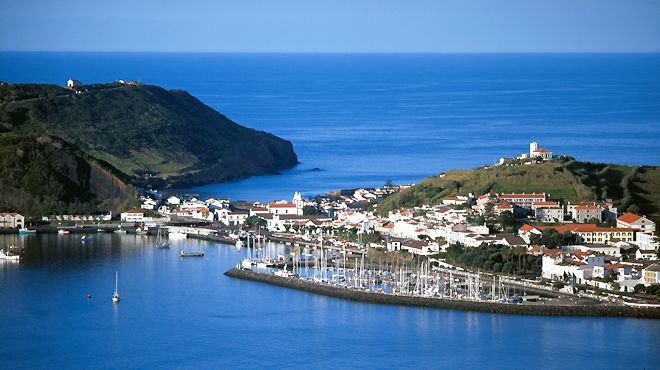
When to go to the island? The best times are May, June, July, August, and September. Good times are February, March, April, and October. Average times are January, November, and December.
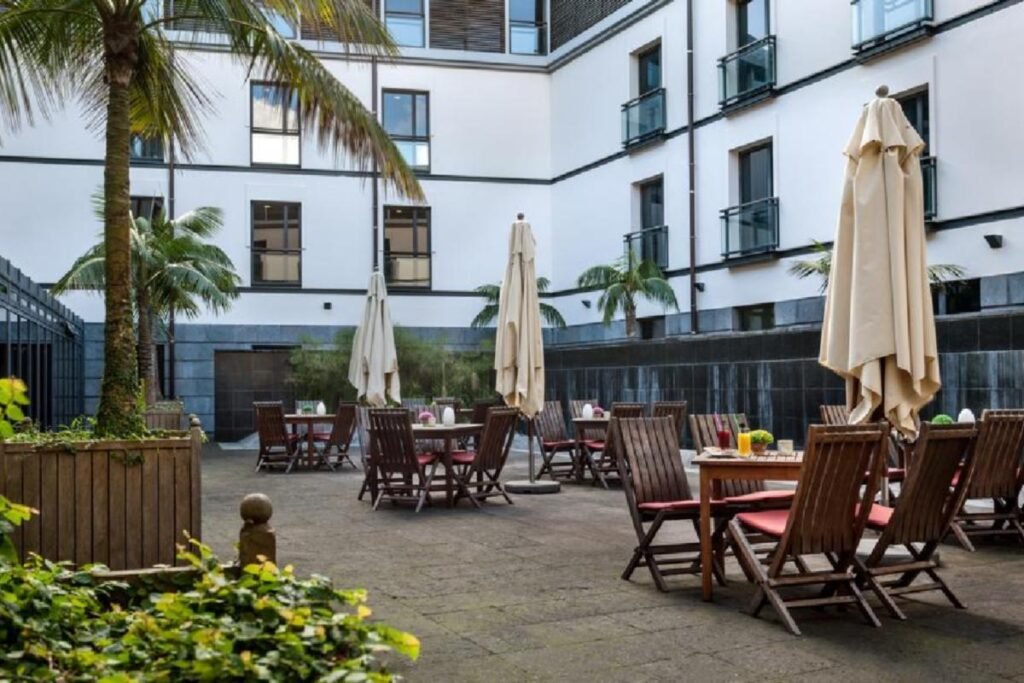
Hotel do Canal. Located in the capital of Faial Island, the four-star Hotel do Canal is just 100 meters from the marina and about 500 meters from Horta town center. Numerous shops, restaurants, and bars are nearby. The property also features a spa and wellness center, sauna, hairdresser, laundry service, a small conference center, and a bar and restaurant. Numerous hiking and horseback riding tours are organized during the season, and water sports facilities are available for an additional fee. The nearest beach, Praia de Porto Pim, is about 300 meters from the property. Hotel do Canal offers a total of 103 modern, brightly decorated single and double rooms. Most offer views of the city or the sea and Mount Pico. Amenities include a small seating area, TV, telephone, desk, air conditioning, safe, minibar (extra charge), Wi-Fi, and tea and coffee making facilities. Private bathrooms include a hairdryer, bathtub or shower, and free toiletries. The hotel boasts a great location, close to Horta town center and a sandy beach. A wide range of hotel activities, local excursions, and a spa center are available.
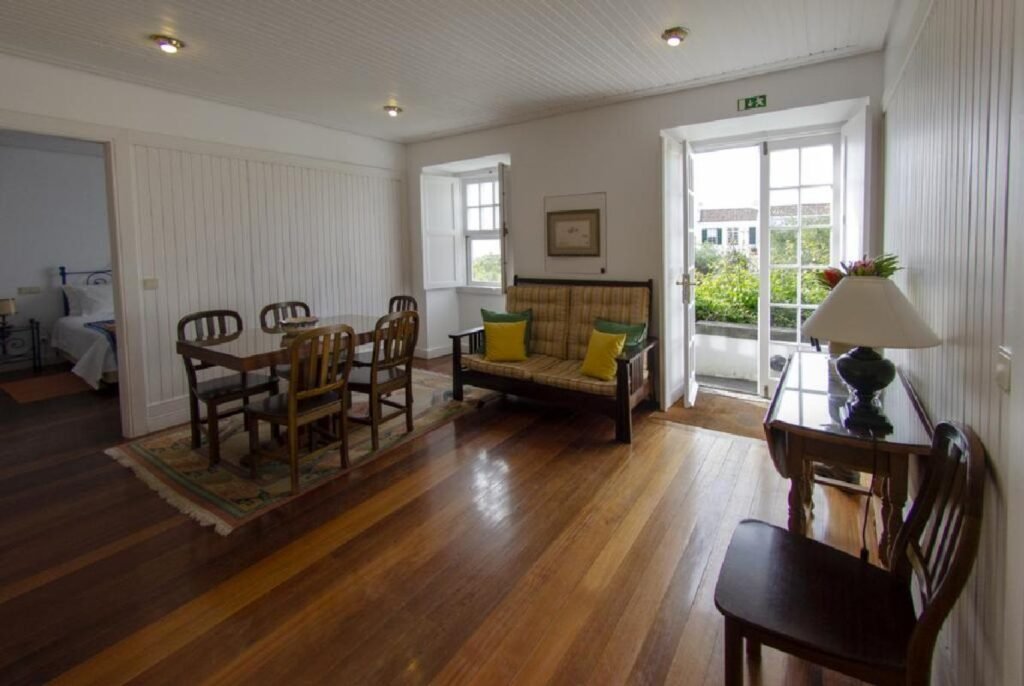
Quinta Das Buganvílias. The three-star Quinta Das Buganvílias is located in the south of Faial Island, in the town of Castelo Branco, just 600 meters from the small airport. Guests will find shops and a few restaurants nearby. The hotel is surrounded by a beautiful garden of tropical fruit trees and is an integral part of a large, organic farm. The hotel is housed in three historic buildings of a former farm, which have been modernized and adapted to the needs of hotel guests. The former mill building houses the reception and a small bar, whose décor reflects its original function. Guests can use the garden barbecue and communal kitchen, as well as bicycles. Breakfast is served buffet-style and is based on the farm’s own products. The hotel offers accommodation in eight rooms in two buildings. Rooms are divided according to the number of beds – double or single. Guests have access to a fully equipped communal kitchen and a living room with a TV. Each room has a garden view, and the private bathrooms include showers, hairdryers, and complimentary toiletries. Free Wi-Fi is available throughout the property. The hotel is set in a beautiful tropical garden. Breakfasts are made with organic produce from our own farm. Located on a farm, yet in the center of town.