
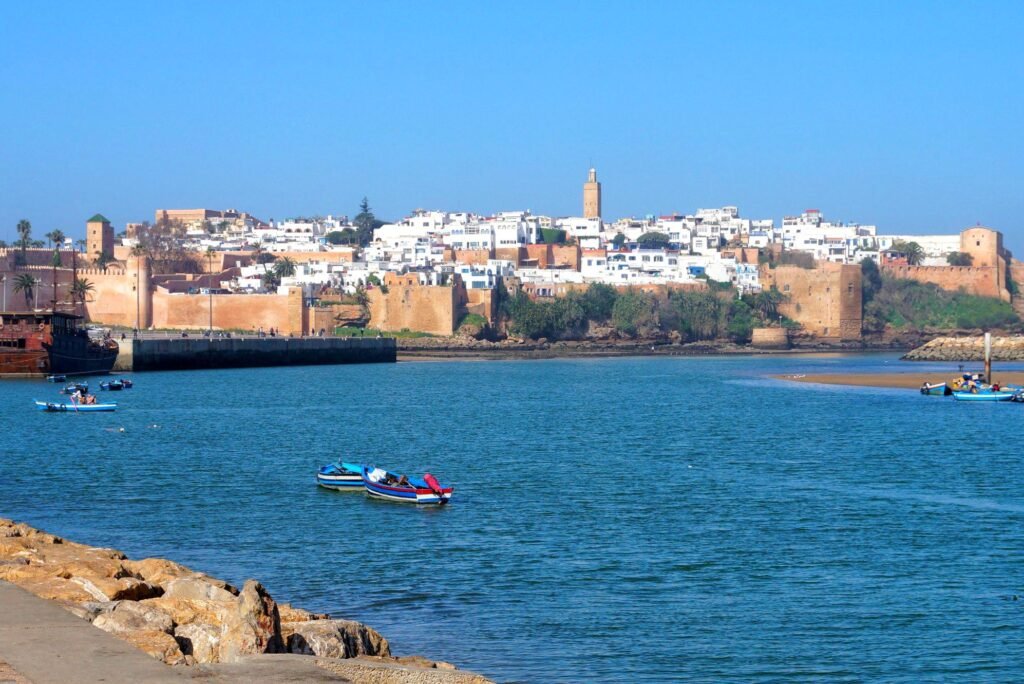
Rabat, the capital of Morocco, is located in the western part of the country, on the Atlantic Ocean, at the mouth of the Bu Rakrak River. It is the administrative seat of the Rabat-Salé-Quneitra region. In 2024, it had approximately 510,000 inhabitants. It is a major industrial center (chemical, metal, food, leather, clothing) and craft industry (carpets, jewelry, ceramics). Rabat is also a major center of tourism. The city has a major seaport and a transportation hub with an international airport. It also has a tram system.
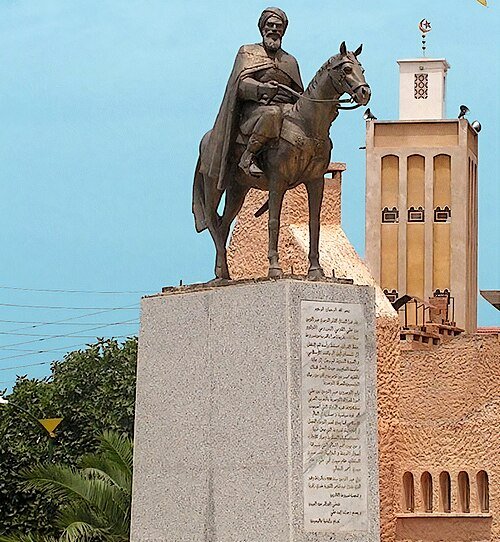
A bit of history. Founded in 1150 by Caliph Abd al-Mumin of the Almohad dynasty, near the former Roman settlement of Sala Colonia, it was a fortified encampment for military raids on the Iberian Peninsula. From the early 17th century, it became a settlement for Muslims expelled by Christian rulers from the Iberian Peninsula. For centuries, it was a center of piracy in the western Mediterranean. In 1911, it was occupied by the French. In 1912, the city became the capital of Morocco, a French colony. After gaining independence in 1956, Rabat became the capital of an independent state. In 2012, Rabat was added to the UNESCO World Heritage List.
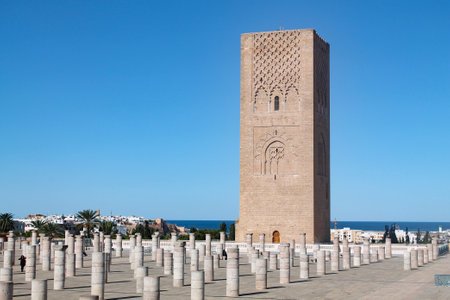
The Hassan Mosque in Rabat. It’s worth a visit. To be in Rabat, Morocco, and not see the Hassan Tower is like being in Rome and not seeing St. Peter’s Basilica. This minaret is a model for all minarets in Morocco. I first saw it on a hill as I was driving from the airport in Salé. It stood on the right, dominating the surrounding area, welcoming visitors from other countries and cities, just as it had for centuries. And it welcomed me in the same way when I approached it. It stood quietly, as if alone, waiting for something more. And indeed, it is alone, because for 800 years, of the massive architectural complex planned for the Hassan Mosque, only it has survived to this day. The remaining parts of the structure were destroyed in the great earthquake that struck Rabat in 1755. Construction began in 1195 and was abandoned in 1199 due to the death of its founder and founder, Sultan Yaqub al-Mansur. The entire complex, as we see it today, is a hollow rectangle measuring 183 by 139 meters. 312 columns protrude from the paved square. Some are larger, others smaller, but some of the accessible ones are occupied by young people who enjoy taking photos at their tops. Unfortunately, when I visited the would-be mosque, the Hassan Tower was undergoing renovation. The 44-meter-high, square structure was tightly enclosed on all sides by scaffolding, leaving only its peak proudly displaying its magnificence. It is indeed a sight to behold, as the rich decorations are unique in every direction. Upon exiting one of the main gates, you’ll undoubtedly notice the guard, guarded by two soldiers on horseback in traditional garb.
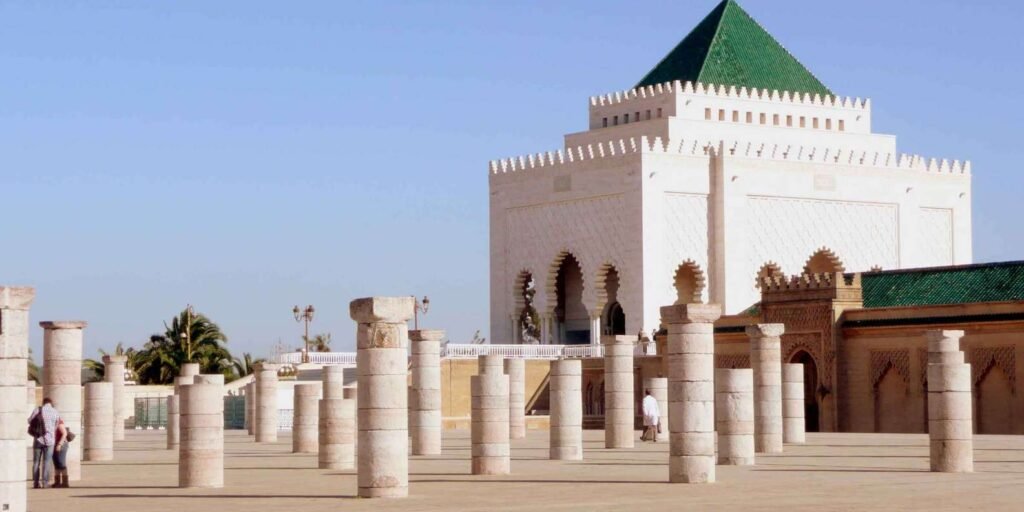
Mausoleum of Mohammed V. Opposite the Hassan Mosque and the tower of the same name, a relatively new building stands out, yet it captivates with its whiteness and pristine appearance. This is the mausoleum of Mohammed V, the ruler who, in 1954, led the French out of Morocco and ended the decades-long protectorate. Before entering through one of the four entrances, we see guards guarding each one. More guards in traditional garb, spears in hand, maintain order inside the mausoleum. Admittedly, the king’s tomb is inaccessible to tourists, as tourists can only view it from the gallery level. After viewing the white tomb of Mohammed and his sons, it’s worth looking up and admiring the intricately carved wooden ceiling.
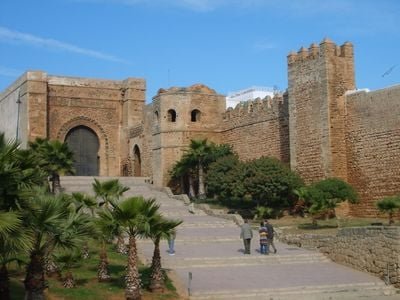
The Kasbah of Al-Udaya in Rabat. The kasbah, or fortified fortress with massive walls, was designed to protect the entrance to the port and simultaneously keep pirates at bay, who, with the sultan’s permission, happily plundered ships sailing the seas and oceans. The kasbah’s crew was responsible for ensuring loyalty to the ruler. You can enter the castle through one of two gates: a small one located at the bottom and a large one visible at the top of the stairs. It’s worth entering both, as each offers different attractions. Once you enter through the large gate, or rather, a small door just to the right of the main entrance, you’ll find a labyrinth of streets. It’s worth venturing into it, as it’s quite an atmospheric place. The whitewashed and blue-painted walls form alleyways, which often lead to dead-end alleys. But since the fortress is so small, there’s no need to worry about getting lost. You’ll probably find a place you recognize within a minute. It’s worth mentioning here that you might encounter scammers who will try to convince you that this or that section is closed and will show you where you can and should go. Of course, they won’t do this for free, and then you’ll face a tedious process of negotiating for a “service” you didn’t want at all. A separate and beautiful attraction within the walls of the Kasbah of Al-Udaya is the Andalusian Garden. Entering it, I felt like I was crossing the border into another world. There was no noise here; I could sit on a wall or a bench, listen to the birds singing, and watch the oranges ripening on the trees.
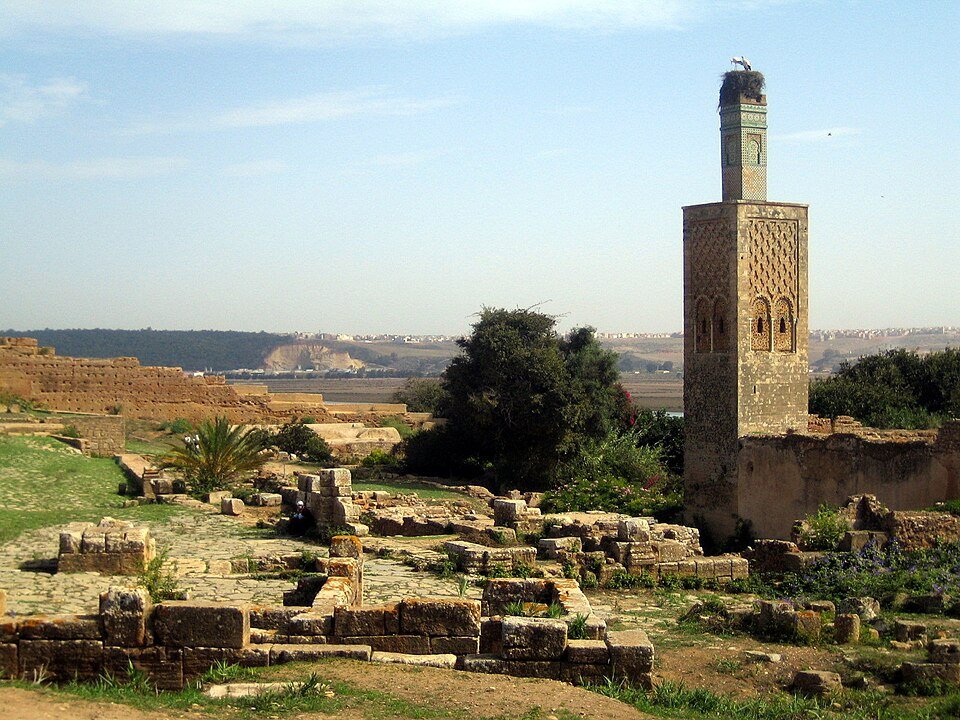
Chellah, a vast complex of ancient and medieval ruins on the outskirts of Rabat, on a slope above the Bou Rakrak river valley, surrounded by defensive walls.
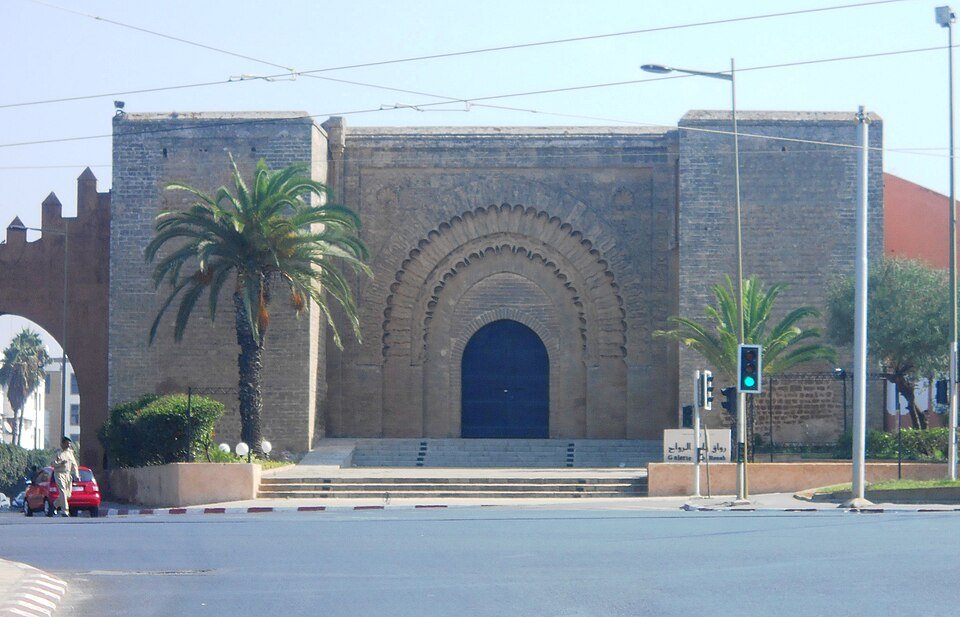
Bab ar-Rwah, the largest gate in Rabat’s historic medieval defensive walls, its Arabic name means Gate of the Winds. It was built during the reign of the Almohad sultan Yaqub al-Mansur in the 12th century. On the eastern exterior of the wall, it is decorated with a relief featuring a square motif. A modern street, used for regular traffic, runs through the wall immediately adjacent to the gate. Exhibitions are held within the gate’s interior spaces.
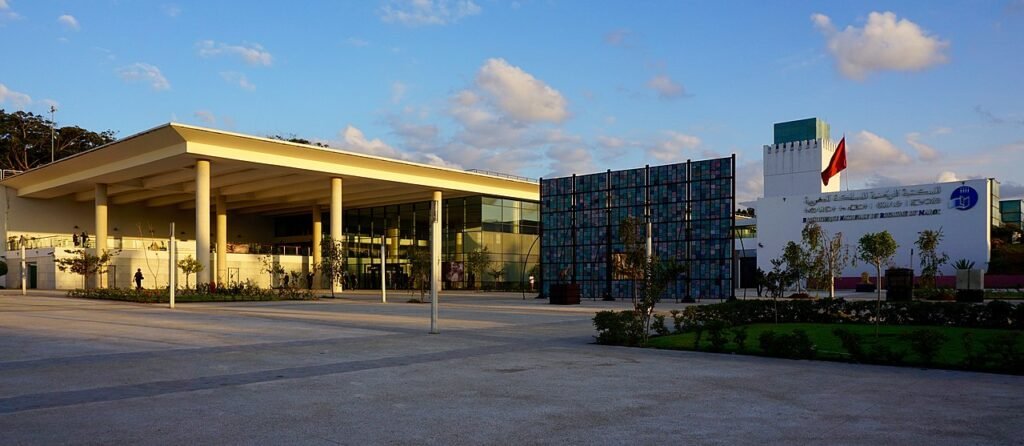
National Library of the Kingdom of Morocco – national library in Rabat, Morocco.
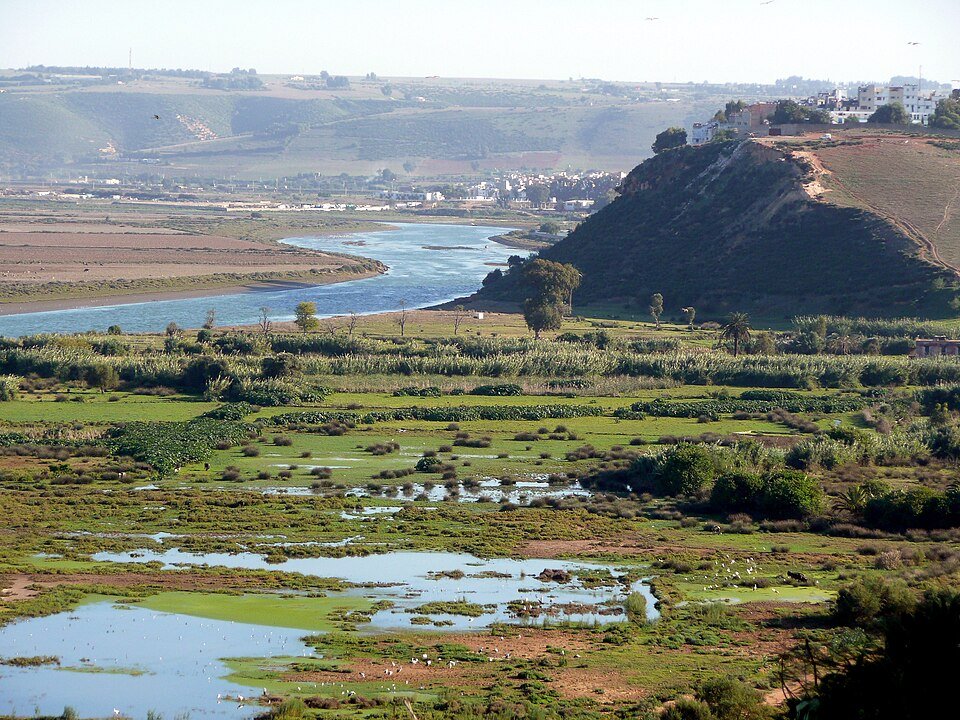
The Wadi Bou Rakrak is a river in Morocco, rising in the foothills of the Middle Atlas Mountains. It flows into the Atlantic Ocean near Rabat and Salé. Its most important tributary is the Wadi Karu, which flows into the Wadi Bou Rakrak approximately 30 kilometers southeast of Rabat.
