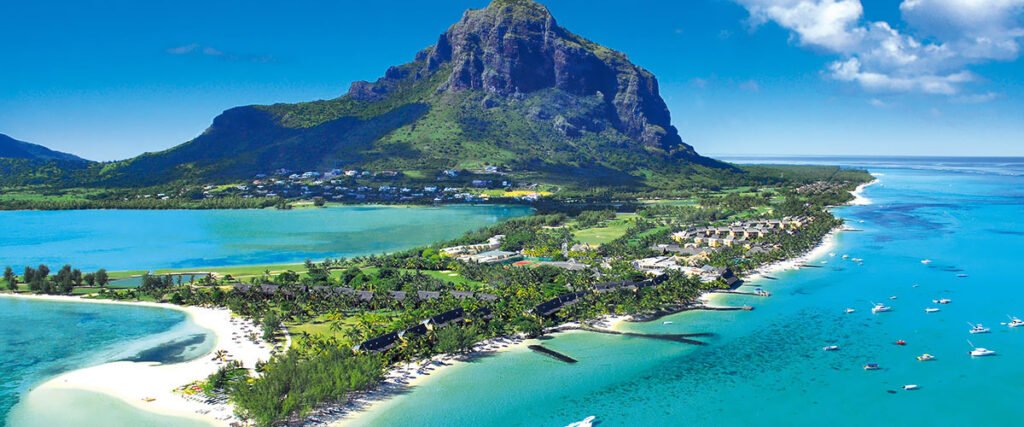
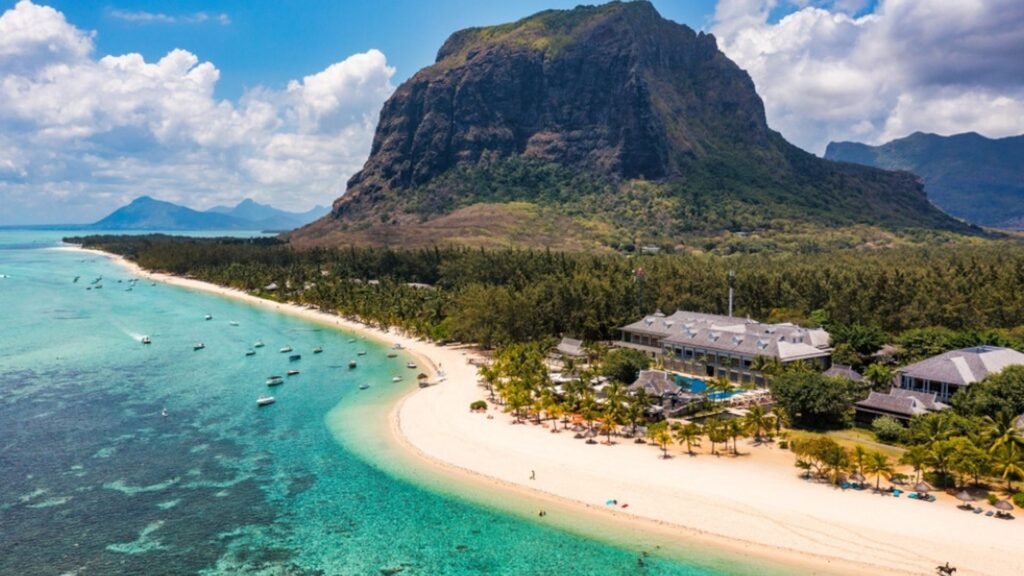
Mauritius is an island in the Indian Ocean, east of Madagascar, part of the Mascarene Islands. It is the largest of the islands comprising the state of Mauritius. Located in the western Indian Ocean, its coast is surrounded by coral reefs and a number of small islets. The nearest major landmass is Réunion Island, a French overseas department located 172 km to the southwest of Mauritius. The island has an area of 1,864 km².
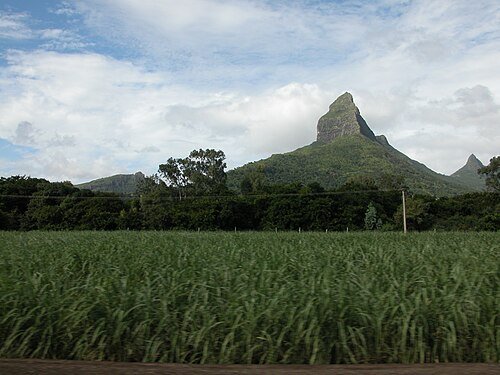
Geology and geomorphology. The island was formed by volcanic activity approximately 15 to 8 million years ago. There are no active volcanoes on Mauritius today, but traces of its volcanic past are still visible – remnants of a large caldera, the shapes of local mountain peaks resembling rock outcrops or towers, and the well-preserved volcanic crater Trou-aux-Cerfs, 300 meters in diameter, located in the central part of the island, in the town of Curepipe. The highest peak in Mauritius is Piton de la Petite Rivière Noire (828 meters), which rises in the southwest of the island, in the heart of Black River Gorges National Park. The other peaks in the area, with the exception of Mount Cocotte (780 meters), are approximately 600 meters high. The island’s second-highest peaks – Le Pouce and Pieter Both (both 820 meters above sea level) – lie almost thirty kilometers further north, near the capital, Port Louis. The central plateau surrounds a low-lying coastal strip, whose waters are dotted with coral reefs.
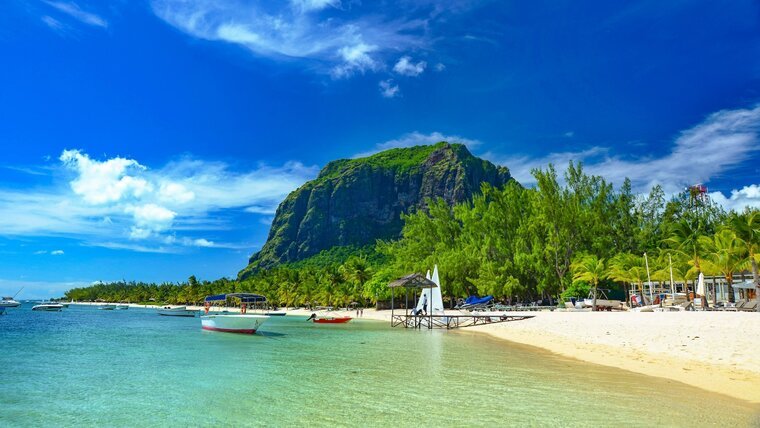
Climate. Mauritius has a tropical, humid climate, with relatively stable temperatures throughout the year, ranging from around 20°C (minimum) to 30°C (maximum). Because Mauritius is located in the Southern Hemisphere, temperatures are slightly cooler from June to August, but even during this period, daily highs typically don’t fall below 26–27°C. February is the rainiest month, while September to November sees the least rainfall. Sunshine duration is also stable, typically exceeding 7 hours per day, and humidity remains at 80–85% year-round.
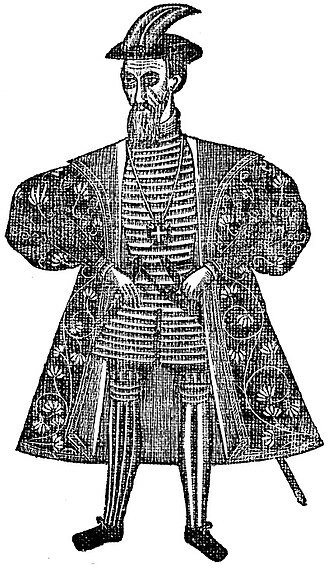
A bit of history. The island was discovered by the Portuguese navigator Pedro de Mascarenhas, who named it Cerne. In 1638, the island came under Dutch rule, who named it Mauritius in honor of Prince Maurice of Orange. Then, in 1710, the island came under French rule and was named Île de France. The island’s capital, Port Louis, was a base for French exploration and discovery in the southern Indian Ocean. In 1814, following France’s defeat in the Napoleonic Wars, the island became a British colony. In 1968, it became part of the independent Republic of Mauritius.
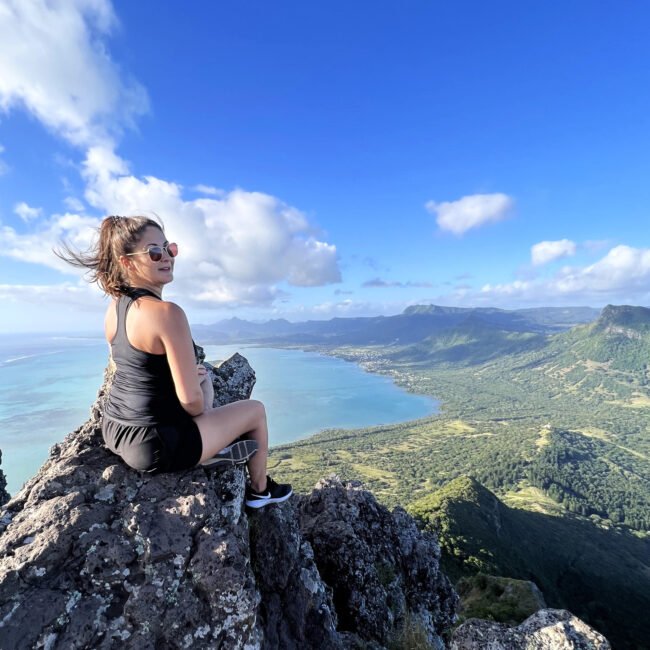
Population. Mauritius’s immense cultural diversity is a result of the island’s colonial past. Its inhabitants constitute a remarkable blend of races, religions, denominations, skin colors, and languages.
The total population is approximately 1.3 million (as of July 2014).
Indians constitute 68%
Creoles constitute 27% – descendants of African slaves
Chinese constitute 3%
Franco-Mauritians approximately 2%
Mauritius is presented as a miniature representation of the world where East meets West. Experiencing the authenticity of the local people, who form a remarkably cosmopolitan community, is a great pleasure and a truly profound experience.
Language. The official languages are English and French. The language that unites the island’s inhabitants is Creole. Other languages spoken on the island include Hindi, Urdu, Hakka, and Bhojpuri (Bodzpuri).
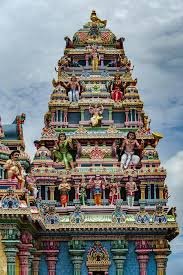
Religion. The vast majority of the population is Hindu, constituting 48.5% of the population. As many as 32.7% are Christians (including approximately 26% Catholics), and 17.3% are Muslims. Due to its ethnic diversity, Mauritius celebrates and observes numerous holidays.