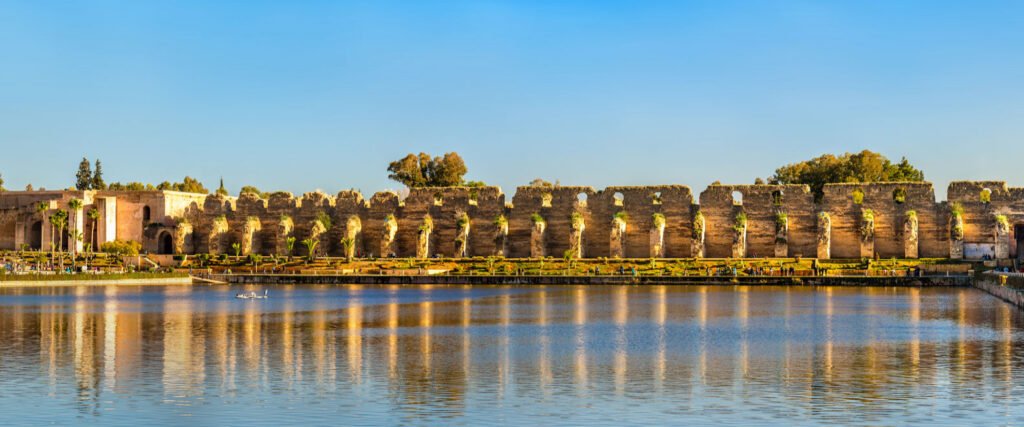
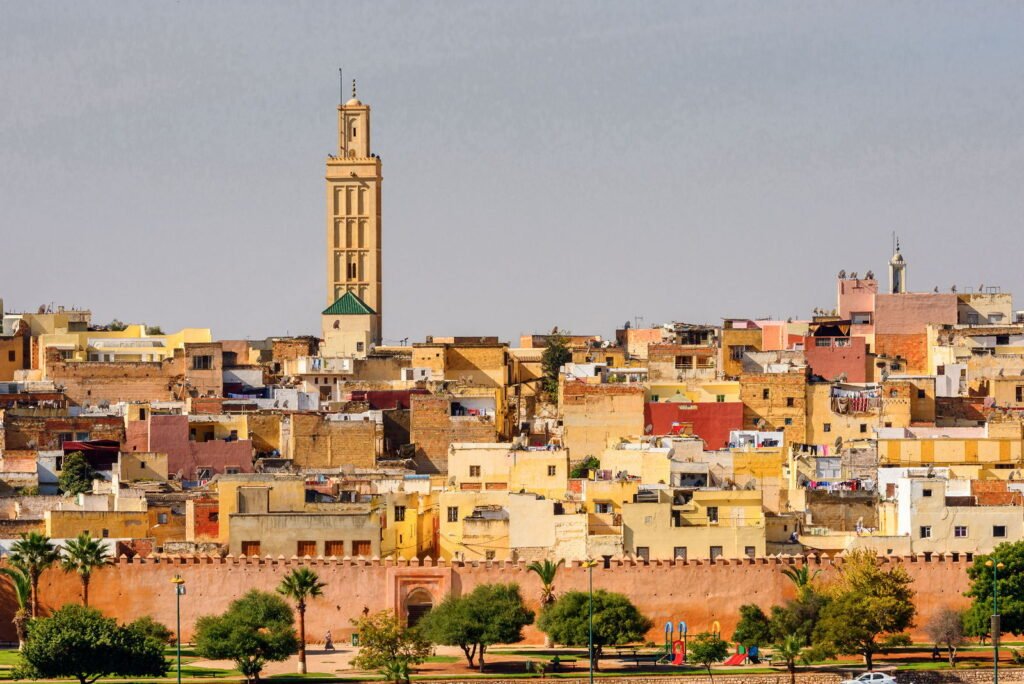
Meknes is a city in northern Morocco, in the Fez-Meknes region, on the foothills of the Middle Atlas Mountains, at an altitude of approximately 530 meters. It is the administrative seat of the Meknes prefecture. In 2024, it had a population of approximately 552,000.
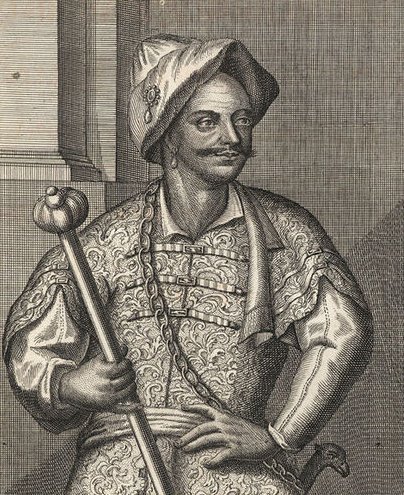
A bit of history. The city’s history dates back to the 8th century, when the first fortified settlement was established here. In the 10th century, the Berber Miknasa tribe settled in what is now Meknes, from which the city takes its name. Under the rule of Sultan Moulay Ismail (1672–1727), the city was significantly expanded and transformed into the capital of the Moroccan state. After its transfer, first back to Fez and later to Rabat, the city declined in importance. In 1996, the medina of Meknes was added to the UNESCO World Heritage List. On February 19, 2010, a minaret collapsed, killing 41 people and injuring over 80. The city also houses the Meknes railway station.
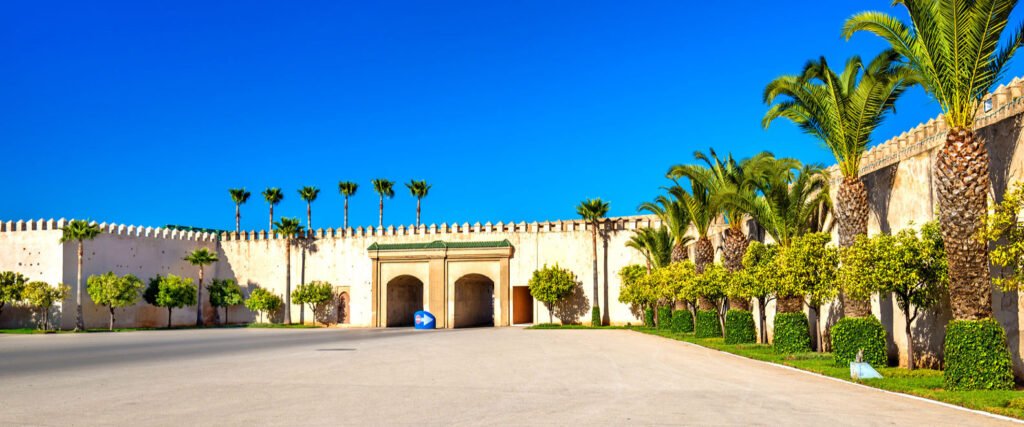
The weather in Meknes is perfect for vacations almost year-round. In spring and autumn, daytime temperatures hover between 20 and 25°C, making it ideal for exploring historical sites like the medina and the famous Bab Mansour Gate. In summer, temperatures reach up to 33°C, and there are 30 sunny days a month, making this the perfect time for relaxing by the hotel pools and evening strolls when the temperature drops to a pleasant 18°C. The heaviest rainfall occurs in winter, particularly in December, when there can be about 12 days of rain, but it’s also a good time for sightseeing, with daytime temperatures around 15°C. If you’re planning sightseeing trips, consider May or September – these are the months with the least rainfall and a pleasant climate. Regardless of the season, choosing a package holiday in Meknes offers comfortable conditions and a wide range of attractions prepared by travel agencies.
Practical Information.
Currency and Payments
– Currency – the official currency is the Moroccan dirham (MAD).
– Card Payments – payment cards are accepted in larger hotels, restaurants, and shops, but it’s advisable to have cash in the medina and markets.
– Where to Exchange Currency – preferably at exchange offices or banks. Hotel exchanges are possible, but less favorable.
Local Transport
– Best Ways to Get Around – Taxis (petit taxi in the city center, grand taxi for longer trips), buses, and walking tours of the medina.
– Public Transport Tickets – It’s best to buy tickets directly from bus drivers or at sales points.
– Car Rental – The roads in Meknes are in good condition, but driving in the medina is difficult due to the narrow streets. Parking is mainly located outside the historic center.
Internet
– SIM Card – it’s worth buying a local SIM card. Popular operators include Maroc Telecom, Orange, and Inwi.
– Where to buy – at the airport, at kiosks, or at operator stores. A passport is required.
– Free Wi-Fi – available in most hotels, some restaurants, and shopping centers.
What to bring to Meknes?
– Clothing – light clothes for daytime, warmer clothes for evenings, comfortable shoes for walking the uneven streets of the medina.
– Documents – passport, driver’s license (if planning to rent a car).
– Electronics – adapter for type C and E plugs.
– Other – sunscreen, hat, traveler’s diarrhea medication, a small backpack for trips.
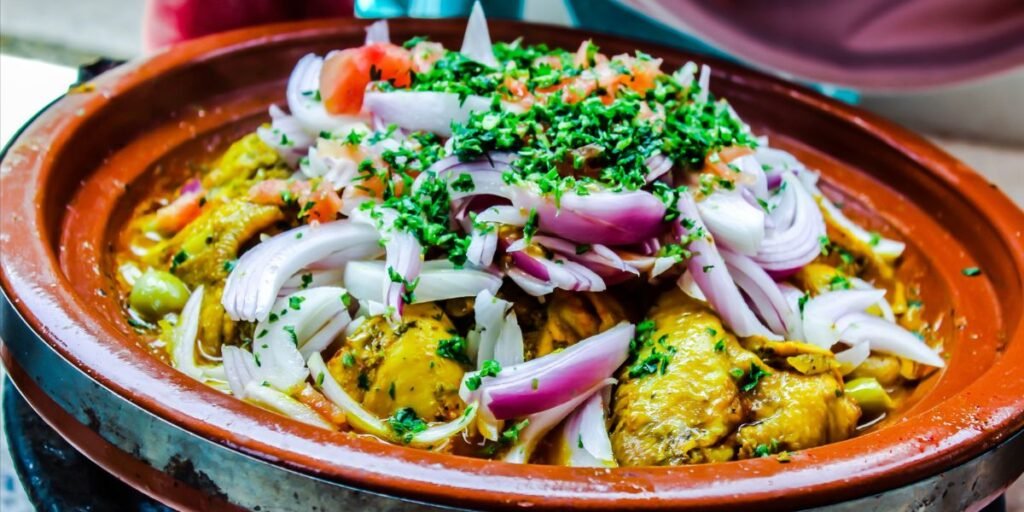
Cuisine. Meknes is renowned for its aromatic cuisine. Typical dishes include lamb and plum tagine, harira (chickpea and lentil soup), and mechoui (roasted lamb). For dessert, try gazelle horns – almond cookies. Local spices like saffron and cinnamon give the dishes a unique flavor. The best places to dine are the El-Hedim bazaar or restaurants in the medina.
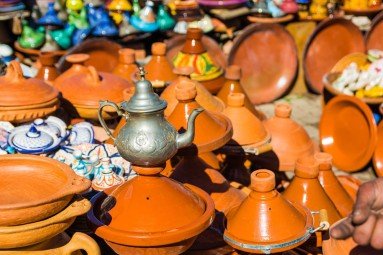
Souvenirs from Meknes include hand-painted ceramics, leather goods, and argan oil. The best place to shop is the El-Hedim bazaar. Prices here are lower than in Marrakesh, but it’s worth haggling.
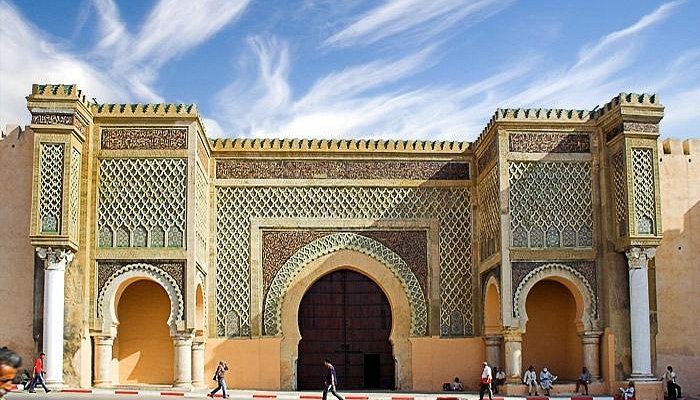
Bab Mansour is a monumental city gate in Meknès’s el-Hedim Square, adorned with large columns on either side of the main entrance and intricate green and blue mosaic tiles on the façade. The gate creates an impressive opening with richly decorated surfaces, making it the square’s most dominant feature. Sultan Moulay Ismail began construction of this monumental gate, which his son Moulay Abdallah completed in 1732, as the entrance to the royal palace. Construction took place during a period when the city was expanding and transforming into an imperial residence. The Arabic inscriptions atop the gate express power through poetry written from the perspective of the structure itself. These words speak of dominion and grandeur and become part of what visitors naturally perceive as they pass through the square. The main entrance is closed to visitors, but access to the interior exhibition is possible through a smaller passage on the side. It is worth arriving early to avoid crowds and to better see the mosaic details in better lighting. The marble columns adorning the entrance were transported from the ancient Roman ruins of Volubilis, blending Roman history with Moroccan design. These columns come from one of the region’s major archaeological sites and add an additional layer of historical depth to the gateway.
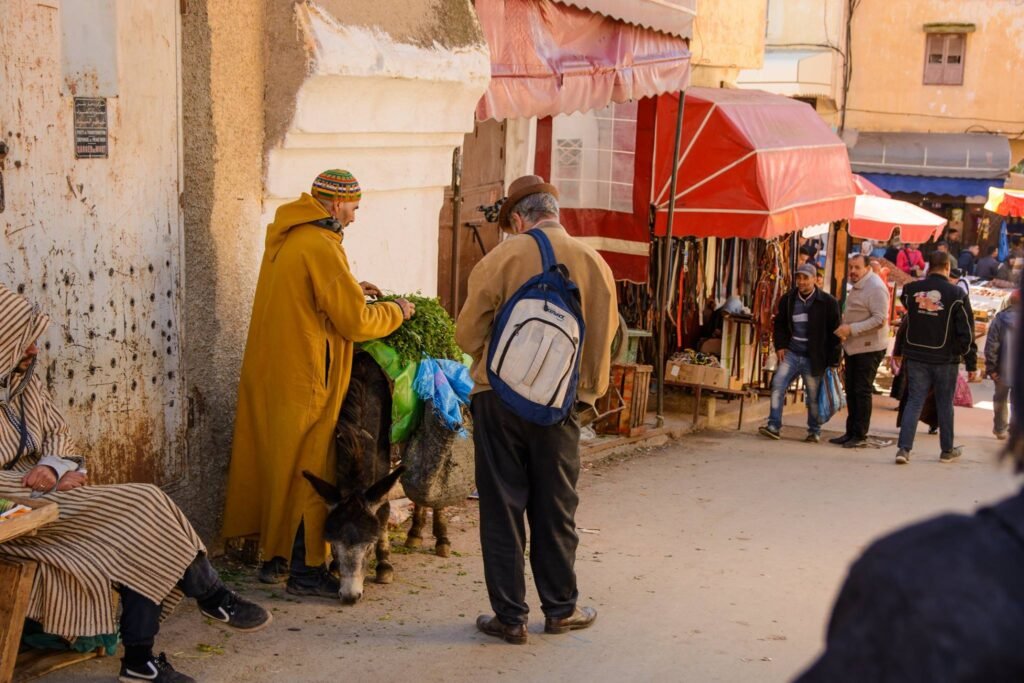
Medina and Souks. The unique medina consists of authentic, less crowded souks and the monumental Bab Mansour Gate. The official language of Meknes is Arabic, but French is also widely spoken. English is also spoken in tourist areas.
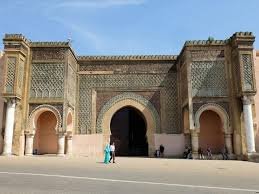
Moulay Ismail’s Palace, known as the Kasbah of Meknes, is a gigantic palace complex built in the late 17th century. Sultan Moulay Ismail, fascinated by the power of Louis XIV, desired to create a “Moroccan Versailles” in his new capital. The complex’s key features. Although the 1755 earthquake destroyed much of the building, many impressive structures remain to this day:
Dar el-Makhzen: Today’s royal residence, with restricted access, is surrounded by massive walls.
Moulay Ismail’s Mausoleum: A unique sanctuary open to non-Muslims, renowned for its intricate zellij mosaics, carved stucco, and marble columns.
Bab Mansour: Considered one of the most beautiful gates in Morocco and the entire Arab world, it is decorated with ceramics and inscriptions.
Heri es-Souani: Monumental royal granaries and stables that could accommodate up to 12,000 horses.
Dar Kebira: The first of the palaces built within the complex, the ruins of which provide an idea of the scale of the investment.
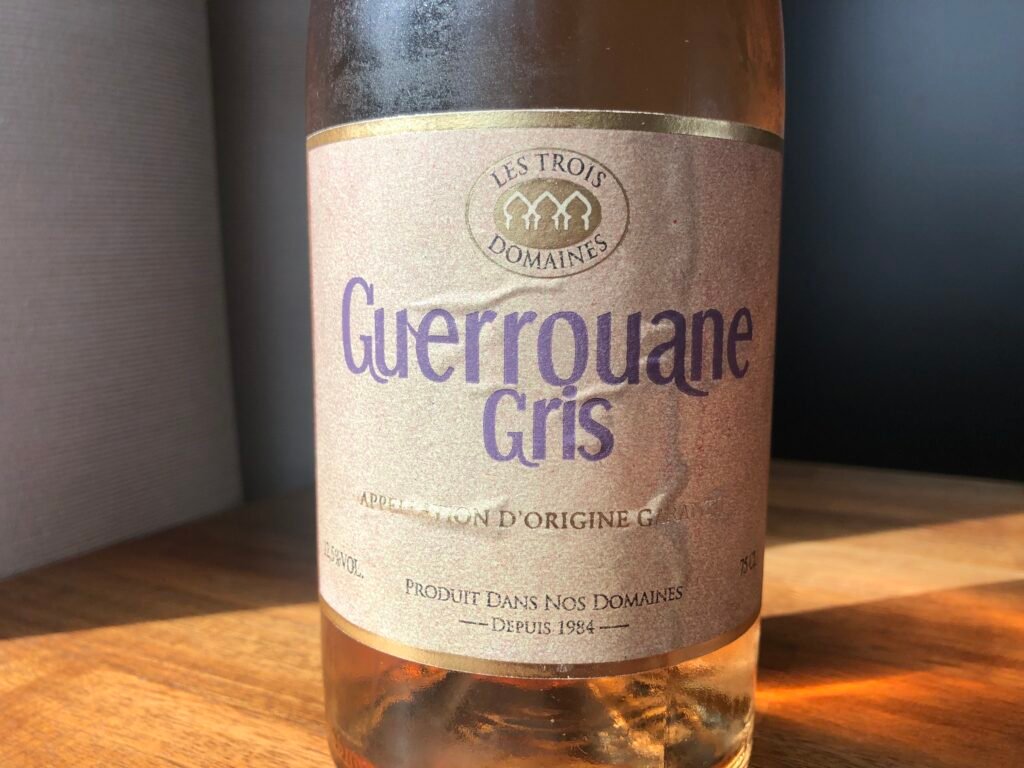
What wine is worth trying in Morocco? Vin Gris. Of course, we recommend Vin Gris first, a gray wine, the most emblematic of Morocco. The wine isn’t actually gray, but pale pink. These wines are made from red grapes, but due to a very short maceration, they acquire a light hue. The wines are fermented exclusively in stainless steel tanks and are not aged in oak barrels. Therefore, we can expect fruity, fresh, and light aromas. And that’s exactly what our Guerrouane Gris was. A mouthwatering, rounded strawberry on the nose. Light, refreshing, and well-balanced in the mouth. It could be better enjoyed on a terrace in Meknes or Fez. The wine comes from Les Celliers de Meknes – a true wine agglomeration, responsible for the production of most Moroccan wines. The various plots belonging to Les Celliers de Meknes are located at the foot of the Atlas Mountains, in the region around the city of Meknes, which, due to its location, sunshine and mild temperatures, constitutes the ideal terroir for grapes in Morocco.