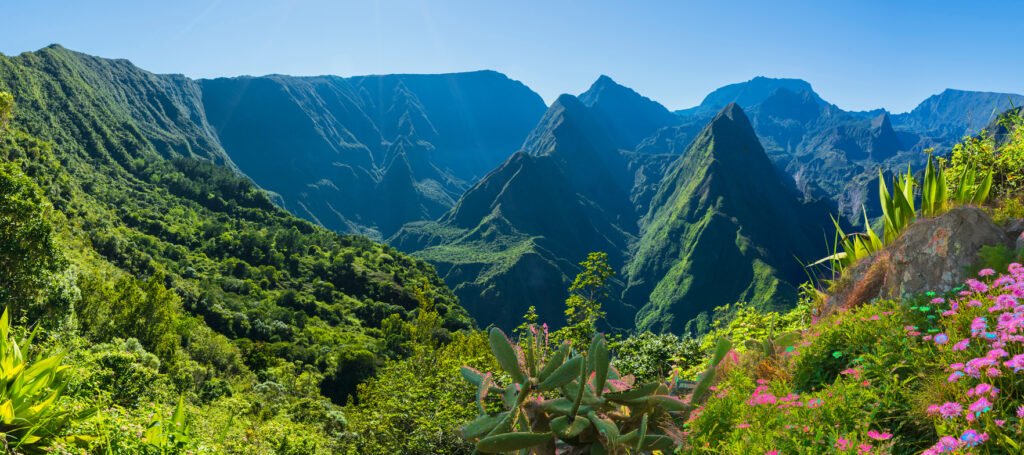
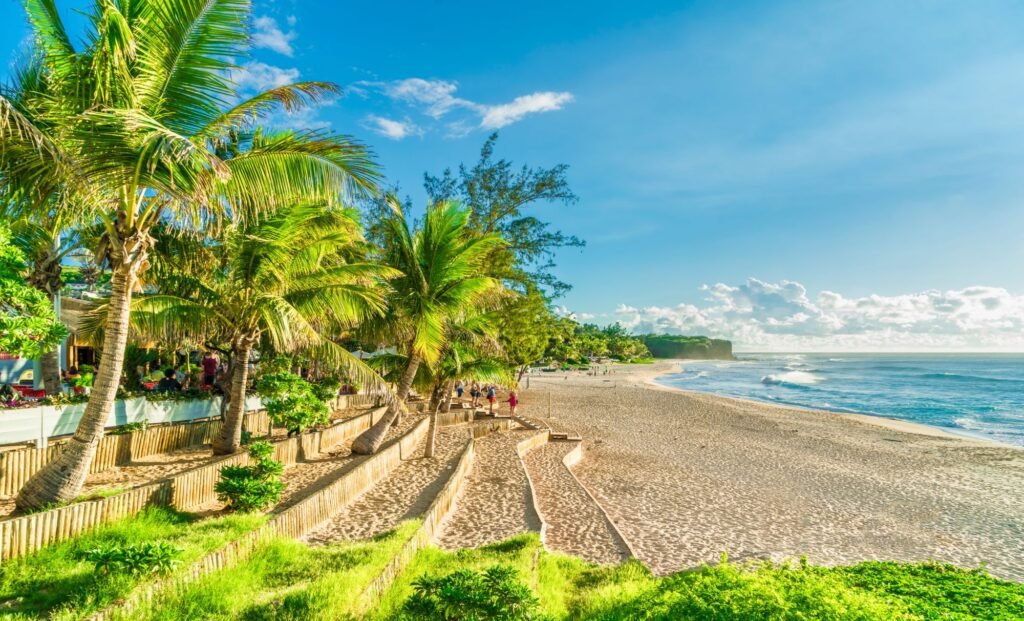
Réunion is an overseas department of France, occupying the island of the same name. Located in the Indian Ocean, it lies approximately 700 km east of Madagascar and 174 km southwest of Mauritius. It constitutes the westernmost part of the Mascarene archipelago. The island covers an area of 2,512 km² and has a population of 842,767 (2014). Réunion is an administrative region and, at the same time, a department of France with the status of overseas department no. 974 (since 1946). The island is divided into four arrondissements and 49 cantons. The department’s capital is Saint-Denis (population 142,600), located in the northern part of the island. Other important cities include Saint-Paul (95,100), Saint-Pierre (74,700), Le Tampon (65,400), Saint-Louis (47,200), Saint-André (46,500) and Le Port (41,500).
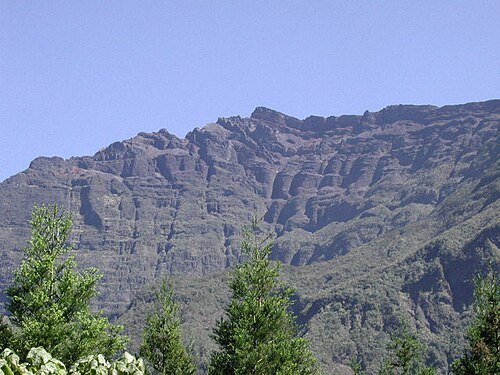
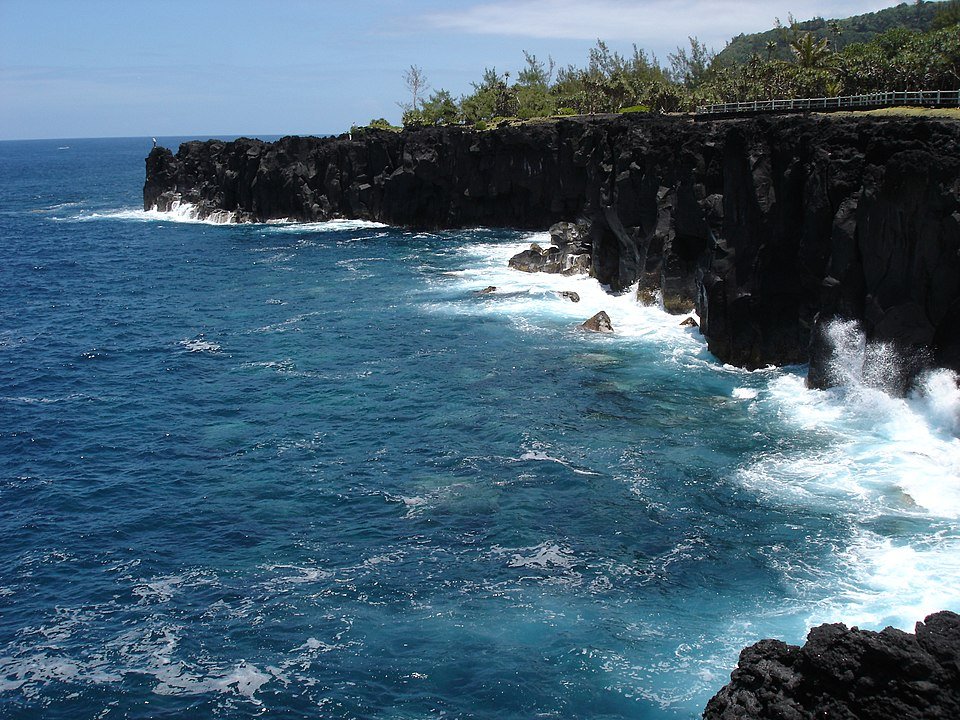
The island is of volcanic origin. The highest point is the extinct volcano Piton des Neiges, at 3,070.5 meters above sea level. The lower volcano, Piton de la Fournaise, at 2,632 meters above sea level, is one of the most active volcanoes in the world (last eruption was on July 14, 2017). The island has a tropical climate. Cooling is provided by southwest trade winds, bringing heavy rainfall and occasionally violent cyclones. It was once covered with lush equatorial forests. Most of these have been cleared, and with them, many animal species have become extinct.
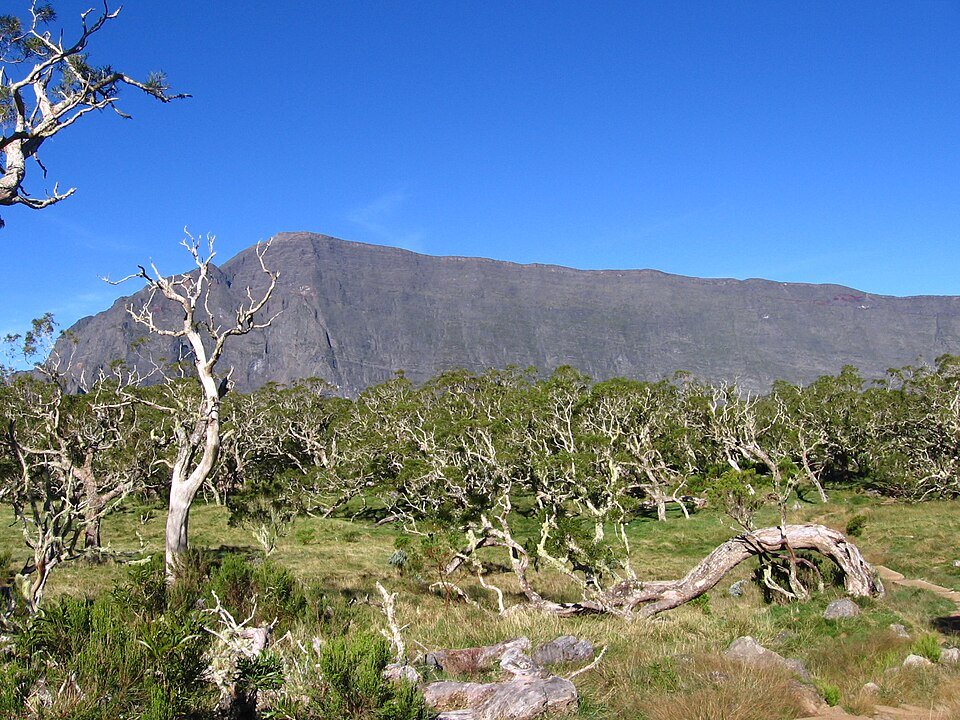
Nature. 2,685 indigenous animal species have been observed in the territory, including 697 endemic species. Twenty-nine species are considered extinct. 217 animal species have been introduced or their origin is unknown (36 of these are invasive species). 1,173 indigenous plant species have also been recorded, of which 259 are endemic. In addition, 1,476 species have been artificially introduced or their origin is unknown, 84 of which are invasive. Réunion National Park has been established on the island.
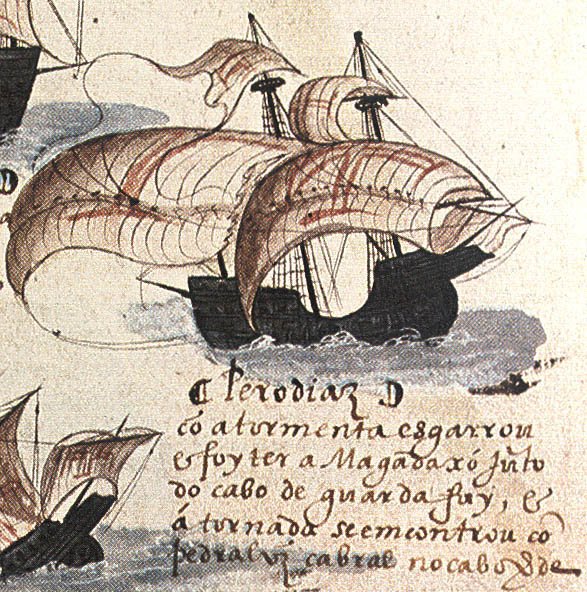
A bit of history. The island was long uninhabited, but Arab sailors occasionally visited. They knew Réunion as Dina Morgabin, meaning “island of the West.” Portuguese navigator Diogo Diaz landed on February 9, 1507, on Saint Apollonia’s Day, and it soon appeared on Portuguese maps as Santa Apolonia. Around 1520, the three islands of Réunion, Mauritius, and Rodrigues were named the Mascarenes, after another Portuguese navigator, Pedro de Mascarenhas. In the early 17th century, the island served as a haven for English and Dutch ships sailing to India. In 1638, the French occupied the island and named it Bourbon. The first permanent inhabitants settled in 1665. A group of 20 settlers was led by Étienne Régnault, the island’s first governor. French colonizers brought in first African slaves and later Chinese workers to work on sugarcane plantations. On March 23, 1793, the National Convention changed the island’s name, associated with the Ancien Régime, to La Réunion. The new name was intended to commemorate the meeting between the federated Marseilles and the Parisian National Guard, which preceded the insurrection of August 10, 1792, and the march on the Tuileries Palace. Until December 31, 1945, Réunion was a French colony, and since January 1, 1946, it has operated as an overseas department (département d’outre-mer – DOM). After neighboring Mauritius gained independence in 1968, left-wing groups began operating on the island in the early 1970s, advocating for independence or autonomy for the island. However, these groups failed to gain significant support from Réunion residents. In 1982, the French authorities developed a plan for limited decentralization and self-government reform of their overseas territories (de facto colonies). As a result, Réunion, as an overseas department, has had a Departmental Council (Conseil général) with expanded powers since 2 March 1983. Since 1997, Réunion, as an integral part of the French Republic, has been part of the European Union (its outermost region). In 2003, Réunion also became an overseas region of France (région d’outre-mer) with its own Regional Council (Conseil régional). Unlike Martinique and Guadeloupe, no referendum was held on the island on 7 December 2003 regarding the change of the territory’s status to an overseas collectivity (collectivité d’outremer – COM). Until 2005, Réunion administered the uninhabited islands around Madagascar: Bassas da India, Europa, Juan de Nova, Glorieuses, and Tromelin; they are now part of the French Southern and Antarctic Lands. On December 7, 2007, the French authorities and the island’s administration published a joint plan for further local government reform and decentralization, including the merger of the Departmental and Regional Councils into a single Regional and Departmental Council with expanded powers. Consultations on this plan took place in the first half of 2008.
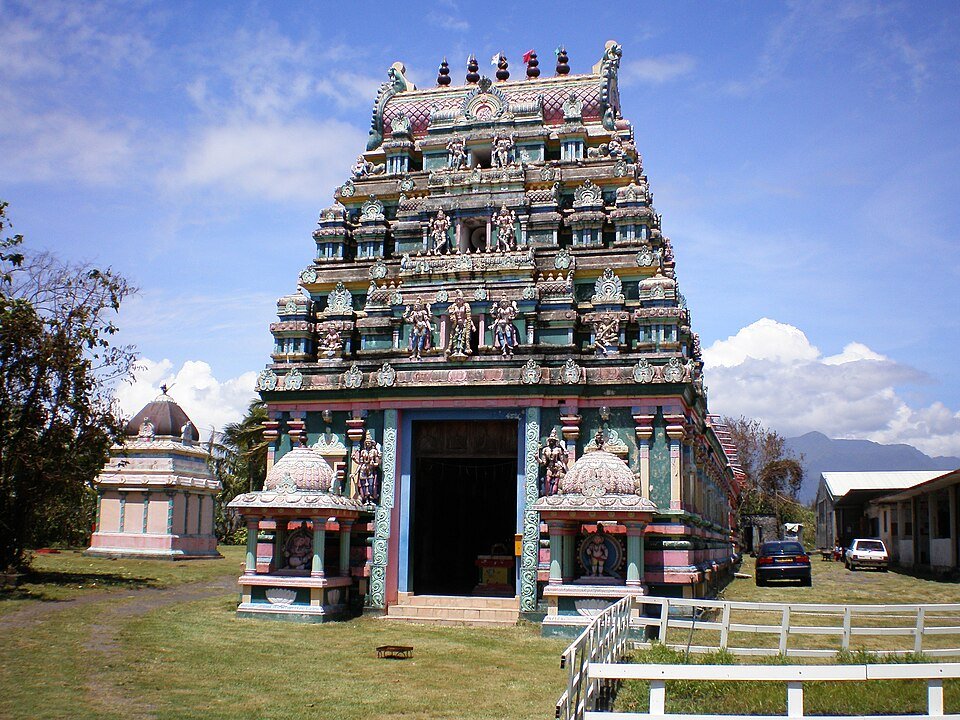
People and Religion: There are no indigenous people; the island is inhabited by a mixed population – descendants of plantation workers who came from various corners of the world. The official language is French, but the local Creole is widely spoken. Catholicism is the dominant religion. The largest non-Catholic group on the island is Pentecostals. The Assemblies of God, established throughout the island in the 1960s, ended the monopoly of Catholicism on the island and in 2012 had over 22,000 members in 47 congregations. Since 1983, numerous divisions have emerged within the Assemblies of God, leading to the formation of independent Pentecostal churches with an estimated membership of 10,000. Reunion Island has also witnessed the development of the Catholic charismatic renewal, which has also surpassed 20,000 adherents in the same period. Other Christian groups include Jehovah’s Witnesses (3,500 publishers), the Evangelical Church (2,000 members), and the Seventh-day Adventist Church (1,500 believers).
Politics. The island is part of France, one of its overseas departments. It is an integral part of the European Union within the so-called outermost regions, with the exception of the Schengen Area and the VAT Union. It is represented in the French National Assembly by five deputies and in the Senate by three senators. The French government appoints a prefect to govern the island. Furthermore, power is exercised by a 44-member General Council and a 45-member Regional Council, whose members are elected every six years by universal suffrage.
Economy. Réunion’s primary source of income is sugarcane cultivation, followed by tourism. Despite some economic development, unemployment is relatively high on the island, primarily due to the high birth rate. This has forced many islanders to emigrate, primarily to metropolitan areas. The gross domestic product (GDP) per capita is $6,200 (2005). The island is served by Roland Garros Airport, located in Gillot, near the capital, Saint-Denis, and the seaport of Pointe-des-Galets.