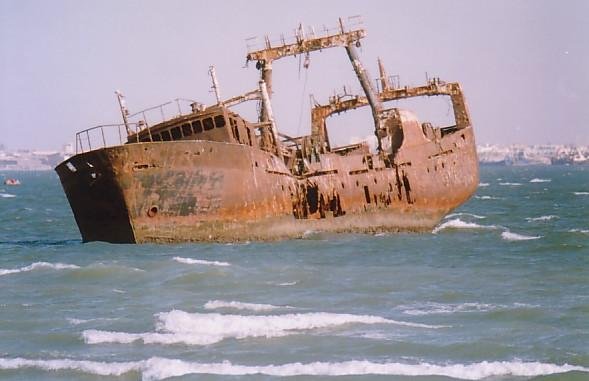
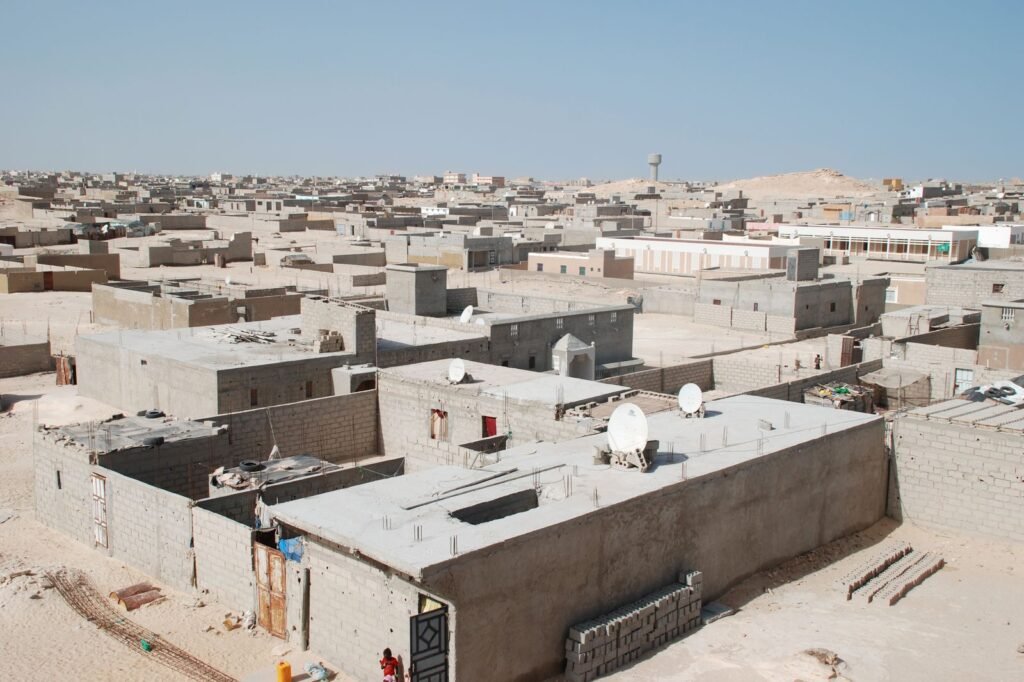
Nouadhibou is a port city in northwestern Mauritania, on the Cape Blanco, and the administrative center of the Dakhlet Nouadhibou region. In 2013, it had a population of approximately 118,000. It is the country’s second-largest city. Since early 2006, Nouadhibou has been a transit point for illegal immigrants attempting to reach the Canary Islands by sea. This dangerous route is due to increased controls at the Moroccan-Spanish border crossings in Ceuta and Melilla. The border crossing with Western Sahara, located near Nouadhibou, makes the city a popular destination for tourists arriving from Morocco and heading towards Adrar or south to Nouakchott. Off the coast of the Ras Nouadhibou headland, east of the city, lies the world’s largest ship graveyard.
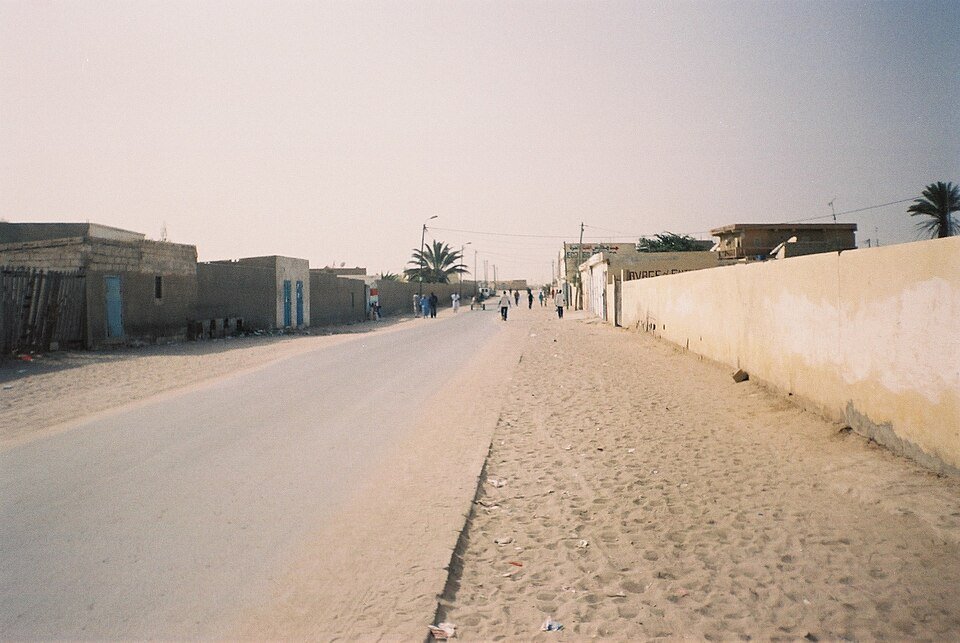
Transportation. Nouadhibou is the terminus of the Mauritanian railway. The city is also connected to Nouakchott by a paved road. There are also regular flights with Mauritania Airways to the capital, Nouakchott. There is no public bus service in Mauritania, but there are plans to introduce regular services from Nouadhibou to Dakhla in Western Sahara. Currently, as throughout the country, private transport (bus taxis) operates. South of the city, on Cape Blanc, is the Ras Nouadhibou lighthouse.
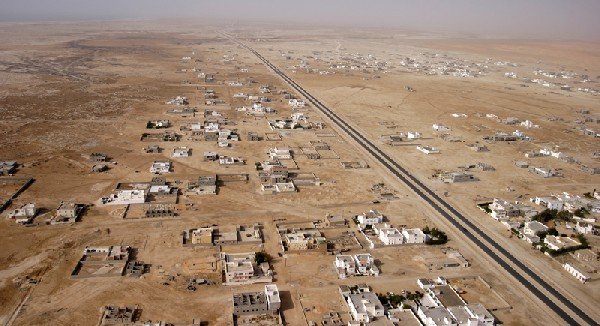
Geographic Location: Located in the northwestern tip of Mauritania, on Cape Blanc. Peninsula: The city lies on a narrow, 65-kilometer-long peninsula shared with Western Sahara. Neighborhood: It serves as the entry point to the country for travelers arriving by land from Morocco and Western Sahara.
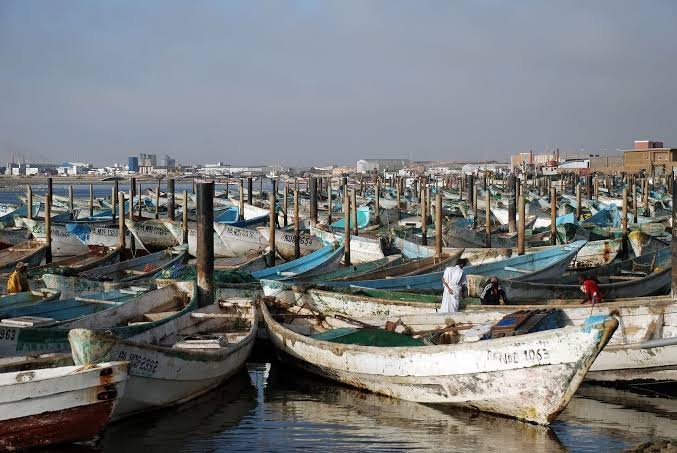
Economic Importance: Fishing: A key pillar of the local economy and one of the most important fishing grounds in West Africa. Iron Ore: The port of Nouadhibou is the terminus for freight trains from Zouerate, from where the raw material is exported.
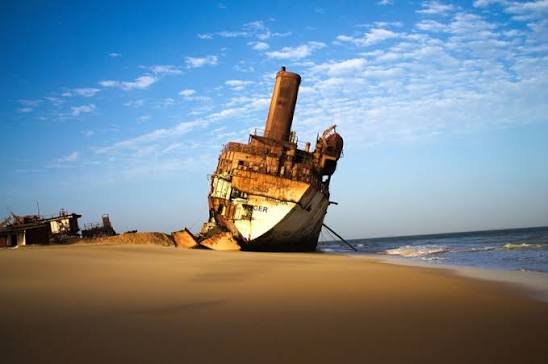
The Nouadhibou ship graveyard in Mauritania is the world’s largest concentration of abandoned shipwrecks. Over 300 decaying vessels from around the world—from fishing boats to large cargo ships and cruisers—have been buried in the shallow waters of Cansado Bay (part of the Baie du Lévrier) and along its coast. How did the graveyard come into being? Corruption and austerity: Properly scrapping and dismantling a large ship is an extremely expensive process. Shipowners around the world discovered that, for a relatively small bribe paid to corrupt local officials in Nouadhibou, they could legally abandon unwanted vessels in the bay with impunity. Nationalization of the industry: This practice began on a massive scale in the 1980s, when, following the nationalization of the Mauritanian fishing industry, many unprofitable vessels were simply abandoned by their owners. Impact on the environment and the economy. This phenomenon is twofold, causing both enormous damage and unexpected benefits: Ecological threat: Rusting hulls release toxic substances, fuel residues, oils, and poisonous ship paints into the water. Hazard to navigation: Wrecks block shallow waters and impede safe maneuvering for merchant ships entering the port. Artificial reefs: Paradoxically, sunken hulls have become shelter and an ideal habitat for fish and other marine life, which has improved local fishing. Livelihood: An unofficial industry has developed around the wrecks – local residents massively dismantle valuable metals and equipment from ships, which can be sold. Some larger, stranded ships have even been temporarily inhabited by the poorest population. Current status and cleanup of the bay. Although Nouadhibou is still associated with a landscape of rusting hulks, the former image of the “iron graveyard” is undergoing dynamic changes.
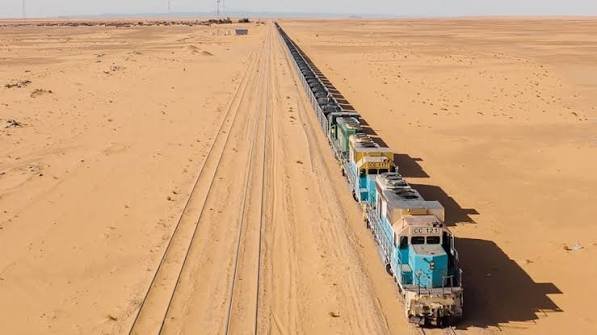
A legend of Mauritania’s railways is the massive train that carries iron ore from the mines in Zouérat to the port of Nouadhibou. It’s up to 3 km long and weighs thousands of tons. It’s an extreme, free adventure through the Sahara. However, it requires proper preparation due to the lack of comfort and the ubiquitous dust. Key information about the route: Route and distance: The train runs a distance of approximately 700 km between the desert interior and the Atlantic coast. Journey time: The journey typically takes from a dozen to over 20 hours (often around 15-22 hours), depending on weather conditions. Free transport: Travel in open freight wagons is free. There is also one infrequent passenger wagon with very limited availability. Climate and conditions: Temperatures exceed 40°C during the day and can plummet at night. The main challenge for freight wagon passengers is iron ore dust and sandstorms. What you need to bring with you. This experience requires preparation due to the extreme environment: Safety glasses and goggles: Essential to protect your eyes from fine sand and iron dust. Kuffia (scarf): Essential to cover your mouth and nose from dust and wind. Water and provisions: During the long hours of the wagon ride, resupply is not possible. Appropriate clothing: Loose, breathable clothing for sun protection, as well as warm layers for cold nights. Mat or sleeping bag: These are useful for sitting or lying on a hard surface filled with ore or on the edge of the wagon.
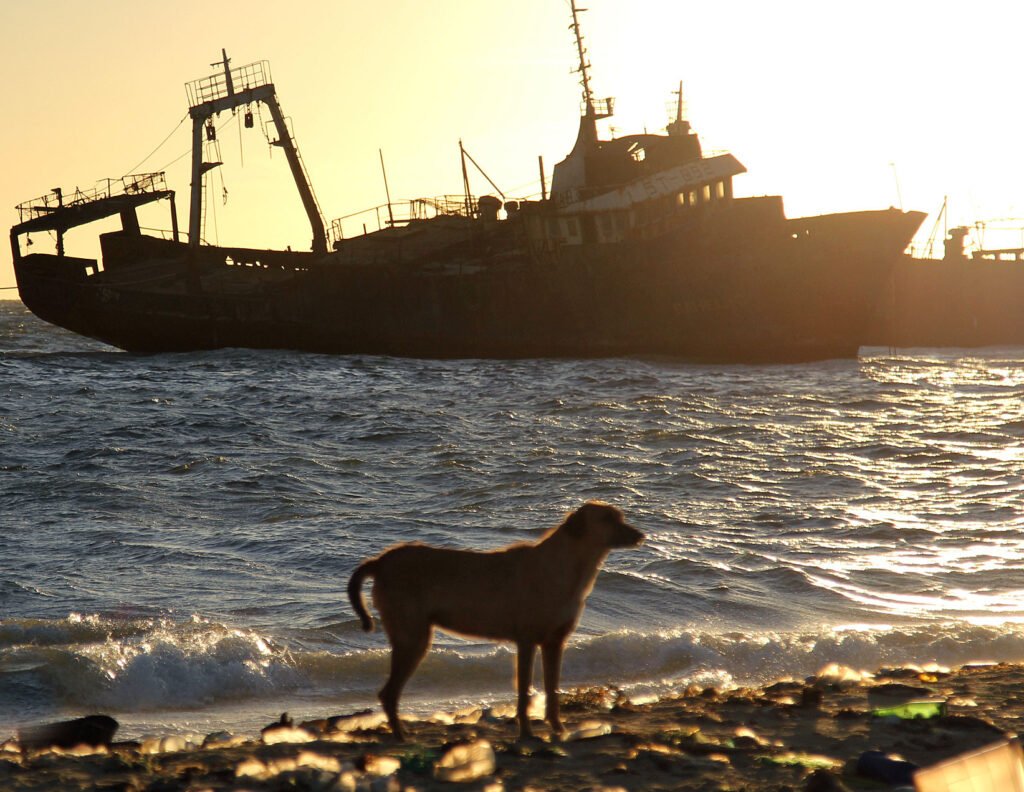
Greyhound Bay (French: Baie du Lévrier) and Cansado Bay in Nouadhibou, Mauritania. The name “Bay of Dogs” (or literally, Bay of Greyhounds/Hounds) comes from the French word lévrier (greyhound). It is a key geographical and tourist area, known internationally for two main reasons: The Notorious Shipwreck Graveyard. For decades, Nouadhibou Bay was considered the largest shipwreck in the world. Origin: Since the 1980s, corrupt officials, in exchange for bribes, allowed foreign shipowners to abandon old, inoperable vessels in the bay’s shallow waters to avoid the high costs of legal scrapping. Scale: At its peak, over 300 wrecks—from fishing boats to gigantic cargo ships—were rotting in the bay and on the surrounding beaches. Current Status: Thanks to EU funding and cleanup efforts in recent years, most of the large wrecks have been removed or scrapped, but rusting hulls can still be found. Homeless Dogs and the Environment. The area around the bay and local beaches is also associated with many homeless, emaciated dogs that roam around the waste heaps from nearby fish processing plants. Due to the overwhelming stench of decaying fish remains and the water contaminated by toxins from the wrecks, walking in these areas can be a challenging experience for tourists.