Nauru, officially the Republic of Nauru—originally known as Pleasant Island—is an island microstate located in the western Pacific Ocean, in Micronesia, approximately 42 km south of the equator. It is the smallest republic in the world in terms of both area (21.3 km²) and population, and the third-smallest country globally, after Vatican City and Monaco. Its exclusive economic zone covers 308,480 km², while its territorial waters span 41 km².
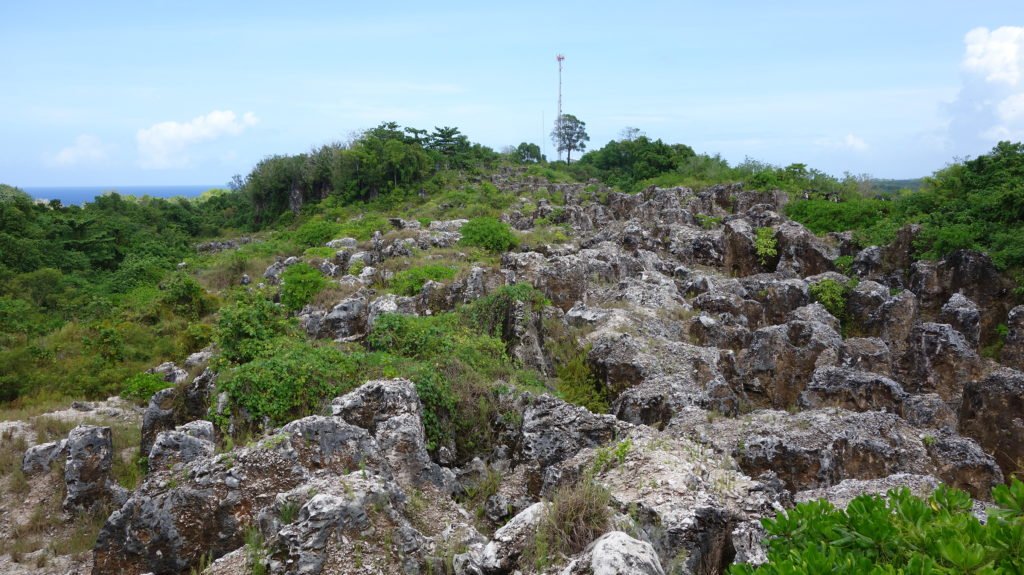
Geography. Nauru is a small (21.3 km²), oval-shaped island located in the western Pacific Ocean, approximately 42 kilometers south of the equator. Its coastline measures about 19 kilometers. The nearest island is Banaba, situated 306 kilometers away. The presence of a reef makes the construction of a harbor impossible; however, 16 artificial channels have been created for small boats. Most of the island is occupied by an interior plateau—known locally as “Topside”—which slopes steeply toward the coast. Its highest point is Command Ridge, rising 71 meters above sea level. Nauru possessed some of the world’s largest phosphate deposits (similar to Banaba and Makatea). Years of resource extraction have had a detrimental impact on the island’s environment, leaving behind barren terrain characterized by coral pinnacles reaching up to 15 meters in height across the central plateau. Phosphate mining resulted in the destruction of 80–90% of the island’s surface area. The damaged areas were not rehabilitated at the time; such efforts were initiated only in the 21st century and are proceeding gradually. By the end of the 20th century, approximately 80% of the island resembled a lunar landscape.
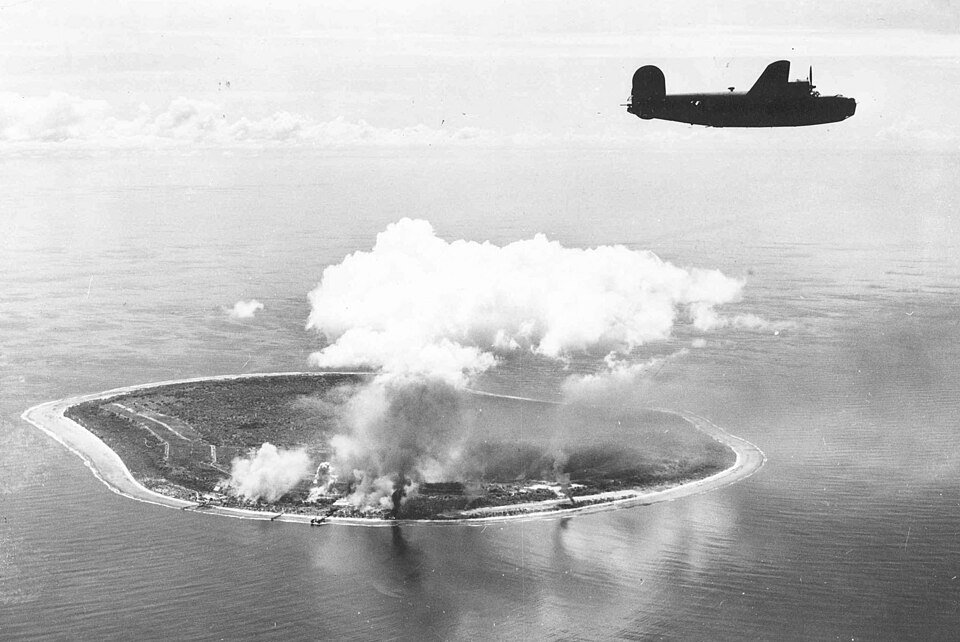
History. Nauru was settled by Micronesians and Polynesians approximately 3,000 years ago. In the pre-colonial era, the island was inhabited by 12 tribes, which are now represented by the twelve-pointed star on the Nauruan flag. In 1798, John Fearn discovered Nauru while sailing from New Zealand to China aboard the whaling ship *Hunter* (or *Snow Hunter*). He named it “Pleasant Island” due to its attractive natural conditions and the friendliness of the Nauruan people. The Nauruans subsisted primarily on coconuts, the fruit of the *Pandanus tectorius*, and *Chanos chanos* (milkfish), which they had acclimatized to the freshwater environment of Buada Lagoon. Jackfruit trees also grew on the island, but prolonged droughts caused the plant to die out. With the arrival of firearms on the island, inter-tribal disputes began to be settled using these weapons. A civil war also broke out. The war began in 1878 when a prominent chief was accidentally shot during a wedding. This accident led to an escalation of the conflict, as many families sought revenge against their enemies. During the war, small groups of armed Nauruans would stealthily infiltrate the territories of other inhabitants and kill people, including women and children. The social changes brought about by the war led to the establishment of a monarchy; one of the kings was Aweida. The instability on the island had a significant impact on trade and the population, which declined from 1,400 inhabitants in 1843 to 900 in 1888. The civil war ended only after the German Empire annexed Nauru in 1888 and incorporated it into the Marshall Islands Protectorate. At that time, the island was known as Nawodo or Onawero. Christian missionaries from the Gilbert Islands also arrived in 1888. In 1900, the researcher Albert Fuller Ellis discovered rich phosphate deposits on Nauru. On August 25, 2007, the island’s residents elected a new parliament. Scotty became president once again, and his supporters secured fifteen of the eighteen parliamentary seats. A new political crisis erupted in November 2007, triggered by allegations of corruption against the president’s administration. Consequently, on December 19, 2007, following a vote of no confidence in Scotty, Marcus Stephen was elected as the new head of state. A referendum was held in 2010 in which residents were asked whether to support constitutional amendments. One of the key proposed changes was the direct election of the president by the citizens. The electorate voted decisively against the constitutional changes; of the 4,400 voters, nearly 3,000 voted against the proposal (approximately 68%). Voter turnout was 78%. In 2016, the death penalty was abolished for all crimes.
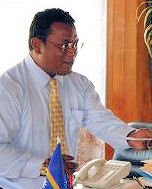
Politics. Nauru is a republic. The Constitution of Nauru was adopted on January 29, 1968, and subsequently amended on May 17, 1968. Its form of government is based on the Westminster model. The President serves as the head of state. The Parliament of Nauru, which has consisted of 19 members since 2013 (previously 18), is elected every three years under a majoritarian electoral system. Voting is open to any citizen of the island who has reached the age of twenty. At the beginning of each term, Parliament elects the President, who also serves as the head of government. The President then selects four or five ministers from among the members of Parliament. Candidates running for office are typically independents. The Nauru Island Council has been active since 1992, focusing its efforts on local matters. A member of the Nauru Island Council cannot simultaneously serve as a member of Parliament. All Nauruans hold full rights to lease land, which is owned by families or individuals. Foreigners cannot own land. Nauru has a complex legal system. The Supreme Court, headed by a Chief Justice, plays a paramount role in constitutional matters. Parliament cannot overturn court decisions; however, following a hearing in the Court of Appeal, a case may be referred to the High Court of Australia. Lower courts include the District Court and the Family Court. The state does not maintain its own armed forces. Under an agreement, the defense of Nauru is the responsibility of Australia. Only a police force operates on the island.
Human rights. According to U.S. State Department reports, human rights are respected in Nauru. There have been no reports of torture, political killings, political prisoners, restrictions on freedom of speech, or other serious human rights violations. The country’s only prison met international standards.
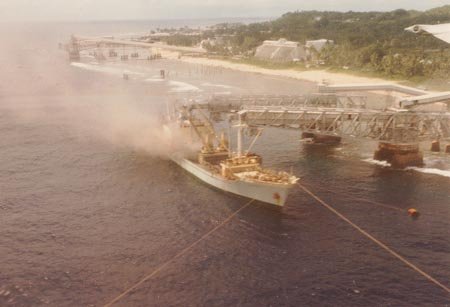
Economy. The economy is based on phosphate mining, with Australia serving as the primary market. Revenue is also generated from guano, while tuna are caught in the waters surrounding the island. The Australian dollar is the island’s currency; the country has never had a currency of its own. From 2001 to 2008, Nauru received aid from the Australian government in exchange for hosting—under the “Pacific Solution” program—illegal immigrants seeking asylum in Australia. As this was the island’s main source of income, the authorities reacted with concern when the program was shut down in 2008.
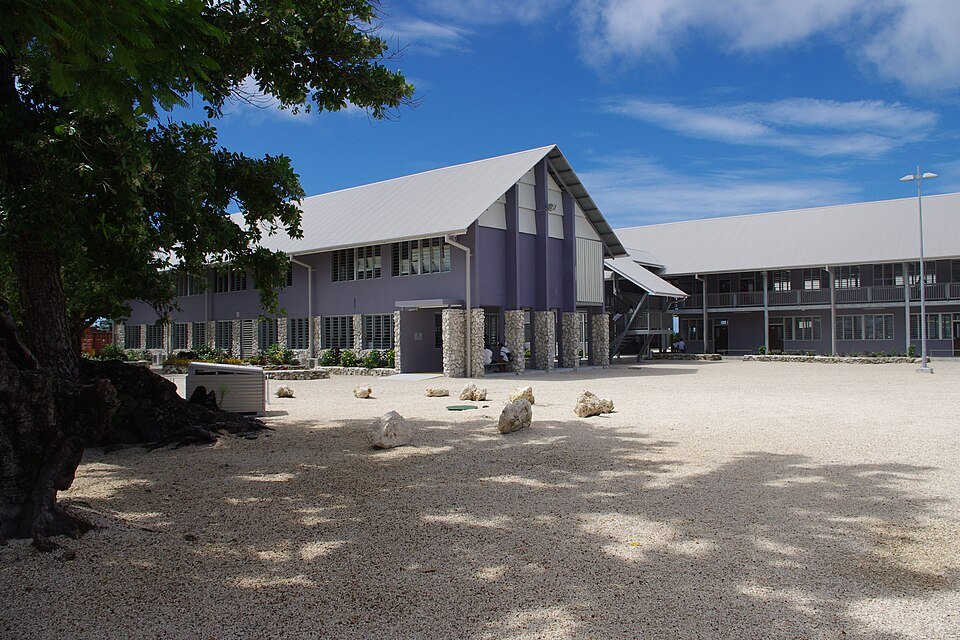
Education and social welfare. Effective healthcare measures have recently prevented infectious disease epidemics among the island’s residents. Nevertheless, a shortage of medical personnel remains a major issue (there are five doctors working on the island), prompting the government to try to attract as many specialists in the field as possible. Medical care is provided free of charge. In 2007, estimated total health expenditure reached 6.7 million US dollars (15.1% of GDP). In 2003, the prevalence of diabetes among adults was the highest in the world (30.2%). There are two hospitals on the island: one for Nauru residents and another for employees of the Nauru Phosphate Corporation. Nauruans are among the most obese people in the world; 94.5% of the island’s inhabitants suffer from obesity, and 90% of adults have a BMI above the global average. This is attributed to the consumption of cured foods. Education is a priority for the Nauru government, which has committed to fostering the development of children’s talents, personalities, mental and physical abilities, cultural identity, and language, as well as preparing them for a responsible life in a free society. All Nauru citizens have the right to education. Education is free and compulsory for children aged six to fifteen, while preschool education—lasting up to two years—is voluntary. Secondary education is divided into two stages: the first four years are compulsory, while the subsequent two are optional. English is the primary language of instruction in schools. There are no higher education institutions, so university studies are pursued abroad. The island has six preschools, two primary schools, and one secondary school (Kayser College).
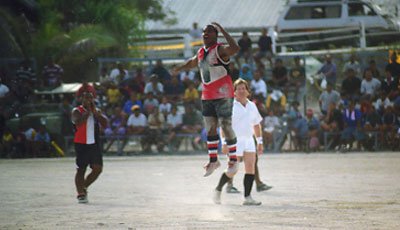
Sport. Australian rules football is the most popular sport in Nauru. Twelve clubs compete in the league. All matches are played at the island’s only completed stadium, Linkbelt Oval. Athletics is also practiced, though no Nauruan athlete has ever qualified for the Olympic Games. The island also has a national football team; on October 2, 1994, the Nauru team played a single match, defeating the Solomon Islands team 2–1. Nauru participates in the Commonwealth Games and the Summer Olympic Games. Marcus Stephen was a multiple gold medalist in weightlifting at the Commonwealth Games and a silver medalist at the 1999 World Weightlifting Championships. He was inducted into the Weightlifting Hall of Fame and later became President of the Republic.
Demographics. Most of the country’s population is concentrated in a narrow coastal strip due to the devastation caused by years of phosphate mining in the island’s interior. In 1968, the year independence was proclaimed, the island’s population stood at 3,000. By the end of 2006, the island had 9,872 inhabitants. The population had previously been slightly higher, but in 2006, approximately 1,500 people left the country as part of the repatriation of immigrants from Kiribati and Tuvalu. This exodus was primarily driven by a reduction in phosphate mining. Nauruans, the country’s indigenous people, make up 58% of the population. Other groups include other Micronesians (26%), Chinese (8%), Filipinos, and people of European descent (8%). The official languages of the island are Nauruan and English.
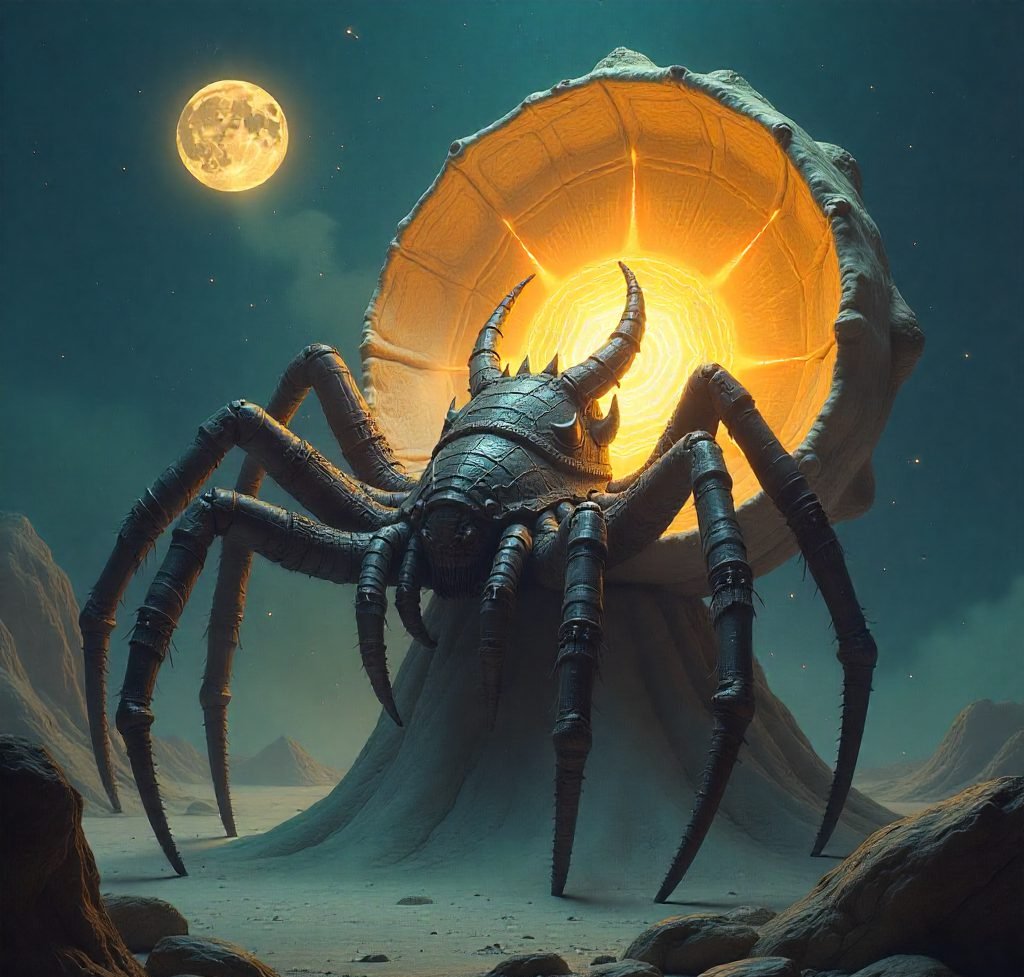
Indigenous mythology. According to the mythology of the peoples of Oceania, the spider Areop-Enap played a significant role in the creation of the world. In the beginning, there was only Areop-Enap and the void. One day, Areop-Enap found a clam shell. After much effort, he managed to open it and crept inside. It was cramped and dark within the shell. Areop-Enap found two snails there—a smaller one and a larger one—and bestowed a portion of his power upon them. From the smaller snail, he created the moon. In the moon’s faint light, he saw a worm that set about separating the lower and upper parts of the shell; these became the earth and the sky. The worm worked so hard that its salty sweat filled the lower part of the shell, forming the sea. Upon finishing the task, the worm collapsed from exhaustion. Then, Areop-Enap created the sun from the second snail.
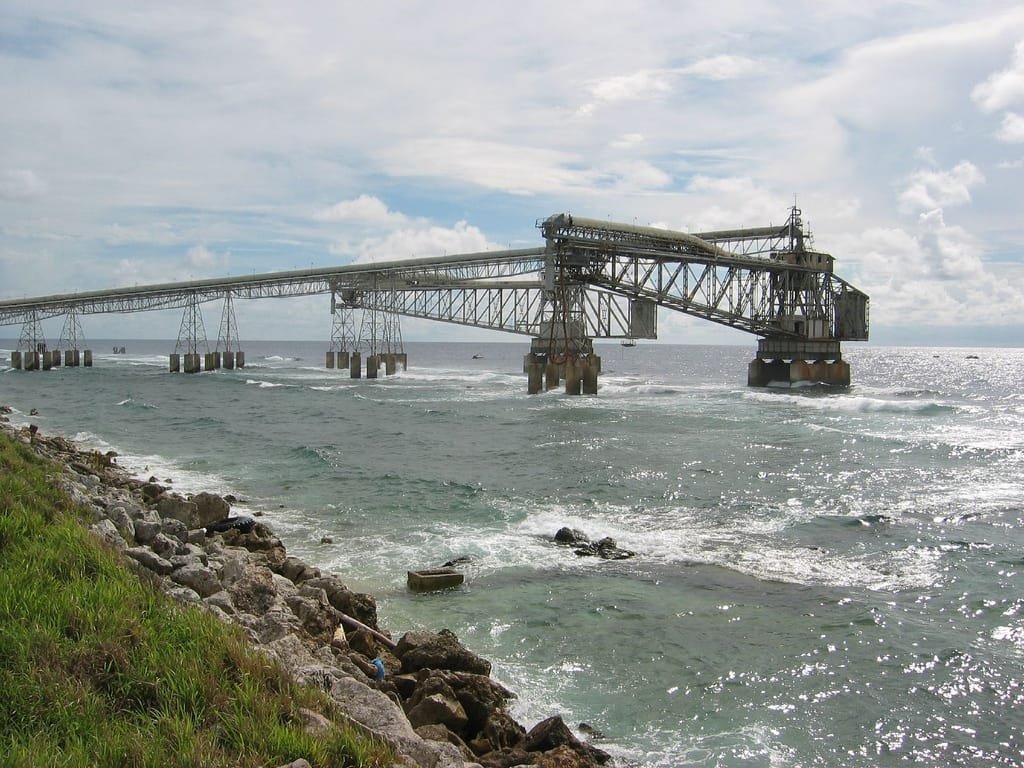
An ecological disaster. Today, it stands as a symbol of total ecological, economic, and health catastrophe. Ecological Disaster: The destruction of paradise. Nauru’s bedrock consisted of high-quality phosphate deposits (formed from seabird droppings—guano). Aggressive open-pit mining led to environmental destruction: A lunar landscape—as much as 80–90% of the island’s surface has suffered total degradation. The interior of Nauru has turned into a barren expanse of limestone pillars and jagged rocks, making any regeneration of flora and fauna impossible. Lack of agriculture and water: The destruction of the topsoil made it impossible to grow any crops. Due to the absence of rivers and the contamination of groundwater with toxic cadmium, the country struggles with a chronic shortage of drinking water, forcing it to import water or rely on desalination plants. Coastal erosion: Stripped of natural vegetation cover, the island has become vulnerable to extreme weather events and rising sea levels. The population has been pushed onto a narrow, low-lying coastal strip.
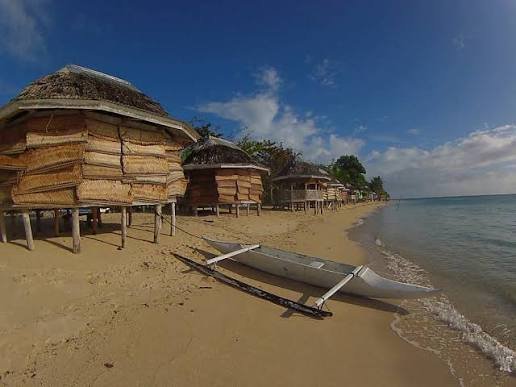
Tourism. Nauru is the world’s smallest independent republic and one of the least visited countries, located in the Micronesia region of the central Pacific. Tourism on this remote coral island—covering an area of just 21 km²—is virtually non-existent; only about 200 foreigners arrive here annually. You won’t find luxury resorts here, and tourism infrastructure is extremely limited. It is a destination strictly for the most determined travelers seeking places that are authentic, rugged, and completely removed from mass tourism.
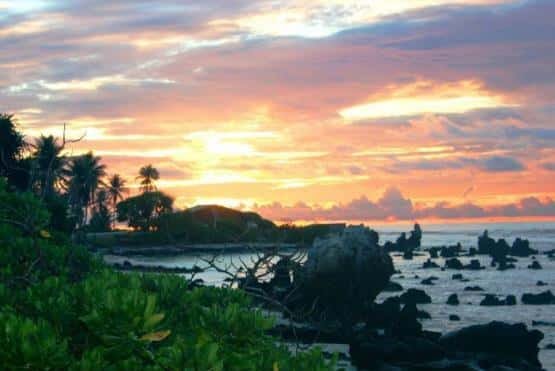
Nauru’s Attractions. Despite its small size, the island holds distinctive and unique attractions:
Lunar Landscape (Topside): Nearly 80% of the island’s interior has been devastated by decades of intensive phosphate mining. Today, it consists of abandoned plateaus filled with sharp limestone pinnacles, resembling a scene from a science-fiction movie.
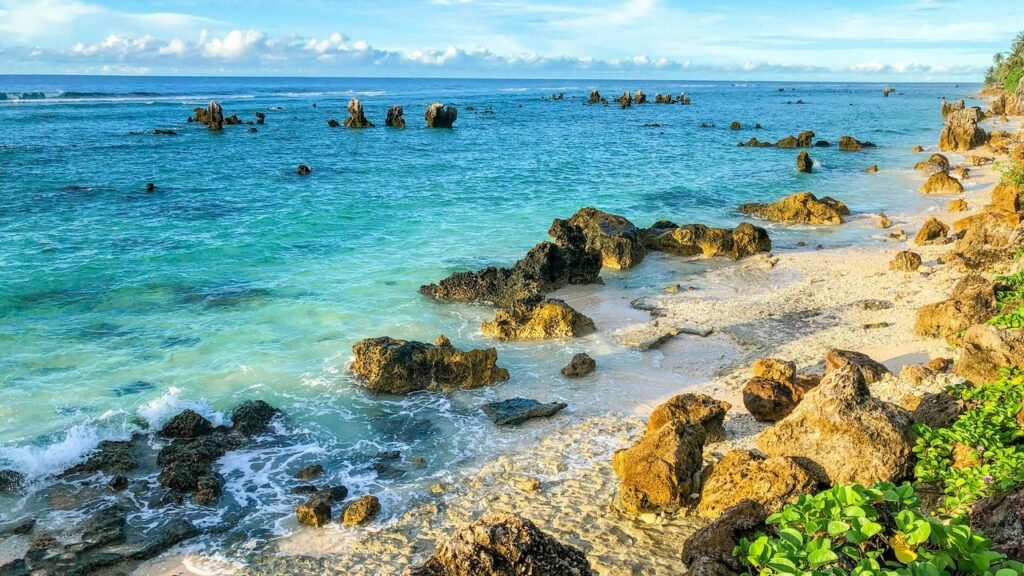
Anibare Bay: Considered the island’s most beautiful beach, featuring crystal-clear turquoise water. Due to treacherous and strong ocean currents, safer swimming and snorkeling are possible mainly within the sheltered Anibare Harbor.
Command Ridge: The island’s highest point (71 meters above sea level), offering a view of… the entire country. Here, one can find the rusted remains of Japanese fortifications, artillery, and bunkers from World War II.
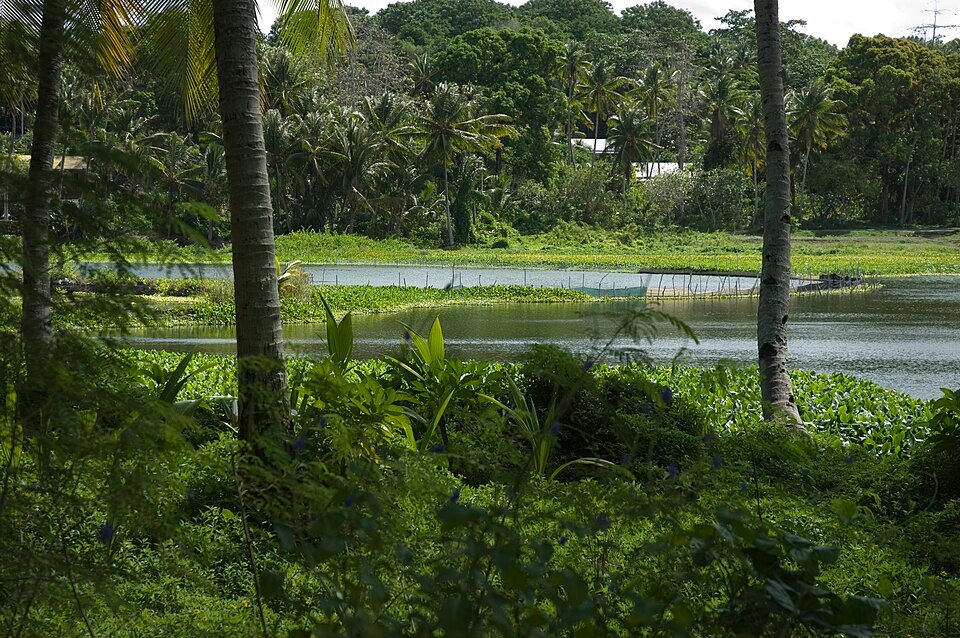
Buada Lagoon: The island’s only freshwater lagoon, surrounded by remnants of tropical vegetation and palm trees, serving as a rare green sanctuary on Nauru. Yaren and Moqua Well: Yaren serves as the unofficial capital (housing the parliament and the airport). Hidden nearby is Moqua Well—an underground lake within a limestone cave that was once the primary source of drinking water.