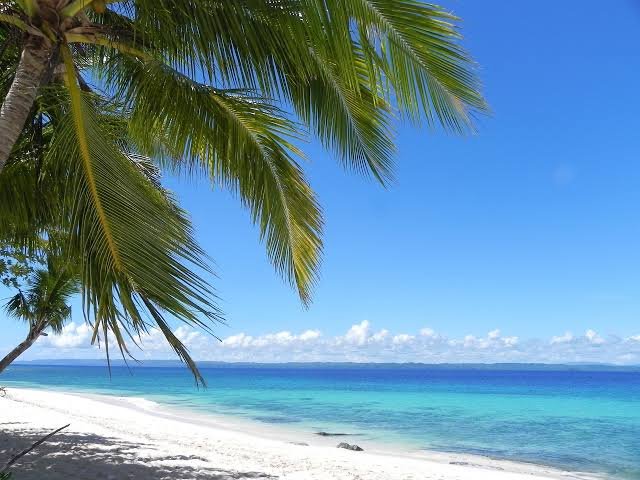
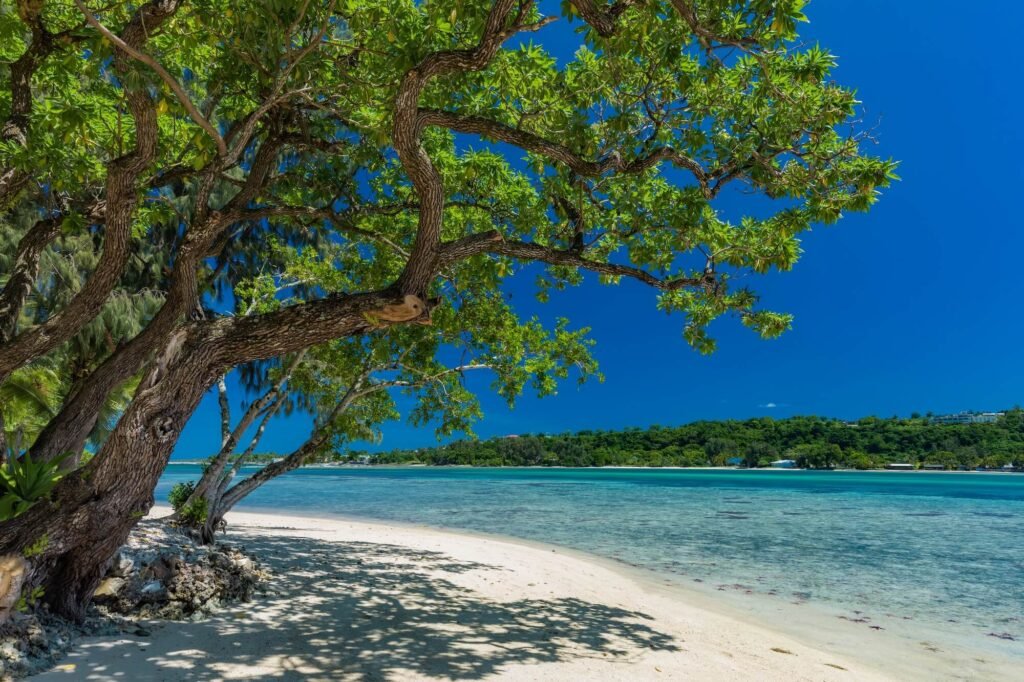
The Republic of Vanuatu is a country in Oceania. It is situated across the 198 islands of the New Hebrides (two of which—Matthew and Hunter—belong to New Caledonia, an overseas territory of France), 65 of which are inhabited. It lies approximately 800 km northwest of Fiji and northeast of New Caledonia. The country’s territory was formerly a French-British condominium known as the New Hebrides.
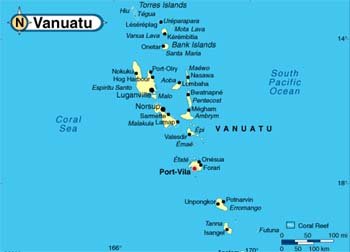
Geography. Vanuatu comprises 198 islands (65 of which are inhabited)—mostly mountainous and of volcanic origin—including Espiritu Santo, Malekula, Efate, Ambrym, and Erromango. Narrow strips of coastal lowlands are present, and active volcanoes are found on three of the islands. Frequent earthquakes occur, sometimes triggering tsunamis. The largest city is Port Vila—the capital, located on Efate—with a population of 45,694 (as of October 2009); the second-largest city is Luganville (population 13,484), located on Espiritu Santo. The climate is humid equatorial; the local evergreen rainforests create a distinctive microclimate for the islands. Some islands are covered by dry forests and savannas.
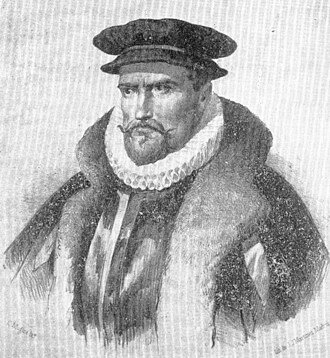
History. The first humans arrived in the territory of present-day Vanuatu approximately 3,000 years ago; pottery fragments found there date back to 1300–1100 BC. The first contact between local inhabitants and Europeans occurred in 1606, when Pedro Fernández de Quirós arrived on the largest island (naming it *Terra Austrialis del Espiritu Santo*), followed by L.A. Bougainville in 1768. In 1774, James Cook mapped the islands and named them the New Hebrides. The first Christian missions were established in the early 19th century, and French and British colonists began arriving towards the end of the century. A Joint Naval Commission placed the archipelago under British-French administration in 1887, and nineteen years later, the islands became a British-French condominium. During World War II, the islands served as an Allied military base. A 1977 conference in Paris decided to grant Vanuatu independence, which was officially proclaimed on July 30, 1980.
Political system. Vanuatu has a unicameral parliament with 52 members, elected every four years by universal suffrage. The leader of the main parliamentary faction is typically elected Prime Minister and head of government. The head of state is the President, elected every five years by Parliament and the presidents of the six provincial governments.
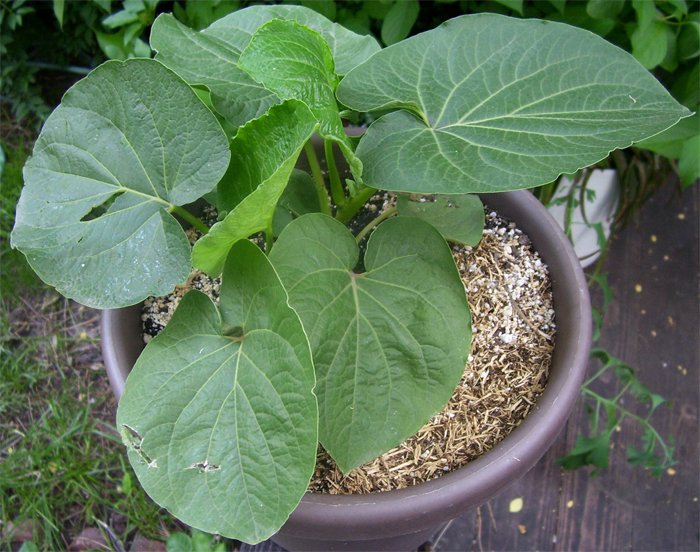
Agriculture. Agricultural land accounts for 12% of the country’s total area. Crops include kava, cocoa, coconut palms, sugarcane, peanuts, and coffee. Yams, taro, maize, vegetables, and breadfruit are also grown for subsistence. Agriculture employs 65% of the economically active population.
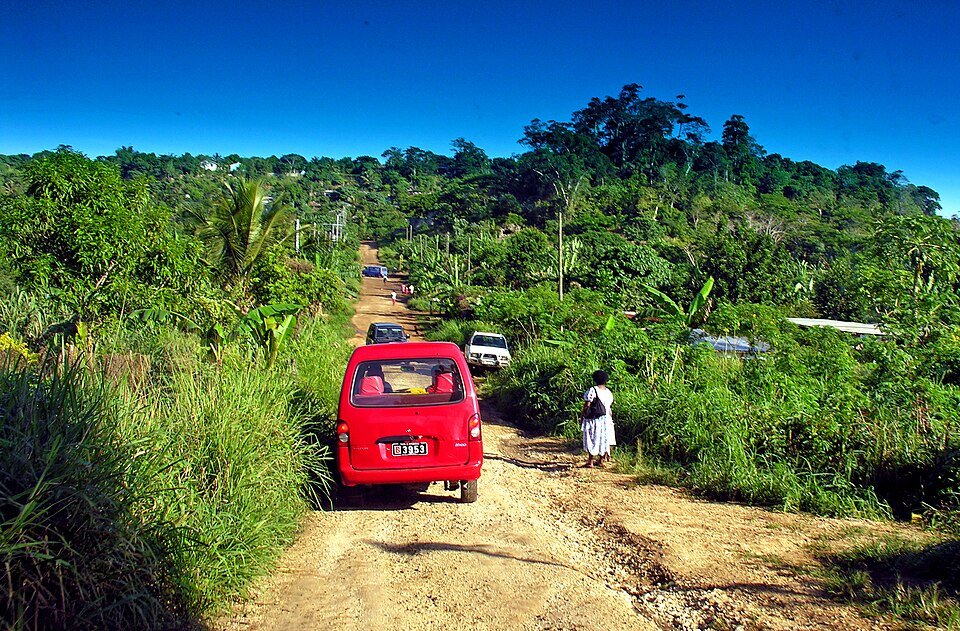
Tourism. The key tourist destinations in Vanuatu are the islands of Espiritu Santo, Tanna, and Pentecost. The country’s well-developed tourism sector draws its appeal primarily from volcanic and tropical landscapes and the culture of the indigenous peoples of Oceania. Swimming spots are also popular. Vanuatu’s reefs attract divers; the most notable dive site is the wreck of the SS President Coolidge. A number of dive centers also offer reef diving. Tourism development is supported by good air links with Australia and New Zealand. The islands of Efate and Artok, along with the western coast of Lelepa Island in Shefa Province, comprise the domain of Chief Roi Mata—the first site in Vanuatu to be inscribed on the UNESCO World Heritage List (in 2008). The area contains sites associated with the life and death of the last paramount chief to hold the title of Roi Mata (16th–17th centuries), including his residence and the locations of his death and burial.
Economy and natural resources. Vanuatu’s economy is based primarily on services; it is a tax haven (and, among other things, a “flag of convenience” country). Vanuatu does not possess abundant natural resources. Manganese ore is mined in the country on a small scale.
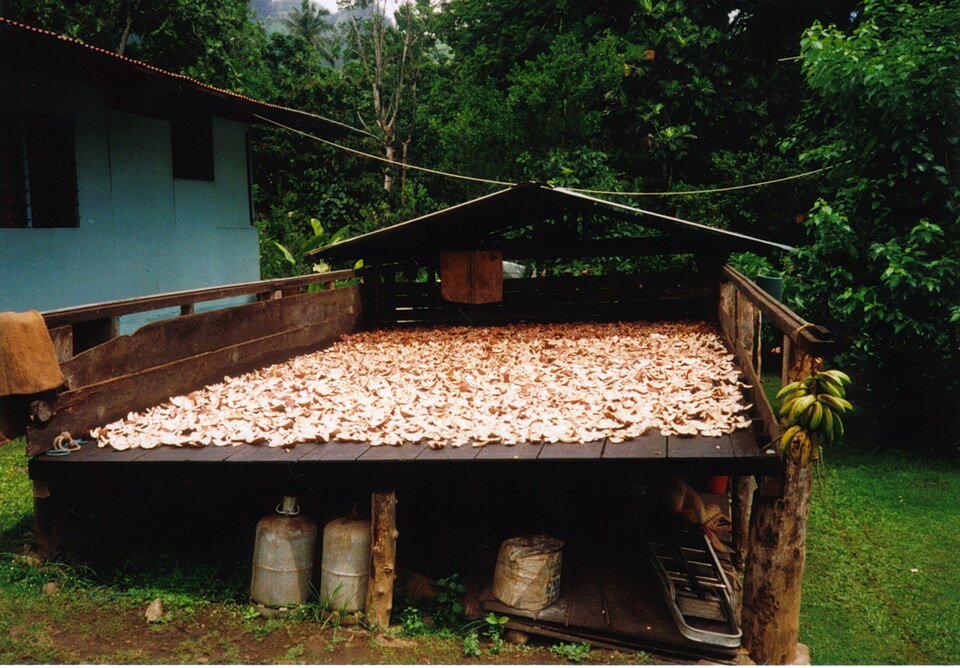
Industry and exports. The most important industrial sector is the food industry (meat, vegetable oil, and fish processing). Exports consist mainly of fish and agricultural products: copra, cocoa, timber, coffee, beef, and coral.
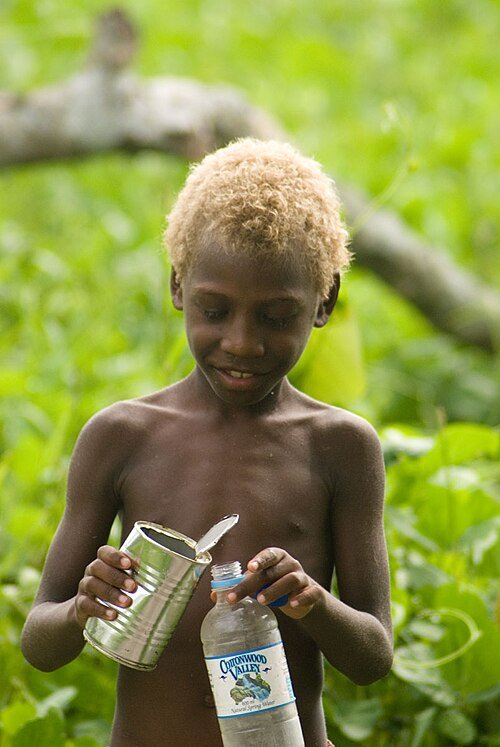
Demographics. The archipelago is home to over 190,000 people. The vast majority of the population—some 92–93%—consists of indigenous Melanesians, known as Ni-Vanuatu, whose ancestors settled the islands at the beginning of the second millennium BCE. They are divided into dozens of ethno-territorial groups and speak various languages and dialects. In addition to the Ni-Vanuatu, several groups of Polynesians live on the archipelago; these include both indigenous groups (such as the Aniwa, Mae, Mele, and West Futuna) and immigrants from French Polynesian territories—Tahiti, Uvea, and Futuna—who together make up about 3% of Vanuatu’s population. The remaining inhabitants include French, British, Australian, and New Zealand nationals, as well as small groups of refugees from Micronesia (I-Kiribati) and Asia (Vietnamese and Chinese).
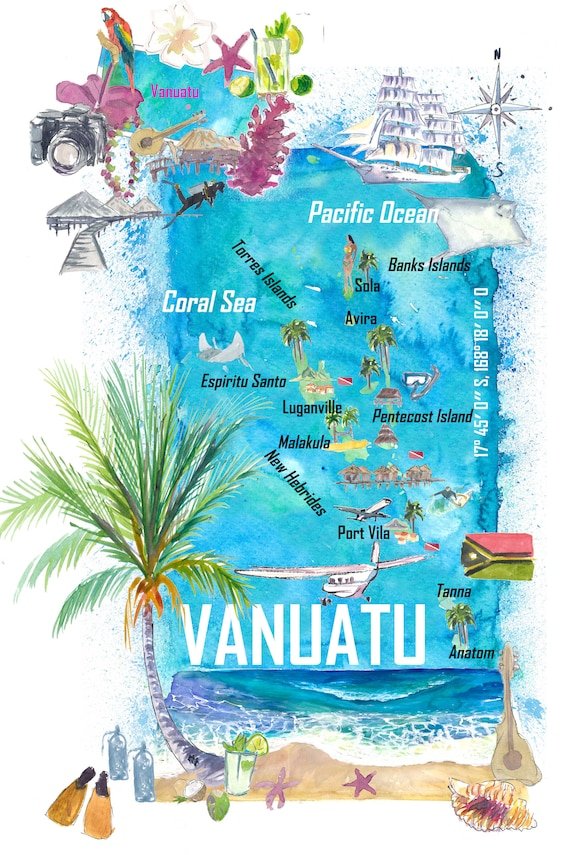
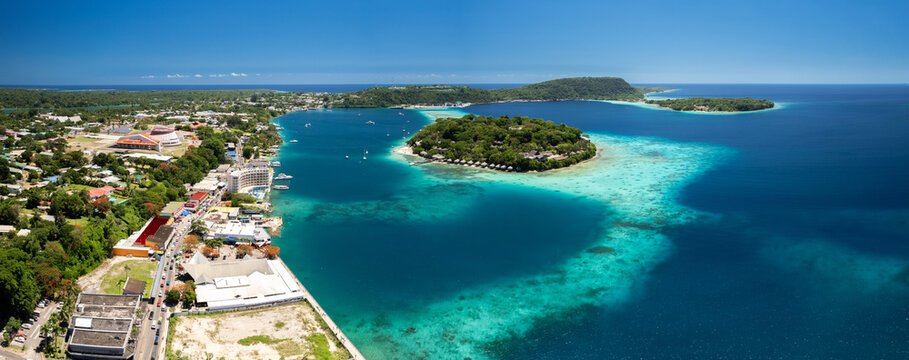
Key islands and tourist attractions. Vanuatu (Republic of Vanuatu) is an island nation located in Melanesia, in the southwestern Pacific Ocean, east of Australia and north of New Caledonia. The archipelago, formerly known as the New Hebrides, consists of approximately 83 islands of volcanic and coral origin, about 65 of which are permanently inhabited. The country is renowned for its unspoiled nature, active volcanoes, and unique, living cultural traditions.
Efate Island: The country’s main entry point, home to the international airport. Beyond the capital, Port Vila, the island offers beautiful lagoons, waterfalls (such as the Mele Cascades), and excellent snorkeling spots.
Tanna Island: Known for Mount Yasur—one of the most accessible active volcanoes in the world. Tourists can stand right on the edge of the lava-spewing crater. The island is also home to traditional tribes that maintain an ancient way of life (known as “Kastom villages”).
Espiritu Santo Island: The largest island in the archipelago and a true diver’s paradise. It is home to the famous WWII shipwreck, the SS President Coolidge, as well as idyllic, snow-white beaches like Champagne Beach. The island is also famous for its “blue holes”—natural freshwater pools with intensely blue water.
Pentecost Island: World-famous for the Nagol ritual (a vine-jumping festival), which takes place annually between April and June. Men jump from specially constructed wooden towers with their ankles secured only by flexible vines. This tradition served as the direct inspiration for modern bungee jumping.
Malekula Island: The second-largest island in Vanuatu, considered the most culturally diverse. It is known for the traditions of the Big Nambas and Small Nambas tribes and for its rich folklore.