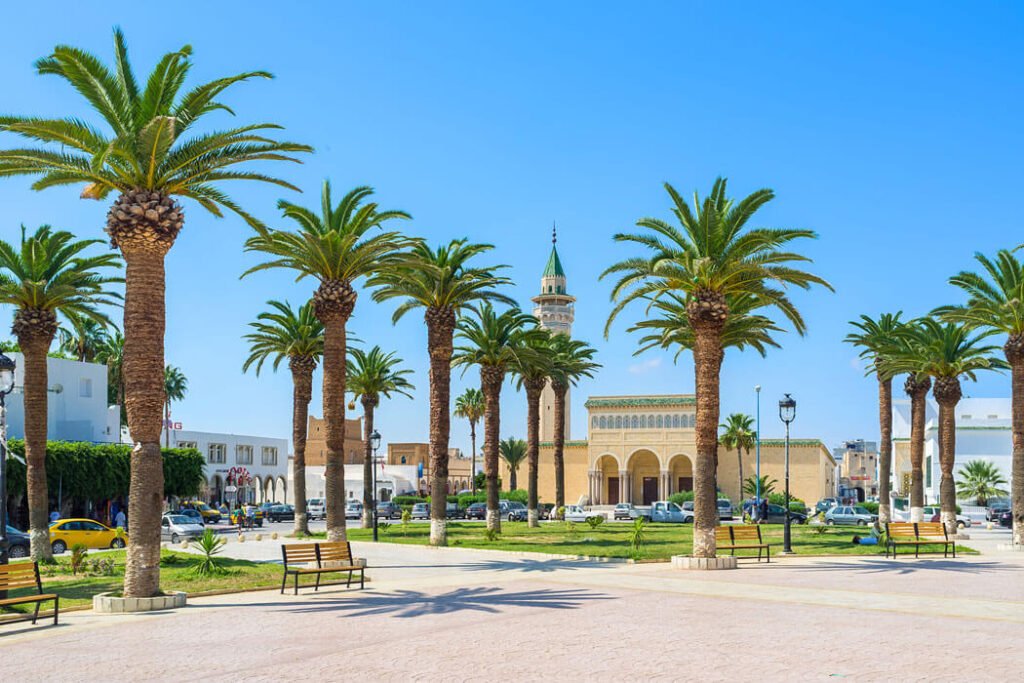
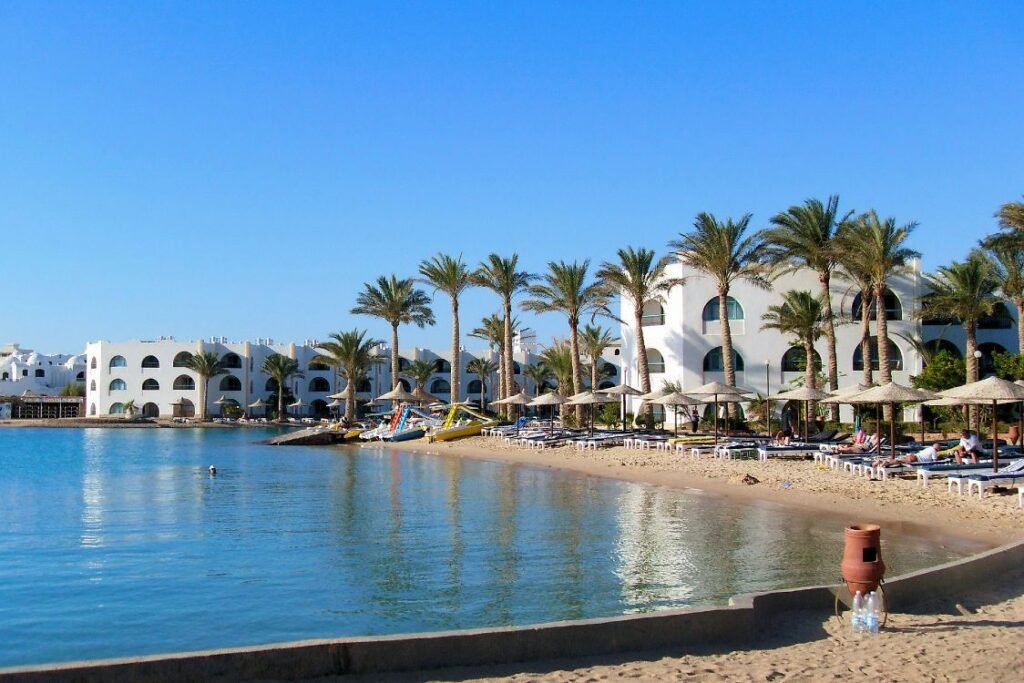
Monastir is a port city in the central part of Tunisia’s eastern coast, located approximately 15 km south of Sousse. Monastir’s history dates back to Phoenician and Roman times. The city experienced its golden age in the Middle Ages, during the rule of the Aghlabid dynasty. The city’s name derives from a Christian monastery. The city also boasts a marina and two golf courses. Monastir International Airport, located between Monastir and Sousse, primarily serves tourist charter flights.
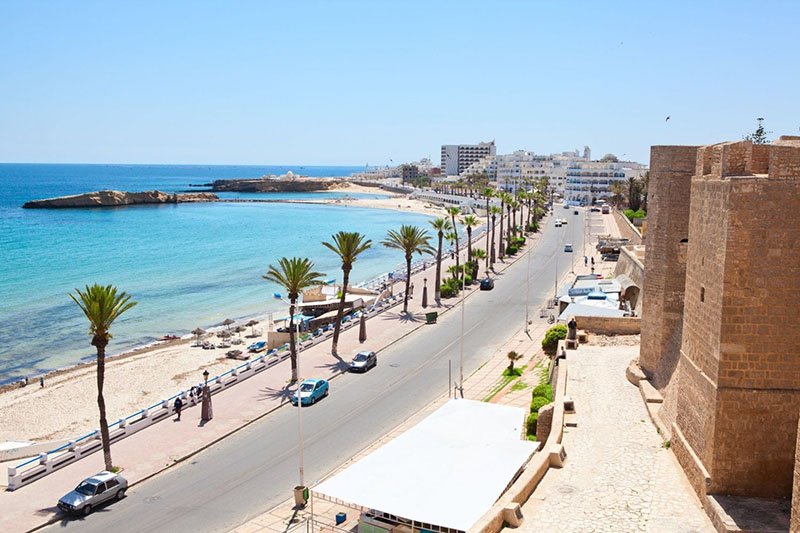
About the city. Monastir was once a staging post for Roman emperors on their African expeditions. Today, this city of approximately 93,000 inhabitants is also known as the birthplace of the first president of independent Tunisia, Habib Bourguiba. After independence, intensive reconstruction and modernization of the city began. Much of the medina’s walls were demolished. Despite this, the ribat known as Ribat Harthema remains intact – a magnificent complex of halls, towers, staircases, and corridors, built in 796 to defend the coast and interior of the country from enemies. To the side of the courtyard is a prayer hall, now used as a museum showcasing art from across the Islamic world. Today, its incredible atmosphere attracts not only tourists but also filmmakers, who use it as a natural setting for filming (including “The Life of Christ,” “The Life of Brian,” “In Desert and Wilderness”) and theater performances. Directly adjacent to the ribat is the mosque known as the Great Mosque, with a square-based minaret. The minarets of Bourgiba’s mausoleum, which was buried here in 2000, dominate the city. The building is situated in the middle of a Muslim cemetery.
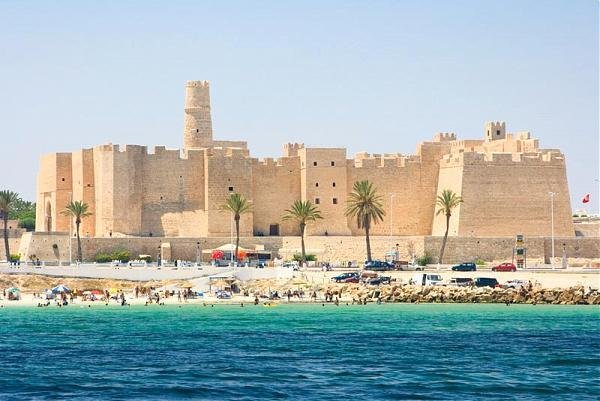
Ribat Harthema. The monastery’s greatest attraction is undoubtedly Ribat Harthema, the oldest fortified Muslim monastery built by the Arabs during their conquest of the Maghreb. The ribat was founded in 796 by Hartham ibn A’yan, governor of the Ifriqiya region, of the Abbasid dynasty. The ribat’s name comes from him. Originally, the structure was square in plan, but over the following centuries it was gradually enlarged (particularly during the reign of the Hafsid rulers in the 15th century) until it reached its contemporary form. The current version of the ribat consists of four buildings with two inner courtyards and several observation towers. During the visit, it is worth climbing at least one of these towers – it offers breathtaking views of the city and surrounding beaches.
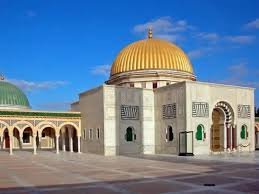
Habib Bourguiba Mausoleum. Habib Bourguiba is undoubtedly one of the most important figures in Tunisian history – a hero of the fight against French colonialism and the first president of the independent republic (he held this office for 30 years). Bourguiba had close ties to Monastir, where he was born and spent the last years of his life. It is no wonder that he chose this city as the location for his mausoleum. He decided to build it in the early 1960s, almost four decades before his death. It was intended to serve not only as a final resting place for himself but also for members of his immediate family, including his wife, parents, and siblings.
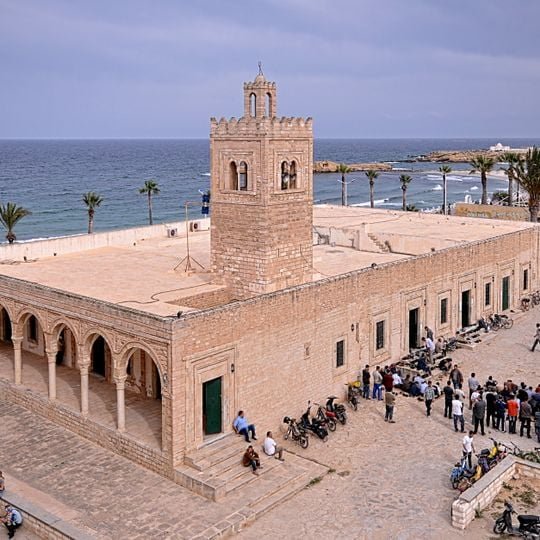
The Great Mosque. Adjacent to the Ribat Harthema is the Great Mosque – a seemingly austere, fortress-like stone structure topped by a single minaret on a square plan. Built during the Aghlabid period as a small oratory, it was gradually expanded by the Zirid and Hafsid dynasties. The structure’s architecture combines local North African building techniques with Mediterranean elements. The mosque only achieved its current appearance in the 18th century. The building’s interior is distinguished by an arched vault supported by Roman columns. A mihrab, decorated with Kufic inscriptions and floral motifs, also features, indicating the direction of Mecca. Characteristically, the mosque lacks a sahn, or inner courtyard, so characteristic of Islamic architecture. The entire structure consists solely of a vast, 1,000-square-meter prayer hall. The building was closely linked to the nearby ribat, emphasizing the monastery’s dual religious and military role as a center of worship, learning, and coastal defense. Today, the mosque continues to serve the local Muslim community as an active place of prayer and is a significant tourist attraction (non-Muslims are not permitted inside). It has been a protected Tunisian monument since 1928, and after the 2013 earthquake, conservation work was undertaken to preserve its historic structure.
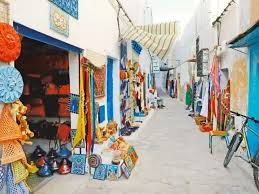
The medina in Monastir is a labyrinth of narrow streets, filled with souvenir stalls, handicraft workshops, and teahouses. It’s a great place to shop for unique items, sample traditional Tunisian cuisine, or simply observe the locals. Much of the old town and the eastern section of the defensive walls were demolished shortly after Tunisia gained independence. They fell victim to the rapid modernization of the city under Habib Bourguiba. The medieval structures disappeared in the blink of an eye. Fortunately, the western walls of the medina survived the city’s reconstruction and can still be seen today. Particularly noteworthy are the historic Bab el-Gharbi gate, built in the 15th century during the Hafsid dynasty, and the 18th-century Bab Tunis.
The Monastery Museum of Islamic Art is located within the Ribat Harthema. It comprises an open-air gallery where visitors can admire funerary stelae and an exhibition space set in the former prayer hall. The museum houses richly decorated artifacts grouped according to their material. They form a remarkable collection representing the successive eras of Muslim rule in Tunisia, from the Aghlabid period, through the Fatimids, the Hafsids, and finally the Ottomans. The exhibition includes ceramic, glass, and marble objects, gold and silver coins, and wooden friezes. Many of these artifacts are richly decorated with floral and geometric motifs, as well as inscriptions. Among the metal artifacts, a unique astrolabe dating from the 18th century stands out. The art of calligraphy and bookbinding is represented by a collection of parchment Quranic leaves from the library of the Great Mosque in Kairouan, dating from the 9th to 12th centuries. The museum’s permanent collection is complemented by Coptic and Fatimid textiles with inscriptions containing the names of the workshops in which they were created.
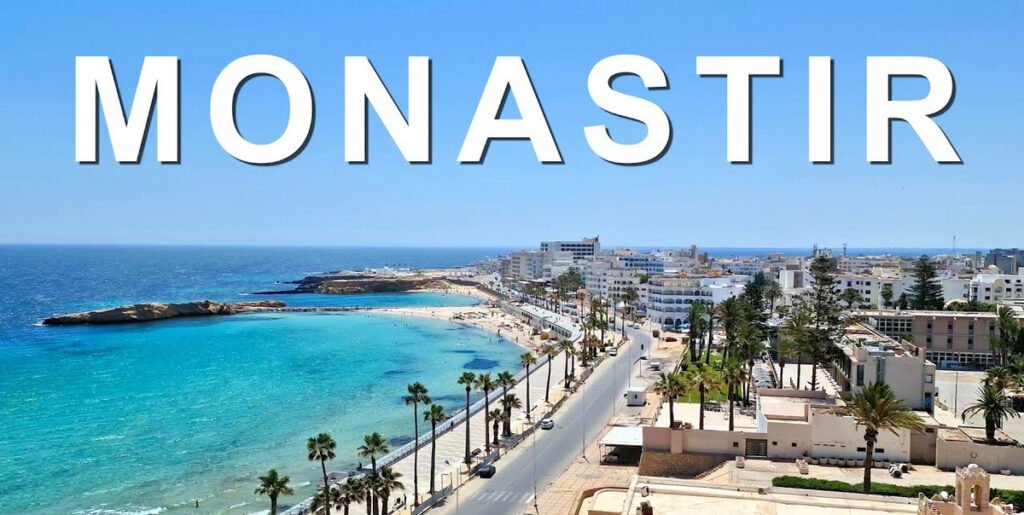
Marina and Corniche Promenade. Cap Monastir Marina and the adjacent Corniche Promenade are a must-see in the city. Situated on the shores of the Mediterranean Sea, they combine the beauty of a coastal landscape with modern urban infrastructure. The marina is bustling with activity, with luxury yachts and boats docked here, and the waterfront is lined with elegant cafés offering local delicacies, as well as a variety of restaurants serving Mediterranean seafood dishes, as well as typical dishes from various parts of the Arab world, such as baba ganoush, falafel, couscous, and brik. The Corniche is a wide, palm-lined avenue that runs along the coast of Monastir. It’s an ideal place for sunset strolls, jogging, or cycling. The promenade offers stunning views of the sea, the port, and the city’s coastal districts. In summer, the Corniche becomes a hub of cultural life, hosting concerts, festivals, and street art shows.
Skanes – a luxurious tourist district. Skanes is a very modern tourist district located on the outskirts of Monastir, right next to the airport. It’s famous for its beautiful, long, sandy beach and is a popular center for water sports, such as jet skiing, diving, and parasailing. Large, luxurious hotels with swimming pools, water parks, and fantastic restaurants dominate the area. Many offer hammams, spas, massage parlors, entertainment, and gyms, making for an exceptionally comfortable stay. The offerings are suitable for families with children as well as those seeking relaxation and top-notch entertainment.
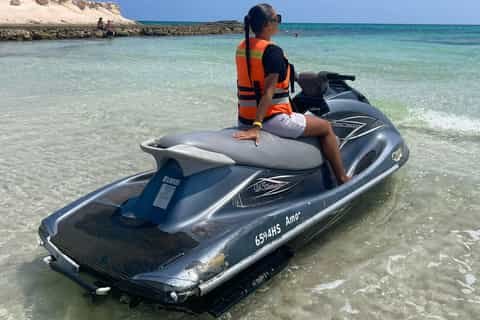
Diving and water sports. Monastir is also a great place for diving enthusiasts. There are several sites worth visiting near the city. The most famous is the Hannibal Wreck – a shipwreck located at a depth of 31 meters, teeming with fish. Several companies operate in the city that offer diving training and organize underwater adventures. Monastir also offers plenty of opportunities for water sports enthusiasts. Jet skis, jet skis, paragliding, banana boats, or perhaps a towable toy? Local rental companies are waiting to provide you with an unforgettable and adrenaline-filled marine adventure.