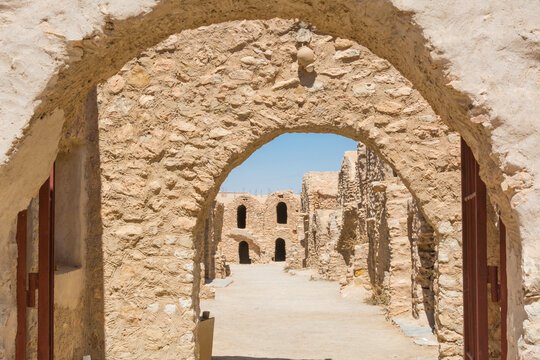
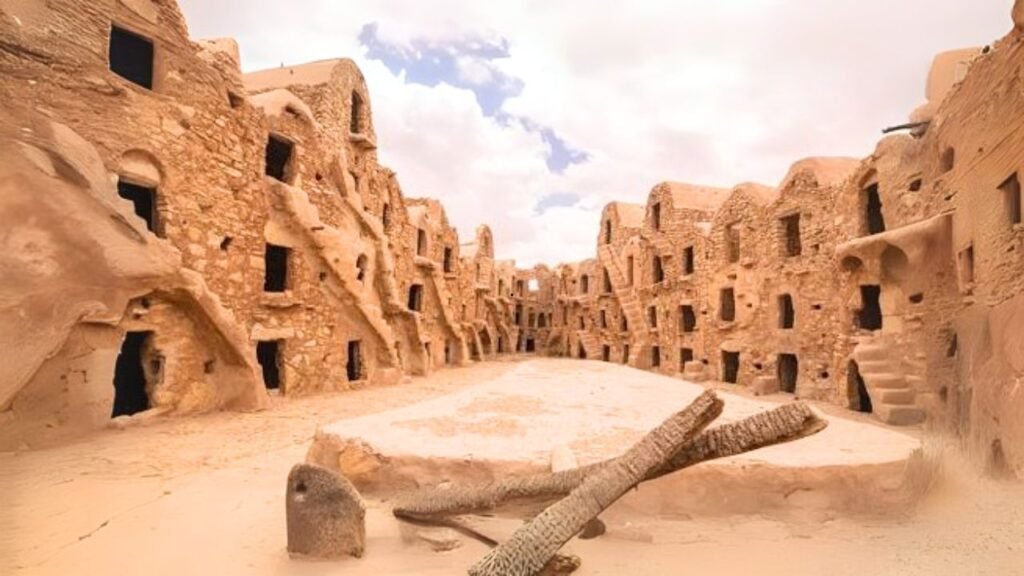
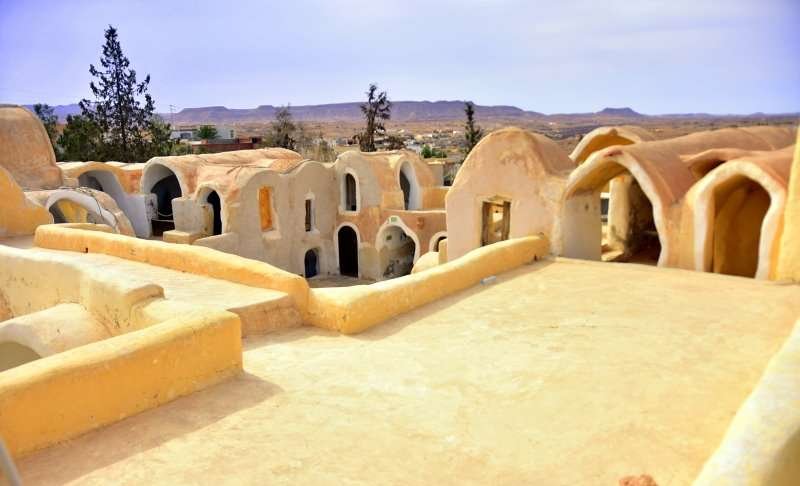
Tataouine is a city in Tunisia, the administrative center of the Tataouine Governorate, 531 km from Tunis. The city is famous for its surrounding ksars, particularly Ksar Aulad Sultan, Shanini, and Duwayrat, where picturesque granaries dating back to the 15th and 16th centuries can be found in abandoned settlements. Due to its drinking water sources, the site held strategic significance, and during the French colonization, a military unit was stationed there, earning the city the nickname “Gateway to the Desert.” The location gained fame as a location for George Lucas’s Star Wars, where the city itself lent its name to the desert planet Tatooine. The surrounding ksars of Aulad Sultan and Haddad later served as locations for the next film in the series, Star Wars: Episode I – The Phantom Menace. The city also appeared as “Foum Tataouine” in The X-Files, where an alien laboratory was located.
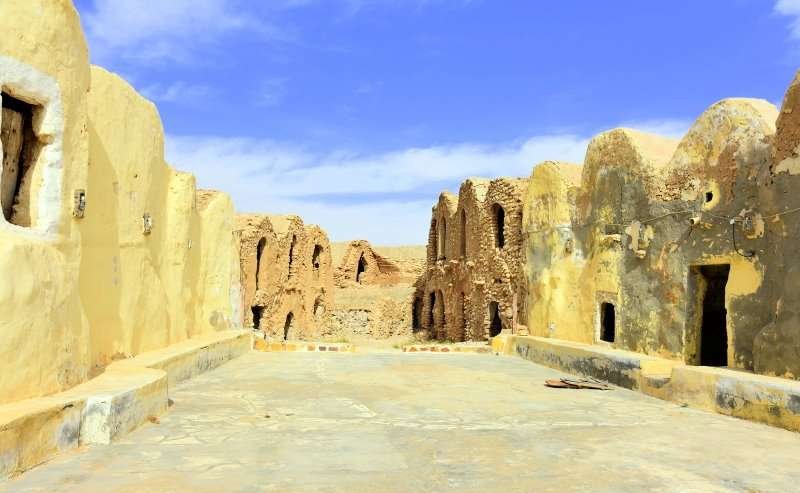
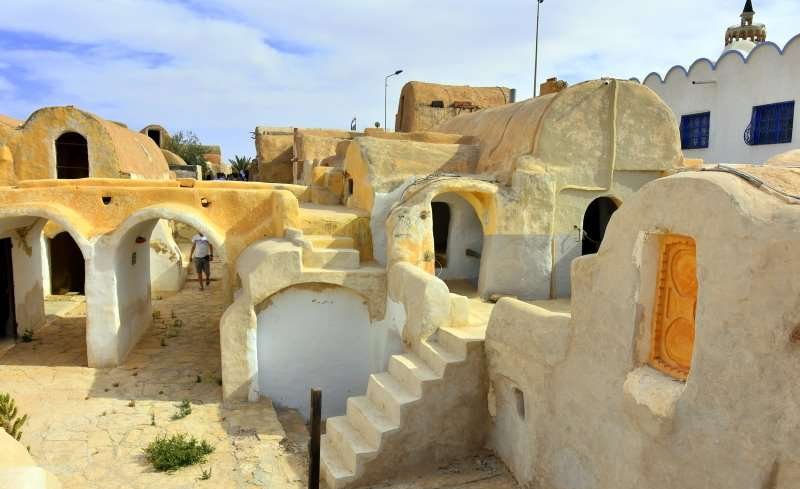
What are ksars, and why are they most famous around Tataouine? A ksar is a fortified complex of ghorfas—small granary chambers arranged in a vertical “honeycomb” around a courtyard. Berbers stored grain and olive oil in them, and the walls protected supplies and the community. Around Tataouine, you’ll see the most beautiful examples of this architecture in the entire country: multi-level, wind-sculpted, and photogenic at any time of day. A visit offers more than just “ruins” but also exposure to the vibrant culture of the south.
Attractions in the region (ksars, villages, film tropes). Start with Ksar Ouled Soltane—a monumental, multi-story ksar with numerous ghorfas, staircases, and viewing ledges. The pre-sunset light paints honey and ochre hues, and shadows create a lacework pattern on the walls. Ksar Hadada tempts with its easy access and cinematic appeal – some scenes from “Star Wars” were filmed in this area; today, there are guesthouses and a small service base. Chenini is a rock village clinging to a ridge with a white marabou atop it. A walk along the ridge offers views of desert valleys, and local guides recount the community’s customs. Douiret – Chenini’s somewhat more rugged, less-visited sister – has preserved cave dwellings and long flights of stairs. Finally, the ksars deep in Dahar (e.g., Ksar Jouamaa on the ridge): a true paradise for photographers, thanks to 360° views and absolute silence. If you have time, add Zammour or one of the “hidden” ksars in the side valleys – smaller but intimate and perfect for meeting a local guide.
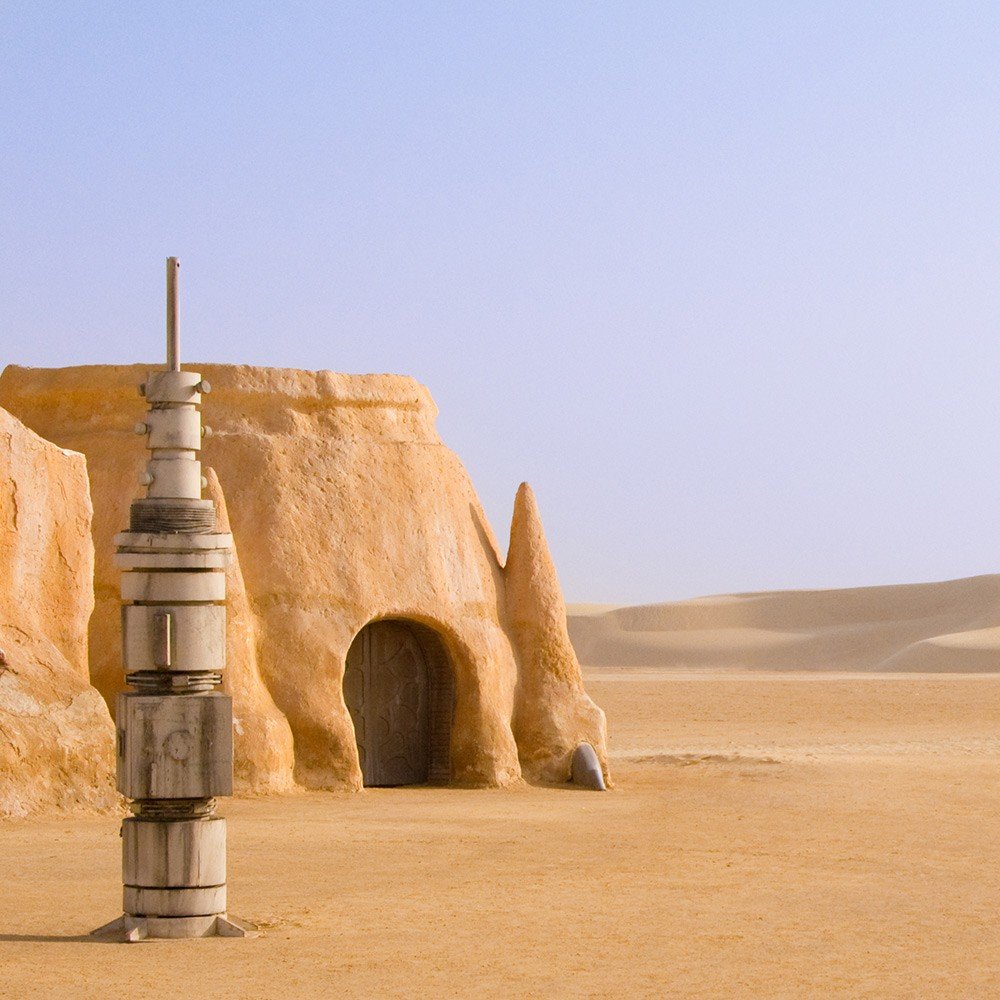
“Star Wars” film. The Dahar region and the area surrounding Tatooine gave its name to the film planet Tatooine. Some scenes were filmed near the ksars and villages in the south (including Ksar Hadada and the area around Tataouine), while more extensive locations can be found closer to Tozeur (Ong Jemel / Mos Espa). In the city itself, there are modest thematic exhibitions in some establishments/guesthouses – remember that the film sets were sometimes temporary, so you’re going for the “atmosphere,” not the Hollywood museum.
Weather and when to go to Tataouine. The best months are March–May and October–November: warm but not scorching, with long, golden light. In summer, temperatures reach 35–40°C; then, set off at dawn, take a siesta at noon, and return to the terrain after 4:00 PM. In winter, mornings are cool, but the trails are empty and the sky is crystal clear.

Cuisine. Start with brik (a thin pastry filled with egg and tuna), mechouia (a spicy salad of roasted vegetables), couscous with lamb or vegetables, and, in season, grilled merguez. In many homes and small establishments, you’ll find bread baked on a baking sheet or over embers, along with honey and olive oil from the surrounding groves. For dessert, there’s makroud—date rhombuses in honey—and mint tea with pine nuts.
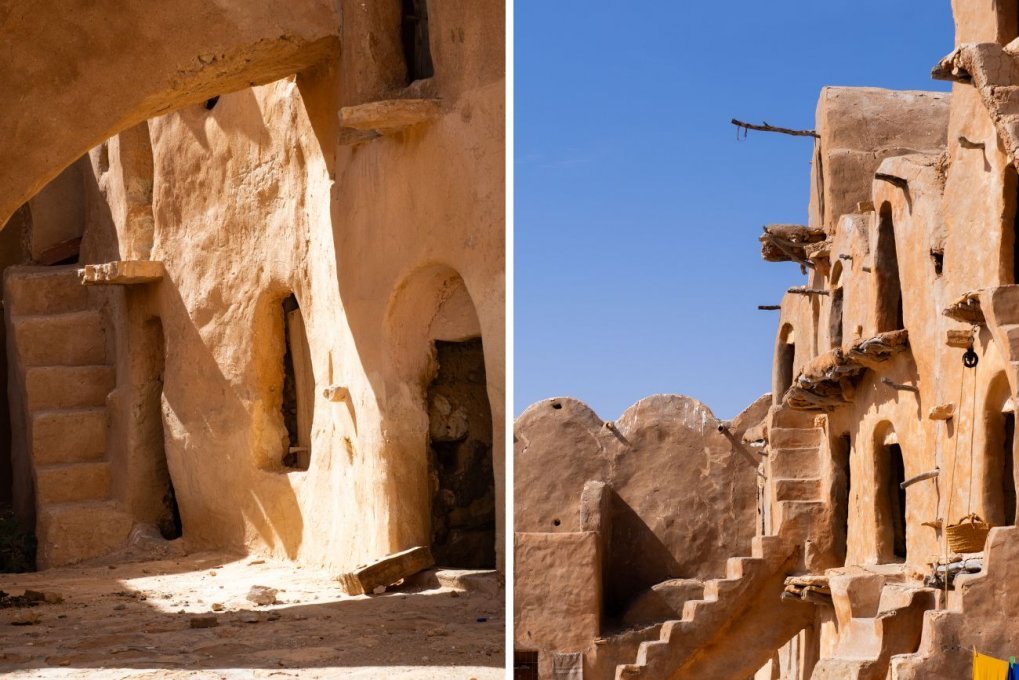
Photography. The most beautiful time is in the morning and the golden hour before sunset: the texture of the clay and stone deepens, and the shadows of the steps create a natural rhythm. Position yourself “on the axis” of the courtyard to capture the symmetry of the ghorfas; look for diagonal guides on the sides. On the ridges of villages (Chenini, Douiret), a wide angle will reveal the space, while a short telephoto lens will bring out the details of the marabou storks and steps. After rain, the stone darkens – the contrast increases, and the photos become more “cinematic.”
Etiquette and safety. Remember that some spaces are still used by local communities. Do not climb onto roofs or the fragile edges of ghorfs, do not move stones “for the sake of the frame,” and do not touch paintings. Ask permission before taking a close-up photo of someone; a small tip or buying a handmade item is a nice gesture. Do not drive off the asphalt after rain—mud on the clay can immobilize your car. Leave the area as clean as you found it.
What to bring for the Ksar and Dahar tour?
1.5–2 liters of water per person,
SPF 50 sunscreen,
hat and sunglasses;
comfortable shoes with treads (for stairs, debris),
a light windbreaker for the ridges;
small dinars for guides and site attendants;
a power bank and lens cloth (dust and wind);
a headlamp if you plan to spend the sunset outside the city.
Tataouine attractions in a nutshell. Because Tataouine’s attractions combine the most beautiful things in southern Tunisia: multi-story ksars, rock villages with marabouts, desert horizons, and movie tropes, all within reasonable distances and without the crowds. Add affordable prices, great light for photographers, and the hospitality of the local communities, and you have the recipe for a day or two that will give your vacation the “expedition light” feel.