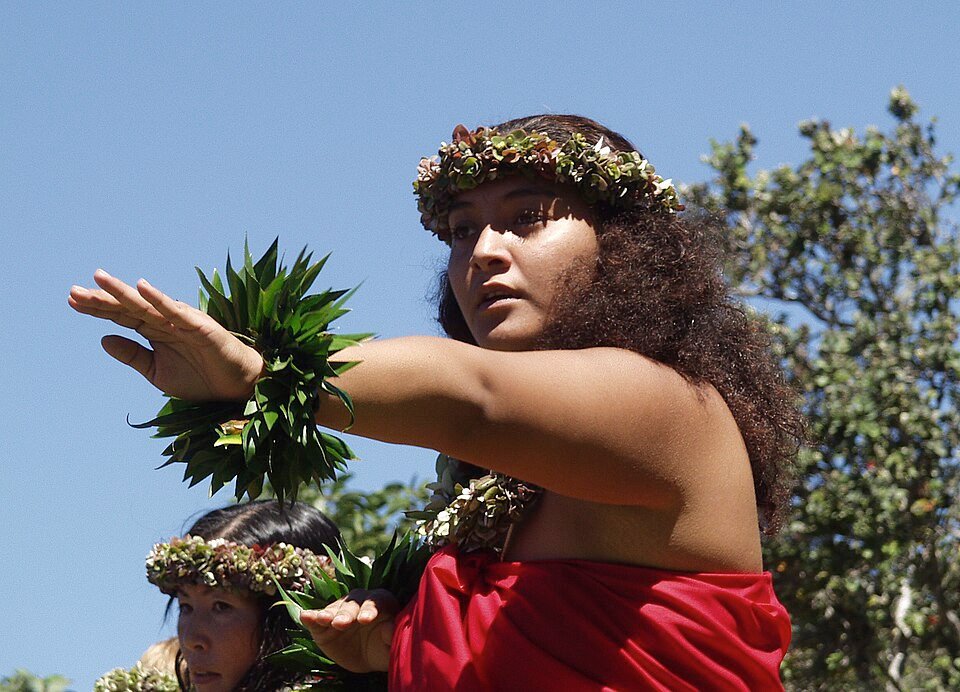
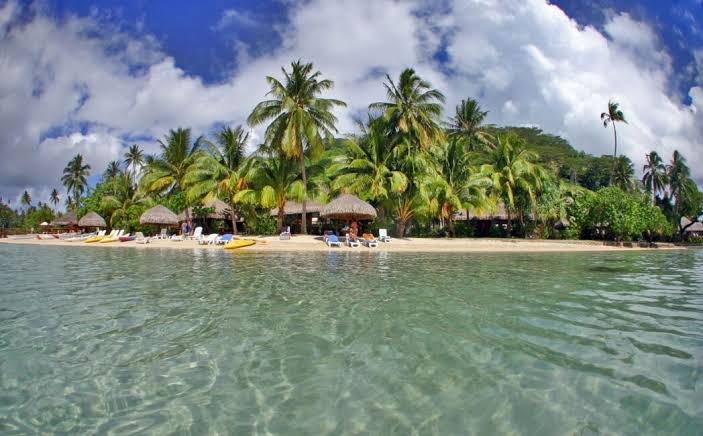
Hawaii is the youngest of the 50 United States and the only state composed entirely of islands. It is situated within the Hawaiian archipelago, in the north-central Pacific Ocean. The state capital, Honolulu, is located on the island of Oʻahu. Hawaii forms the northern apex of the Polynesian Triangle and is an integral part of Polynesia in geographical, cultural, and ethnographic terms. Although politically the 50th U.S. state, its indigenous inhabitants share common roots, language, navigational traditions, and beliefs with other Polynesian peoples, such as the Māori of New Zealand or the people of Tahiti.
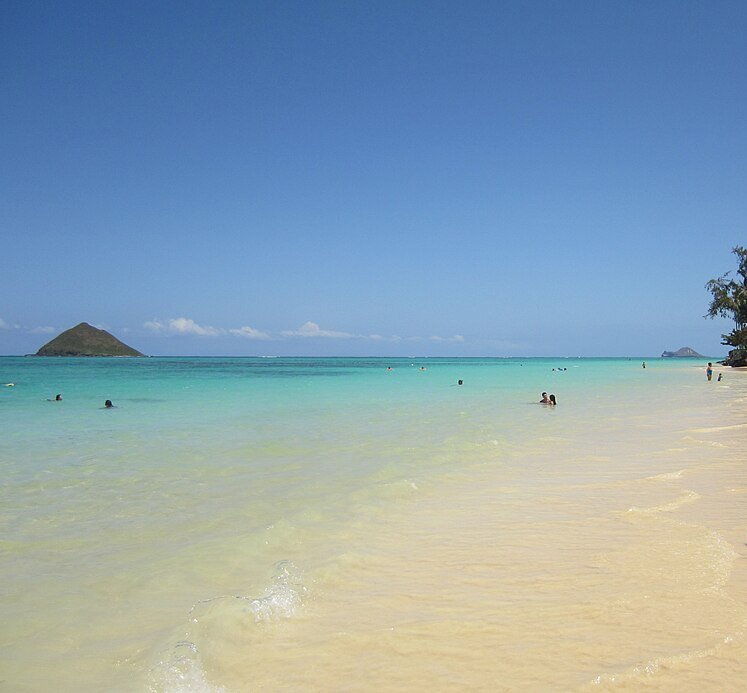
Geography. An archipelago located 3,200 km southwest of North America. It is the southernmost state and, after Alaska, the westernmost. Hawaiʻi is the only state in the United States that:
is not geographically located in North America;
is entirely surrounded by water;
is an archipelago;
contains a royal palace;
has no straight lines in its borders.
The highest mountain in Hawaiʻi, Mauna Kea, rises to an elevation of 4,205 m above sea level; however, when measured from its base on the Pacific Ocean floor, it stands at approximately 10,200 m—making it taller than Mount Everest. Hawaiʻi features the second-highest point above sea level among all islands worldwide. The eight main islands—Hawaiʻi, Maui, Oʻahu, Kahoʻolawe, Lānaʻi, Molokaʻi, Kauaʻi, and Niʻihau—are accompanied by over 100 smaller offshore islets. Kaʻula is another small, distinct island that is also part of the archipelago. The Northwestern Hawaiian Islands consist of nine older islands and numerous reefs, which are the eroded remnants of larger volcanic islands. Several areas in Hawaiʻi are protected by the National Park Service. The state is home to two national parks: Haleakalā on the island of Maui, and Hawaiʻi Volcanoes on the southern part of the island of Hawaiʻi. Additionally, the state contains three National Historical Parks. These include Kalaupapa National Historical Park on Molokaʻi, Kaloko-Honokōhau National Historical Park on Hawaiʻi, and Puʻuhonua o Hōnaunau National Historical Park. Other protected areas include the Ala Kahakai National Historic Trail and the USS Arizona Memorial at Pearl Harbor on Oʻahu. The Papahānaumokuākea Marine National Monument was established by President George W. Bush on June 15, 2006. This monument covers an area of 360,000 km² consisting of reefs, atolls, and shoals—an area larger than all U.S. National Parks combined. The climate of Hawaiʻi is typical of the tropics, though temperatures and humidity are moderated by easterly winds. Local climates vary significantly from one island to another. In the summer, daytime temperatures reach approximately 29°C, while nighttime temperatures are around 22°C. In the winter, daytime temperatures hover around 23°C, dropping to 16°C at night. Snow—rarely associated with the tropics—falls at an altitude of 4,205 meters above sea level on the volcanoes Mauna Kea and Mauna Loa on the island of Hawaiʻi during certain winter months. Snow also occasionally falls on the Haleakalā volcano. Mount Waiʻaleʻale on Kauaʻi records the second-highest annual rainfall in the world, reaching 11.7 meters. Hawaiʻi experiences two distinct seasons: a dry season from May to October and a rainy season from November to April.
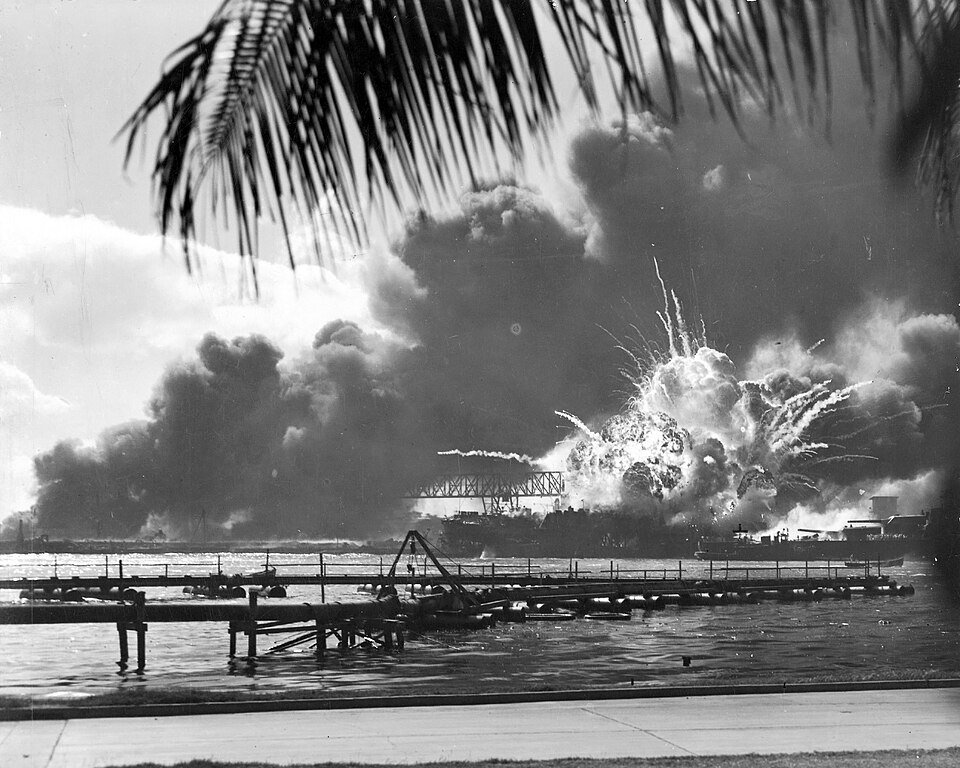
History of the Hawaiian archipelago. Hawaii is one of four U.S. states—along with Vermont, Texas, and California—that were independent nations before joining the United States (as the Kingdom and later the Republic of Hawaii). Furthermore, it is one of only two, alongside Texas, to have gained international recognition as a sovereign state. The Kingdom of Hawaii existed as a sovereign nation from 1810 until 1893, when the monarchy was overthrown. Hawaii then served as an independent republic from 1894 to 1898, at which point it was annexed by the United States as a territory; it eventually became the 50th state in 1959. On December 7, 1941, Hawaii was the target of a surprise attack on Pearl Harbor by the Japanese Empire. This assault—carried out against Pearl Harbor and other military and naval installations on Oʻahu by aircraft and midget submarines—led to the entry of the United States into World War II. Ancient Hawaii. Based on archaeological findings, it is estimated that the first settlers arrived on the islands around 300 AD; these were likely Polynesian settlers from the Marquesas Islands. Subsequently, around the 11th century, people arrived from Raiatea and Bora-Bora. The first European to discover Hawaii was the British explorer James Cook, who arrived in 1778. Archaeologists and historians believe that the initial settlements established by immigrants from the Marquesas Islands and Tahiti around 1000 AD introduced a new lineage of chiefs, the *kapu* system (a way of life), the practice of human sacrifice, and the construction of temples—elements also reflected in Hawaiian mythology. Regardless of the immigrants’ origins, historians agree that ancient Hawaii experienced a slow but steady population growth. The Territory of Hawaii (1898–1959): On July 7, 1898, William McKinley signed a resolution annexing Hawaii as a territory of the United States. An official ceremony took place at ʻIolani Palace, during which the Hawaiian flag was lowered and the flag of the United States was raised. Sanford Dole was appointed as the first governor of the territory. The State of Hawaii (since 1959): In March 1959, Congress passed an act admitting Hawaii to the United States as the 50th state. It was signed by then-President Dwight Eisenhower (the act did not include the Palmyra Atoll, which had been part of the Territory of Hawaii). On June 27, 1959, a referendum was held in which the residents of Hawaii were asked whether they supported statehood; the proposal was approved by a margin of 17 to 1. Following its admission as a state, Hawaii underwent significant changes, driven by the development of tourism across the islands. Hawaiian culture and customs were also actively promoted.
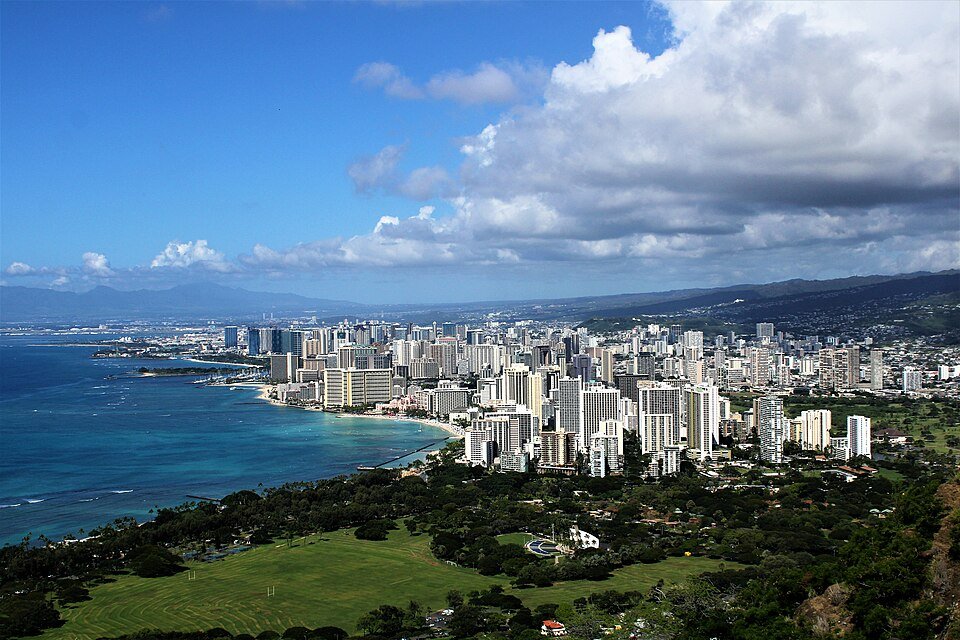
Cities. The capital, Honolulu. The relocation of the Hawaiian royal family from the Big Island to Maui, and later to Oʻahu, explains the distribution of the population across the islands. Kamehameha III chose Honolulu as the capital; a key factor in this decision was the natural harbor located near the city. Honolulu is situated on the southeastern coast of Oʻahu. The previous capital was Lāhainā, on the island of Maui, and before that, it was Kailua-Kona, on the island of Hawaiʻi. Other major towns and cities include Hilo, Kāneʻohe, Kailua-Kona, Pearl City, Waipahu, Kahului, Kailua, Kīhei, and Līhuʻe.
Population. Population density in Hawaii. In 2005, the population of Hawaii was 1,275,194, representing an increase of 13,070 people—or 1.0%—over 2004, and an increase of 63,657 people—or 5.3%—since 2000. This figure accounts for a natural increase of 48,111 (96,028 births and 47,917 deaths) and net migration of 16,956 people; 30,068 individuals moved to the state, while 13,112 left. In reality, the number of people in Hawaii exceeds 1.4 million when accounting for the large presence of military personnel and tourists. The island of Oʻahu, known as “The Gathering Place,” is the most populous island and has the highest population density, with 953,207 people living across its 1,546 km²—an average of approximately 650 people per km². With a total population of 1,275,194 spread across 16,640 km², Hawaii has a population density of 76.7 people per km², making it the 13th most densely populated state. In 2000, the life expectancy in Hawaii was 79.8 years (77.1 for men, 82.5 for women)—the highest of any state. Military personnel account for approximately 1.3% of the state’s population.
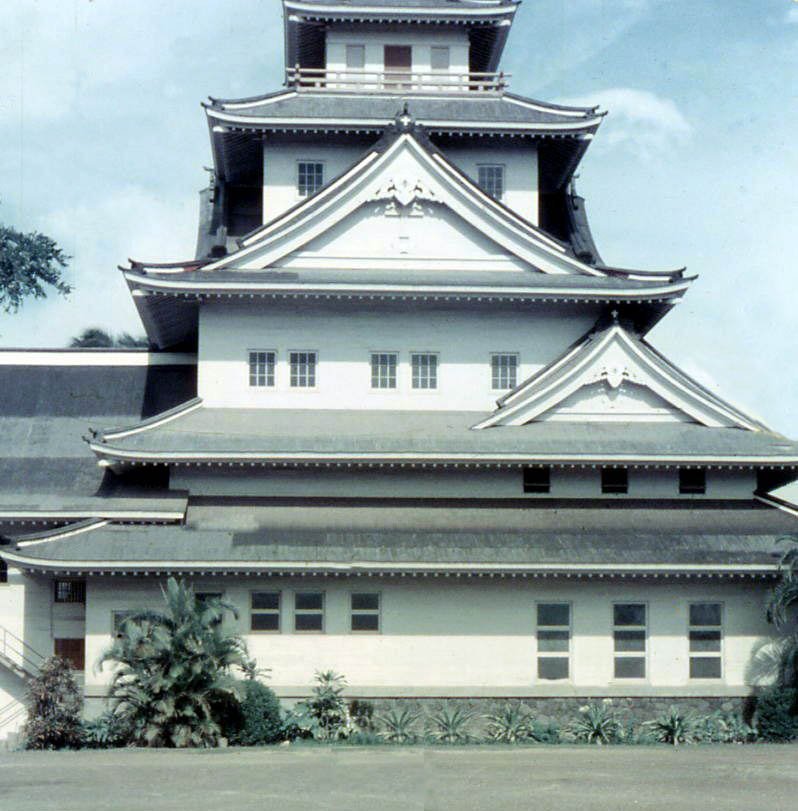
Religion. Data from 2014:
Protestants – 38% (primarily: Pentecostals, non-denominational Christians, Baptists, Calvinists, and adherents of the Holiness movement),
No religion – 26% (including: 5% agnostics and 2% atheists),
Catholics – 20%,
Buddhists – 8%,
Mormons – 3%,
Other religions – 5% (including: Jehovah’s Witnesses, Hindus, Baháʼís, Jews, Muslims, Orthodox Christians, and Unitarian Universalists). A unique case is Hoʻoponopono, an ancient practice of reconciliation and forgiveness combined with prayer. It serves as both a philosophy and a way of life. According to tradition, Hoʻoponopono is conducted by a healing priest—or *kahuna lapaʻau*—among the family members of an individual who is physically ill.
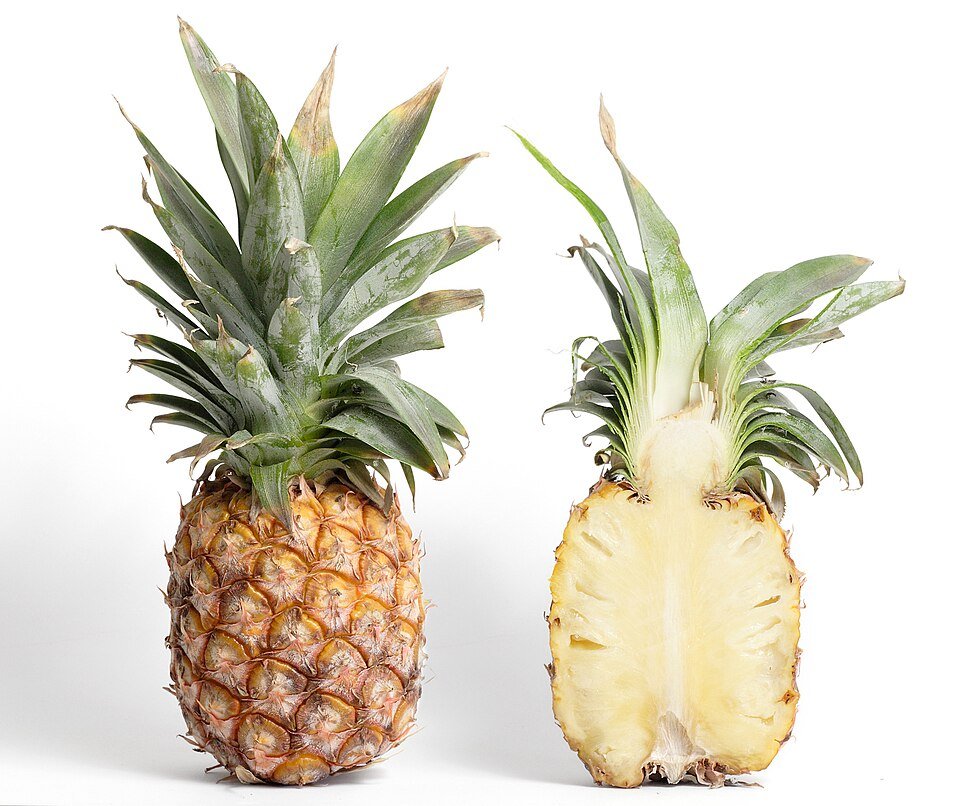
Economy. Historically, agriculture (cultivation of sandalwood, sugarcane, and pineapples), the military sector, and tourism played significant roles in Hawaii’s economy. Since Hawaii attained statehood in 1959, tourism has become the most prominent industry—accounting for 24.3% of the Gross State Product in 1997—despite efforts to diversify the economy. In 2003, the state’s economic output reached $47 billion. Hawaii’s exports consist primarily of food products and apparel. These sectors play a minor role in the Hawaiian economy, largely due to the significant transportation distances to profitable markets, such as the West Coast of the United States. Key food exports include coffee, macadamia nuts, pineapples, and sugarcane. According to the Hawaii Agricultural Statistics Service, sales of agricultural products in 2002 totaled $370.9 million across various agricultural segments, with $100.6 million generated by pineapple cultivation and $64.3 million by sugarcane. Hawaii has a relatively high tax burden; in 2003, the state had the highest per capita tax burden in the United States, at $2,838. This is partly because the state government—rather than local authorities, as is the case in many other states—directly funds education, healthcare, and social services. In 2011, the unemployment rate in the state was 6.1%.
Famous people born in Hawaii: Barack Obama, Bruno Mars, Nicole Kidman.
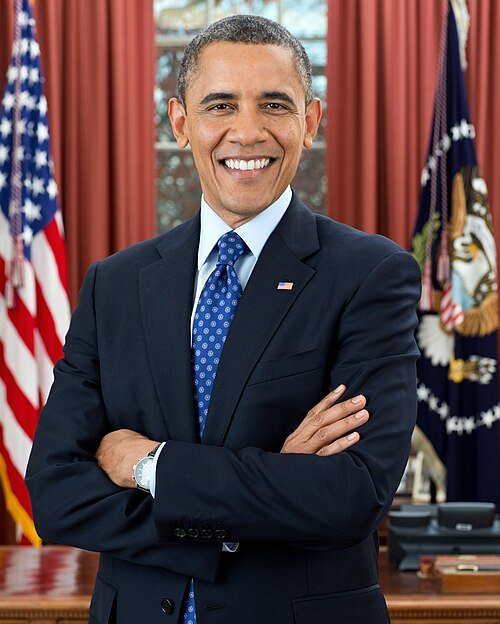
Barack Hussein Obama II (born August 1961 in Honolulu) is an American politician from the Democratic Party who served as the 44th president of the United States (2009–2017). He was a senator from Illinois from 2005 to 2008 and won the presidential elections in 2008 and again in 2012. He is the first African American in history to be elected president of the United States. He was awarded the 2009 Nobel Peace Prize for his efforts to reduce nuclear arsenals and his work toward world peace, and was named *Time* magazine’s Person of the Year in 2008 and 2012.
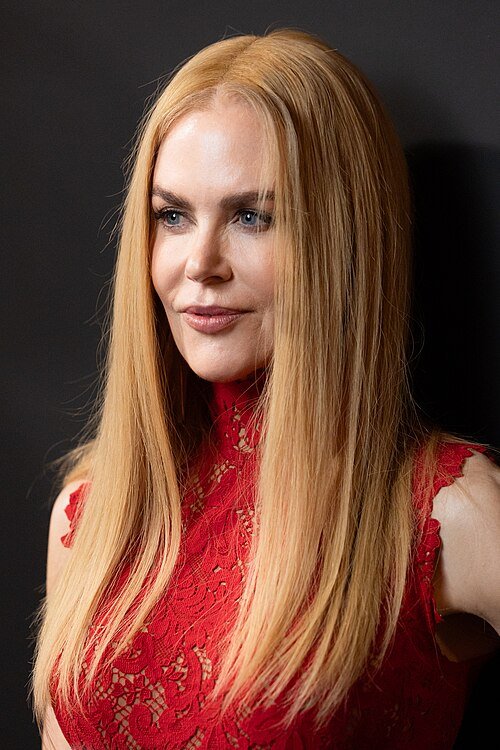
Nicole Mary Kidman AC (born June 1967 in Honolulu) is an Australian-American actress, film producer, and occasional singer. With a career spanning over 40 years in film, television, and theater, she is considered one of the best and most acclaimed actresses in the world. She is the recipient of numerous awards, including an Academy Award (Oscar), a BAFTA Award, two Primetime Emmy Awards, a Screen Actors Guild Award, a Silver Bear, a Volpi Cup, and six Golden Globe Awards.
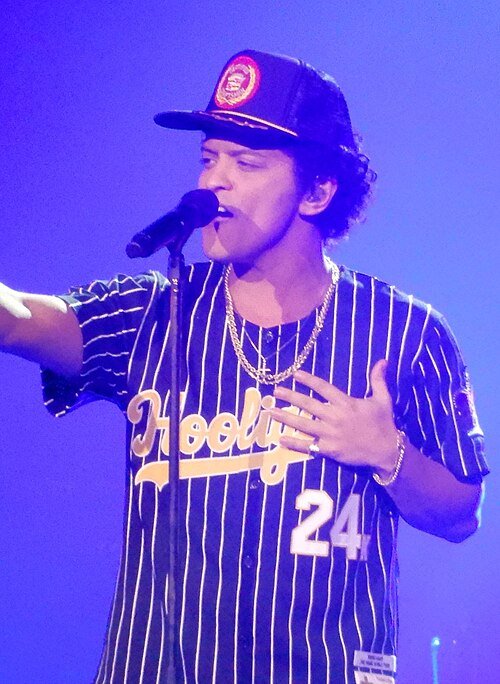
Bruno Mars, born Peter Gene Hernandez (in October 1985 in Honolulu), is an American singer, music producer, dancer, multi-instrumentalist, and songwriter of Filipino and Puerto Rican descent. Raised in Honolulu in a family of musicians, he began developing his talent at a very young age. During his childhood, he performed frequently at various venues across Hawaii, and after graduating from high school, he decided to move to Los Angeles, which offered greater opportunities for his career. Once there, Mars joined the group The Smeezingtons, with whom he produced tracks for other artists.
The Polynesian Triangle. Polynesia is a vast region in the eastern part of the Pacific Ocean, defined by three points:
• Northern vertex: Hawaii
• Southwestern vertex: New Zealand (Aotearoa)
• Southeastern edge: Easter Island (Rapa Nui)
The main official symbols of the State of Hawaiʻi (located in the Polynesian region) are:
• State Flag (Ka Hae Hawaiʻi): Consists of 8 horizontal stripes (white, red, and blue) representing the 8 main islands of the archipelago, with the British Union Jack in the upper-left corner.
• State Seal: Features King Kamehameha the Great and the Goddess of Liberty holding a flag, along with a heraldic shield, a phoenix, and the state motto.
• State Motto: “Ua Mau ke Ea o ka ʻĀina i ka Pono” (“The life of the land is perpetuated in righteousness”).
• Nickname: The Aloha State.
• State Bird: Nēnē (Hawaiian goose).
• State Fish: Humuhumu-nukunuku-ā-puaʻa (reef triggerfish).
• State Flower: Yellow hibiscus (pua aloalo / *Hibiscus brackenridgei*).
• State Tree: Kukui (candlenut tree / *Aleurites moluccanus*).
• Marine Mammal: Humpback whale.
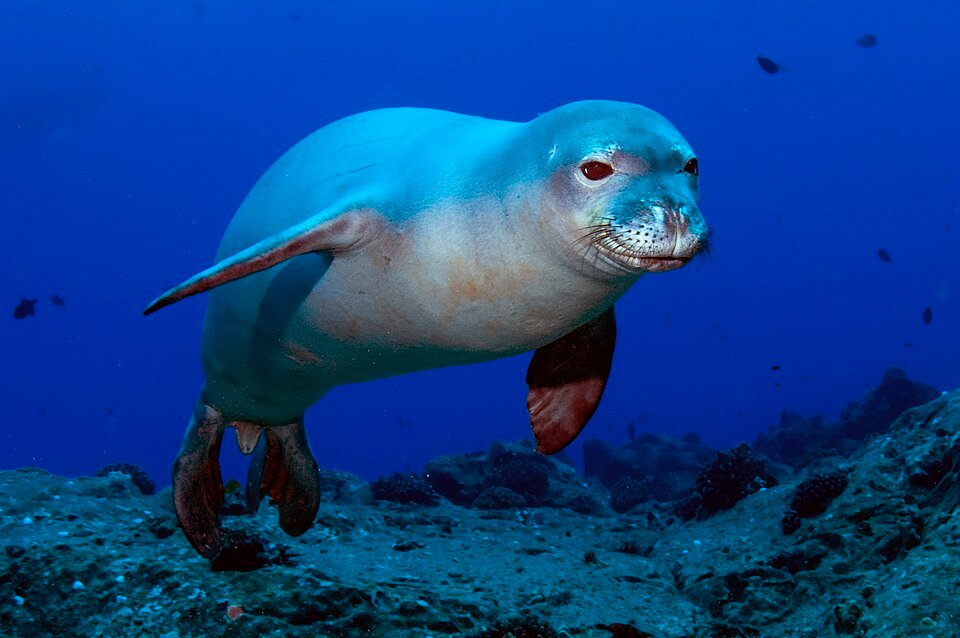
• Land Mammals: Hawaiian monk seal and the Hawaiian hoary bat.
• State Dance: Hula.
• State Sport (individual): Surfing (heʻe nalu).
• Musical Instruments: ʻUkulele (modern) and pahu (traditional drum).
• State Anthem: Hawaiʻi Ponoʻī.