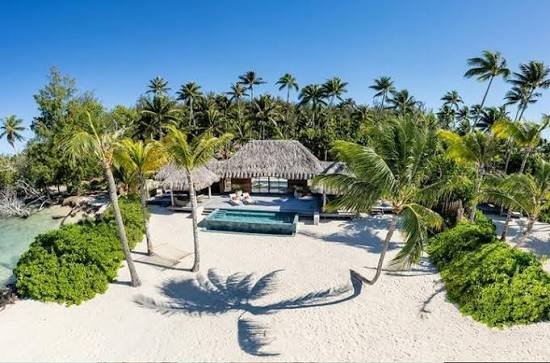
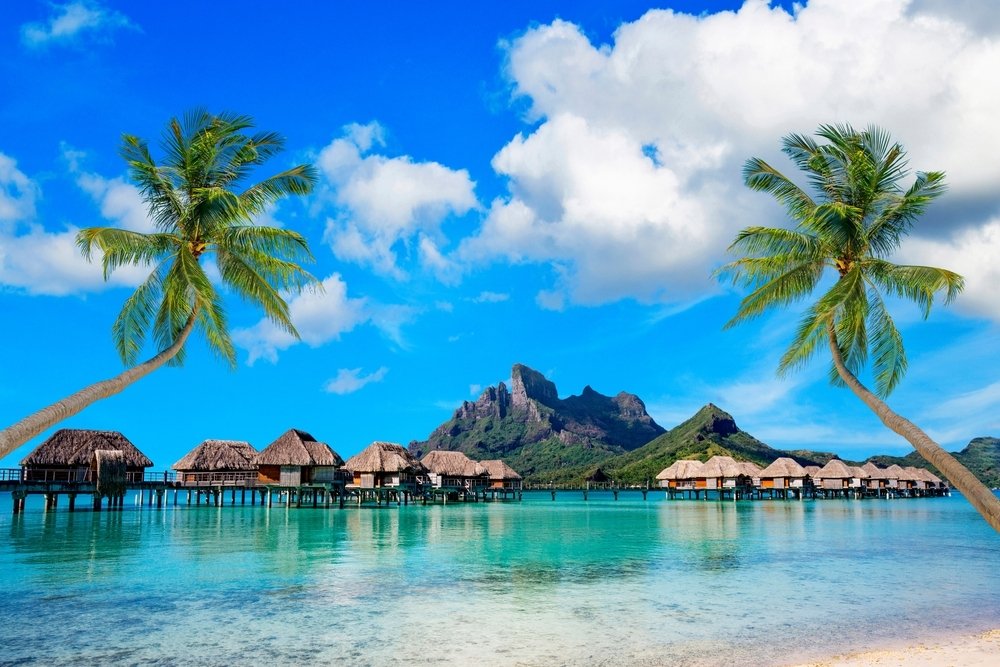
Bora Bora is an island in the Pacific Ocean—a coral atoll surrounding a volcanic peak—located in French Polynesia, within the Leeward Islands of the Society Islands archipelago, northwest of Tahiti. Often called the “Pearl of the Pacific,” this volcanic island paradise in the South Pacific is considered one of the most exclusive and romantic travel destinations in the world, renowned for its luxurious overwater bungalows and a spectacular turquoise lagoon.
Geography. The central volcanic island has an area of 21.9 km². It features two peaks: Pahia, at 661 m above sea level, and Otemanu, at 727 m above sea level. The central island lies within a lagoon surrounded by a ring of smaller islands and coral reefs; in the western part of the lagoon, there are two smaller volcanic islands—Toopua and Toopua Iti. The total area of Bora Bora is 38 km².
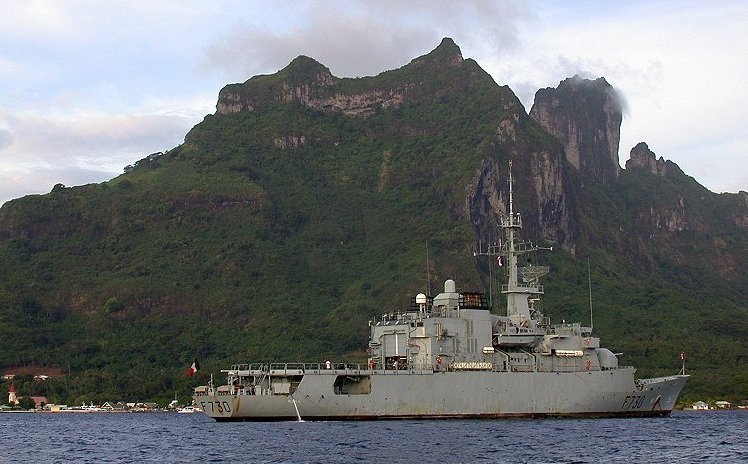
History of the island. Inhabited by Polynesians around the 3rd century AD, it was discovered for Europe by the Dutch navigator Jacob Roggeveen in 1722. Later, in 1769, the English navigator and explorer James Cook sailed past, and in 1777, he dropped anchor there. The first European resident was James Connor, a castaway from a whaling ship who arrived in 1792. In April 1888, the island was annexed by France and subsequently became part of French Polynesia. During World War II, Bora Bora hosted an American naval and land base, staffed by 6,000 troops. It was during this period that an airfield—now Bora Bora Airport—was constructed on the atoll; it currently serves the tourism industry, which is one of the primary sources of income for the local population. Furthermore, the island is a center for the cultivation of black pearls.
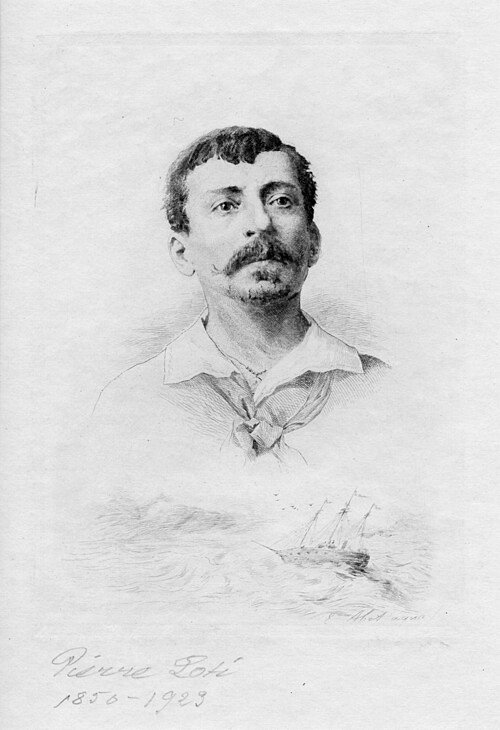
Literature. Bora Bora first appeared in literature in the novels of Pierre Loti and has since frequently served as a backdrop for works such as “Polynesian romances.” For instance, it provided the inspiration for the idyllic island described by American author James Michener in his book *Tales of the South Pacific*; it also features in the 1949 American musical *South Pacific*, by Rodgers and Hammerstein.
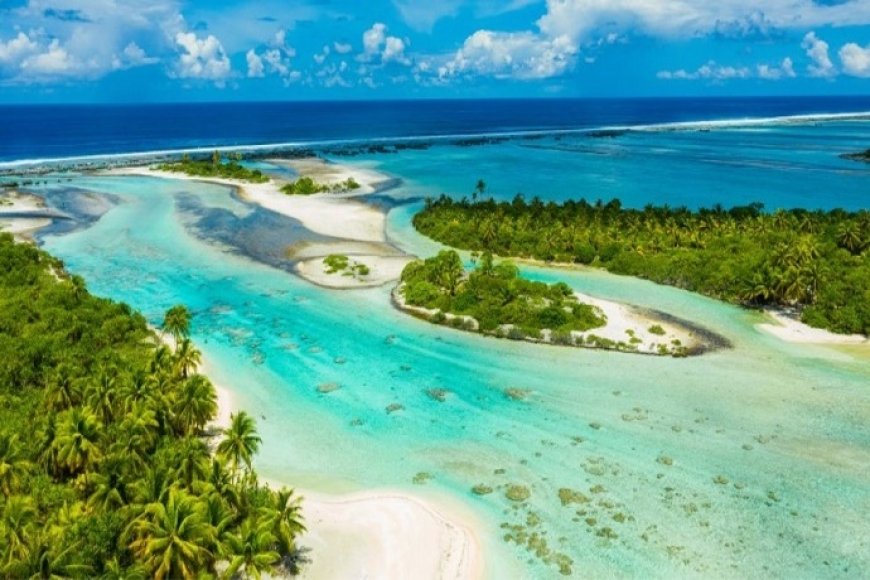
Landscape:
• Central volcanic island: The land is dominated by two monumental, extinct peaks – Mount Otemanu (727 m above sea level) and Pahia (661 m above sea level).
• Lagoon and coral reef: The main island is surrounded by a vast, tranquil lagoon featuring hundreds of shades of blue, separated from the open ocean by a barrier of coral reef.
• Charming islets (motus): Along the edge of the reef lie flat, sandy islets (known as *motu*), which are home to the most luxurious hotels and private beaches.
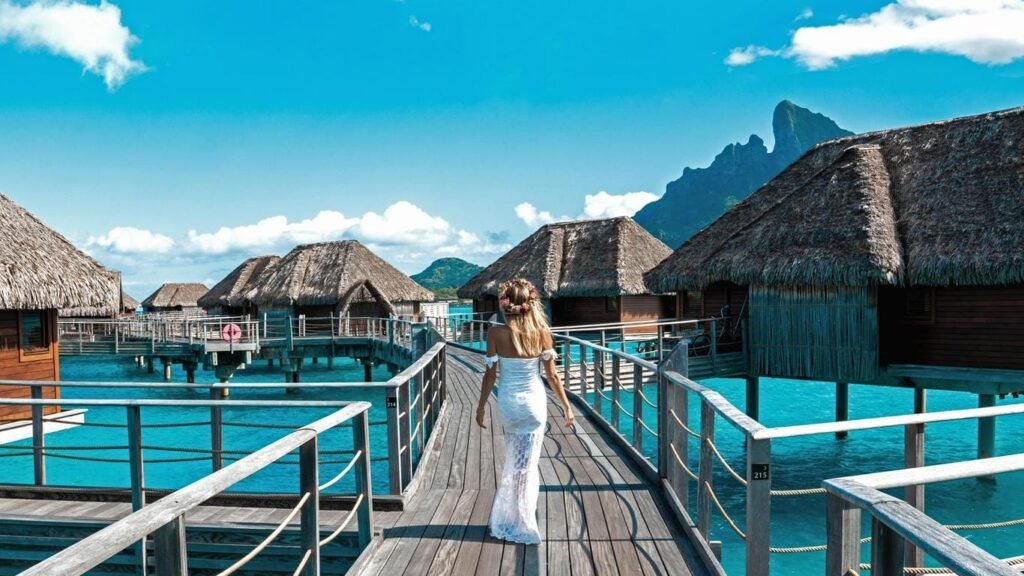
What is there to see and do?
• Lagoon exploration: Snorkeling, kayaking, paddleboarding, and catamaran cruises around the *motu* (islets). The water in the lagoon maintains a temperature of 27–29°C (80–84°F) year-round.
• Underwater safari: Diving in coral gardens, with opportunities to observe stingrays, feed reef sharks, or follow sea turtles.
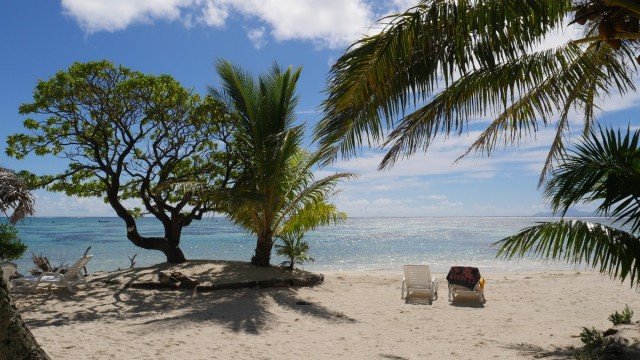
• Matira Beach: The most famous public beach, featuring pristine white, soft sand and a gentle entry into the water—an ideal spot for watching sunsets.
• Whale watching: From July to November, majestic humpback whales appear in the waters of French Polynesia.
• Island interior: 4×4 jeep safaris through tropical terrain, trekking to scenic viewpoints, and discovering the remains of American artillery from World War II.
Traveler information. When to go? The best weather occurs during the dry season, from May to October (it is less humid, with air temperatures around 27–31°C). The season from November to April is more humid and brings intermittent tropical rain, but this is also when the island is at its greenest. Currency and language. The local currency is the CFP franc (XPF). The official language is French, though English is widely understood in resorts.