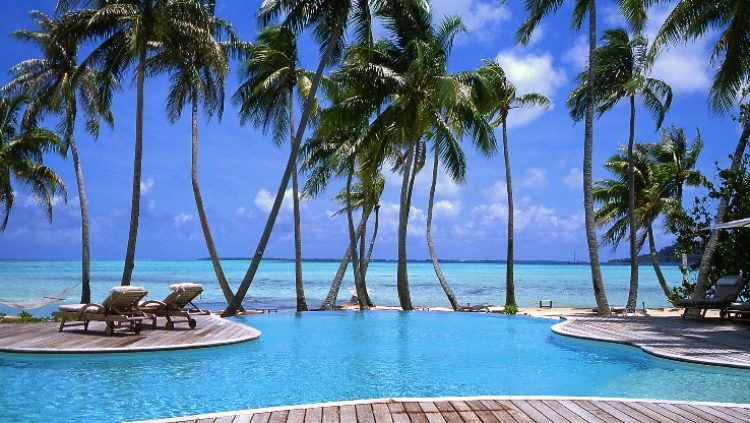
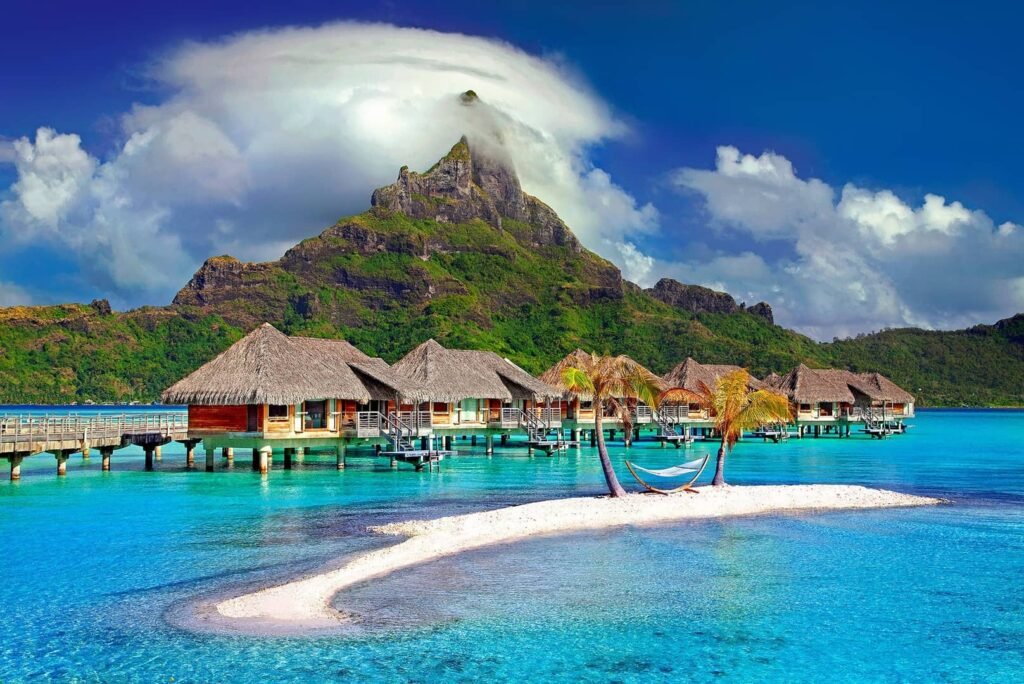
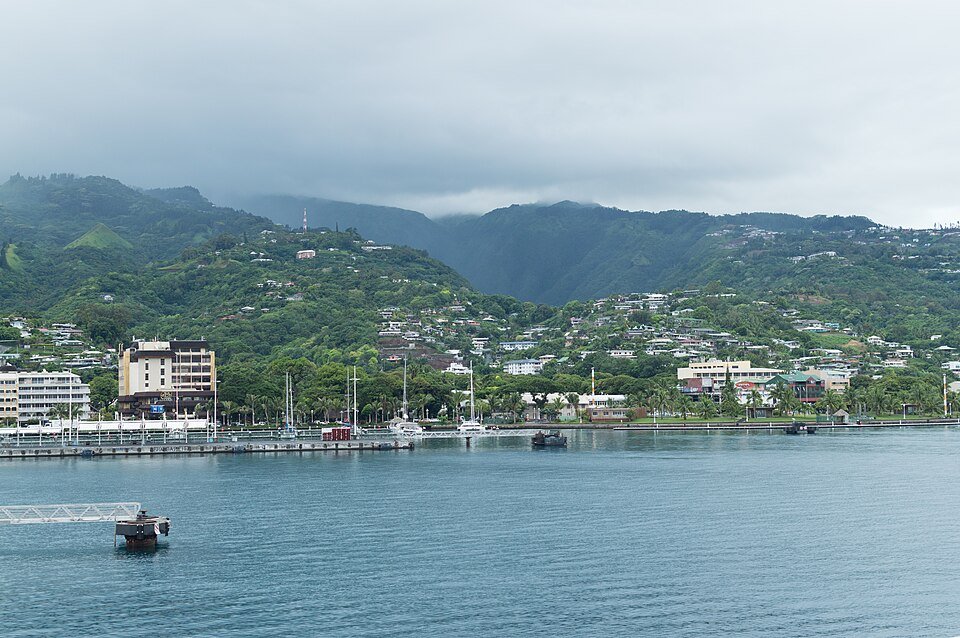
Tahiti is an island in the southern Pacific Ocean, part of the Society Islands archipelago (specifically the Windward Islands); it is the largest island in French Polynesia and serves as its political, economic, and cultural hub. Its original name was Otaheiti. The territory’s capital, Papeete, is located on the island.
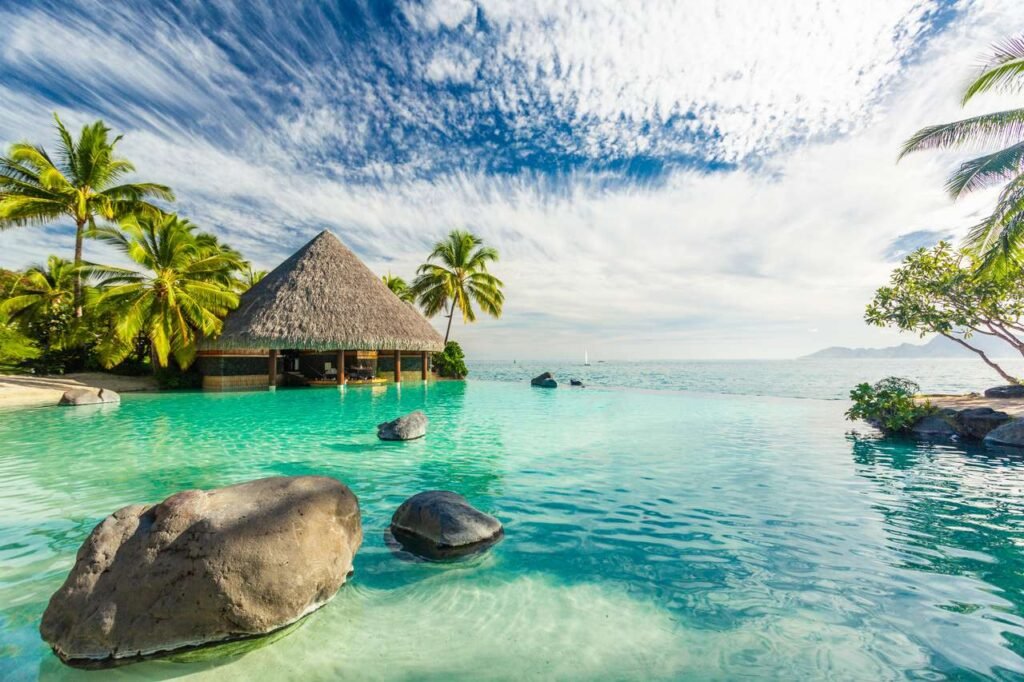
Geography. Tahiti is a volcanic island surrounded by coral reefs. It consists of two main parts: the larger Tahiti-Nui (“Big Tahiti”), which culminates in the extinct volcano Mont Orohena, and Tahiti-Iti (“Little Tahiti,” also known as Taiarapu); the two are connected by the narrow, low-lying Taravao isthmus. A significant portion of the island is covered by dense vegetation. The mountain slopes are cut by deep, narrow ravines featuring numerous waterfalls. The climate is tropical and maritime. The settlement is concentrated on Tahiti-Nui, particularly around the largest city and capital, Papeete. The smaller part of the island is sparsely populated and less accessible. The island’s population consists primarily of indigenous Polynesians (approximately 70%), as well as people of Chinese descent—originally brought in as laborers for cotton plantations, they are now among the wealthiest Tahitians—and French residents; mixed marriages are common. All inhabitants hold French citizenship. The largest city, Papeete, is located in the northwestern part of the island. Traditional economic sectors in Tahiti include fishing, pearl harvesting, and, to a lesser extent, agriculture and the processing of agricultural products. Subsidies from the French government play a major role, and tourism is becoming increasingly significant. The island is home to the Faaʻa International Airport.

History of Tahiti. The first inhabitants of the island were Polynesians, who arrived between 300 and 800 AD. Although the island was sighted from a Spanish ship as early as 1606, the first Europeans did not set foot on it until 1767. A year later, the Frenchman Louis Antoine de Bougainville arrived; he described Tahiti as a paradise inhabited by natives living a simple, happy life, untainted by civilization—a depiction that helped propagate the stereotype of the “noble savage.” In the years that followed, European ships arrived with increasing frequency, including the HMS *Bounty* (1789). Contact with Western civilization led to the introduction of infectious diseases, including venereal diseases, which caused a significant decline in the population. In 1842, Tahiti became a French protectorate. In 1880, the last Tahitian king, Pōmare V, ceded sovereignty to France. In 1891, the French painter Paul Gauguin settled on the island. From 1946 to 2004, it served as an overseas territory of France.
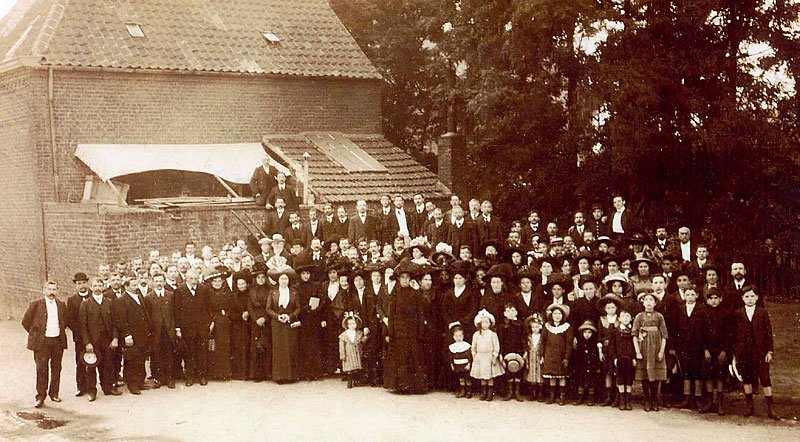
Religion. The majority of the inhabitants are Protestants and Roman Catholics. There are also smaller denominations, such as Jehovah’s Witnesses.
Sport. During the 2015 FIFA Beach Soccer World Cup in Espinho, Portugal, the Tahiti national team—in only its second-ever appearance at the tournament—reached the final, defeating opponents including Italy along the way; they were ultimately defeated 3–5 by the host nation in the final match. In 2017, the Tahitians reached the final once again, where they lost 0–6 to Brazil. In 2013, the World Cup was held in Papeete, Tahiti. During the 2024 Summer Olympics, the surfing competition took place in Teahupoʻo, located on the island of Tahiti.
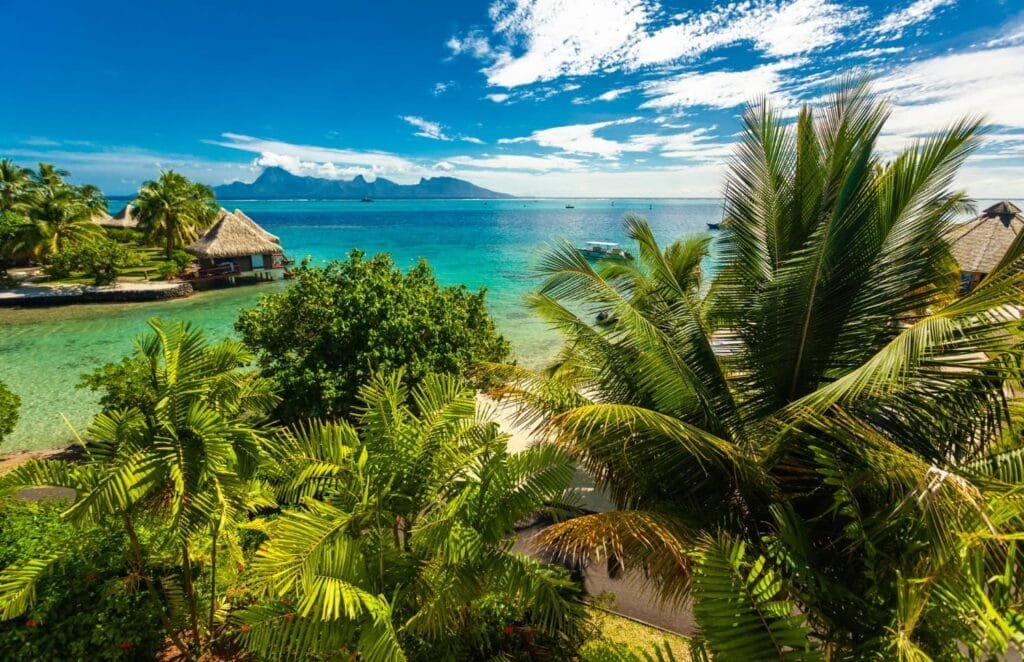
Division of the island. The island has a distinctive shape resembling the number eight and is divided into two main parts connected by the narrow Taravao isthmus:
• Tahiti Nui – the larger, northwestern section, home to the majority of the population and the center of urban life.
• Tahiti Iti – the smaller, more sparsely populated, and wilder peninsula on the southeastern side.
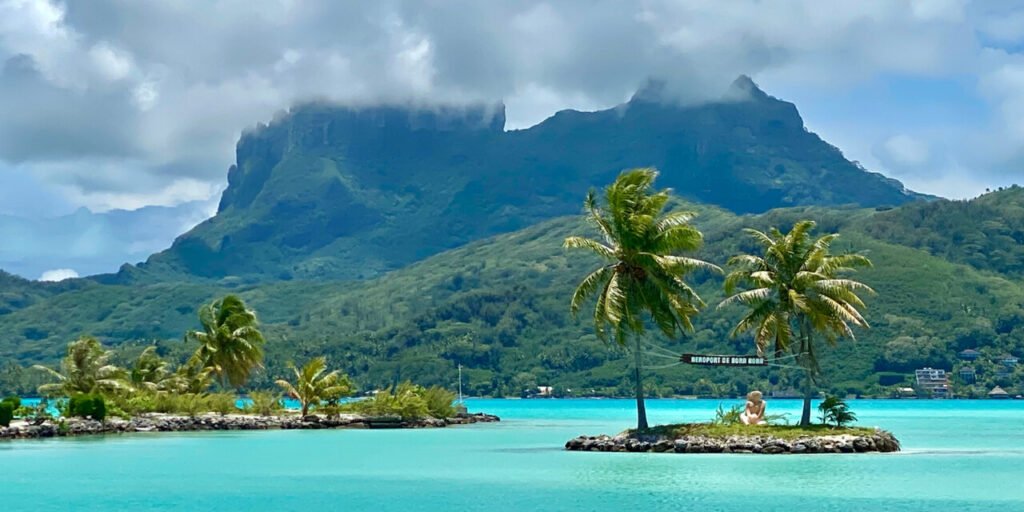
Island attractions:
• Volcanic landscape: The island’s interior is mountainous—featuring its highest peak, Mount Orohena—and covered in dense tropical vegetation, punctuated by spectacular waterfalls (such as those in the Fautaua Valley).
• Black-sand beaches: Due to its volcanic origins, Tahiti is renowned for its unique, dark-sand beaches, though bright, clear lagoons can also be found along the coastline.
• Ma’ohi culture: The island boasts an incredibly rich culture—from the traditional *ori tahiti* dance and the art of tattooing to local beliefs and a deep-rooted tradition of hospitality. The vibrant heart of the island is the iconic Marché de Papeete (Papeete Market), a bustling hub for local handicrafts, fresh fruit, and the famous Monoi oil.
• A surfing mecca: On the southern tip of Tahiti Iti lies the legendary village of Teahupo’o, known for some of the most powerful and dangerous waves in the world, which frequently host elite surfing competitions.

Information for travelers:
• Language: The official language is French, but the indigenous Tahitian language is also widely spoken. English is commonly used and understood within the tourism sector.
• Currency: The currency is the Pacific franc (XPF), which is pegged to the euro.
• Travel: The primary gateway is Faa’a International Airport (PPT), located near Papeete.