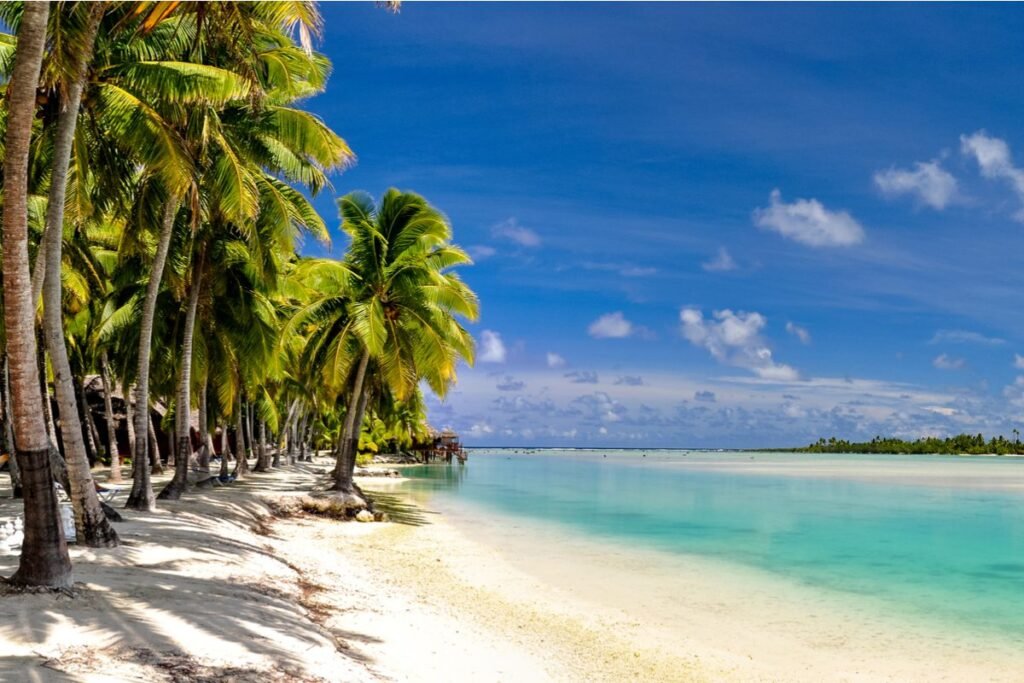
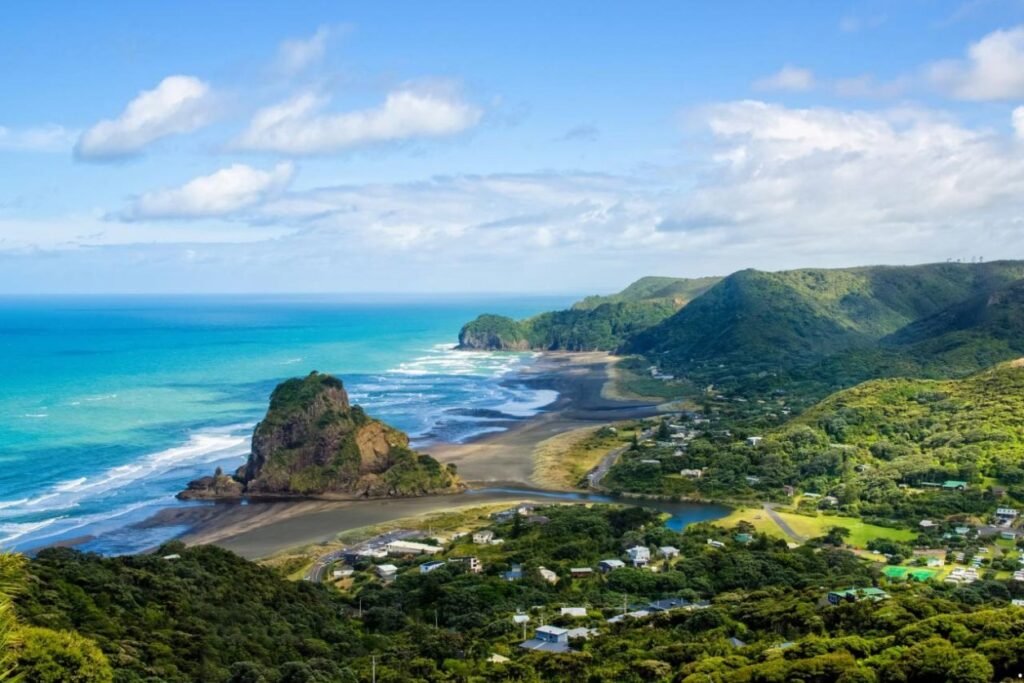
The Cook Islands, a self-governing territory in free association with New Zealand, located in Polynesia in the South Pacific Ocean—comprise the islands of the same name.
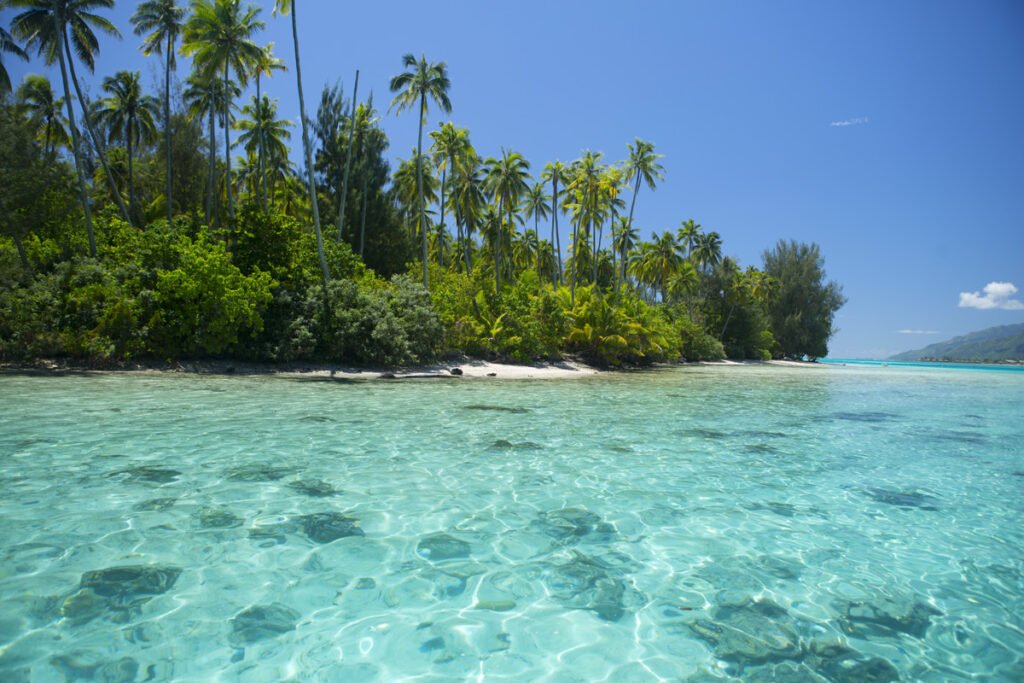
Geography. The Cook Islands consist of 15 atolls and islands. The land area of the Cook Islands is 236.7 km², while their exclusive economic zone covers an area of 1,800,000 km². The islands have a population of 17,434 (as of 2016). The capital and largest city is Avarua, located on the island of Rarotonga.
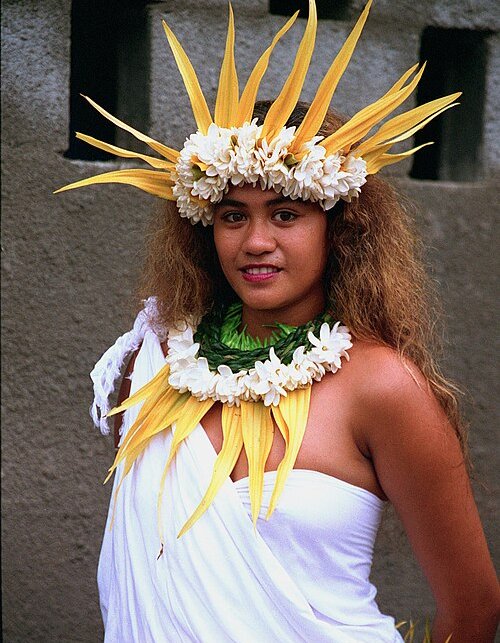
Population. The inhabitants of the islands are primarily Polynesians, referred to as Cook Islands Polynesians. They number approximately 16,500 and belong to several ethnic groups that form the communities of individual islands or island clusters. They speak five distinct languages from the Polynesian family, as well as English. In recent years, these various groups have increasingly merged into a single ethnic community. The traditional culture of the Polynesians inhabiting the islands of Rarotonga, Atiu, Mauke, Mitiaro, Manihiki, Rakahanga, Mangaia, and Tongareva shows close ties to Eastern Polynesia, whereas the society of the Pukapuka atoll exhibits similarities to Western Polynesian cultures. Traditional livelihoods include the cultivation of coconut palms and citrus fruits, as well as fishing and pearl harvesting. Additionally, the islands receive about 30,000 foreign tourists annually, which provides an extra source of income for the residents. Approximately 22,000 people from the islands have emigrated to New Zealand.
Religion. Data as of 2011:
Protestantism: 62.8%:
Cook Islands Christian Church (Calvinism): 49.1%
Seventh-day Adventist Church: 7.9%
Assemblies of God: 3.7%
Apostolic Church: 2.1%
Catholicism: 17%
Mormons: 4.4%
Other religions: 8%
Jehovah’s Witnesses: 2.3%
No religion: 5.6%
Unspecified: 2.2%
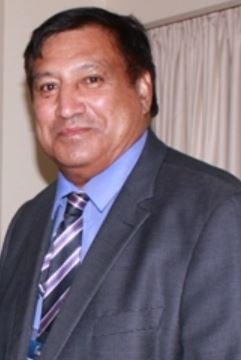
Political System. The Cook Islands are a self-governing parliamentary monarchy in free association with New Zealand. The head of state is King Charles III, represented by the King’s Representative, Tom Marsters. Legislative power is vested in a 24-member parliament, elected through general elections for a five-year term. Under the 1965 Constitution, the Cook Islands exist in a state of free association with New Zealand. The government of the Cook Islands exercises full authority over internal affairs and partial authority over external affairs. New Zealand is responsible for the defense of the Cook Islands and shares responsibility for their foreign policy. The Cook Islands have the right to establish diplomatic relations with other states and international organizations (they are members of, among others, the WHO, UNESCO, and the ILO—though not the UN—and have established diplomatic relations with over 50 countries). Due to their unique status, the Cook Islands are recognized by some nations as an independent state. The United Nations has acknowledged the capacity of the Cook Islands to enter into treaties under international law.
History. The islands were discovered in 1595 by the Spanish captain Álvaro de Mendaña y Neyra. They were rediscovered in 1773 by James Cook, who named them the Hervey Islands. The name “Cook Islands” was used for the first time in 1824 on a map created by Johann von Krusenstern. In 1858, the islands were unified into an independent state, the Kingdom of Rarotonga. From 1888, the islands became a British protectorate, known from 1893 as the Cook Islands Federation. In 1901, the islands were transferred to New Zealand, and in 1903, Niue was separated from them to become a distinct territory. Since 1965, the islands have been an autonomous territory—a self-governing state in free association with New Zealand. From the beginning of the 20th century, the United States laid claim to four of the Northern Cook Islands. In 1980, a treaty was signed between New Zealand and the United States, under which the United States recognized New Zealand’s sovereignty over the disputed islands.
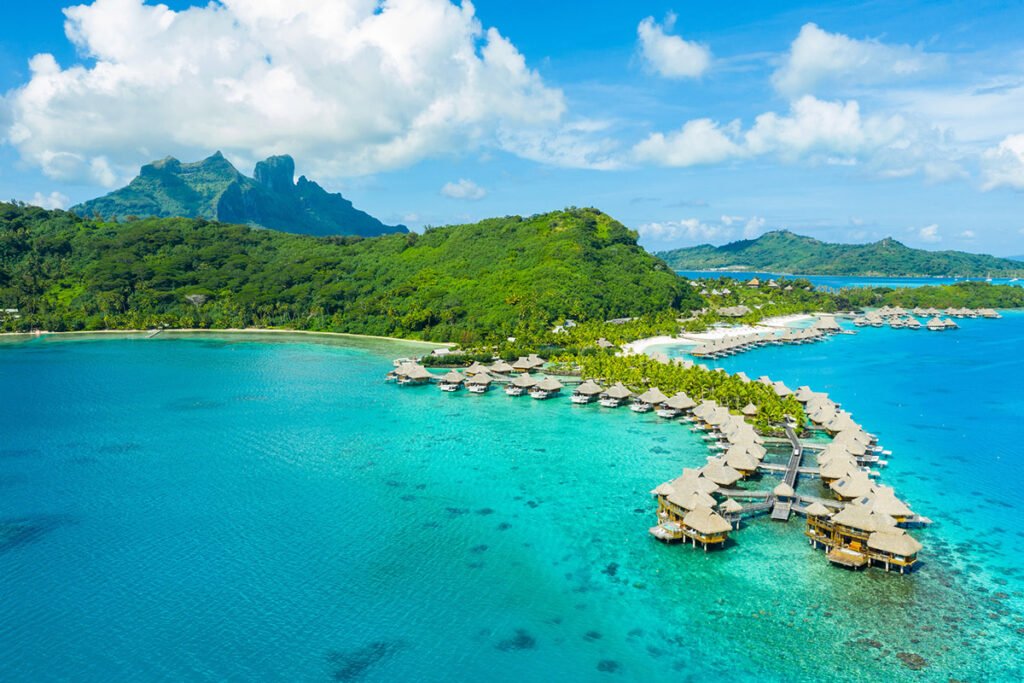
Key information at a glance:
• Capital and main hub: Avarua, located on the largest and most populous island, Rarotonga.
• Political status: Fully self-governing; however, residents hold New Zealand citizenship, and the New Zealand dollar (NZD) is used alongside the local Cook Islands dollar.
• Culture: The indigenous inhabitants are Polynesian, closely related to the Māori of New Zealand and the people of French Polynesia. The culture is exceptionally vibrant, rich in traditional dance, music, and craftsmanship.
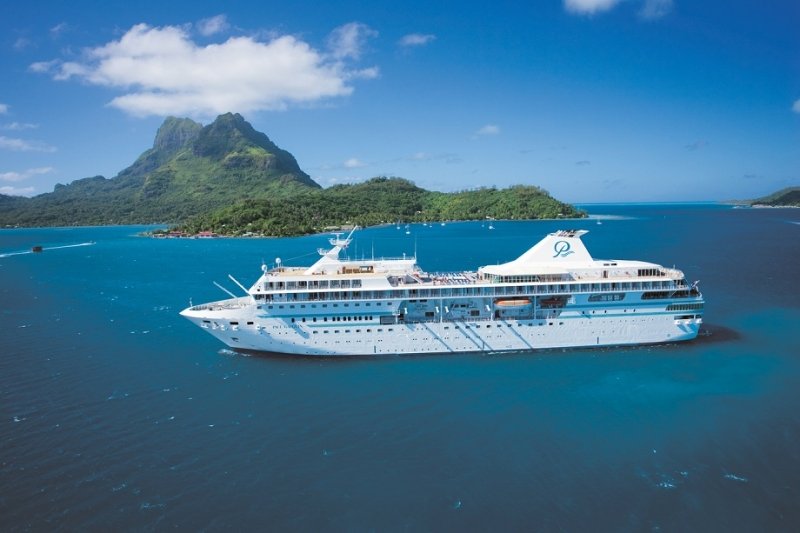
Tourist destinations.
• Rarotonga: The heart of the country, surrounded by a coral reef. The island’s interior is covered by densely forested volcanic mountains—perfect for trekking—while the coastline offers sandy beaches.
• Aitutaki: An island renowned for having one of the most beautiful lagoons in the world. It is home to the famous One Foot Island, which serves as a showcase for the entire archipelago.
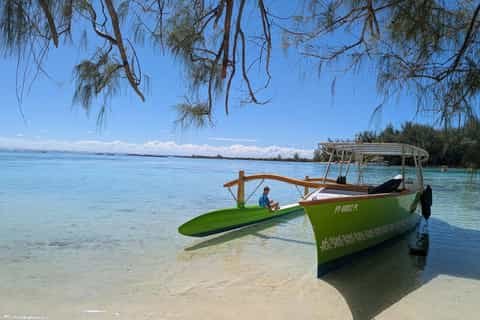
Traveler information. When to go? The best time is from May to October (the dry season, with pleasant temperatures around 24–26°C). The rainy season lasts from November to April. How to get there? The main international airport is located in Rarotonga. The most popular routes are via Auckland (New Zealand) or Papeete (French Polynesia). Attractions. Snorkeling, diving, lagoon cruises, mountain trekking, and evenings featuring traditional Polynesian dinners and dance (Island Night).