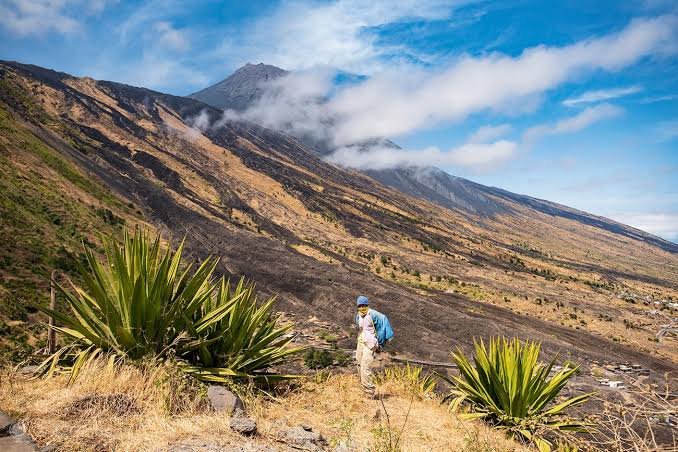
Fogo is an island belonging to the Leeward Islands archipelago, which is part of the Cape Verde Islands. Its most striking feature is the Pico do Fogo peak, which rises 2,829 meters above sea level.
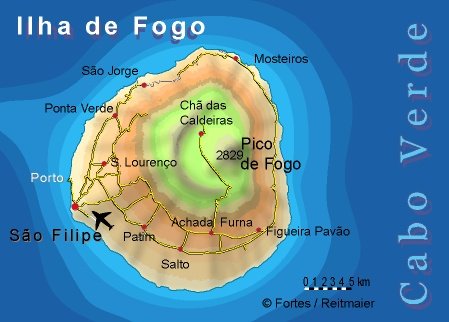
Geography. Fogo lies between the islands of Santiago and Brava. Its most distinctive feature is the 9-kilometer-wide caldera, whose walls are 1 kilometer high. The caldera has a breach on its eastern rim, and a large peak rises from its center. The central volcanic cone, Pico, forms the highest point on the island, its summit about 100 meters higher than the surrounding caldera walls. Lava from the volcano reached the island’s eastern coast in historical times. Fogo has fertile land in the southwest, with a slope of about 10 to 15 degrees. The north and east are more sloping. The entire island is a submarine mountain, called Cadamosto, and the surrounding ocean reaches depths of up to 5,300 meters within 5 kilometers of the coastline. The western side is an exception, but this is connected to another submarine mountain further west, in Brava. The slopes in the northeast are green and covered with grass year-round; the rest of the mountain is dry and barren. The streams and creeks are dry year-round, although Fogo receives the highest rainfall of the Cape Verde Islands. The eastern part of Fogo collapsed into the ocean 73,000 years ago, creating a tsunami 170 meters high that struck neighboring Santiago Island. The timing of the cataclysm was determined by analyzing the concentration of the helium isotope 3He in erratic boulders.
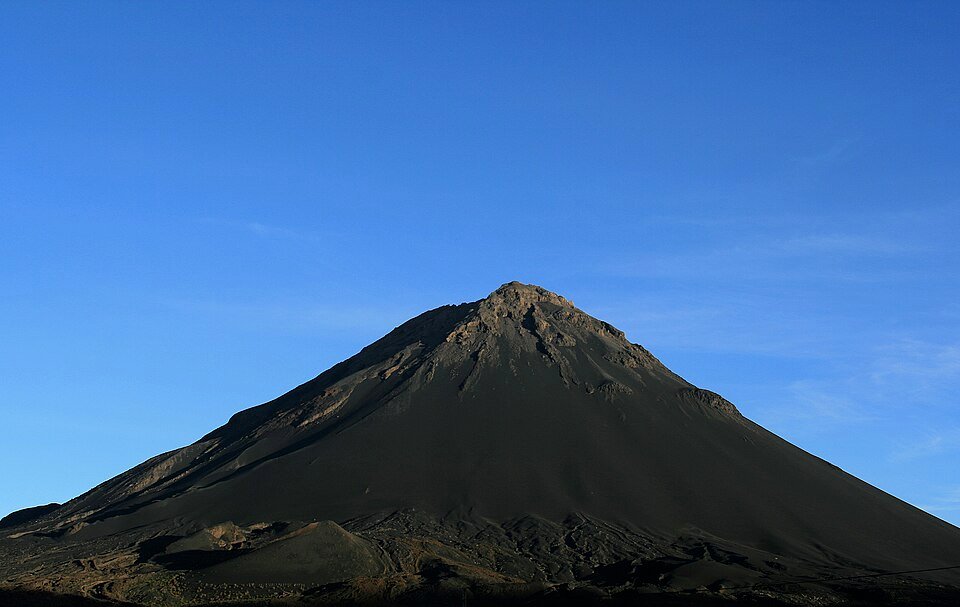
Volcanic activity. Virtually the entire island is an active volcano, which periodically erupts. A small village called Chã das Caldeiras lies within the caldera at the volcano’s foot, and its inhabitants are periodically evacuated during eruptions. In 1680, a violent volcanic eruption occurred. The mountain was visible from hundreds of kilometers away for several years. During this eruption, the island received its name. A smaller eruption in 1995 formed a new crater called Pico Pequeno; it was relatively mild, and the villagers were able to return to their homes. The most recent eruption began on November 23, 2014, and two weeks later, on December 6, lava flows destroyed the villages of Portela and Bangaeira, located in the caldera.
History. Fogo was discovered in 1460 by the Genoese captain António Noli and was first named São Filipe (Portuguese for “Saint Philip”). The Portuguese settled the island in 1500. Slaves were formerly used on the island. Emigration began in the 1850s, primarily to North America. The Republican coup of October 5, 1910, brought the aristocracy and large landowners back to Portugal. A small museum on Fogo explains many of these events.

Economy: The island’s economy is based on agriculture and fishing. The main products are coffee and wine. Many families survive on remittances from emigrants from the United States and other countries, as the island has a significant diaspora. Many emigrants send some money to relatives, even if the sender and receiver don’t know each other personally. Tourism is steadily becoming more popular. The volcano is the island’s main attraction, although many visitors come to see relatives. Most visitors come to the historic town of São Filipe and Chã das Caldeiras in the volcanic crater. The island’s main town is São Filipe, near which there is an airport. The first settlements were established in the 1480s. The island is largely agricultural. It also houses schools, a high school, banks, a post office, several hotels, and squares (praças). The buildings on São Filipe are classic Portuguese colonial architecture. The second most important town is Mosteiros in the northeast.
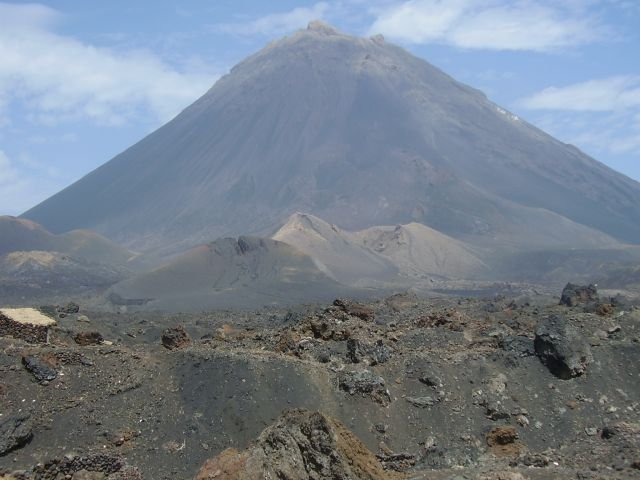
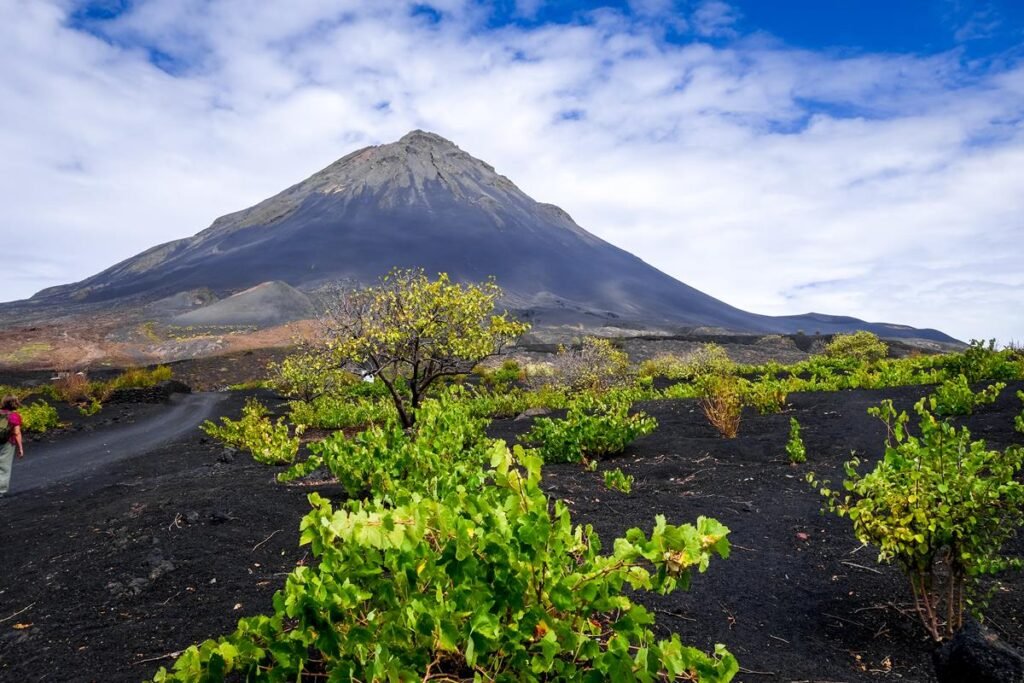
Pico do Fogo is an active stratovolcano rising to 2,829 meters above sea level, the highest peak in Cape Verde and the main attraction of the volcanic island of Fogo. Key Information: Activity: The volcano is constantly active. Violent eruptions have occurred in 1680, 1995 (when the new Pico Pequeno side crater was created), and at the turn of November and December 2014. The most recent eruption destroyed nearby villages, including Portela and Bangaeira. Caldera (Chã das Caldeiras): The gigantic caldera is approximately 9 km wide, and its walls reach 1 km high. Uniquely, normal life continues within the crater – residents have rebuilt their homes and cultivate the exceptionally fertile, post-volcanic soil there. Local Economy: The black volcanic earth produces the unique, prized Manecom wine and traditional Fogo coffee.
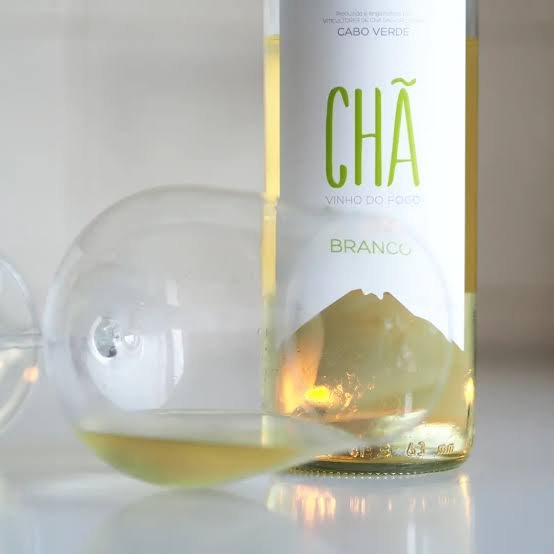
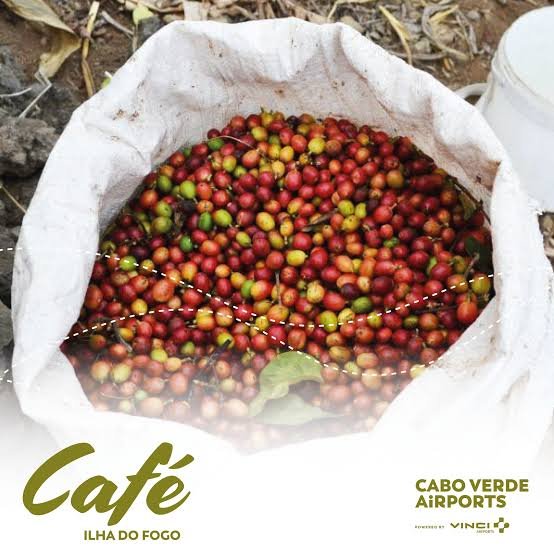
The volcanic island of Fogo in Cape Verde is renowned for producing exceptional artisanal wine and a rare Arabica coffee variety, which owe their unique flavor to the fertile, volcanic soil.
Volcanic Wine of Fogo (Vinho do Fogo) The winemaking tradition is centered in Chã das Caldeiras – a settlement located inside a gigantic volcanic crater at an altitude of 1,500–1,700 meters above sea level. The vines grow directly in the black lava and volcanic ash, without artificial irrigation. Taste: The wines are powerful, expressive, and have a distinctly mineral, earthy, and slightly salty profile. Main varieties: The most prized are white wines from the Muscat variety and red wines from the local Preta variety. Manecom: Traditional, homemade wine made by local residents according to ancient recipes. Wineries: The local cooperative, Associação dos Agricultores de Chã, produces official, certified wines under the Chã brand (award-winning at international artisan wine competitions).
Fogo Coffee (Café do Fogo / Café de Mosteiros) Fogo Coffee is an exclusive, organic Arabica Typica, grown for over 200 years on the northern, verdant slopes of the volcano, primarily in the Mosteiros municipality at altitudes ranging from 1,000 to 1,600 meters above sea level. Taste and Aroma: The coffee is characterized by a full body, low to balanced acidity, and an intense aroma with notes of chocolate, and sometimes fruit and hibiscus. Production: Harvest is done by hand between February and March. Production is very limited due to drought, making it a niche product sought after by baristas. Where to buy: It’s best to look for freshly roasted beans from local producers in Fogo (e.g., Dja’r Fogo or Oro di Fogo in São Filipe) or in souvenir shops in their distinctive green and yellow packaging.
Where to try and buy these products? The best culinary experience is guaranteed by a visit to the heart of the volcanic plantations.
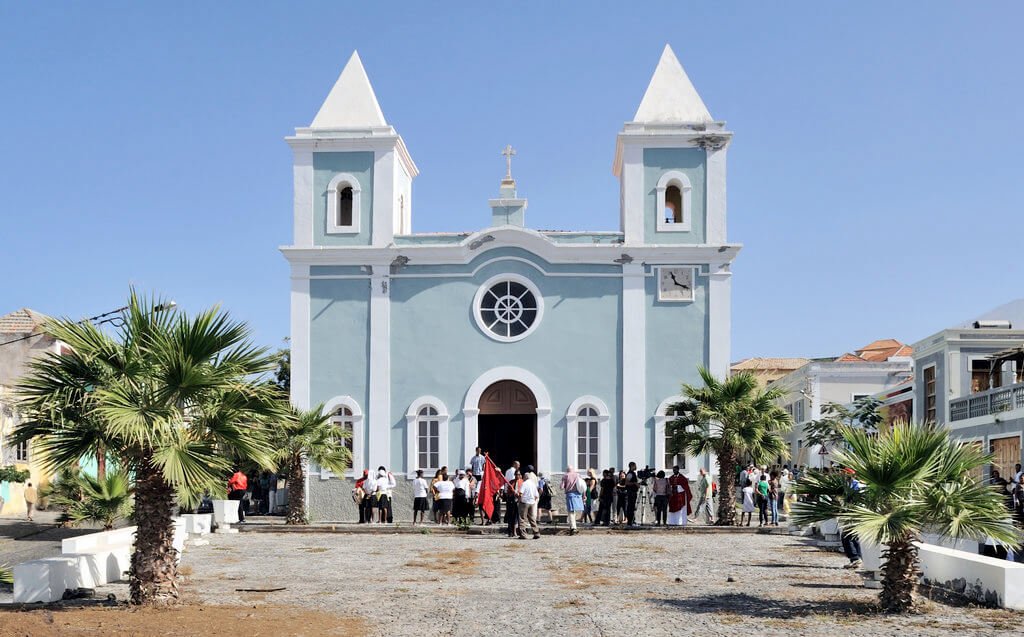
São Filipe is a charming colonial port city and the capital of the volcanic island of Fogo in the Cape Verde archipelago. It is considered one of the oldest and most charming cities in the country, renowned for its distinctive pastel architecture, proximity to the monumental Pico do Fogo volcano, and its unique local coffee plantations.
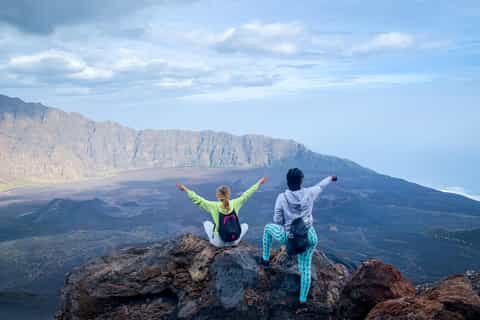
Trekking and climbing. Fogo Island in Cape Verde is one of the most spectacular trekking destinations in West Africa. At the heart of the island is Pico do Fogo – an active volcano rising to 2,829 meters above sea level, the highest peak in the entire archipelago. The rugged, lunar landscape of black lava, the gigantic Chã das Caldeiras caldera, and vineyards and coffee plantations nestled in volcanic soil create unique hiking conditions.