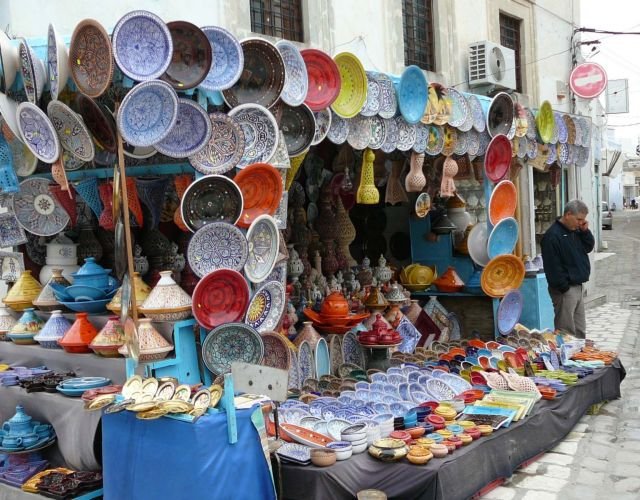
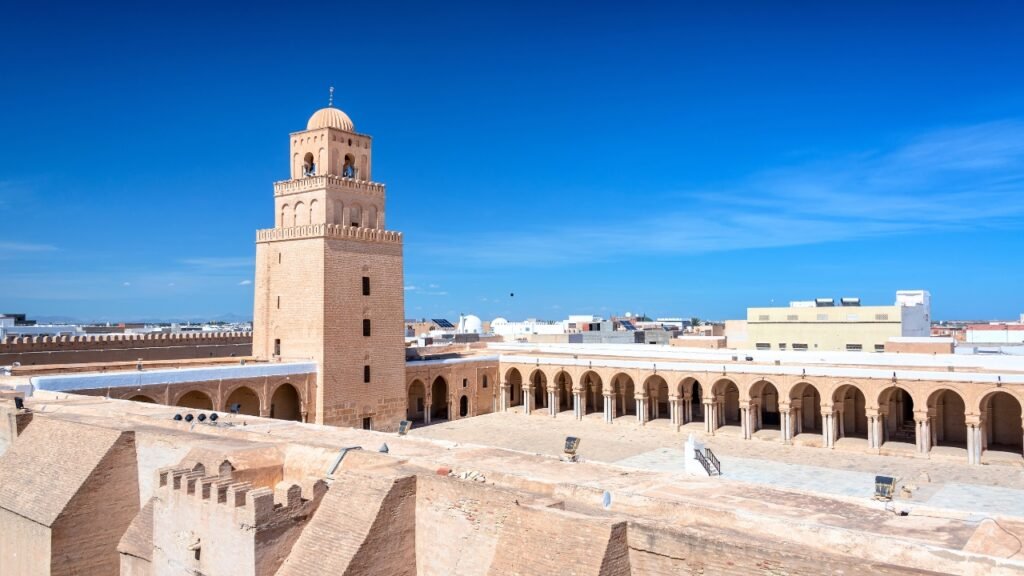
Kairouan is a city in Tunisia, approximately 160 km south of Tunis and 57 km west of Sousse. It is one of the local holy sites of Islam. Thanks to its numerous carpet weaving mills, textile and clothing companies, and tobacco factories, Kairouan is an important economic city in Tunisia. Foreign tourism is an additional source of income. It houses hotel complexes and numerous historical monuments open to visitors.
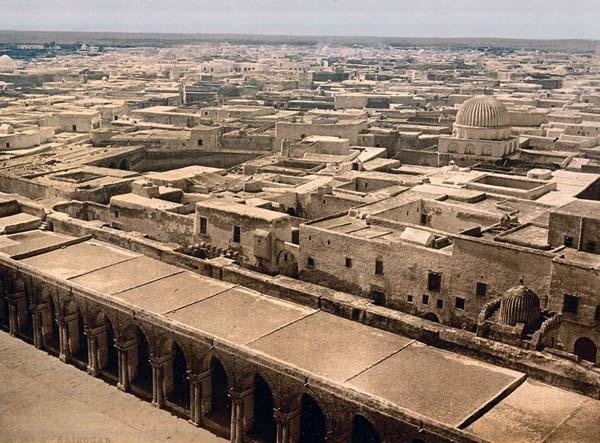
About the city of Kairouan. Kairouan was founded in 671 by the Arab leader Uqba ibn Nafi from the Arabian Peninsula. Initially, it was an Arab outpost guarding caravan routes against Berber raids. A mosque was also built. From 800 to 909, it was the capital of the African Aghlabid state, and during these years, the city experienced its greatest prosperity. In 909, Kairouan fell to the Fatimids, who moved the capital to Mahdia. From then on, the city began to decline, and in 1057, it was completely destroyed by the Hilalites. It never regained its former political position, yet retained its importance as a religious center and holy city of Islam. For centuries, Kairouan was also a thriving center of learning in the Arab world. Among other things, it housed renowned medical and philosophical schools.
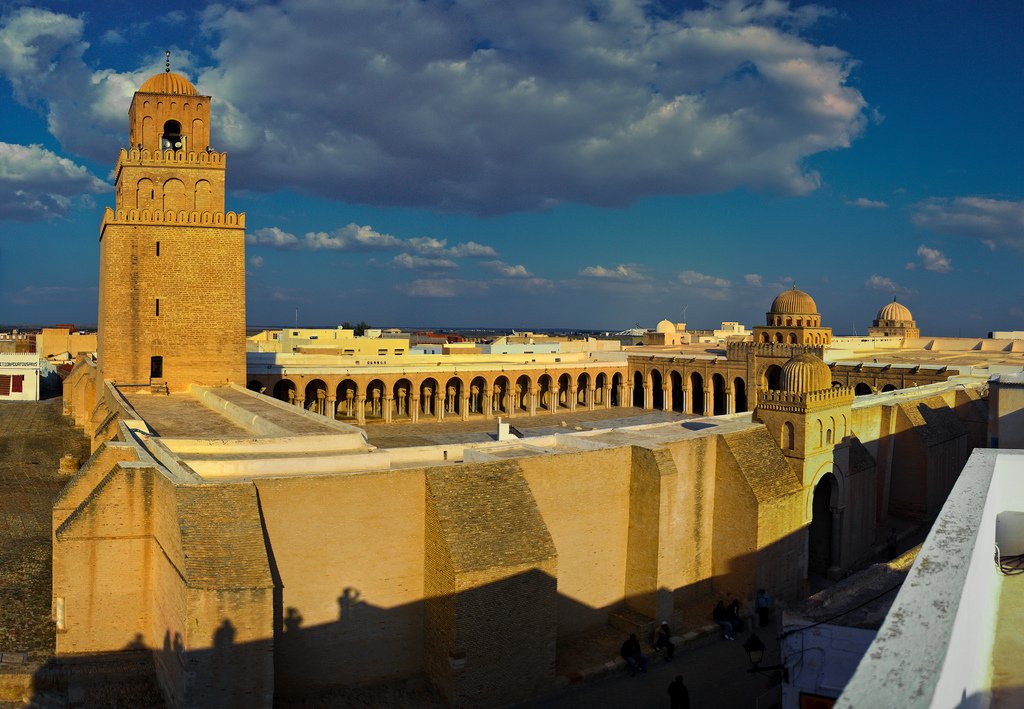
The Mosque of Sidi Uqba. This monumental work of architecture, built in the 7th century by the city’s founder, Uqba ibn Nafi, is a reminder of a time when religion, power, and art were intertwined.
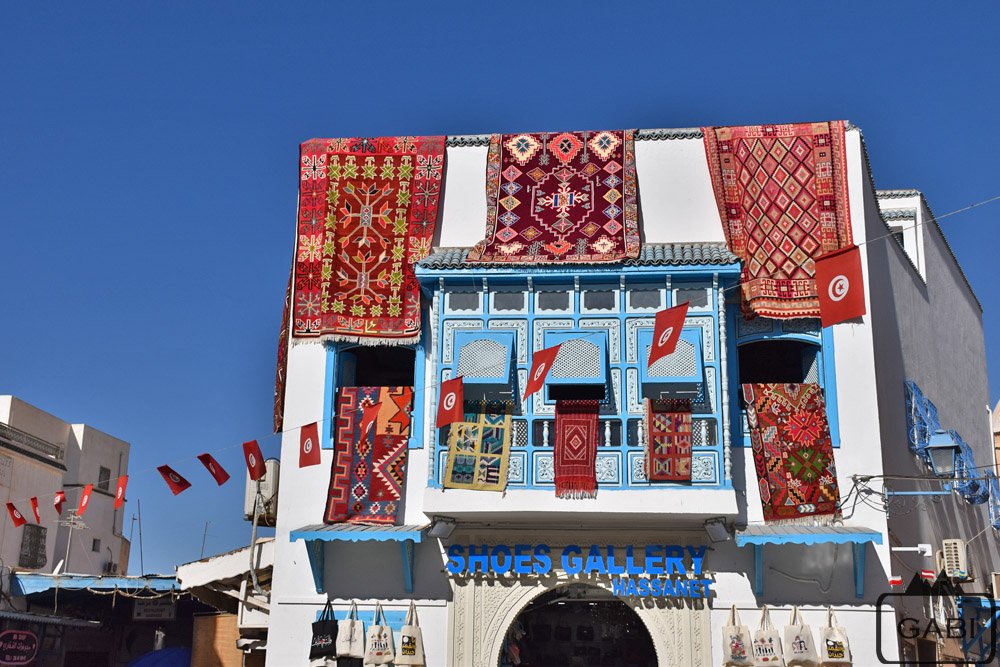
The Medina of Kairouan. A walk through the Medina of Kairouan is an adventure in itself. This UNESCO-listed old town transports you to a world where life goes on as it did centuries ago. Narrow streets, whitewashed walls, blue doors, and local artisans make a stroll feel like a journey through time. This is where the heart of the city beats.
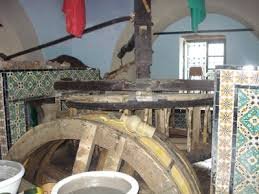
Bir Barouta. Near the center lies Bir Barouta – a legendary well supposedly discovered by Uqba ibn Nafi himself. This place is steeped in mysticism and still functions as a water source. Interestingly, you can still see a donkey turning the well’s windlass – just as it was done hundreds of years ago.
Carpet weaving in Kairouan. It’s also worth visiting one of Kairouan’s carpet weaving mills. These are not just shops but also workshops where you can admire hand-weaving techniques passed down from generation to generation.
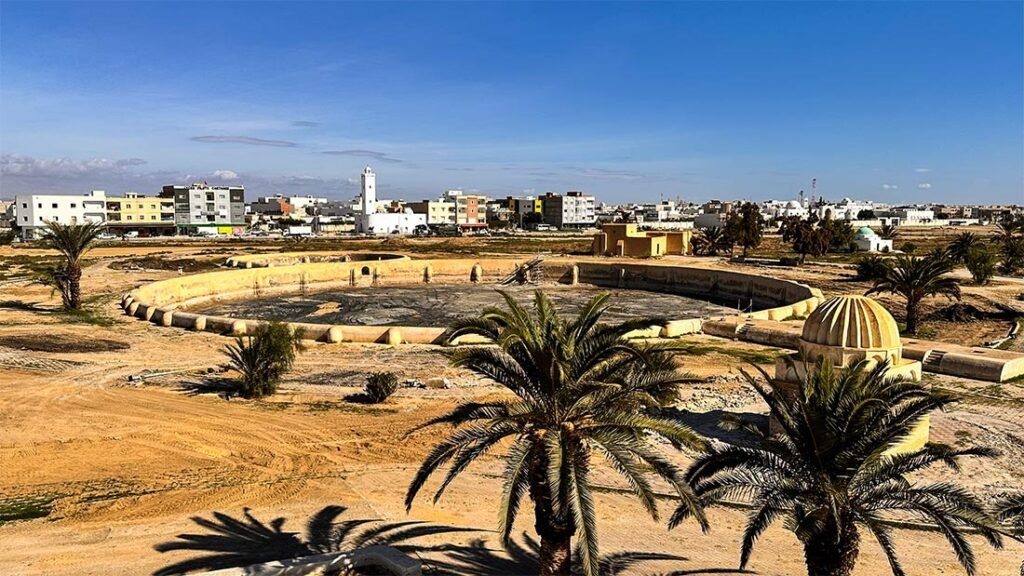
Abou Zouk Mausoleum. Hidden among the winding streets of the medina, this small mausoleum commemorates a local saint, Sidi Abou Zouk. Although rarely mentioned in guidebooks, it is popular with locals who come here to seek blessings. The building is striking in its tranquility and modesty, and its painted interior, with geometric motifs and Quranic quotations, captures the spirit of Sufi mysticism.
Poetry pools, literary cafés in the medina. While it may sound a bit surprising, in the heart of Kairouan you can find traditional cafés where local poets and storytellers gather in the evenings. One such place is Café Zitouna. It’s the perfect space to experience the spirit of Tunisian oral culture, so important in the Arab world.
Camel Market (Souk al-Ghamir). Although more of a local attraction than a tourist attraction, the traditional camel market held near Kairouan is worth mentioning. Slightly chaotic, full of shouting and dust, it offers an authentic experience, showcasing how trade in the region has been for centuries. It’s a meeting place for shepherds from the Sahara and traders from surrounding villages.
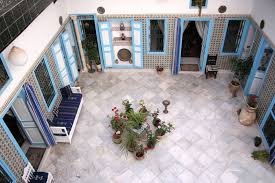
Museum of Islamic Civilization (Dar Hassine Allani). Although small, this museum in a private residence offers a rare glimpse into the traditional home of a wealthy Kairouan family. It houses collections of everyday objects, old photographs, and works of Islamic art, including beautiful ceramics, textiles, and ornamental weapons. Visits often end with a cup of tea in the garden—a gesture of hospitality that speaks volumes about the local culture.
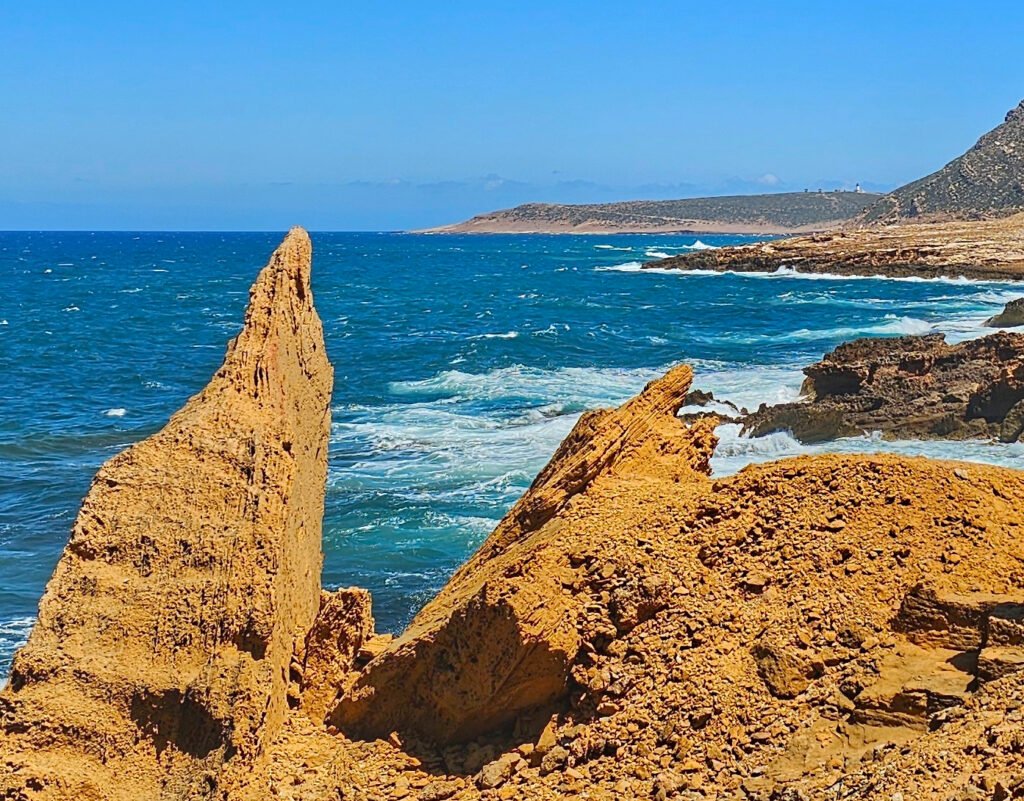
Weather and Climate: Kairouan has a semi-arid climate, which means hot, dry summers and mild, short winters. Average temperatures in summer (June–August) reach 35–40°C, and in July and August often exceed 42°C. In winter (December–February), daytime temperatures typically range from 15–20°C, and at night they can drop to as low as 5°C. Rainfall is minimal, with most falling in autumn (October–December). The best times to travel to Kairouan are during the spring (March–May) and autumn (September–November), when temperatures are more moderate and pleasant for sightseeing. If you plan to explore the mosques and souks on foot, avoid July and August, as the heat can make any trip unpleasant.
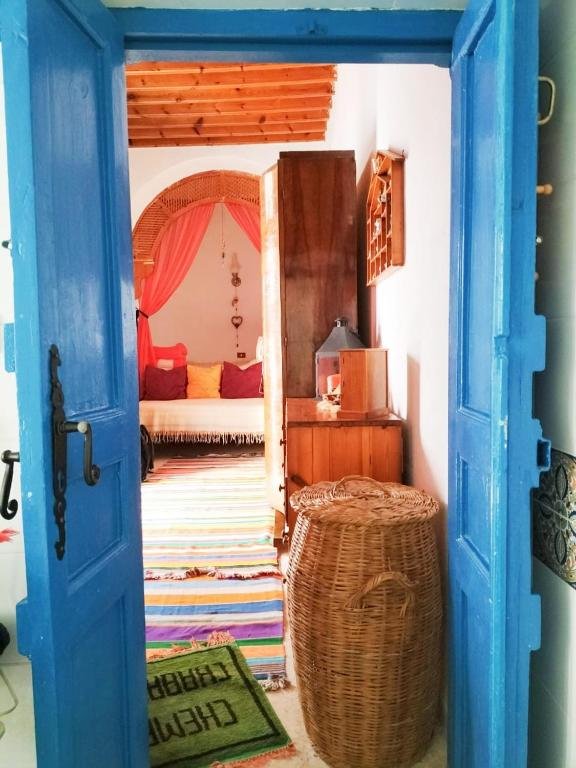
Maison d’hôte Chama is located in Kairouan and offers free WiFi, air conditioning, a shared lounge, and a terrace. The property is 1.3 km from the Great Mosque of Kairouan and less than 1 km from Kids Land. Guests staying at this homestay have access to a patio. The kitchen is equipped with a refrigerator, an oven, and a microwave. A bathtub, free toiletries, and a hairdryer are also provided. A buffet or halal breakfast is available. Staff at the 24-hour front desk speak Arabic, German, English, and French and are always happy to help. Enfidha-Hammamet Airport is 63 km away.
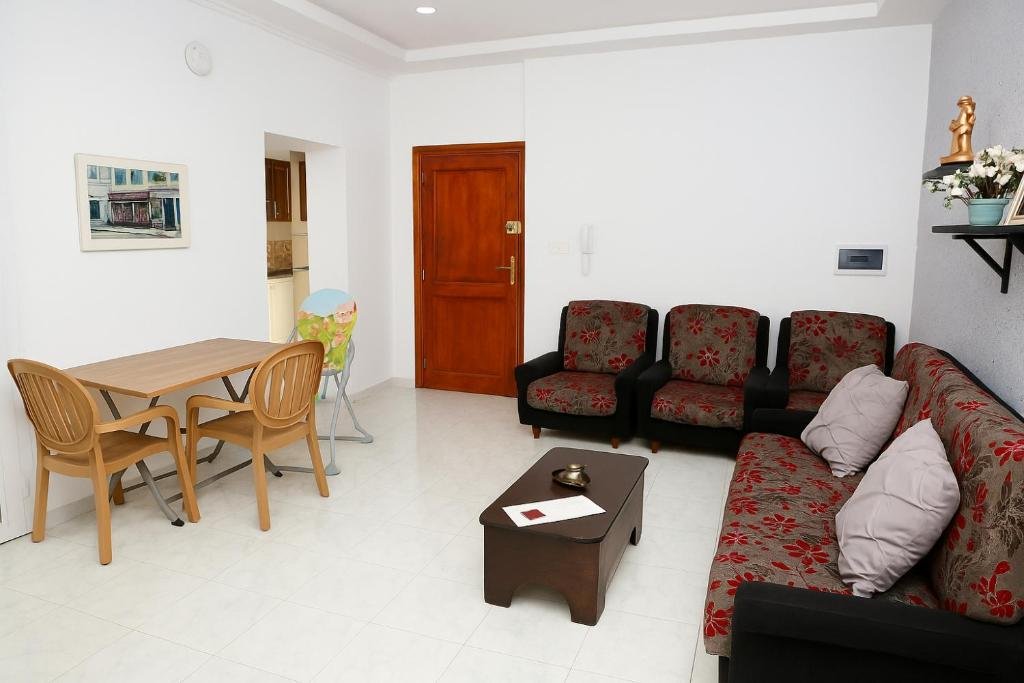
Residence Lyne is located in Kairouan and offers free Wi-Fi, air conditioning, and a terrace. The property is 1.2 km from the Great Mosque of Kairouan and 2.7 km from Kids Land. The apartment features a balcony, two bedrooms, a living room with a flat-screen TV, a kitchen with standard equipment such as a refrigerator and a microwave, and a bathroom with a shower. Guests can enjoy city views. Towels and bed linen are provided. Enfidha-Hammamet Airport is 63 km away. A paid airport shuttle service is available.
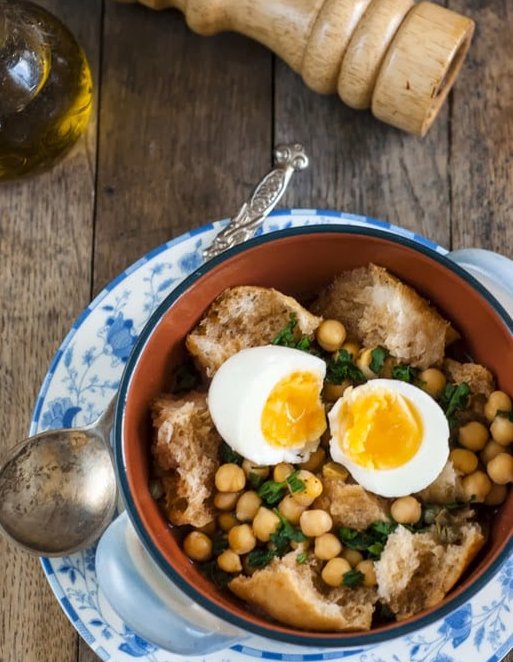
Cuisine and Restaurant: Sultan, family hospitality, and flavors fresh from the pan. A slightly more intimate, family-run restaurant, Sultan offers what Tunisian cuisine is all about – freshness, simplicity, and hospitality. Stewed one-pot dishes like lablabi (a spicy chickpea soup with bread and egg) and beef ragout are particularly popular. Mint tea and local olives are a must-have. This place is appreciated by travelers for its affordable prices and family atmosphere.