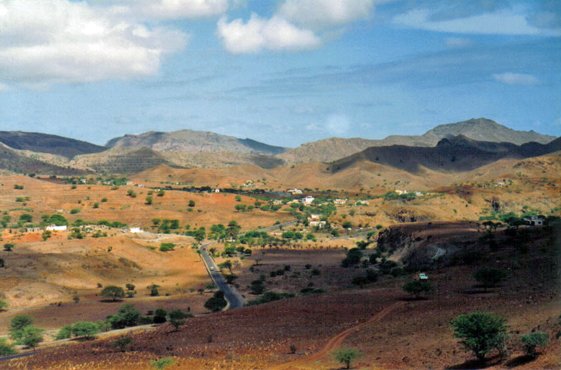
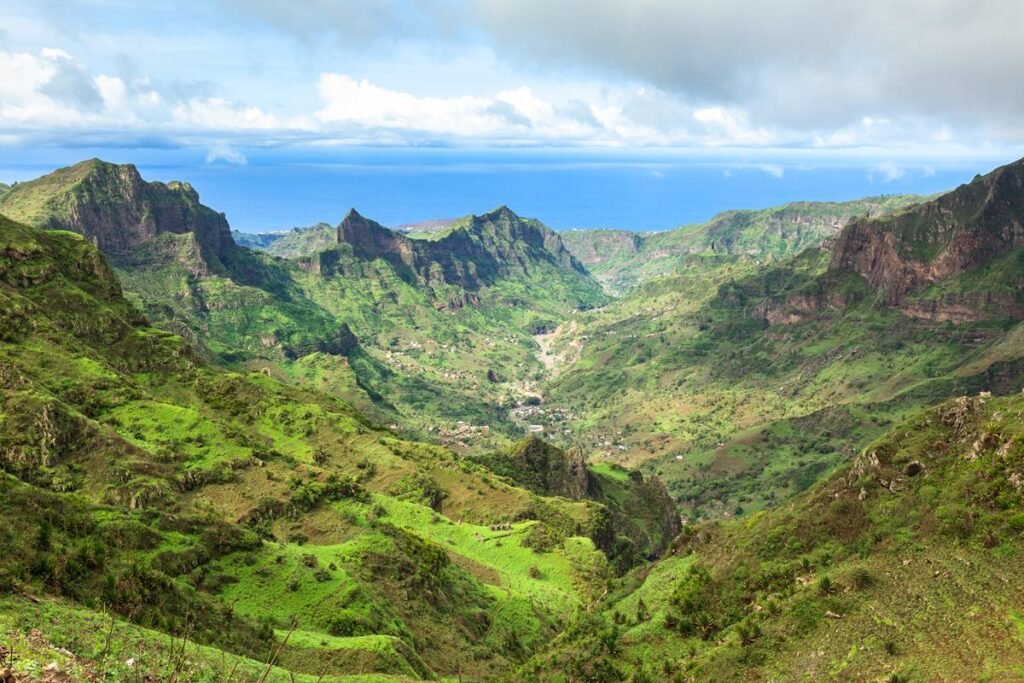
Santiago, also known as São Tiago, is the largest island in Cape Verde. It is the most important agricultural center and home to half the country’s population. Located between Maio Island (40 km west) and Fogo Island (50 km east), Santiago is part of the Leeward Islands archipelago. It was the first island to be settled. The city of Cidade Velha was founded in 1462 as Riberia Grande. The island is home to Praia, the capital of Cape Verde, and Francisco Mendes International Airport, one of the two international airports, located 2 km from the capital.
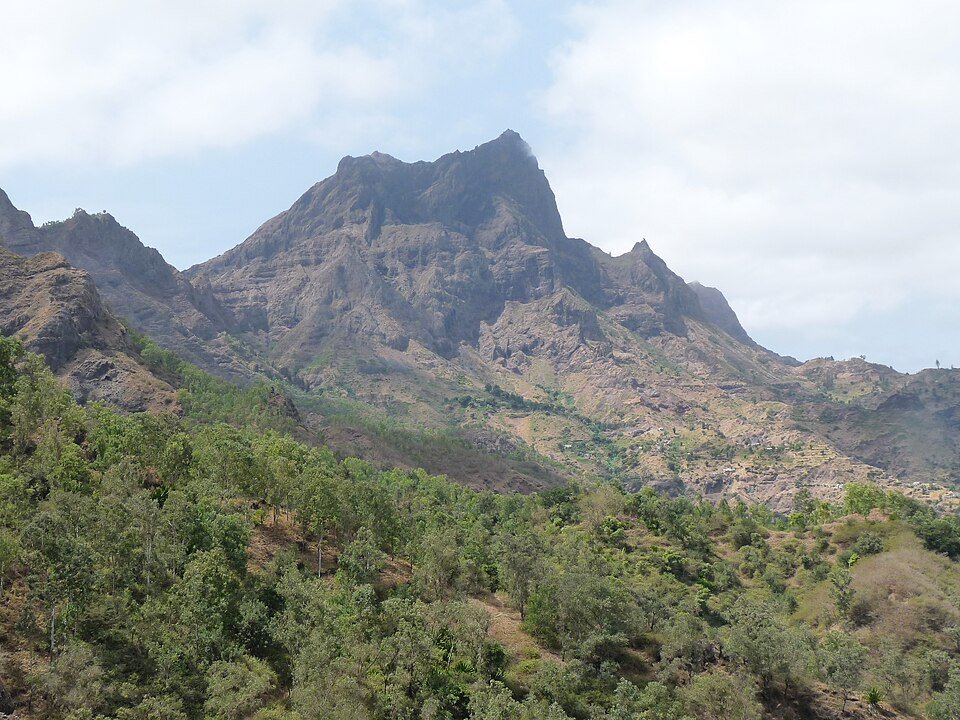
Geography. Santiago is the largest island in Cape Verde, with an area of 991 km². It is mountainous, although somewhat flattened in the southeast. The humid climate of the island’s interior and east coast contrasts with the drier climate of the south and southwest. Praia, located on the southeast coast, is the largest city on the island, as well as the country’s largest, and the capital. Other towns on the island include Cidade Velha, 15 km west of Praia, the country’s first capital; Assomada, 60 km north; and Tarrafal, 75 km from the capital in the northern part of the island. The highest peak is Pico da Antónia.
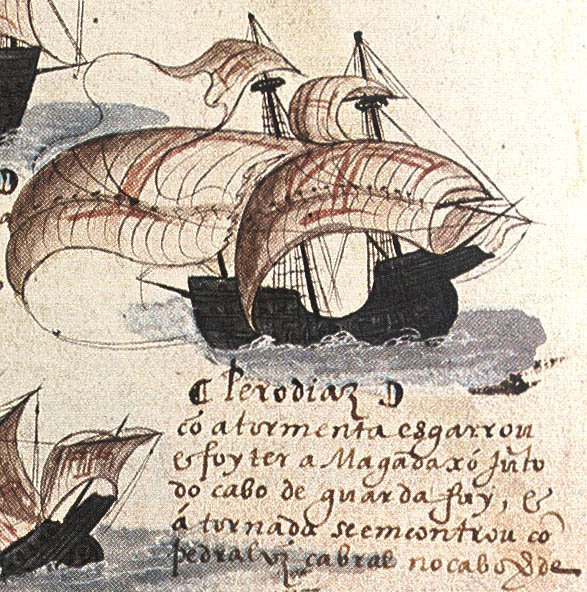
History. The island was discovered by António Noli around 1460, who built a garrison in Cidade Velha, then known as Ribeira Grande. Transcontinental slavery made Cidade Velha the second wealthiest city in the Portuguese kingdom. Portugal was unable to protect its colonies, as the English, Dutch, French, and Spanish took over the slave trade, and the islands were soon attacked by pirates. In 1712, Cidade Velha was attacked by pirates and ceased to be the capital, which was moved to the Praia plateau. The Portuguese colonial system harmed the island’s population, which supported Amilcar Cabral and the African Party for the Independence of Guinea and Cape Verde, and the independence declared in 1975. Santiago hosted several conferences on Creole culture.
Population: Santiago has always been the most populous island in Cape Verde. Since declaring independence in 1975, its population has doubled. The island’s population as of 2015 was 294,135. The population density is 296.8 people/km².
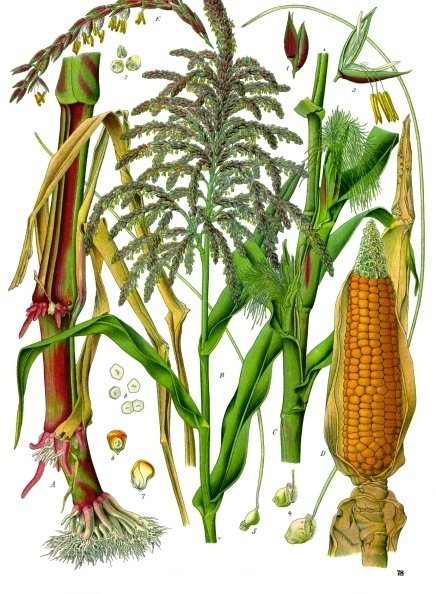
Economy. The most important industries are agriculture, tourism, and fishing. The main agricultural products are corn, sugarcane, bananas, coffee, and mangoes. Since independence, infrastructure has improved, particularly schools, ports, airports, roads, and other facilities.
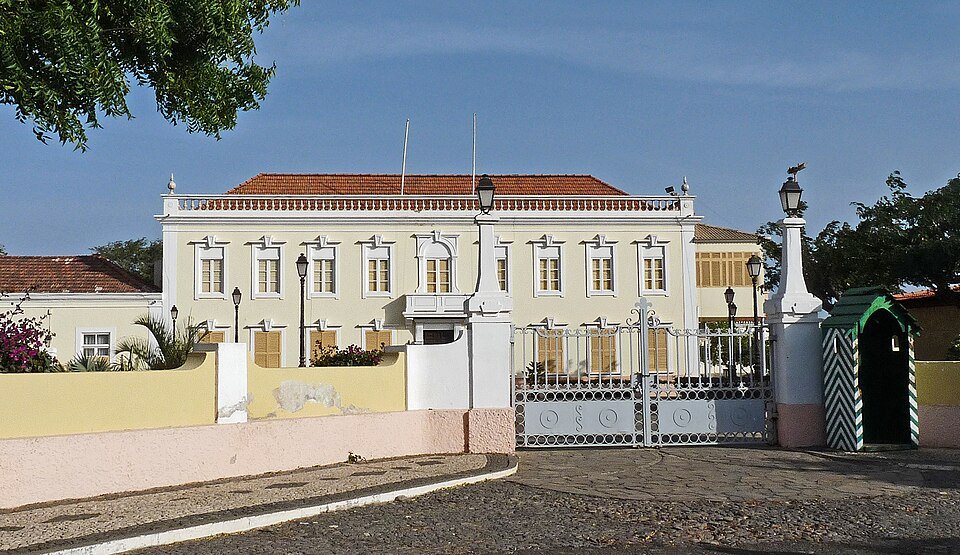
Praia is the capital and largest city of Cape Verde, a commercial and fishing port on Santiago Island (Atlantic Ocean); the administrative center of Praia County; 151,436 inhabitants (2015). Founded at the end of the 15th century, it served as the administrative center of the Portuguese colony from the mid-17th century until 1975. Paulino do Livramento Évora, a Catholic priest and Bishop of Santiago de Cabo Verde, was born here in 1931. Demographics. In 2015, the city’s population was 151,436. Transport. Praia Airport. The city is home to Praia Airport (opened in 2005). Cabo Verde Airlines, the airline of Cape Verde, is also headquartered in Praia. The city also serves the Port of Praia, the country’s largest port, which was rebuilt in 2014. The Dona Maria Pia Lighthouse stands at the harbor entrance. Culture. The city is home to the Ethnographic Museum (Museu Etnográfico). It also houses the Cape Verde National Library. The Ethnographic Museum of Praia has been a UNESCO World Heritage Site since 2016.
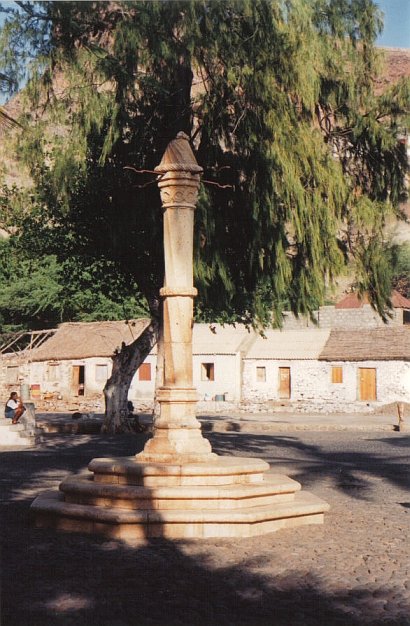
Cidade Velha is a city in Cape Verde, on the island of Santiago. Founded in 1462 as Ribeira Grande (Portuguese for “Great Valley”), it acquired its current name in the 18th century. In 2009, the historic old town of Cidade Velha was added to the UNESCO World Heritage List, becoming the first site in Cape Verde. Historic sites include:
*Church of Our Lady of Rossario from 1495
*Ruins of the Church of São Francisco and the Cathedral
*Fort of St. Philip, built in 1587 to defend against pirates
*Pelourinho – a pillory for punishing slaves
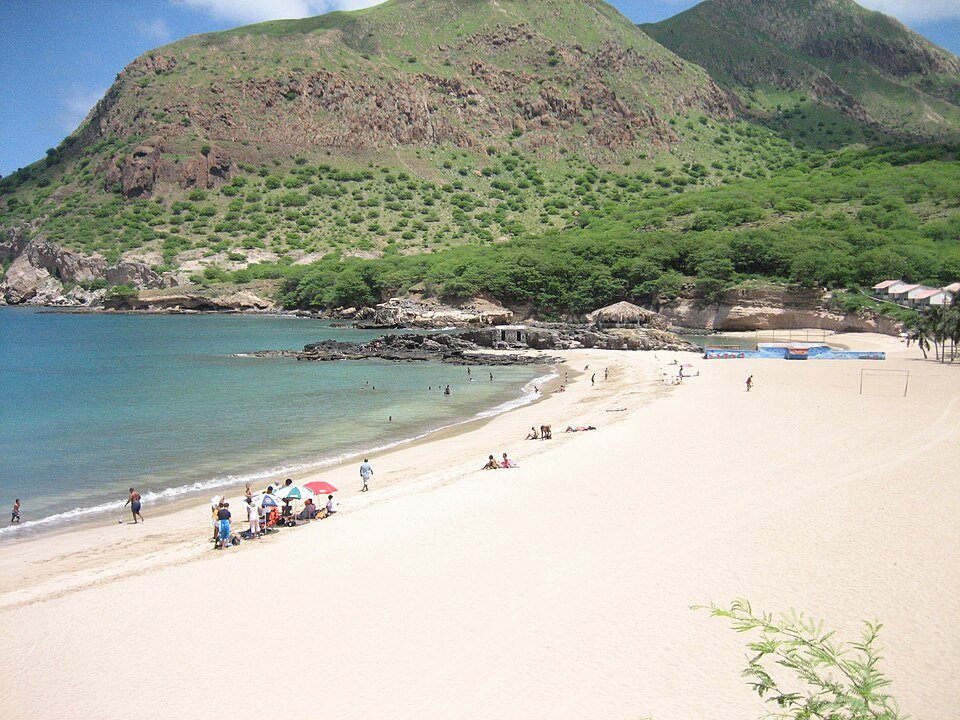
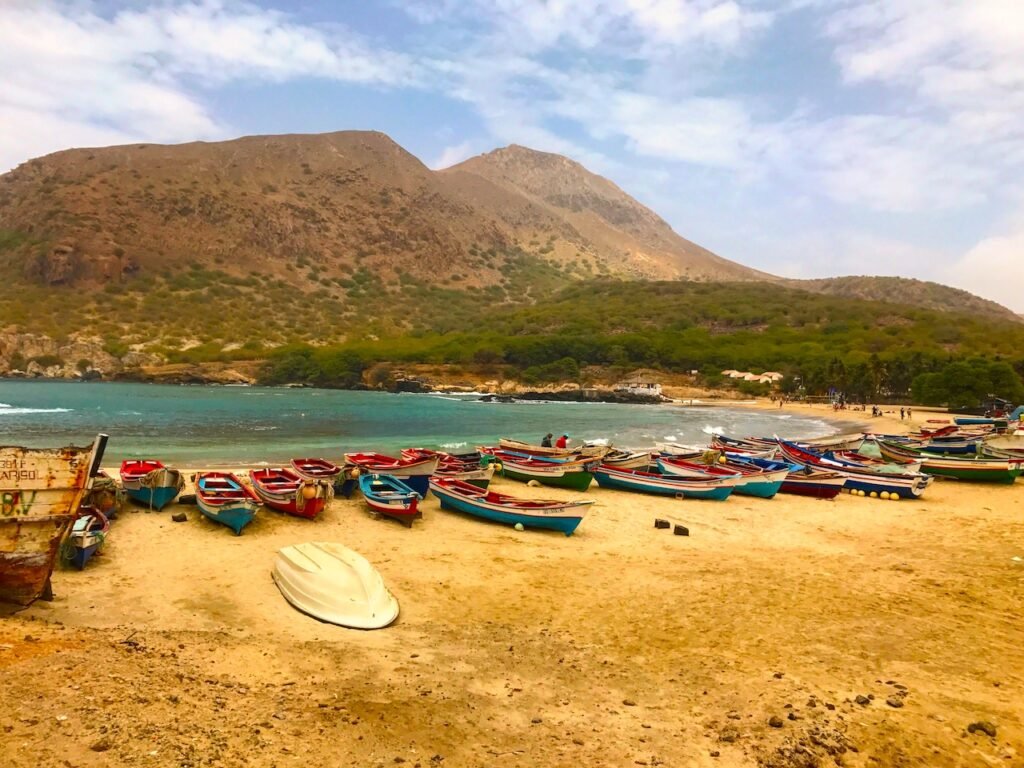
Tarrafal is a town in Cape Verde on Santiago Island, with a population of 6,656 (2010). The town’s name derives from the tamarisk, a plant common on the islands, hence several other towns bearing the same name. It became a tourist resort thanks to its picturesque sandy beach dotted with palm trees. Nearby, the Portuguese colonial authorities established a political prison, sometimes referred to as a concentration camp, where political opposition figures and leaders of African national liberation movements were detained and tortured.
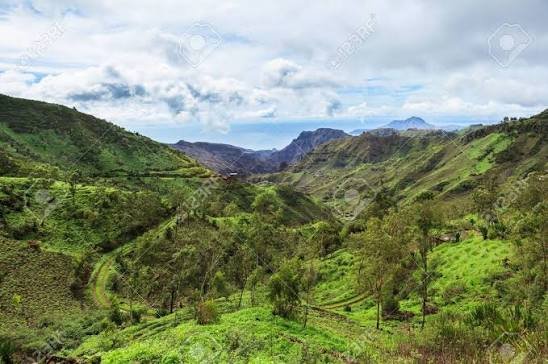
Serra Malagueta National Park (officially Parque Natural de Serra Malagueta) is the green heart of Santiago Island in Cape Verde. A volcanic mountain range that rises 1,064 meters above sea level, it is the highest point in the northern part of the island. Established in 2005, the park encompasses over 770 hectares of protected land, renowned for its humid, cool climate, misty forests, and stunning views of steep valleys and the ocean.
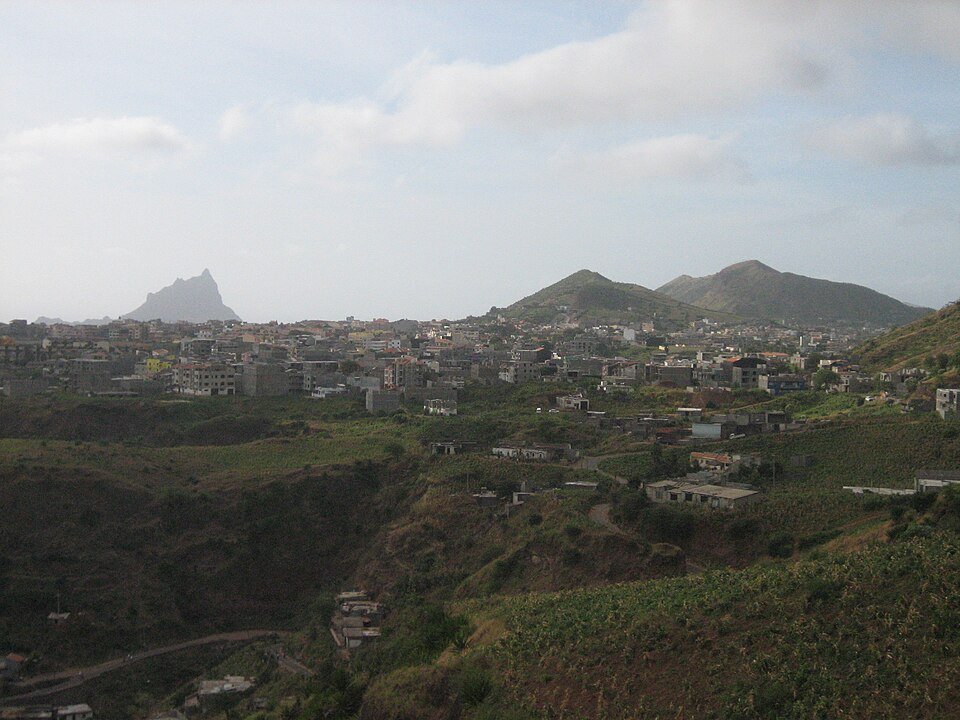
Assomada is a town located in the central part of Santiago Island in Cape Verde. With over 12,000 inhabitants, it is considered the country’s fourth most populous town, considered the most “African” in its character. It is an important commercial center for the populous agricultural region situated in the highlands between the Antónia and Malagueta mountain ranges. The Assomada market is one of the largest on the islands and enjoys a high reputation. It is a significant educational center (a high school and branches of two universities) and a cultural center. Located in the main square is a cultural center with a museum exhibition dedicated to the tabaca folk custom and the composer Norberto Tavares. The town has experienced significant development since the mid-19th century. In 1912, it became the administrative center of the municipality of Santa Catarina. It received city rights in 2001. José Maria Neves, the current Prime Minister of the Republic, is from Assomada.
Practical information for travelers. The main entry point is Nelson Mandela International Airport in Praia. The official language is Portuguese, but the locals primarily speak Creole. Currency: Caboverdean Escudo (CVE). Euros are also often accepted. Climate: Warm and tropical year-round. The interior of the island is wetter and greener.